

Companies representing 91% of global market capitalization disclosed sustainability information in 2024. Fewer than one in three listed companies did the same. That contradiction defines greenhouse gas reporting in 2026: near-universal among the giants, patchy everywhere else, and consequential for both groups.
I spend most of my time in IoT and asset tracking, not carbon accounting. But the overlap keeps growing. Logistics operators want container cycle data that feeds Scope 3 calculations. Airlines need environmental sensor readings tied to sustainability disclosures. Port authorities require emissions baselines for infrastructure grants. The pattern is always the same: greenhouse gas reporting has become an operational data problem, not just a regulatory checkbox.
This guide covers what the exercise actually requires in 2026, which frameworks apply where, how Scope 3 works in practice, where claims create legal exposure, and how to build a reporting system that holds up whether regulators tighten or retreat.
What Greenhouse Gas Reporting Actually Measures
Greenhouse gas reporting is the structured measurement, calculation, and disclosure of emissions tied to an organization’s operations and value chain. The practical foundation for nearly every corporate program is the GHG Protocol Corporate Standard, developed by the World Resources Institute and the World Business Council for Sustainable Development and first published in 2001. It was used by 97% of disclosing S&P 500 companies in 2023.
The protocol splits emissions into three scopes.
Scope 1 covers direct emissions from sources an organization owns or controls. Fuel combustion in boilers, company fleet vehicles, refrigerant leaks, on-site manufacturing. If the molecule leaves your facility, it’s Scope 1.
Scope 2 covers indirect emissions from purchased electricity, steam, heat, or cooling. The CO2 leaves the power plant’s stack, but the energy consumption belongs to the reporting organization. EPA guidance details both location-based and market-based methods for calculating Scope 2, and the choice between them changes the reported number significantly.
Scope 3 is everything else in the value chain: purchased goods, upstream transportation, business travel, employee commuting, use of sold products, end-of-life treatment, investments. The GHG Protocol divides Scope 3 into 15 categories, and for most companies, it represents the majority of total emissions.
The math itself is not complex. Activity data (liters of fuel, kilowatt-hours consumed, tons of material purchased) multiplied by an emission factor, converted to CO2 equivalents. What makes greenhouse gas reporting difficult is not arithmetic. It’s getting defensible activity data from dozens of sources, choosing appropriate factors, defining consistent boundaries, and maintaining an evidence trail that survives external assurance.
Who Must Report in 2026
There is no single global rule. Requirements depend on jurisdiction, company size, listing status, sector, and sometimes on who your customers are. Here is where the major mandates stand this year.
| Jurisdiction / Framework | Who’s Covered | What’s Required | 2026 Status |
|---|---|---|---|
| EU CSRD / ESRS | Large EU companies and listed SMEs (phased) | Full environmental, social, governance disclosure including Scope 1, 2, 3 | First group reported on FY2024; revised ESRS and voluntary SME standard adopted July 2026 |
| California SB253 | Entities with $1B+ annual revenue doing business in California | Scope 1, 2, and 3 disclosure | Implementation under development by CARB |
| IFRS S1 / S2 (ISSB) | Adopted by individual jurisdictions for listed companies | Climate-related risks, opportunities, Scope 1, 2, 3 | GHG emissions disclosure amendments issued December 2025; jurisdictional adoption varies |
| US EPA GHGRP | Facilities emitting 25,000+ metric tons CO2e | Facility-level emissions data | EPA proposed ending most obligations in September 2025, estimating $2.4B in savings |
| US SEC Climate Disclosure | SEC registrants | Climate-related financial risk and emissions | SEC proposed rescinding its 2024 climate-disclosure amendments |
The US picture is fractured. Federal agencies are pulling back while California pushes forward. The EU is simplifying but not retreating. ISSB is gaining jurisdictional adoption outside the US.
But here is the detail most companies miss: regulatory mandates are only one driver. Customers send supplier questionnaires. Lenders require emissions data for financed-emissions calculations under PCAF methodology, which identifies financed emissions as Scope 3 Category 15. More than 23,100 organizations disclosed through CDP in 2025, most of them voluntarily or at the request of investors and buyers. Even if every federal mandate disappeared tomorrow, capital markets and supply chain pressure would remain.
The practical question is not “are we legally required to report?” It’s “can we produce credible emissions data when someone with purchasing power asks for it?”
Five Frameworks, One Data Model
The number of sustainability reporting frameworks creates the impression that companies must build five separate reports. They don’t. The better approach is one controlled emissions dataset that produces multiple compliant outputs.
| Framework | Primary Purpose | Scope Emphasis | Best Used As |
|---|---|---|---|
| GHG Protocol | Corporate emissions accounting | Scope 1, 2, 3 with detailed category methods | The calculation backbone |
| ISSB S1 / S2 | Investor-relevant sustainability disclosure | Climate risks and opportunities, Scope 1/2/3 tied to financial materiality | A disclosure lens for capital markets |
| EU ESRS | Legally specified EU sustainability reporting | Environmental, social, governance with XBRL digital tagging | A jurisdictional compliance view |
| GRI Standards | Broader impact reporting for multiple stakeholders | Impacts on economy, environment, people | An impact and stakeholder view |
| CDP | Disclosure platform for investors and buyers | Questionnaire-based, aligned with ISSB | External data channel for customer and investor requests |
IFRS S2 requires Scope 1, 2, and 3 measurement under the GHG Protocol. ESRS uses the same underlying calculation methodology. CDP’s questionnaire maps to ISSB categories. The GHG Protocol and ISO announced a shared, co-branded standard development process in 2026, signaling further convergence ahead.
The GHG Protocol inventory is the engine. Everything else is a reporting view layered on top. Organizations that build their data architecture this way save time, reduce reconciliation errors across multiple disclosures, and avoid the painful scenario of two reports showing different emissions numbers for the same year.
The Scope 3 Problem
Scope 3 is where greenhouse gas reporting gets real. For most companies outside heavy industry, it represents 70% to 90% of total emissions. It is also where data quality is weakest, estimates are most common, and the gap between “we reported a number” and “we can defend that number” is widest.
The GHG Protocol Scope 3 guidance provides decision trees, methods, and examples for all 15 categories. In practice, companies use a data hierarchy:
- Primary supplier data (measured, activity-level)
- Supplier-specific emission factors
- Physical estimates (based on weight, distance, mode)
- Spend-based estimates (dollars multiplied by sector-average factors)
Spend-based estimates are the easiest to produce and the least defensible. They assign the same emission intensity to every dollar spent in a category, regardless of what was actually purchased or how efficiently it was produced. They are a starting point, not a destination.
Two real-world examples illustrate what’s at stake.
Microsoft reported total Scope 1, 2, and 3 emissions 23.4% above its 2020 baseline in its latest sustainability report, driven by AI infrastructure and cloud expansion. Microsoft has one of the most sophisticated sustainability programs on the planet. Growth can still overwhelm a well-designed target. If a company’s capital plan does not connect to its carbon plan, the numbers will diverge, no matter how good the reporting system is.
Walmart reports that suppliers have disclosed expected cumulative reductions, avoidance, or sequestration of 1.37 billion metric tons of CO2e since 2017, with more than 6,800 suppliers participating in Project Gigaton. That is a supply-chain engagement achievement. But “expected cumulative project impacts reported by suppliers” is not the same as “Walmart’s gross Scope 3 inventory decreased by 1.37 billion tons.” The boundary, methodology, counterfactual, and double-counting controls all matter. Supplier engagement data and corporate inventory are different exercises. Presenting one as the other invites scrutiny.
When Claims Outpace Evidence
A technically correct emissions inventory does not make every marketing claim lawful. The gap between what a report says and what a campaign implies is where greenwashing litigation lives.
In a landmark ruling, a Dutch court found KLM’s claims about sustainable flying, becoming sustainable, and offset products misleading or unlawful. The airline had sustainability data. It had offset purchases. What it lacked was a defensible link between the advertised claim (“fly sustainably”) and the physical reality of aviation emissions.
In the US, a class action alleged Delta misrepresented itself as carbon-neutral. A court denied in part a motion to dismiss. That case has not reached final judgment, but the exposure it created is instructive: the legal cost of a claim that outpaces evidence can exceed the cost of the reporting itself.
The operational lesson is that claims governance must sit alongside the inventory team, not downstream from it. Before any public statement goes out, five questions should have clear answers:
- Does the claim describe absolute emissions, an intensity metric, a target, a product attribute, a credit, or an expected future effect?
- What boundary, time period, and calculation method support it?
- Is the evidence current and verified?
- Has the claim been independently tested?
- Would it hold up in a Dutch or US courtroom?
Companies that answer those five questions before publishing avoid the trap. Companies that let marketing write the headline before the data team finishes the inventory don’t.
Measured Data vs. Estimates: Where Report Quality Is Decided
The quality of a greenhouse gas report is determined before any framework is applied. It is determined by the quality of activity data feeding into the calculations.
Consider transportation emissions (Scope 3, Categories 4 and 9). A company can estimate them using industry-average ton-kilometer factors and total freight spend. Or it can use actual shipment records: origin, destination, mode, weight, carrier. The second approach produces a number that reflects the company’s actual logistics decisions, not a statistical average of everyone else’s.
The same principle applies across every emission source. Facility energy consumption measured by meters is more defensible than utility bill extrapolation. Refrigerant leakage tracked by maintenance logs is more accurate than fleet-average assumptions. Environmental conditions recorded by sensors produce data that generic models cannot replicate.
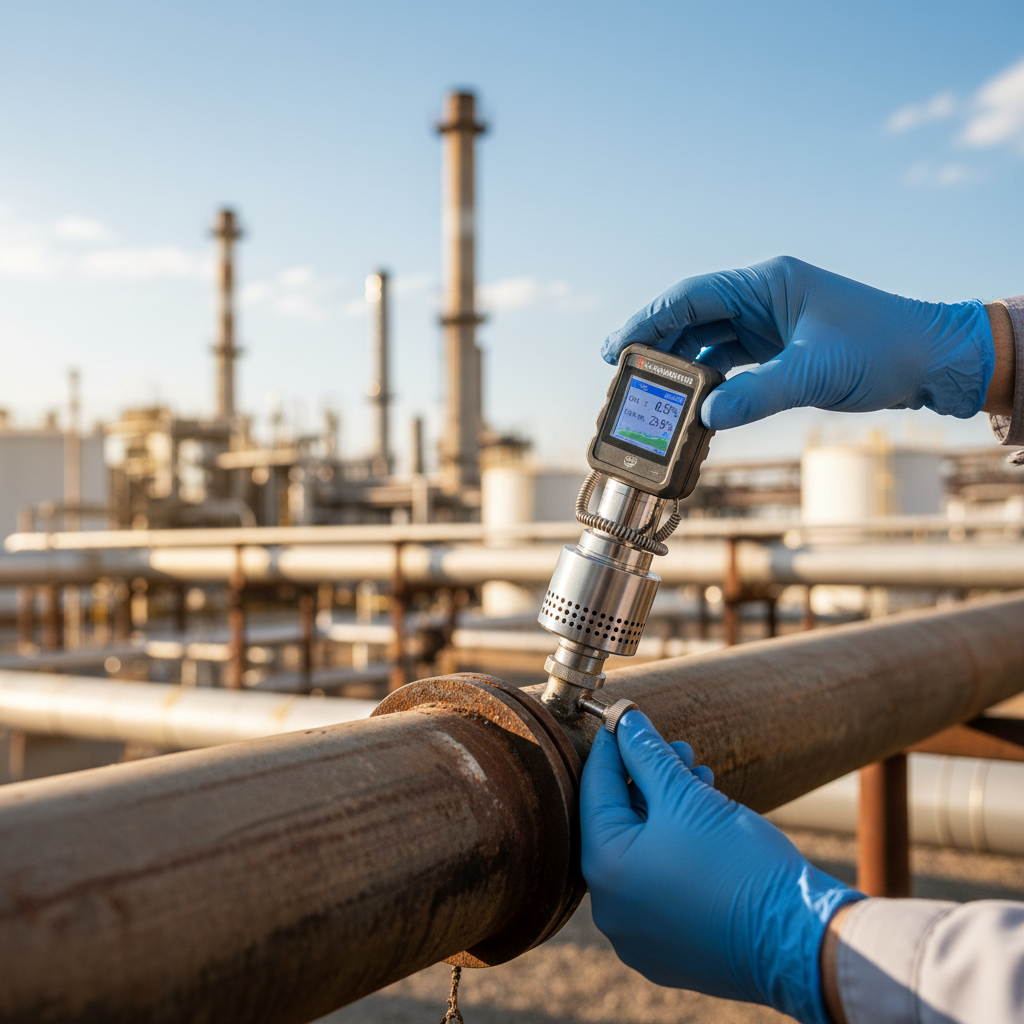
This is where IoT and operational technology intersect with sustainability reporting. Sensor-based environmental monitoring (temperature in cold chains, energy consumption at facilities, equipment utilization across field operations) generates the activity data that replaces generic estimates with measured inputs. The hierarchy is simple: measured beats modeled, modeled beats assumed.
For any company building or upgrading its data collection, the right question is not “do we have a number?” It’s “can we trace this number back to a measured source, an identified emission factor, and a documented method?” If the answer is no, the number is an estimate. Estimates are acceptable when disclosed. They become a liability when dressed up as precision.
Building a Report That Outlasts the Next Rule Change
The regulatory landscape in 2026 is moving in multiple directions simultaneously. The EU is simplifying ESRS but not retreating from mandatory disclosure. US federal agencies are proposing rollbacks. California is building state-level mandates. ISSB adoption is accelerating outside the US. ISSA 5000, the new international sustainability assurance standard, takes effect for periods beginning December 15, 2026, raising the bar for evidence quality and audit trails.
Building a reporting system around any single regulation is a recipe for rework. The resilient approach has four layers.
First, a GHG Protocol-compatible ledger. This is the calculation engine: organizational boundaries, sources, activity data, emission factors, unit conversions, aggregation. It is framework-agnostic and jurisdiction-agnostic by design.
Second, a standards and jurisdiction mapping layer. This translates the ledger into whatever output each framework requires. ISSB gets the financial-materiality view. ESRS gets full double-materiality disclosure with XBRL tags. CDP gets the questionnaire format. State programs get facility-level data. One inventory, many reports.
Third, an assurance and evidence layer. Every material datapoint should carry a source file, factor version, unit, geography, period, owner, estimate flag, and approval status. When the auditor arrives (and under ISSA 5000, that bar is rising), the evidence is ready.
Fourth, a claims governance layer. This is the bridge between the inventory and anything the company says publicly. It ensures that marketing messages, investor presentations, and customer responses can all be traced back to verified data with a defined boundary. It prevents the KLM scenario.
This architecture absorbs regulatory change without forcing a company to rebuild from scratch. New rule appears? Add a mapping. Rule is rescinded? Remove a mapping. The underlying data and evidence remain intact.
And that last point matters more than it might seem. Even when a specific reporting obligation disappears, the data a company collects for its inventory remains valuable for energy cost management, supply chain optimization, customer requirements, and capital market access. The report is the output. The data infrastructure is the lasting asset.
If your organization already collects environmental and operational data across facilities, transport, and supply chain, you have the raw inputs. The gap is usually connecting that data to a controlled emissions ledger. That’s a solvable problem, and it’s one where sensor-based measurement infrastructure pays for itself in data quality alone. We build environmental tracking systems for exactly that kind of continuous, measured data collection. If that’s a conversation worth having, our team is here.
Frequently Asked Questions
What is greenhouse gas reporting?
It is the structured measurement, calculation, and disclosure of emissions tied to an organization’s operations and value chain. It typically follows the GHG Protocol Corporate Standard, which defines organizational boundaries, emission scopes, calculation methods, and quality principles. A credible report covers Scope 1 (direct), Scope 2 (purchased energy), and Scope 3 (value chain) emissions expressed in CO2 equivalents.
Is greenhouse gas reporting mandatory?
It depends on jurisdiction, company size, listing status, and sector. The EU requires companies subject to CSRD to report under ESRS, and understanding when CSRD reporting is required depends on the phased timeline. California’s SB253 covers entities over $1 billion in annual revenue. US federal agencies have proposed rolling back both EPA facility reporting and SEC climate-disclosure rules. Even where mandates are reduced, investor, customer, and lender requirements often make reporting functionally necessary.
What is the difference between Scope 1, 2, and 3?
Scope 1 is direct emissions from owned or controlled sources (fuel combustion, process emissions, refrigerant leaks). Scope 2 is indirect emissions from purchased electricity, steam, heat, or cooling. Scope 3 covers all other value-chain emissions across 15 categories, from purchased goods and transportation to product use and end-of-life treatment. For most companies, Scope 3 is the largest share of total emissions.
How do companies calculate Scope 3 without complete supplier data?
They use a data hierarchy: primary supplier data first, supplier-specific factors second, physical estimates (weight, distance, mode) third, and spend-based averages as a last resort. The GHG Protocol Scope 3 guidance provides decision trees for each category. Mature programs disclose data quality levels, identify estimates, and describe plans to improve primary data over time.
Do carbon offsets make a company carbon neutral?
Not automatically. A Dutch court ruled KLM’s offset-based sustainability claims misleading. Offsets must be evaluated for additionality, permanence, and verified impact, then disclosed separately from gross emissions. Best practice: report gross emissions first, describe operational reductions second, and present credits as a distinct, qualified claim rather than a blanket neutrality statement.
What software or tools are needed for greenhouse gas reporting?
At minimum, a system to collect activity data, apply emission factors, maintain organizational boundaries, produce calculations, and preserve an audit trail. Options range from structured spreadsheets to dedicated platforms. Critical selection criteria include boundary logic, factor governance, Scope 3 supplier workflows, audit trails, and the ability to export to multiple frameworks from one controlled dataset.








 +1 508 292 2210

3 Responses