

UPS invested over $100 million in RFID sensing across its U.S. package network this year. At the same time, 26 of the top 30 global retailers are actively expanding 2D barcode capability at checkout. If one technology were simply “better,” both wouldn’t be growing.
So, is RFID better than barcode? It depends on what you’re identifying, how often, and how much a missed scan costs you. That’s not a hedge. It’s the framework that separates smart infrastructure investments from expensive regrets.
I’ve deployed tracking systems across aviation MRO shops, freight forwarders, port operations, and industrial supply chains for over 15 years. The pattern holds: companies that pick the wrong technology almost always started with the spec sheet instead of the workflow.
RFID vs. Barcode at a Glance
Before the nuance, here’s the comparison in one table. Bookmark it for the next time a vendor talks past the question you actually asked.
| Dimension | Barcode (1D and 2D) | Passive UHF RFID |
|---|---|---|
| Capture method | Optical (camera or laser sees the label) | Radio frequency (no line of sight required) |
| Scan speed | One label at a time per scanner; automated tunnels decode multiple codes | Hundreds of tags simultaneously per reader |
| Read range | Centimeters to roughly 1 meter | Up to 10 meters, environment-dependent |
| Label cost | Under $0.05 per label | $0.04 to $15+ per tag, depending on construction |
| Reader cost | $50 (smartphone) to $2,000+ (industrial scanner) | $1,000 to $4,000+ per fixed reader |
| Data capacity | 2D codes carry serial, lot, expiry, URLs | Read/write memory with unique serial identifiers |
| Durability | Degrades with physical damage, dirt, moisture | Encapsulated tags survive harsh conditions; RF affected by metal and liquid |
| Best fit | Low-cost ID, deliberate verification, consumer access | Bulk capture, concealed items, repeated counting, automated workflows |
Cost figures above come from published vendor pricing guides. Actual costs vary by volume, tag construction, and integration scope.
How Each Technology Actually Works
The core distinction is simpler than most articles make it sound.
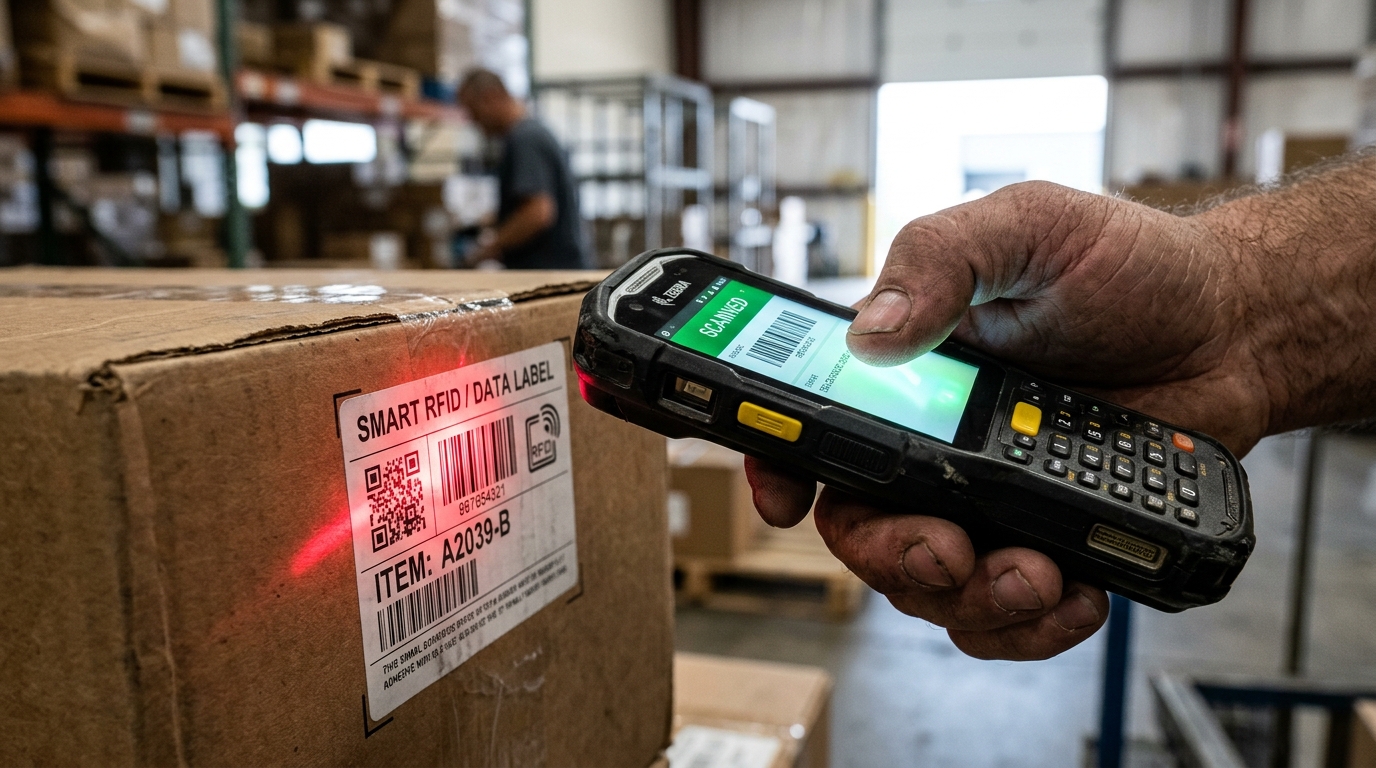
A barcode encodes information visually. A scanner or camera must see the printed symbol to read it. This is line-of-sight capture: it works reliably when someone (or a fixed camera) can point at the label.
RFID encodes information on a chip that communicates via radio waves. A passive RAIN RFID tag has no battery. It harvests energy from the reader’s signal, then responds with its stored data. No optical access needed. The reader captures hundreds of tags in the same pass, through cardboard, inside containers, or across a loading dock.
That’s the advantage. Here’s what most comparisons skip: RFID is not one technology. It spans three frequency families with very different capabilities.
- Low Frequency (125 to 134 kHz): 10 to 50 cm range. Animal ID, access control. Not a warehouse solution.
- High Frequency (13.56 MHz): up to about 1 meter. NFC lives here, good for item-level close-range interactions.
- Ultra-High Frequency (860 to 930 MHz): up to 10 meters. This is RAIN RFID, the technology powering large-scale inventory and supply chain applications. For real-time location applications requiring active signaling, the choice often comes down to active RFID vs BLE depending on range and infrastructure requirements.
When someone says “RFID reads at 15 meters,” ask which frequency. It matters.
Barcodes have evolved too. A modern GS1 DataMatrix or Digital Link QR code carries serial numbers, lot codes, expiration dates, and URLs. It’s not the basic UPC that first scanned a pack of Wrigley’s gum back in 1974. The 2D barcode is a fundamentally richer identification tool than its predecessor, and that changes the comparison.
Four Scenarios Where RFID Clearly Wins
RFID earns its premium when the value of repeated, low-labor identification exceeds its infrastructure cost. Here are four proven cases where that math consistently works.
1. Warehouse and store inventory counting
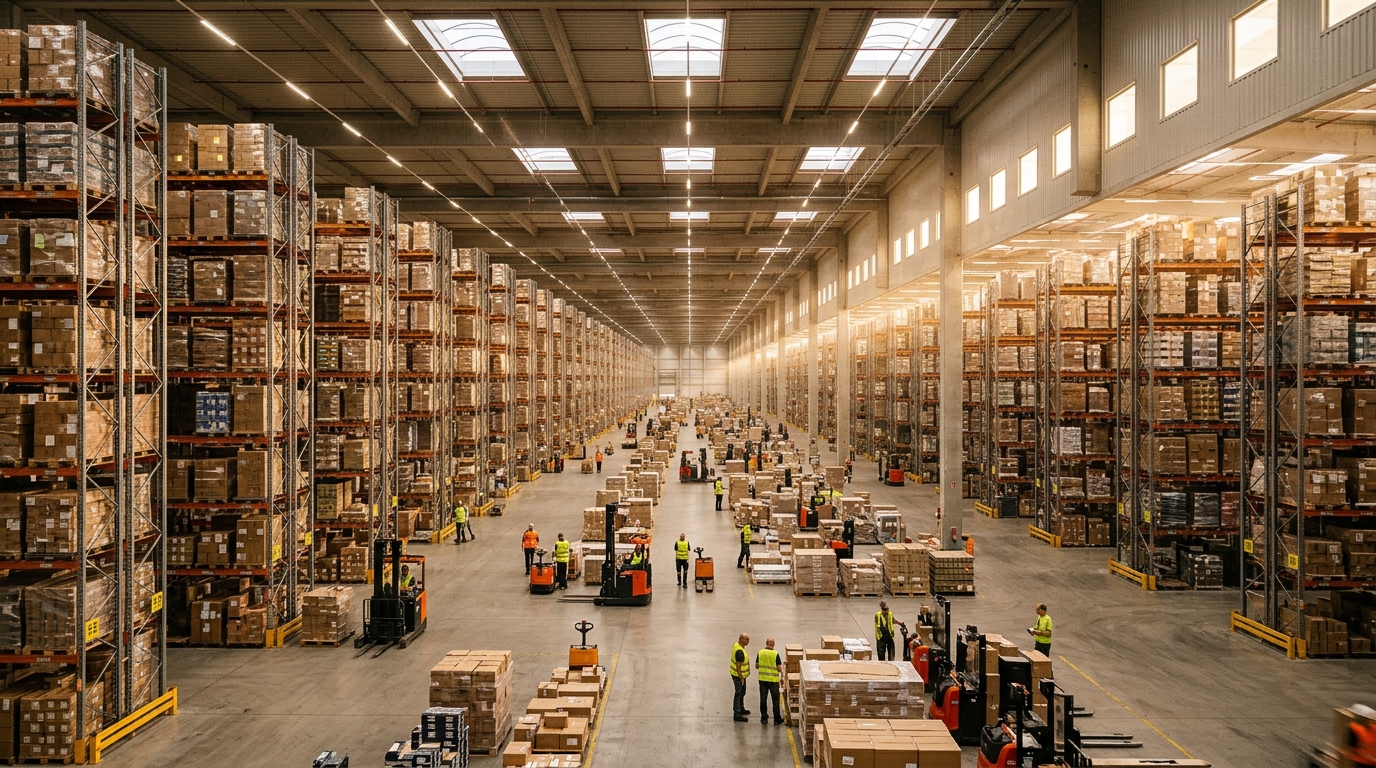
This is RFID’s most documented use case. Myer’s pilot on Apple merchandise at one Melbourne store reduced daily stock-taking from 150 minutes to 15 minutes. A 90% reduction, with shrinkage falling over 80%.
Why such a gap? Counting with barcodes means pointing a scanner at every single item. With RFID, you walk the aisle carrying a handheld reader and capture everything in range. The labor math flips dramatically when you’re cycling thousands of SKUs on a daily or weekly cadence.
2. High-volume retail checkout
Decathlon Brazil deployed 458 RFID checkout stations across 50 stores. Their reported numbers: self-checkout time cut by up to 50%, counting productivity up 38%, inventory accuracy improved by 3 percentage points. Instead of scanning each item individually, the customer drops a basket on the counter and the reader captures everything at once.
3. Infrastructure-scale logistics sensing
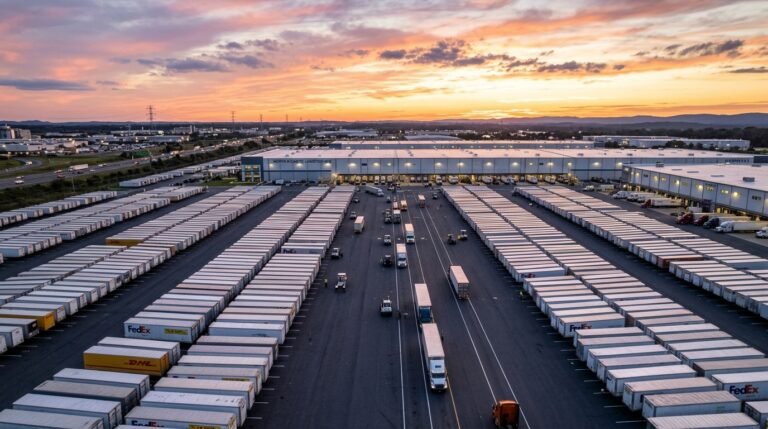
UPS’s 2026 rollout embedded RFID in all U.S. package delivery vehicles, delivery facilities nationwide, and over 5,500 UPS Store locations. Packages pass through reader zones at natural workflow points without anyone aiming a scanner. When you move millions of parcels daily, removing the need for manual scan presentation is a throughput multiplier.
4. Reusable asset pools and harsh environments
This is where my daily work intersects. Reusable containers, ULDs, ground support equipment, MRO tooling: these assets cycle through multiple facilities, get rained on, stacked, and occasionally lost. A barcode label on a container that’s survived three ocean crossings and a rainy tarmac is often illegible. An encapsulated RFID tag, bolted or riveted in place, keeps responding.
For container pools and aviation ground equipment, scanning an entire batch through a dock portal (without opening each container or rotating each item to find the label) changes cycle-time visibility from theoretical to operational.
Three Scenarios Where Barcode Still Wins
RFID doesn’t win everywhere. Barcode holds clear advantages in several common workflows. Pretending otherwise is how companies end up with expensive infrastructure they don’t need.
1. Deliberate verification at the point of action
In healthcare, a study of 14,041 medication administrations found that barcode scanning at bedside reduced non-timing errors from 11.5% to 6.8%. That’s a 41.4% relative reduction. The scan forces a specific confirmation: this nurse, this patient, this medication, right now.
That intentionality is a feature, not a limitation. RFID’s bulk-read capability would be a liability at bedside. You don’t want a reader picking up every medication in the cart. You want one match for one patient at one moment.
2. Operations with tight budgets and low item counts
If you’re tracking 500 items in a single location, barcode labels cost pennies and a smartphone does the scanning. An RFID system requires dedicated readers ($1,000 to $4,000 each), tags, middleware, and possibly a site survey. The break-even math doesn’t work unless volume or scan frequency justifies that fixed cost.
3. Consumer-facing product information
Every smartphone on the planet can scan a QR code. Almost none can read a UHF RFID tag. When identification needs to reach the end consumer (product authentication, recycling instructions, warranty info), GS1’s 2D barcode standards offer a universal path that requires zero additional hardware on the customer’s end.
Europe’s Digital Product Passport framework reinforces this: it specifies QR-code-style data carriers to connect physical products to their digital records, with battery passport requirements starting February 2027. At the consumer interface, that’s a barcode play.
The Cost Conversation Nobody Finishes
Most RFID-vs-barcode articles quote tag prices and stop. That comparison is incomplete to the point of being misleading.
Passive RFID tags can cost as little as $0.04 in high volume. But the tag is the smallest line item in the budget. Fixed readers run $1,000 to $4,000 each, and a single warehouse might need 6 to 20 read points. Handheld readers add another $1,500 to $3,000 per unit. Software and middleware range from $100 to $3,500+ monthly. On top of all that: site survey costs, antenna placement, RF environment testing, integration work, and training. None of those are optional.
J.C. Penney learned this the hard way. In 2012, the company announced an aggressive RFID rollout. By January 2013, they had scaled back because of cost, retaining RFID only for high-value categories like bras, footwear, jewelry, and denim. The technology worked. The economics didn’t, at that scope.
The lesson isn’t “RFID is too expensive.” It’s that using RFID as an expensive barcode replacement without changing the underlying process will always disappoint. Researcher Bill Hardgrave flagged this during Walmart’s early mandate days, and it’s still true: the ROI comes from redesigning workflows around RFID’s strengths, not from swapping labels and expecting magic.
The right approach: calculate total cost of ownership on both sides. Tags, annualized hardware, integration, software, training, maintenance, and exception handling, minus documented labor savings and measurable business benefits. Then compare RFID against an optimized barcode process, not a straw-man manual one.
Why the Best Systems Use Both
Here’s the part most vendor articles skip, because it’s hard to sell “use both.”
GS1 explicitly supports interoperability between barcode and RFID. The same GTIN and serial number can be encoded on a printed 2D barcode and on an RFID tag. Different steps in the same process use whichever capture method fits: RFID for automated dock reads, barcode for point-of-use verification, QR code for consumer interaction.
The Kit Check and Sandoz pilot, documented in an FDA-hosted report, demonstrates this architecture. Barcode identification at the saleable-unit level. RFID at the unit-dose level. Same pharmaceutical workflow. The submitter explicitly noted that RFID alone doesn’t achieve full regulatory compliance.
And automated barcode capture is far more capable than many realize. Modern modular vision tunnels offer up to six-sided barcode reading at conveyor speed, with advertised read rates of 99.9%. For exposed labels on a moving line, machine vision can deliver the automation benefit without adding an electronic tag to every item.
The architectural takeaway: detecting an identifier is not the same as completing a business event. GS1’s EPCIS framework structures visibility events along four dimensions (what, where, when, why) and accepts input from both barcode scanners and RFID readers. When your software can reconcile data from both capture methods, you get the best of each without forcing one technology into a role it was never designed for.
When Identification Isn’t Enough: The Asset Tracking Gap
Here’s where I push back on the entire framing of this debate.
Both RFID and barcode are identification technologies. They answer one question: “What is here, right now, at this scan point?” Valuable for inventory, checkout, and verification. But for a growing class of operational problems, identification at discrete scan points isn’t the bottleneck. Visibility between those points is.
Consider a pool of reusable containers cycling between a manufacturer, three distribution centers, and two return depots. Or ground support equipment spread across an airport tarmac. Or MRO tooling that moves between hangars, shops, and aircraft. RFID tells you the asset was at Dock 7 at 14:32 on Tuesday. It tells you nothing about where it went after, or whether it’s dwelling at a customer site two weeks past the expected return date.
This is the gap between shipment tracking (the job ends at delivery) and asset tracking (follows the asset through its full lifecycle: deployment, return, dwell, reuse). RFID addresses identification. GPS and cellular IoT trackers address continuous visibility.
In our work at Datanet, we see this pattern constantly. Companies come in asking about identification technology and discover their real problem is cycle-time visibility. They don’t just need to know what’s in the warehouse. They need to know where their containers are sitting idle, which ground equipment drifted to the wrong terminal, and how long MRO tools spend in transit versus in productive use. This distinction between RFID vs GPS asset tracking becomes critical when designing systems for reusable asset pools.
For those use cases, GPS-enabled asset trackers with cellular or satellite connectivity fill the gap that neither RFID nor barcode can close. The strongest systems layer identification (RFID or barcode at fixed scan points) over continuous IoT tracking (devices reporting location independently between those points).
Three Questions That Cut Through the Noise
When a client asks me “should we go RFID or barcode,” I ask three questions before answering.
How often does each item need to be identified? If it’s once at shipment or receipt, barcode almost always wins on cost. If it’s daily, weekly, or at every transition point across a multi-site operation, RFID’s labor savings compound fast.
How expensive is a missed identification? If a missed scan means a package arrives a day late, barcode’s occasional read failures are tolerable. If it means a $40,000 ULD disappears for six months or a medication reaches the wrong patient, invest in the technology that most reliably reduces that risk.
Does someone currently have to expose the label? If your process already presents labels to fixed scanners (conveyor lines, checkout counters), automated barcode capture may solve the problem without RFID infrastructure. If items are stacked, boxed, palletized, or concealed inside containers, RFID is the path to capture without unpacking.
Start with the bottleneck. Match the technology to the workflow. Pilot one category before committing to a full-scale rollout. And if your identification problem is really a visibility problem (you need to know where assets are between scan points, not just at them), that’s a different conversation. Reach out to our team and we’ll map the right identification and tracking architecture together.
Frequently Asked Questions
Can RFID completely replace barcodes?
It can replace specific capture steps, but complete replacement is rarely necessary. GS1 supports using both technologies on the same item with shared identifiers. A printed barcode remains valuable as a fallback when supply chain partners use different capture equipment, and for consumer-facing interactions where smartphones can’t read UHF tags.
Is RFID always faster than barcode scanning?
For bulk counting and dock-level capture, yes. A single reader handles hundreds of tags simultaneously. But automated barcode vision tunnels also decode multiple labels at conveyor speed. The speed advantage depends on whether items are visually accessible or concealed. Concealed items in dense stacks favor RFID. Exposed labels on a moving line can favor optical automation.
Does RFID work near metal and liquids?
It can, with the right engineering. UHF radio signals are affected by metal and moisture, so tag selection, antenna design, and placement must account for those materials. Recent innovations like Avery Dennison’s AD IdentiFresh specifically target high-moisture food environments. “RFID fails near metal” is outdated. “RFID near metal requires proper engineering” is accurate.
What does a full RFID system cost?
Passive tags start around $0.04 in volume. Fixed readers run $1,000 to $4,000 each, handhelds $1,500 to $3,000. Software ranges from $100 to $3,500+ monthly. Add integration, site survey, and training. Never compare tag prices alone. Build a total cost of ownership model that includes infrastructure, labor savings, and exception-handling costs on both sides.
Can my phone read RFID tags?
Your phone reads NFC tags (13.56 MHz), which are technically RFID. But NFC compatibility does not extend to UHF/RAIN tags used in supply chain applications. Those require dedicated reader hardware. Some newer mobile devices are beginning to support RAIN reading, but it is not yet standard across consumer phones.
What if I need visibility between scan points, not just at them?
Both RFID and barcode are point-in-time identification technologies. For continuous location visibility (where is this container right now, how long has it been dwelling, when will it return), you need GPS or cellular IoT trackers that report independently. The strongest asset tracking architectures layer identification at scan points over continuous tracking between them.




 +1 508 292 2210

One Response