

Short answer: GPS signals are free. Civilian GPS is continuously available worldwide at no charge. But receiving satellite signals and getting that location delivered to your phone are two entirely different operations. Most trackers that report their position in real time over a cellular network require paid connectivity of some kind.
The better question is: what kind of location delivery do you need, and what does it actually cost over one, two, or three years?
“No monthly fee” often means annual billing. “Subscription included” can mean a single year of service baked into the hardware price. And “lifetime tracking” raises an obvious follow-up: whose lifetime? The device’s? The company’s? The cellular network it rides on?
Let me break down what you are really paying for, when you can genuinely avoid a subscription, and where cutting corners creates risks that cost more than the service fee ever would.
GPS Is Free. Delivering Your Location Is Not.
GPS satellites broadcast positioning signals in one direction. Your receiver (tracker, phone, car navigation module) picks up those signals and calculates where it is. That calculation costs nothing. The satellites do not know your receiver exists, and no one bills you for listening.
The cost enters at the next step: moving that calculated position from the device to you. A cellular tracker needs a SIM card and a data connection. A satellite communicator needs access to an orbital relay network like Iridium. Even a Bluetooth finder depends on nearby phones forwarding its signal through a crowd-sourced network.
Three layers, three different cost implications. Positioning (satellite reception) is always free. Transport (cellular, satellite, radio, Bluetooth relay) is where subscriptions live. Application services (maps, alerts, geofences, trip history) sometimes add a third charge on top of transport, sometimes come bundled.
When someone advertises a “GPS tracker with no subscription,” they almost always mean a device where the transport and application layers are either genuinely free, prepaid into the hardware price, or handled through a mechanism that does not generate a monthly invoice. That is possible. But it always involves a trade-off in range, update speed, or access method.

Five Tracker Architectures and What Each Actually Costs
Not all GPS trackers use the same communication method. The architecture determines whether a subscription exists, what it covers, and what you sacrifice without one.
| Type | How It Delivers Location | Subscription? | Main Limitation |
|---|---|---|---|
| GPS data logger | Records coordinates to internal memory; you download later via USB or Bluetooth | No | No remote access. You retrieve data after the fact. |
| Direct radio (e.g., Garmin Alpha VHF) | Sends position to a compatible handheld within radio range | No (for the radio link) | Limited range, typically up to 9 miles line-of-sight. |
| Bluetooth/UWB finder (AirTag, Tile, SmartTag) | Nearby participating phones relay the signal to a cloud network | No for core features | Depends on density of nearby network participants. |
| Cellular GPS tracker | Built-in SIM transmits coordinates to a server over mobile networks | Yes (monthly, annual, or prepaid) | Requires cellular coverage. Ongoing connectivity cost. |
| Satellite communicator | Uses satellite networks for off-grid messaging and tracking | Yes (plan + possible per-message fees) | Higher cost, greater power draw, needs clear sky. |
The Garmin Alpha 200i illustrates why blanket answers fail. Its VHF link tracks dog collars within radio range without any subscription. But the same device has inReach satellite messaging that requires an active Iridium plan. One product, two different billing answers, depending on which communication layer you use.
The meaningful distinction is not “GPS versus Bluetooth.” It is local knowledge versus remotely delivered knowledge, and each path carries different coverage and cost constraints.
What Popular Trackers Actually Cost in Year One
Sticker prices mislead. A $30 device with a $20/month plan costs more in year one than a $146 device with annual billing. The only honest comparison is total cost of ownership: hardware plus all service charges over the same time period.
| Product | Hardware | Service Model | Approx. First-Year Total |
|---|---|---|---|
| Apple AirTag | $29 | None (Bluetooth crowd network) | $29 |
| Tile (core, no Premium) | ~$25–35 | None for basic finding | $25–35 |
| Vyncs Basic 4G+ | Included | $145.98 yr 1 (incl. activation); $99.99/yr renewal | $146 |
| Bouncie | $89.99 | $9.65/month cellular | $206 |
| LandAirSea 54 (annual prepaid) | $29.95 | $179.55/yr prepaid, 3-min updates | $210 |
| LandAirSea 54 (monthly) | $29.95 | $19.95/mo, 3-min updates | $269 |
These figures come from publicly listed U.S. prices, excluding taxes and shipping. They compare payment obligations, not identical update rates or mounting options.
The takeaway: a device marketed as “no monthly fee” (like Vyncs) still carries a $99.99 annual renewal after year one. The subscription exists. It is just billed on a different cadence. At two years, prepaid annual plans usually beat monthly billing. But hardware replacement (battery death, network retirement) can reset the entire calculation.
Before you compare products, decide how many years you plan to use the tracker. Then run the math over that full period.
When You Genuinely Do Not Need a Subscription
Some use cases do not require real-time remote updates. If yours is one of them, you can track without any recurring charge.
GPS data loggers record routes to internal memory. Hikers, drivers logging mileage, and fleet managers reviewing routes after the fact use these regularly. You sync via USB or Bluetooth, download the track, and you are done. Dedicated GPS loggers exist at various price points, and none require a SIM or monthly plan.
Bluetooth finders like AirTag work well for items that move through populated areas: luggage, keys, bags, bikes locked up in cities. Apple’s January 2026 AirTag update extended Precision Finding range by up to 50% compared to the previous generation, at the same $29 price with no monthly fee. Just understand what it is: a crowd-sourced item finder, not an independent GPS reporter. In a rural area with no iPhones nearby, it goes silent.
Direct radio systems, like the Garmin Alpha’s VHF collar link, deliver real-time location to a nearby handheld without cellular service. Effective for hunting, dog training, or any scenario where you and the tracked asset are within a few miles of each other.
The common thread: you accept either delayed access (loggers), proximity dependence (Bluetooth), or limited range (radio). For many people and many use cases, that trade-off is perfectly reasonable. A hiker recording a trek does not need cellular. A commuter tagging a bag in Manhattan does not need satellite.
When the Subscription Pays for Itself
If you need to know where something is right now, from anywhere, a cellular or satellite connection is unavoidable. And when the asset has real value (a vehicle, a container of pharmaceutical supplies, a piece of ground support equipment worth $40,000), the subscription is not an expense. It is insurance that generates a receipt every month.
Consider the numbers. According to SITA’s 2026 Baggage IT Insights report, airlines using Apple’s Find My Share Item Location integration with the WorldTracer system saw a 90% reduction in truly lost bags, plus 26% faster recovery times for delayed bags. The annual industry cost of mishandled baggage sits around $6.3 billion, averaging $260 per incident. Even a low-cost tag, when connected to the right recovery workflow, generates measurable returns.
In healthcare, a hospital documented by GE HealthCare used real-time location before ordering 40 new infusion pumps and found 28 idle units already sitting inside the building. That is a 70% reduction in unnecessary equipment purchases. The annual tracking service was a rounding error compared to the capital spend it eliminated.
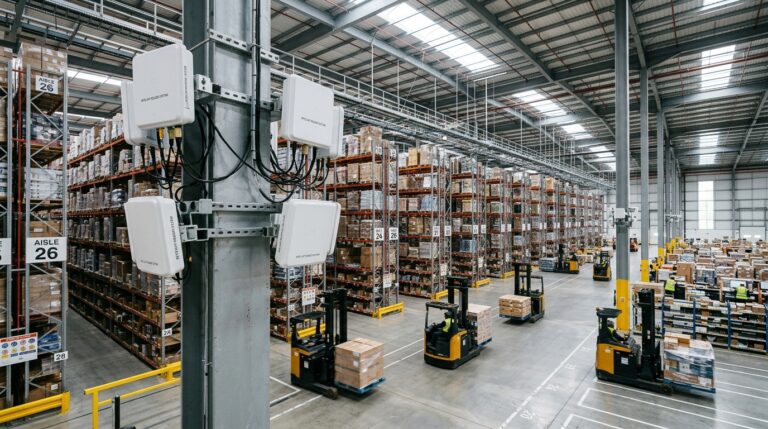
In industrial IoT and logistics (the world I work in daily), the math is even more direct. A reusable container or a unit load device that goes invisible after delivery creates dwell time, replacement purchases, and cycle-time waste that compounds across hundreds or thousands of units. Shipment tracking tells you where something is until it arrives. Asset tracking follows it through the entire lifecycle: delivery, idle time, return, reuse. That lifecycle visibility requires connectivity—often through rugged gps trackers built for harsh environments—and it pays for itself many times over.
The question shifts from “can I avoid a subscription?” to “what does invisibility cost me per asset per month?” If the answer exceeds the subscription price, the subscription is the cheapest part of the solution.
Hidden Costs Behind “No Monthly Fee” Labels
Three risks rarely show up in product marketing, and all three can turn a seemingly cheap tracker into an expensive mistake.
Network retirement can kill your hardware overnight. When U.S. carriers shut down their 3G networks, connected car features stopped working, sometimes with no available upgrade path. The same fate awaits any tracker built on aging cellular technology. A “no subscription” device running on a 2G or 3G modem is not a bargain. It is hardware with an expiration date you cannot see on the box. The industry is trending toward hybrid designs that switch between terrestrial networks and satellite, but those do not eliminate connectivity costs. They redistribute them. Always check which cellular bands your tracker supports before buying.
“Lifetime” means someone’s lifetime, and it is probably not yours. If the provider folds, gets acquired, or the network generation retires, that lifetime service ends with it. A hardware warranty is not a connectivity commitment. Ask three specific questions: what happens to my service if the company is acquired? If the network is retired? If the product line is discontinued? If the answers are vague, the “lifetime” promise is too.
Your location data goes somewhere, and you should know where. Every tracker that reports to the cloud sends coordinates to a server. Reputable providers disclose hosting location, access controls, and retention policies. Many budget trackers from unknown brands sold on Amazon do not. If you are tracking vehicles, personnel, or high-value assets, the cheapest hardware often carries the highest privacy risk. That is not a trade-off anyone advertises.
How to Choose the Right Tracking Model
Forget the product first. Start with four questions:
- Do you need real-time remote updates, or is after-the-fact data acceptable?
- How far from the asset will you typically be? Same building? Same city? Anywhere on the planet?
- How long does the tracker need to run between charges or battery swaps?
- What is your total budget over two to three years, not just the purchase price?
Match those answers to the architecture:
| You Need | Best Fit | Subscription? |
|---|---|---|
| Route history, reviewed later | GPS data logger | No |
| Finding lost items in populated areas | Bluetooth finder (AirTag, Tile, SmartTag) | No (core features) |
| Local tracking within a few miles | Direct radio system | No |
| Real-time vehicle or pet tracking, nationwide | Cellular GPS tracker | Yes |
| Off-grid tracking or emergency SOS | Satellite communicator | Yes |
| Industrial asset lifecycle visibility | Enterprise cellular or LPWAN tracker | Yes (usually annual or bundled) |
If you land in the “yes” column, do not default to the cheapest monthly plan. Compare total cost of ownership over your actual usage horizon. Ask about annual prepaid discounts, suspension options for seasonal use, and what happens to your data and device if you cancel.
There is also a self-hosted path. Open-source tracking platforms let you run software on your own server at no licensing cost, but the hardware still needs a SIM card for cellular connectivity, and you own the maintenance, security updates, and data storage. The subscription disappears from the invoice. The work does not disappear from your calendar.
For fleet and supply chain operations, the right question is not whether to pay a subscription. It is how to extract the maximum asset visibility per dollar spent. If your container pool, ground equipment, or logistics assets go invisible after delivery, that is exactly the gap asset tracking closes. See what purpose-built asset trackers look like, or reach out to our team at info@datanetiot.com.

Frequently Asked Questions
Do all GPS trackers require a monthly subscription?
No. GPS data loggers, Bluetooth finders (AirTag, Tile), and direct radio systems work without a monthly fee. Cellular GPS trackers that send real-time location over mobile networks do require paid connectivity, whether billed monthly, annually, or as a prepaid bundle.
Can a GPS tracker work without cell service or internet?
It can calculate its position from satellite signals without any internet connection. But delivering that position to your phone remotely requires a communication link: cellular, satellite, or Bluetooth relay. Without those, you access the data only by physically connecting to the device.
Are AirTags really free to use with no subscription?
Yes, for core finding features. AirTag uses Bluetooth and Apple’s Find My network, not onboard GPS or cellular. There is no monthly charge. The trade-off is that it depends on nearby Apple devices to relay its location, so it works best in populated areas and cannot guarantee continuous independent tracking.
What does “no monthly fee” actually mean on GPS trackers?
It usually means the device is billed annually or has a prepaid service period bundled into the hardware price. Vyncs, for example, charges $145.98 for the first year (including activation) and $99.99 for each annual renewal. No monthly invoice appears, but a recurring cost still exists.
What happens to my tracker if the cellular network it uses is retired?
It stops working. When U.S. carriers retired 3G, older trackers and connected car features lost functionality, often with no upgrade available. Before purchasing, confirm which network bands the device supports and ask the manufacturer about their migration policy for future network changes.
When is a GPS tracker subscription actually worth the money?
When you need real-time remote alerts, geofencing, or continuous visibility over valuable assets. The subscription pays for cellular connectivity, cloud storage, and platform features. For high-value equipment, vehicles, or industrial assets, the cost of not knowing where something is almost always exceeds the monthly or annual service fee.







 +1 508 292 2210

One Response