

The LPWAN asset tracking market crossed USD 5 billion in 2024 and is on track to triple by 2035. Yet most teams evaluating the technology still pick a protocol based on whichever vendor reached them first. That is an expensive way to make a 10-year infrastructure decision. (See also: rugged gps tracker.)
I have spent over 15 years deploying IoT tracking across aviation, logistics, and ground operations. The pattern repeats: an ops team picks LoRaWAN because a trade-show booth said “no SIM card needed,” or jumps to NB-IoT because a carrier offered a bundled deal. Eighteen months later, they are either buried in gateway maintenance or watching per-device subscriptions erode the ROI they promised leadership.
Four LPWAN protocols. Their real costs. Where each earns its place, and where each fails. No vendor favoritism.
What LPWAN Asset Tracking Actually Is
LPWAN stands for Low-Power Wide-Area Network. It is a class of wireless technology that trades data rate for range and battery life. Devices transmit small data packets (10 bytes to 1 kilobyte) across distances from 2 to 50 kilometers, running on batteries that last years instead of weeks.
For tracking assets, this tradeoff is the whole point. A reusable container does not need to stream video. It needs to report its position and perhaps its temperature, once every 15 minutes or so. A few dozen bytes per message handles that.
LPWAN sits between two older approaches that each break in specific scenarios. Understanding the fundamental tradeoffs between GPS and RFID tracking helps clarify why LPWAN emerged as the middle path:
- Cellular GPS trackers give you real-time accuracy but drain batteries in weeks. At 5,000 containers, battery swaps become a parallel logistics operation.
- BLE and RFID tags are cheap per unit but require dense reader infrastructure. Range is measured in meters. Once an asset crosses the facility gate, it vanishes.
LPWAN gives you kilometers of range paired with years of battery, enough to stay connected through the full asset cycle: deployment, transit, dwell, return, reuse. That last word matters. If your tracking ends at delivery, you are doing shipment tracking. If it follows the asset through every loop of its lifecycle, you are doing asset tracking. LPWAN was built for the second.
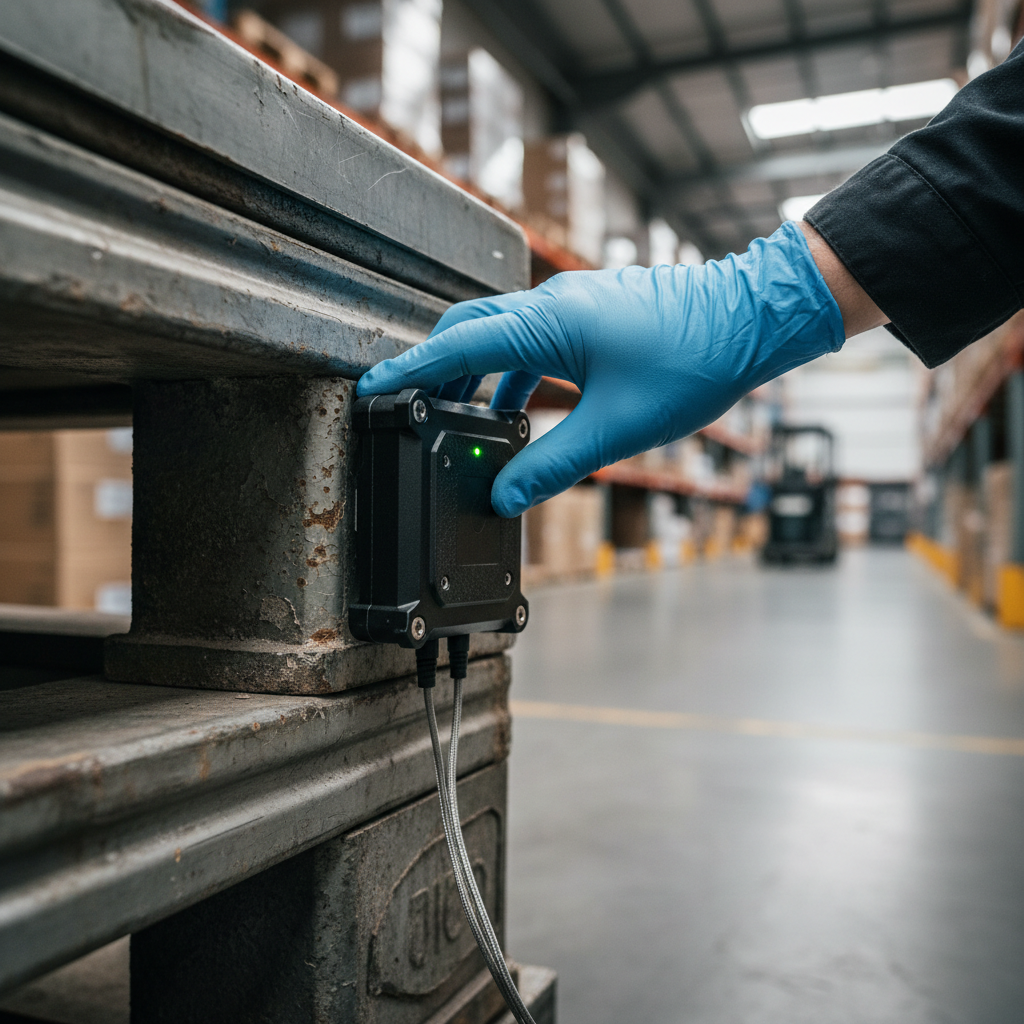
Four Protocols Compared Head to Head
There are four production-grade LPWAN technologies for asset tracking in 2026. Two operate on unlicensed spectrum (LoRaWAN, Sigfox). Two ride licensed cellular bands (NB-IoT, LTE-M). The table below compares them on the dimensions that matter for actual deployments, not lab demos.
| Factor | LoRaWAN | NB-IoT | LTE-M | Sigfox |
|---|---|---|---|---|
| Spectrum | Unlicensed | Licensed (cellular) | Licensed (cellular) | Unlicensed |
| Typical range | 2 to 15 km | 1 to 10 km | 1 to 10 km | 10 to 50 km |
| Battery life | 5 to 15 years | 5 to 10 years | 3 to 8 years | 5 to 10 years |
| Max uplink rate | ~50 Kbps | ~250 Kbps | ~1 Mbps | ~100 bps |
| Mobility handover | Limited | Moderate | Strong | Limited |
| Cross-border roaming | Requires gateways in each location | Carrier roaming | Carrier roaming | Sigfox network agreements |
| Infrastructure you own | Gateways + network server | None | None | None |
| Best for | Private campus, large fixed-area pools | Cross-border, urban, static or slow-moving | Mobile assets needing higher throughput | Massive ultra-low-cost passive deployments |
The table gives the shape. Here is the substance.
LoRaWAN
LoRaWAN is the default recommendation for private, on-premise tracking. If you operate a port terminal, a construction yard, or a manufacturing campus, you deploy your own gateways and avoid recurring carrier fees entirely. Any industrial GPS tracking device built for LoRaWAN commonly achieves 5 to 15 years of battery life at standard reporting intervals. The Bouygues Construction deployment (more on that below) put over 20,000 LoRaWAN sensors to work on a private network with a three-year ROI target.
The tradeoff: you own the network. Gateway procurement, site surveys, backhaul internet, network server hosting. For a single campus, manageable. For assets that leave the gate and cross geographies, it breaks down, unless you rely on public LoRaWAN networks (Helium, The Things Network), which introduces coverage uncertainty you cannot control.
One advantage rarely mentioned in vendor brochures: data sovereignty. Gateways and servers sit on your infrastructure, so asset location data never touches a third-party cellular network. For defense, pharmaceutical, or regulated operations, that can be the deciding factor.
NB-IoT
258 operators across 68 countries had deployed or launched NB-IoT or LTE-M networks as of April 2024, with 176 actively investing in NB-IoT. This is not a niche technology. NB-IoT is the go-to for cross-border asset tracking where gateway coverage cannot be assumed.
Devices connect to whatever carrier network is locally available, the same way a phone roams. No gateways to maintain. Battery life is competitive with LoRaWAN when you leverage eDRX and PSM power-saving modes, though active transmissions draw more current than LoRa radio. Before committing, it helps to understand what NB-IoT asset tracking spec sheets tend to leave out.
The real cost here is the SIM plan. Monthly per-device fees ($0.50 to $5 depending on carrier and volume) add up across thousands of assets. But for containers moving between Rotterdam, Antwerp, and Hamburg, NB-IoT with a multi-operator SIM is often the lowest total cost of ownership because the gateway layer disappears completely.
LTE-M
LTE-M (Cat-M1) is the cellular LPWAN for assets that move at speed and need more bandwidth. It handles seamless cell-tower handover during motion, supports voice pass-through, and delivers higher throughput than NB-IoT. With 115 LTE-M networks live worldwide, coverage is substantial.
If your assets are ground support equipment shuttling between airport terminals, trucks on intercity routes, or airline ULD containers, LTE-M handles the mobility better than NB-IoT. Battery life is shorter (3 to 8 years depending on reporting cadence and GPS usage), but operational overhead is low: a SIM, a platform, no physical network to manage.
Sigfox
Sigfox deserves a candid paragraph. The company filed for bankruptcy in January 2022 and was acquired by UnaBiz that April. The network still operates: 14 million active devices across 75 countries as of late 2024, and an 18x energy reduction shipped in a May 2024 firmware upgrade.
The technology works. The risk is vendor lock-in. Sigfox is a single-operator proprietary network. If UnaBiz pivots, changes pricing, or runs into financial trouble, your devices lose connectivity with no built-in migration path. For new deployments in 2026, this is a real consideration. Some teams still choose Sigfox for ultra-low-cost, ultra-low-data sensors (water meters, static environmental monitors). For mission-critical asset fleets, the safer bet is NB-IoT, LTE-M, or LoRaWAN.
Total Cost of Ownership Beyond the Device Price
This is where most evaluation processes go wrong. A LoRaWAN tracker at $80 per unit looks cheaper than a cellular tracker at $120. But hardware is typically less than 30% of total deployment cost over five years. The other 70% is everything else:
- Devices run $50 to $300 (LoRaWAN) or $60 to $250 (cellular LPWAN) depending on enclosure rating, certifications, and onboard sensors.
- LoRaWAN connectivity means purchasing industrial gateways ($300 to $2,000 each), providing backhaul internet at each site, and running a network server (self-hosted or cloud, from free-tier to $500+/month). Cellular connectivity means per-device SIM data plans, typically $0.50 to $5/device/month at volume.
- Platform and integration covers the software that ingests device data, maps assets, triggers geofence alerts, and hooks into your ERP or WMS. Some vendors bundle this. Others charge $1 to $10/device/month separately. Custom integration always adds project cost.
- Ongoing maintenance spans battery replacements (years out, but plan for it), device attrition from damage or loss, firmware updates, gateway upkeep (LoRaWAN), and SIM lifecycle management (cellular).
A concrete scenario: a logistics operator tracking 2,000 reusable containers across three countries. LoRaWAN requires gateways in every depot, potentially spanning 15+ sites in different regulatory environments. Cellular NB-IoT requires zero physical infrastructure, just a roaming SIM agreement. Even at a higher per-device cost, the NB-IoT project total is often lower because the gateway layer vanishes.
Flip the scenario: a single port terminal tracking 10,000 chassis within a 5 km radius. Eight LoRaWAN gateways cover the entire pool at near-zero marginal cost per device. Paying cellular subscriptions on 10,000 devices would be financially irrational.
Anyone telling you one protocol is always cheaper carries only one protocol.
Where LPWAN Wins (and Where It Does Not)
LPWAN excels in a specific operational sweet spot: assets that move periodically, across wide areas, over long deployment horizons, with modest data requirements. Construction formwork, shipping containers, ground support equipment, roll cages, pallets, MRO tooling. These assets are idle most of their lives, travel moderate distances, and need position updates measured in minutes or hours.
Three measurable outcomes LPWAN consistently delivers in this sweet spot:
- Cycle time visibility exposes where assets dwell and for how long, directly reducing pool size requirements by 10 to 25%.
- Loss reduction results from assets that check in regularly instead of disappearing silently. Documented reductions range from 20 to 35% in the first year.
- Condition-based MRO replaces calendar-based schedules when trackers report vibration, temperature, and movement count, cutting spend on equipment that was serviced too early or too late.
Where LPWAN falls short:
- Sub-meter precision tracking for forklifts on a warehouse floor requires UWB or high-density BLE. LPWAN geolocation ranges from 20 to 200+ meters depending on method.
- Rich data payloads like video, image capture, or dense sensor streams need cellular LTE or Wi-Fi. LPWAN packets max out around 1 kilobyte.
- Small indoor spaces are better served by BLE beacons with fixed readers, which deliver better accuracy at lower cost when the entire tracking zone fits inside one building.
The distinction I keep coming back to with field teams: LPWAN is for asset tracking, not shipment tracking. A shipment has a start, a destination, and it is done. An asset has a lifecycle. It goes out, comes back, gets maintained, goes out again. LPWAN’s battery economics and range are designed for that repeating loop.
Deployments That Prove the Numbers
Published case studies carry more weight than spec sheets. Three of them illustrate the range of what works and why.
Bouygues Construction Matériel deployed over 20,000 LoRaWAN trackers across construction sites in France: formwork, tower cranes, bungalows, consoles. According to a LoRa Alliance whitepaper on asset-tracking connectivity, projected ROI was three years, with 5 to 10% annual savings on maintenance and fleet management. The critical enabler was that Bouygues controlled every site, so gateway placement was never a negotiation. For a contractor without site authority, the gateway challenge is fundamentally different.
Volvo used LoRaWAN trackers inside a single plant for vehicle tracking during customization and in the factory parking area. This disproves the assumption that LoRaWAN is outdoor-only. Within a campus, it works as a cost-effective indoor-outdoor solution that BLE and RFID cannot span without reader density headaches.
GEFCO, the Tier-1 automotive logistics provider, deployed LPWAN tracking to reduce the number of transport cradles needed for motor shipments. The tracked metric was the cradle-to-motor ratio. When you know exactly where every cradle sits at all times, you need fewer in circulation. That is a direct asset pool reduction: fewer cradles purchased, less storage space, less handling labor. Pure operational dollars back in the budget.
The common thread across all three: assets with long idle periods, controlled or semi-controlled movement patterns, and a need for years of unattended operation. None of these deployments would have been viable with traditional cellular GPS at the same battery economics.
Satellite LPWAN Is Closing the Last Coverage Gap
The biggest limitation of terrestrial LPWAN has always been the coverage boundary. Your LoRaWAN gateway does not follow a container onto a cargo ship. Your NB-IoT SIM goes silent in rural stretches without a cell tower, which is why choosing a GPS tracker for remote locations matters. Satellite IoT is fixing this faster than most operations teams realize.
Sateliot launched four NB-IoT NTN satellites in the summer of 2024, with EUR 187 million in binding orders from 350 clients across 50+ countries. Their constellation, targeting 250+ satellites, will allow standard NB-IoT devices to connect to an orbiting base station when no terrestrial tower is in range. No special hardware required. A standard NB-IoT tracker that connects to a carrier network on land could fall back to satellite coverage at sea or in remote terrain.
Hubble Network is building a 60-satellite constellation for Bluetooth-to-satellite tracking. Semtech’s LoRa chip roadmap explicitly targets satellite IoT as the next connectivity layer. The trajectory is clear: within 24 to 36 months, “no coverage” stops being a valid objection to LPWAN asset tracking for ocean or remote logistics.
The practical takeaway for anyone specifying hardware today: choose devices and protocols that align with the satellite roadmap. NB-IoT devices are the natural fit for the Sateliot model. LoRa devices will benefit from Semtech’s satellite work. These are not speculative road maps. Active satellites are already in orbit, and understanding satellite asset tracking in depth helps you avoid the gaps no spec sheet reveals. For assets in the field for a decade or more, a solar powered asset tracker can remove the battery-swap concern entirely.
How to Choose the Right Protocol for Your Assets
The protocol decision comes down to five questions. Answer them honestly before you engage any vendor.
- Do your assets stay within an area you control (port, campus, warehouse yard)? If yes, LoRaWAN with a private gateway network delivers the lowest marginal cost per device and full data sovereignty. If no, go cellular.
- Do your assets cross national borders or travel corridors where gateway coverage is unreliable? If yes, NB-IoT or LTE-M with a multi-carrier roaming SIM is the pragmatic play. The GSMA deployment map shows live commercial coverage across 68+ countries.
- Do your assets move frequently and at speed? LTE-M handles cell handover better than NB-IoT. For stationary or slow-moving equipment, NB-IoT is enough and draws less power.
- How many devices will you deploy? At 100, the protocol math is secondary. At 10,000+, the gateway-vs-subscription equation tips hard. Run a five-year TCO model before committing.
- What reporting cadence do you actually need? One position per hour? Per day? LPWAN is built for periodic updates. If you need second-by-second location, you need LTE or satellite, not LPWAN.
There is no universal answer. The right protocol matches your assets’ movement patterns, your geographic footprint, and your appetite for owning infrastructure.
At Datanet, we work across these protocols daily. We deploy cellular LPWAN trackers like the Oyster3 and Oyster Edge from Digital Matter for cross-border fleet and container pools, and specialized hardware like the DO-160 certified Thingfox T2 for aviation and airfreight. The device choice always follows the protocol decision. If you are working through this and want to pressure-test your thinking with someone who has done it before, reach out to our team or drop a note to info@datanetiot.com.

Frequently Asked Questions
What is LPWAN asset tracking?
LPWAN asset tracking uses low-power wide-area network protocols (LoRaWAN, NB-IoT, LTE-M, or Sigfox) to monitor the location and condition of physical assets. Devices transmit small data packets over long range, powered by batteries that last years. It is designed for assets that need periodic position updates across wide geographic areas, not real-time streams.
How long do LPWAN tracker batteries last?
Battery life varies by protocol and reporting frequency. LoRaWAN trackers commonly achieve 5 to 15 years at one report per hour. NB-IoT and LTE-M trackers typically last 3 to 10 years at similar intervals. GPS activation shortens battery life significantly, so specs on any battery powered GPS tracker deserve scrutiny. Wi-Fi scanning and cell-ID geolocation are lighter alternatives that extend runtime.
Which LPWAN protocol is best for cross-border tracking?
NB-IoT and LTE-M. Both leverage existing cellular carrier networks with international roaming agreements. As of April 2024, 258 operators in 68 countries had live NB-IoT or LTE-M deployments. LoRaWAN requires gateway infrastructure at each location, which becomes impractical when assets cross borders regularly.
Is LoRaWAN cheaper than cellular LPWAN?
It depends on deployment context. LoRaWAN eliminates per-device SIM fees but requires gateway infrastructure (purchase, placement, maintenance, backhaul). For single-site deployments with thousands of devices, LoRaWAN often wins on total cost. For distributed, multi-country tracking, cellular LPWAN is usually less expensive because the gateway layer disappears.
Can LPWAN trackers work without cellular coverage?
LoRaWAN operates anywhere you or a community network has deployed gateways, regardless of cellular availability. For areas with no infrastructure at all, satellite LPWAN is arriving fast: Sateliot’s NB-IoT satellite constellation and Semtech’s satellite LoRa roadmap target global coverage within 24 to 36 months. Active satellites are already in orbit.
How accurate is LPWAN geolocation?
Accuracy depends on method. Onboard GPS/GNSS provides 5 to 20 meters. Wi-Fi scanning delivers 10 to 30 meters in urban areas. Cell-ID positioning (NB-IoT, LTE-M) is coarser at 100 to 500 meters. For sub-meter accuracy indoors, LPWAN is the wrong tool. UWB (Ultra-Wideband) handles that use case.








 +1 508 292 2210

3 Responses