

LTE-M hardware now accounts for 58.14% of the asset-tracking market by connectivity type. That number didn’t appear because someone won a marketing war. It happened because logistics managers, fleet operators, and MRO teams ran out of patience with trackers that died mid-journey, lost signal inside containers, or relied on 2G networks that no longer exist.
If you’re evaluating LTE-M asset tracking for containers, trailers, ULDs, ground support equipment, or returnable packaging, this is the operational picture: what the technology solves, where it falls short, and what most hardware vendors conveniently skip.
What LTE-M Means for Asset Tracking
LTE-M (Long Term Evolution for Machines) is a low-power wide-area (LPWA) cellular standard, technically called LTE Cat-M1. 3GPP froze the specification in June 2016 as part of Release 13, and carriers have been building it out ever since. In practical terms, it’s a stripped-down version of LTE engineered to send small data packets (GPS fixes, temperature readings, shock alerts) for years on a single battery.
Three characteristics set LTE-M apart from other connectivity options for asset tracking:
Mobility with seamless handover. LTE-M supports connected-mode cell transitions. When a tracker crosses from one cell tower’s coverage to the next, it maintains its data session. NB-IoT devices, by contrast, must detach and reattach between cells. For a container sitting in a warehouse, that distinction is academic. For a trailer crossing three states overnight, it’s the difference between continuous visibility and periodic blackouts.
Multi-year battery life. Two power-saving mechanisms, PSM (Power Saving Mode) and eDRX (extended Discontinuous Reception), let the modem sleep for hours or days between transmissions. Manufacturers rate top devices at up to 10 years of battery life under typical reporting cadences. That changes the economics of tracking: you can tag a $200 pallet and still make the math work.
Deep indoor coverage. LTE-M achieves up to 18 dB better link budget than standard LTE Cat-1. It works inside metal shipping containers, warehouse basements, and airport cargo holds where regular cellular signals go dark.
That first point, handover, is the one most buyers underestimate until deployment day. If your asset sits still, NB-IoT works fine. If it crosses state lines, port terminals, or country borders, handover isn’t a bonus feature. It’s infrastructure.
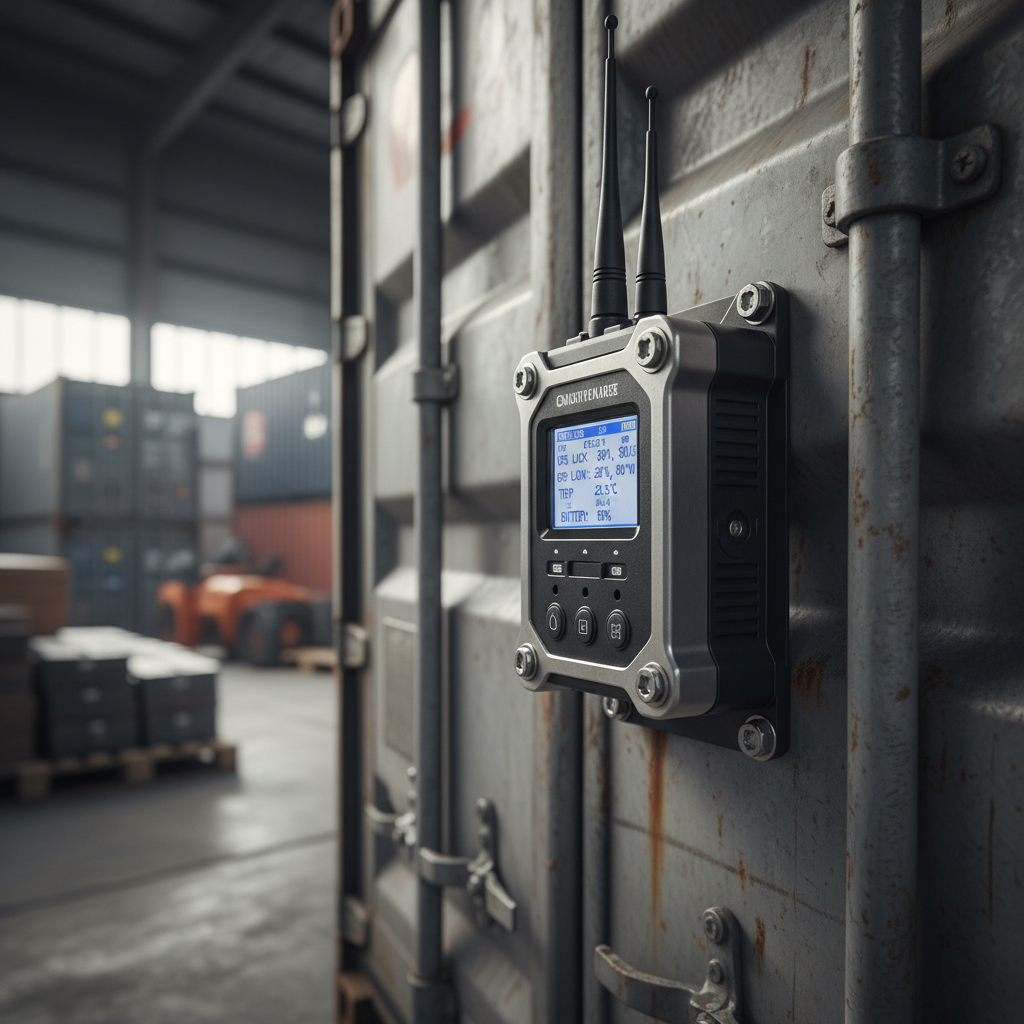
Why LTE-M Took Over
Market share doesn’t lie, but it doesn’t explain itself either. Three converging forces pushed LTE-M to dominance.
The 2G/3G sunset forced the migration. AT&T, Verizon, and T-Mobile shut down their 3G networks between 2022 and 2023. Every legacy tracker on those networks went dark. In Sweden, Telenor and Telia are ending 2G service by late 2025. Across the industry, 37 operators are phasing out 2G and 39 are retiring 3G through 2025 and 2026. The replacement path for moving assets leads almost exclusively to LTE-M.
Network coverage reached critical mass. According to the Global mobile Suppliers Association (GSA), 177 mobile operators have launched NB-IoT or LTE-M networks globally, with 81 specifically offering LTE-M. Connectivity providers now offer multi-IMSI SIMs that automatically switch between 140+ LTE-M networks across 50+ countries, eliminating the roaming headaches that plagued earlier LPWA deployments.
The installed base is growing faster than most realize. Berg Insight projects the installed base of tracking devices for trailers, containers, railcars, ULDs, and returnable transport packaging will hit 27 million units by 2029, a 14% CAGR. Most of those new devices ship with LTE-M or dual-mode LTE-M/NB-IoT connectivity.
LTE-M vs NB-IoT: Choosing the Right Fit
This question comes up in nearly every deployment conversation I have. The answer is straightforward once you separate moving assets from stationary ones.
| Criteria | LTE-M (Cat-M1) | NB-IoT (Cat-NB1) |
|---|---|---|
| Asset in motion (trucks, trailers, containers) | Full handover between cells | Must detach and reattach |
| Deep indoor penetration | Good (+18 dB vs Cat-1) | Very good (optimized for 164 dB MCL) |
| Data throughput | Up to 1 Mbps | Up to 62 kbps uplink |
| Battery life (typical tracking use) | 5 to 10 years | 5 to 10 years |
| Module cost | $8 to $15 | $5 to $10 |
| Voice support (VoLTE) | Yes | No |
| US carrier support (2026) | AT&T, T-Mobile, Verizon | T-Mobile and Verizon only |
If the asset moves, LTE-M. If it sits in one place and reports periodically (utility meters, parking sensors, soil monitors), NB-IoT asset tracking is cheaper and sufficient.
LoRaWAN and similar non-cellular LPWA networks deserve a mention. They offer low module costs and excellent battery life, but they require private gateways and don’t support handover. For cross-border logistics, LTE-M wins on coverage and operational simplicity because it runs on existing carrier infrastructure. No gateways to install, no private network to maintain. For a deeper comparison of tracking technologies, see our analysis of GPS vs RFID tracking trade-offs.
One US-specific complication: AT&T stopped selling NB-IoT data plans in late 2024 and began decommissioning its NB-IoT network. T-Mobile and Verizon both committed to continued NB-IoT investment, but the AT&T exit reduced US NB-IoT coverage by a third. If your fleet operates nationally, LTE-M is the safer long-term bet.
The Tracking Gap Most Operations Teams Miss
Here’s where I see the real disconnect, and it has nothing to do with radio protocols.
Most teams buying LTE-M trackers are solving for shipment tracking: where is this container right now, and did it arrive? Valid problem. Half the picture.
Shipment tracking ends at delivery. Container arrived. Tracker did its job. Everyone moves on.
Asset tracking follows the full lifecycle. Where is the container after delivery? How long is it dwelling at the customer site? When does it enter the return loop? Is it sitting idle in a depot 400 miles from where it’s needed next?
LTE-M’s multi-year battery life is what makes full-cycle asset tracking economically viable. When a battery powered gps tracker lasts 5 to 10 years, you can afford to leave it on the asset through delivery, dwell, return, and redeployment. You’re not answering “where is it?” once. You’re answering “how efficiently is this asset being used across its entire cycle?” continuously.
Container pools with full-cycle visibility typically see 15 to 30% reductions in cycle time. The data exposes idle dwell that was previously invisible. Nobody budgets for assets they can’t see, and nobody fixes utilization problems they can’t measure. If your container pool feels invisible after delivery, that’s the exact gap asset tracking closes.
Where LTE-M Asset Tracking Delivers Today
The technology is past the pilot phase. These are verticals where LTE-M tracking has become standard operating procedure, not a proof of concept.
In pharmaceutical cold chains, multi-sensor LTE-M trackers capture GPS, temperature, humidity, and light exposure in transit. This provides chain-of-custody documentation critical for FDA and GxP compliance. The mobility handover keeps data flowing as shipments cross between carriers, vehicles, and geographies, with no blackout windows to explain during an audit.
Returnable transport packaging is one of the fastest-growing segments. Deutsche Telekom has deployed LTE-M and NB-IoT tags on reusable crates and pallets to eliminate loss and shrinkage in closed-loop logistics pools. When the device cost sits under $25 and the battery lasts for years, tagging individual containers finally makes economic sense.
Aviation and aerospace is our core vertical at Datanet. ULDs, ground support equipment, tooling, and MRO assets move between tarmac, cargo holds, maintenance hangars, and warehouses. These environments range from open-sky GPS visibility to heavy metal shielding. LTE-M’s combination of deep coverage, GNSS positioning, and multi-year battery fits this operational profile better than any alternative. But durability matters just as much as connectivity in these settings, and a rugged GPS tracker only solves part of the problem. For airfreight-specific certification requirements, devices like the Thingfox T2 (DO-160 approved) add regulatory compliance to the connectivity equation.
Sony’s Visilion service uses Telenor IoT’s LTE-M network to track everything from spare parts moving along the Silk Road to ventilators in time-pressured hospitals. That deployment demonstrates what happens when multi-year battery life meets global roaming on a single SIM profile: visibility stops being a regional project and becomes an end-to-end capability.
What the Spec Sheets Don’t Tell You
Every hardware vendor will hand you a clean data sheet: battery life, operating temperature range, IP rating, certifications. That information matters. But it’s not where deployments succeed or fail.
Integration is the real project. The tracker generates location data. Your operations run on an ERP, TMS, WMS, or some combination. The gap between “we have GPS coordinates” and “dispatchers see actionable information” is where most implementations stall. Before choosing hardware, map the data flow: tracker to platform to operational system. If that path includes manual steps, your visibility degrades the moment someone skips one.
SIM management at scale is not trivial either. A fleet of 500 trackers crossing borders means 500 SIM profiles that need to negotiate roaming, handle network fallbacks, and avoid bill shock. The shift to eSIM (GSMA’s SGP.32 standard, adopted across LTE-M trackers in 2025) helps by enabling remote provisioning, but the connectivity strategy still needs planning before the first device ships.
Then there’s the battery conversation. “Up to 10 years” assumes a specific reporting interval, often one or two GPS fixes per day with PSM enabled. Increase that to hourly reporting, add accelerometer wake-ups for motion detection, or operate in areas with weak signal (which forces longer transmission windows), and 10 years becomes 2 or 3. Spec the reporting cadence to your actual operational need, not to the battery number you want to present in a business case.
Coverage deserves the same skepticism. LTE-M reaches 50+ countries, but “available” doesn’t mean “everywhere in that country.” Rural gaps exist. Indoor dead spots exist. A phased rollout on your highest-value routes reveals coverage problems before they become fleet-wide surprises.
After LTE-M: 5G RedCap and the Transition Ahead
The next chapter is already being written. 5G Reduced Capability (RedCap) has 34 operators investing across 24 countries, and RedCap-compatible asset trackers began shipping in 2025. RedCap offers substantially higher bandwidth (up to 150 Mbps downlink) and lower latency, which matters for use cases needing richer telemetry or near-real-time alerts.
For the majority of asset tracking deployments, where a device transmits a location fix every few minutes or hours, RedCap is overkill today. The modules cost more, consume more power, and coverage remains concentrated in major urban areas. Chipmakers like Sequans are building eRedCap support on HD-FDD spectrum, signaling that the migration from LTE-M to 5G NR will be evolutionary. Existing LTE-M deployments won’t go dark overnight.
Industry consensus holds that LTE-M will remain the workhorse for cellular asset tracking through at least 2030. Carriers have invested billions in the infrastructure. The device ecosystem is mature. The installed base is measured in tens of millions. Deploying LTE-M trackers in 2026 is not a bet on a sunset technology. It’s a bet on the platform that will run alongside RedCap for the rest of the decade.
One development worth tracking: Non-Terrestrial Networks (NTN). Satellite asset tracking from LEO constellations is emerging for assets that cross oceans or operate in regions with zero terrestrial coverage. For maritime shipping, remote mining, or transcontinental rail, NTN could close the last major coverage gap that LTE-M alone cannot reach, which is why teams often evaluate a dedicated GPS tracker for remote locations and study what GPS tracking without cellular coverage actually delivers. Operators in offshore asset tracking environments are already evaluating hybrid LTE-M/NTN solutions for extended reach.
At Datanet, we deploy LTE-M asset tracking across aviation, freight, and industrial operations, covering hardware selection, connectivity architecture, and platform integration. If you’re scoping a deployment or replacing legacy trackers, explore our asset tracking device catalog or reach out directly to talk through your operational requirements.

Frequently Asked Questions
What is LTE-M asset tracking?
LTE-M asset tracking uses LTE Cat-M1 cellular connectivity to monitor the location and condition of physical assets (containers, trailers, equipment, tools) over extended periods. The technology combines GPS/GNSS positioning with low-power cellular transmission, enabling battery-powered trackers to operate for years without recharging.
How long does an LTE-M tracker battery last?
Top devices are rated at 5 to 10 years under typical reporting cadences (a few GPS fixes per day with PSM and eDRX enabled). Real-world performance depends on reporting frequency, signal strength, sensor payload, and environmental conditions. Hourly reporting in weak-signal areas can reduce that figure to 2 to 3 years.
Is LTE-M better than NB-IoT for tracking?
For moving assets, yes. LTE-M supports seamless cell handover, which NB-IoT does not. For stationary assets like utility meters or fixed environmental sensors, NB-IoT is cheaper and provides slightly better deep-indoor penetration. Most logistics and fleet tracking deployments choose LTE-M.
Does LTE-M work globally?
LTE-M is commercially available in over 50 countries through 177+ operator networks. Multi-IMSI SIM providers enable a single tracker to roam across 140+ networks automatically. Coverage is strongest in North America, Europe, and parts of Asia-Pacific, with gaps in some developing regions and rural areas.
Is LTE-M being replaced by 5G?
Not in the near term. 5G RedCap is emerging as a higher-bandwidth complement, but LTE-M is expected to remain the primary cellular technology for low-power asset tracking through at least 2030. The transition will be gradual, with both technologies coexisting for the rest of the decade.
What is the difference between LTE-M and Cat-M1?
They are the same technology. Cat-M1 is the 3GPP technical designation for the device category. LTE-M is the commercial name. Both refer to the enhanced Machine-Type Communication (eMTC) standard defined in 3GPP Release 13.








 +1 508 292 2210

3 Responses