

Here is the tension nobody in aerospace manufacturing wants to say out loud: 92% of manufacturing executives now call smart manufacturing their primary competitiveness lever. That number is up six points from 2019. Budgets are flowing. Digital twins are multiplying. And yet, one of the largest aircraft manufacturers on the planet just published a four-pillar safety plan because its production line, surrounded by smart factory technology, kept producing defects the FAA could not ignore.
The smart factory in aerospace is not a myth. It is a $132 billion market with documented, auditable ROI at Lockheed Martin, Airbus, and GE Aerospace. But it is also a story of wildly uneven results, where the gap between deploying sensors and actually fixing your shop floor determines whether you get a 30% defect reduction or an FAA consent agreement.
I have spent enough years deploying IoT across aviation and industrial supply chains to know: the technology works. The outcomes depend on how you layer it, where you point it, and whether the humans in the loop trust what the data is telling them. This piece covers all of it: the real numbers, the real failures, the tech stack, and the piece most smart factory discussions skip entirely.
What “Smart Factory” Means in Aerospace (Not Automotive)
A smart factory in aerospace is a production environment where IIoT sensors, digital twins, AI/ML, robotics, additive manufacturing, and connected software systems operate across the full design-build-service lifecycle. Machines sense their own state. Simulations validate the next step before metal gets cut. Digital twins confirm results against specification in real time. The factory instruments itself, learns, and adapts.
That definition could apply to an automotive plant. The difference is context. Aerospace manufacturing operates in a world of high mix, low volume, and extreme tolerance. A single turbine blade has tighter dimensional requirements than an entire car door assembly. Program lifecycles stretch across decades, not model years. And every part carries a traceable genealogy that regulators can audit years after delivery.
Airbus frames its Industry 4.0 strategy around nine building blocks: big data and analytics, autonomous robots, simulation, horizontal and vertical system integration, IIoT, cybersecurity, cloud computing, additive manufacturing, and augmented reality. That is the canonical list. The practical challenge is sequencing: which blocks create ROI fast enough to fund the next ones?
In automotive, the answer is usually automation first, analytics second. In aerospace, it tends to be the other way around. You instrument, you model, you simulate, and only then do you automate—a sequence that mirrors effective aerospace production planning. Because a defect caught at station 47 of a fuselage assembly costs orders of magnitude more than one flagged digitally at station 3.
A $132 Billion Market With Uneven Returns
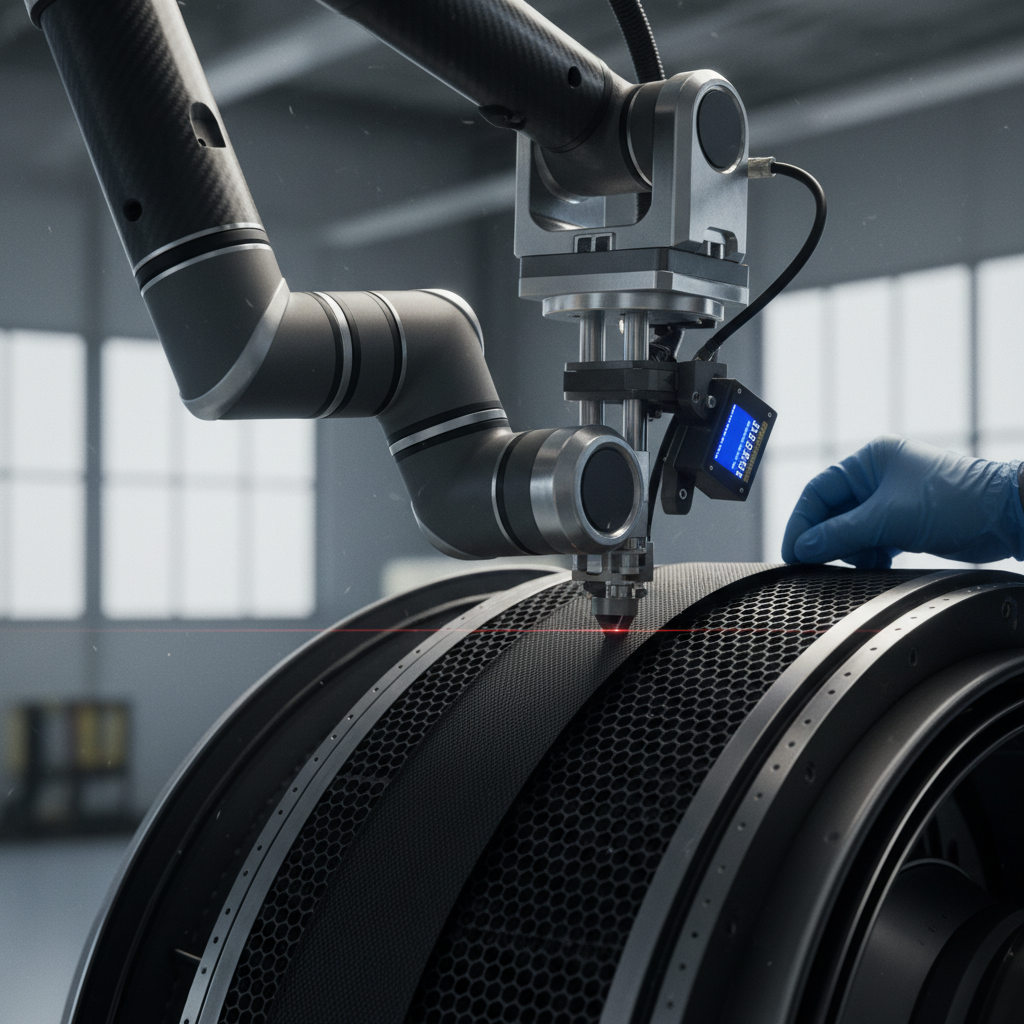
The global smart factory market hit $132.08 billion in 2025 and is projected to reach $271.98 billion by 2032 at a 10.87% CAGR. Aerospace and defense is one of eight priority end-user verticals driving that growth. The broader Industry 4.0 envelope is larger still: $205.91 billion in 2025, forecast to reach $801.49 billion by 2034, with North America commanding a 27.12% share worth roughly $55.83 billion.
Those numbers tell you where the money is going. They do not tell you what it is buying. The Deloitte 2025 survey of 600 executives (companies over $500 million in revenue) provides the behavioral layer:
- 57% have adopted cloud computing. 57% use data analytics. 46% run IIoT. But AI/ML adoption sits at just 29%, with generative AI still piloting at 38%.
- 41% prioritize factory automation hardware for the next 24 months. 34% prioritize active sensors. 28% prioritize vision systems.
- 51% now report that smart manufacturing is owned by operations leadership (the COO), not IT.
Read those adoption numbers carefully. Cloud and analytics are mature. IIoT is approaching the halfway mark. AI is still early. This means most aerospace manufacturers are swimming in data they have not yet learned to act on at machine speed. The smart factory is not a binary state. It is a spectrum, and most of the industry is somewhere in the middle.
Five OEM Programs and Their Actual Numbers
The case data from the major aerospace OEMs is the best evidence we have for what smart factory investment actually returns. Five programs stand out, each with a different technology emphasis and a different capital posture.
Lockheed Martin: $330 Million, Named Sites, Measurable Throughput
Lockheed Martin committed over $330 million to new digital factory facilities over three years starting in late 2021. The investment deployed its Intelligent Factory Framework (IFF), an edge-computing platform driving digital twins, digital threads, AR/VR assembly assistance, advanced robotics, and smart metrology tools. Named sites include Skunk Works in Palmdale, the STAR Center in Titusville, hypersonic facilities in Courtland, Alabama, and the F-35 plant in Fort Worth. Documented outcomes: 10 to 15% throughput increase for a commercial aerospace manufacturer and a 26% reduction in mean time to constraint resolution at a defense program.
Why Lockheed can do this: defense programs run for decades. The F-35 alone has a production runway that stretches past 2040. That lets Lockheed amortize smart factory capex against a stable, predictable revenue base. Commercial OEMs do not have that luxury.
Airbus: Robotics, AI, and 75% Weight Reduction
Airbus embedded robotics and AI across flexible manufacturing cells and reported a 25% reduction in time-to-market, a 30% drop in defect rates through algorithmic inspection, and a 15% productivity gain. Separately, Airbus has used Nikon SLM additive technology to consolidate over 30 parts into a single 3D-printed structural component, achieving a 75% weight reduction. That is not incremental improvement. That is a different manufacturing paradigm.
Boeing: Strong Pilot Numbers, Structural Quality Problems
Boeing’s smart factory pilots delivered solid metrics: 15% efficiency improvement, 20% downtime reduction via predictive maintenance, and 10% cut in raw material waste and energy consumption—gains that align with lean manufacturing in aerospace principles. The Everett facility has been recognized as an evolving smart manufacturing hub. Those numbers are real. But they coexist with a production system that the FAA has placed under enhanced oversight after repeated quality failures on the 737 MAX line. More on that below, because the contradiction matters.
GE Aerospace: 100,000 Fuel Nozzles and a Singapore MRO Overhaul
GE Aviation shipped its 100,000th 3D-printed LEAP fuel nozzle from its Auburn, Alabama plant in 2021. Each nozzle tip consolidates 20 parts into one, with a 25% weight reduction. In 2024, GE Aerospace invested $11 million to convert its Seletar Aerospace Park facility into a smart factory for engine repair. That Singapore site handles over 60% of GE’s global engine-component MRO volume with more than 2,000 employees. The integrated stack: IIoT, robotics, cloud analytics, and additive manufacturing for GEnx and CFM LEAP engines.
Rolls-Royce and Pratt & Whitney: IntelligentEngine and the Long Game
Rolls-Royce pursues its IntelligentEngine vision, integrating physical engines with digital services and digital twin models. Its mtu Series 2000 assembly plant near Friedrichshafen, Germany (EUR 30 million investment, opened 2023) embodies this approach. Pratt & Whitney launched its Intelligent Factory strategy in 2020, building on more than 25 years of robotics deployment across its operations. Both are later in the public-metrics curve but clearly positioning for the same outcomes.
The Boeing Counter-Lesson: Sensors Do Not Fix Culture
This is the section most smart factory content avoids. I am not going to.
Boeing’s production system has IoT sensors. It has automation. It has AI-assisted planning tools. And yet, the FAA halted production expansion of the 737 MAX, explored appointing a third-party overseer, and wrapped an enhanced oversight posture around the manufacturer. In February 2026, Boeing published a refreshed safety and quality plan built on four pillars: investing in workforce training, simplifying plans and processes, eliminating defects, and elevating safety culture.
Read those four pillars again. Not one of them is “deploy more sensors” or “expand the digital twin.” Every single pillar is about human process discipline.
The lesson is uncomfortable but necessary: digital instrumentation does not by itself prevent quality failures. A smart factory that captures data from 10,000 sensors while a technician on the floor does not trust, understand, or follow the process the data reveals is just an expensive data lake with airplanes rolling off the end.
This is why Industry 5.0 is not marketing fluff. The Industry 5.0 thesis is explicitly a response to the failure modes that Industry 4.0 has exposed: purely automated cells do not work well in tight aerospace assembly quarters. Cobots with proximity sensors, human-centric design, and collaborative workflows are the corrective. The smart factory that works is the one where the technology amplifies human judgment, not the one that tries to replace it.
The Technology Stack, Layer by Layer
Strip away the buzzwords and an aerospace smart factory is five layers, each feeding the next.
Layer 1: IIoT (the nervous system)
Everything starts here. IIoT sensors on machines, tools, jigs, containers, and parts create the telemetry stream that every other layer depends on. A peer-reviewed study in the Journal of Cleaner Production documented a dedicated aerospace IIoT platform designed to connect production and assembly data in real time, with the explicit goal of improving quality-monitoring fidelity. Deloitte puts current IIoT adoption at 46%, with 34% of executives earmarking active sensors as a priority for the next 24 months. This layer is still growing.
The practical challenge: IIoT is only as useful as its coverage. Instrument the CNC machines inside your factory wall but lose visibility on the MRO containers cycling between repair stations, or the GSE moving across three airports, and you have created a digital twin with blind spots. This is where asset tracking fills the gap that production-floor IoT leaves open.
Layer 2: Digital twins (the simulation brain)
Airbus uses digital twin technology from initial design through manufacturing and into operations and predictive maintenance. Siemens reports that customers using digital twins have cut manufacturing costs in half. The mechanism: simulate first, manufacture once, instrument continuously, iterate digitally. A digital twin of a turbine disk or a wing spar lets engineers validate tolerances before scrapping titanium. That substitution of simulation cost for build-and-scrap cost is the single largest lever for ROI.
Layer 3: Additive manufacturing (the part-count killer)
Additive is the only aerospace smart factory technology with unambiguously positive cumulative ROI, because every part-count reduction and every weight saving is auditable in dollars. Boeing has produced over 60,000 additive parts. GE has shipped 100,000+ fuel nozzles. North American aerospace 3D printing revenue reached an estimated $1.4 billion in 2025, with engine components projected to capture nearly 49% of the segment in 2026. This is no longer prototyping. This is production-scale manufacturing with certified parts flying on commercial engines today.
Layer 4: Machine vision and ML (the inspector)
A 2024 study in the MDPI Technologies journal documented ML-based defect detection on aircraft skin, identifying missing paint, scratches, peeling, and open latches across high-resolution imagery. Airbus’s Acubed subsidiary runs active R&D applying ML to manufacturing yield problems. The practical payoff: catching defects at the station where they happen, not three stations downstream where rework costs 10x more.
Layer 5: Cobots and Industry 5.0 (the collaborator)
Collaborative robots with proximity sensors are being tested in engine module assembly, wing box work, and other tight-quarter operations where full automation is impractical and pure manual labor is too slow. Industry 5.0 is the framework: human-centric design, sustainable production, and human-machine collaboration layered on top of the cyber-physical base. In aerospace, this is not optional. The geometry of an aircraft assembly simply will not let you remove the human from the loop.
The Blind Spot: Visibility Beyond the Factory Wall
Here is what nearly every smart factory discussion in aerospace gets wrong: the conversation stops at the factory door.
Inside the building, digital twins track every tool position and torque value. But the moment a rotable part ships to an MRO facility, or a container of engine components moves between three freight forwarders and two airports, visibility drops to zero. Cycle time inflates. Containers dwell at the wrong location for weeks because nobody knows they arrived. Tooling gets lost in transit between Tier 2 suppliers.
This is the classic gap between shipment tracking (the job ends at delivery) and asset tracking (the job follows every asset through its full cycle: deployment, transit, dwell, return, reuse). A smart factory that instruments every workstation but cannot see where its reusable containers, GSE, or MRO tooling are sitting outside the four walls is optimizing half the problem.
Deloitte’s data supports this: 65% of manufacturers cite operational risk as a top concern, and between 65% and 70% outsource critical roles in technology, data, and cybersecurity. When you combine that outsourcing with multi-tier supply chains, the asset visibility gap outside the factory becomes one of the highest-friction unsolved problems in aerospace manufacturing.
The fix is not another ERP module. It is ruggedized IoT hardware on the assets themselves: GNSS-enabled trackers on containers, tooling carts, and GSE that report location, dwell time, and cycle status regardless of which facility or tarmac they are sitting on. That data feeds the same analytics layer the smart factory runs internally. One visibility spine, inside the factory and out.
Where Aerospace Smart Factories Go From Here
Four trends shape the next three to five years. None of them are speculative. All four have data behind them right now.
The workforce math is getting worse, not better. Deloitte projects the U.S. manufacturing sector will need 3.8 million new employees by 2033. Smart factory automation does not eliminate that need. It shifts it: fewer manual operators, more systems engineers, data analysts, and cyber-operations specialists. The talent pipeline is the binding constraint.
Cybersecurity is no longer a side conversation. With global cybercrime costs projected over $10 trillion, OT/IT convergence on the factory floor creates an attack surface that grows with every IIoT endpoint added. Deloitte found that 55% of manufacturers worry about unauthorized access and 47% worry about IP theft. In aerospace and defense, where export-controlled data flows through these systems, cyber posture is a program requirement, not a nice-to-have.
Additive manufacturing hits critical mass in engine components. With engine parts projected to represent nearly 49% of aerospace 3D printing revenue by 2026 and OEMs already operating at 100,000+ unit production scale, additive is crossing from “advanced capability” to “baseline expectation.” Future factory designs will integrate additive cells as standard production stations, not pilot projects.
Industry 5.0 becomes the operating philosophy, not just the buzzword. The Boeing quality crisis accelerated a conversation that was already underway. Automation without human integration fails in aerospace. The next generation of smart factories will be designed around collaborative work cells where cobots handle repetitive tasks and human artisans handle judgment calls, with shared data flowing to both.

Frequently Asked Questions
What is a smart factory in aerospace?
A cyber-physical production environment integrating IIoT sensors, digital twins, AI/ML, robotics, additive manufacturing, and connected software across the design-build-service lifecycle. In aerospace specifically, it operates under extreme quality tolerances, traceable part genealogies, regulatory oversight, and long program lifecycles that distinguish it from automotive or consumer-goods smart factories.
How large is the aerospace smart factory market?
The global smart factory market reached $132.08 billion in 2025 and is projected to hit $271.98 billion by 2032. Aerospace and defense is one of eight priority end-user verticals. The broader Industry 4.0 market (which includes smart factory subsegments) is forecast at $801.49 billion by 2034, with North America holding a 27% share.
What ROI have aerospace OEMs documented from smart factories?
Boeing reported 15% efficiency gains and 20% downtime reduction. Airbus achieved a 25% time-to-market cut and 30% defect drop. Lockheed Martin saw 10 to 15% throughput increases and a 26% reduction in constraint resolution time. GE Aerospace’s additive fuel nozzle program consolidated 20 parts into one with 25% weight savings. Results vary significantly based on implementation maturity and process discipline.
What is the difference between Industry 4.0 and Industry 5.0 in aerospace?
Industry 4.0 focuses on cyber-physical systems, connected machines, and digital continuity. Industry 5.0 layers human-machine collaboration, human-centric design, and sustainability on top. In aerospace, the transition matters because tight assembly environments (engine modules, wing boxes) require humans working alongside automated systems, not lights-out operations.
Why did Boeing’s smart factory technology not prevent quality failures?
Digital instrumentation does not replace process discipline. Boeing’s production system has IoT sensors and AI tools, but the FAA’s oversight actions and Boeing’s own corrective plan focus on workforce training, process simplification, and safety culture. The lesson: smart factory technology amplifies the quality system you already have. If that system has gaps, the technology exposes them faster but does not fix them alone.
How does asset tracking connect to smart factory operations?
Most smart factory visibility stops at the factory wall. But MRO parts, reusable containers, tooling, and GSE cycle through multi-site supply chains where visibility drops to zero. IoT-based asset tracking extends the same data spine outside the facility, covering transit, dwell, and return cycles. Without it, the digital twin has a blind spot everywhere the asset is not inside the factory.
If your production floor is getting smarter but your containers, tooling, and rotables go dark the moment they leave the building, that is the gap worth closing first. We build IoT tracking solutions for exactly that problem, across aviation, MRO, and industrial supply chains. Talk to our team or explore our asset tracking devices to see what fits.






 +1 508 292 2210

2 Responses