
Here’s a number that should make any aviation logistics manager uncomfortable: cargo theft losses hit nearly $725 million in 2025, with the average value per incident jumping 36% year-over-year to approximately $274,000. Now consider that a single CFM56 engine is worth $10–15 million. An APU, $2–4 million. A set of landing gear, north of $5 million. If you’re responsible for tracking high-value aviation assets—engines, LRUs, GSE, flight-critical components—the question isn’t whether you can afford a tracking system. It’s whether you can afford the gap between knowing where something was shipped and knowing where it is right now.
That gap has a name. We call it the difference between shipment tracking and asset tracking. Shipment tracking ends at delivery confirmation. Asset tracking follows the component through its entire lifecycle—transit, dwell, maintenance, reuse, and even verified destruction. For aviation, where provenance is airworthiness and a documentation lapse can ground a fleet, that distinction isn’t semantic. It’s operational.
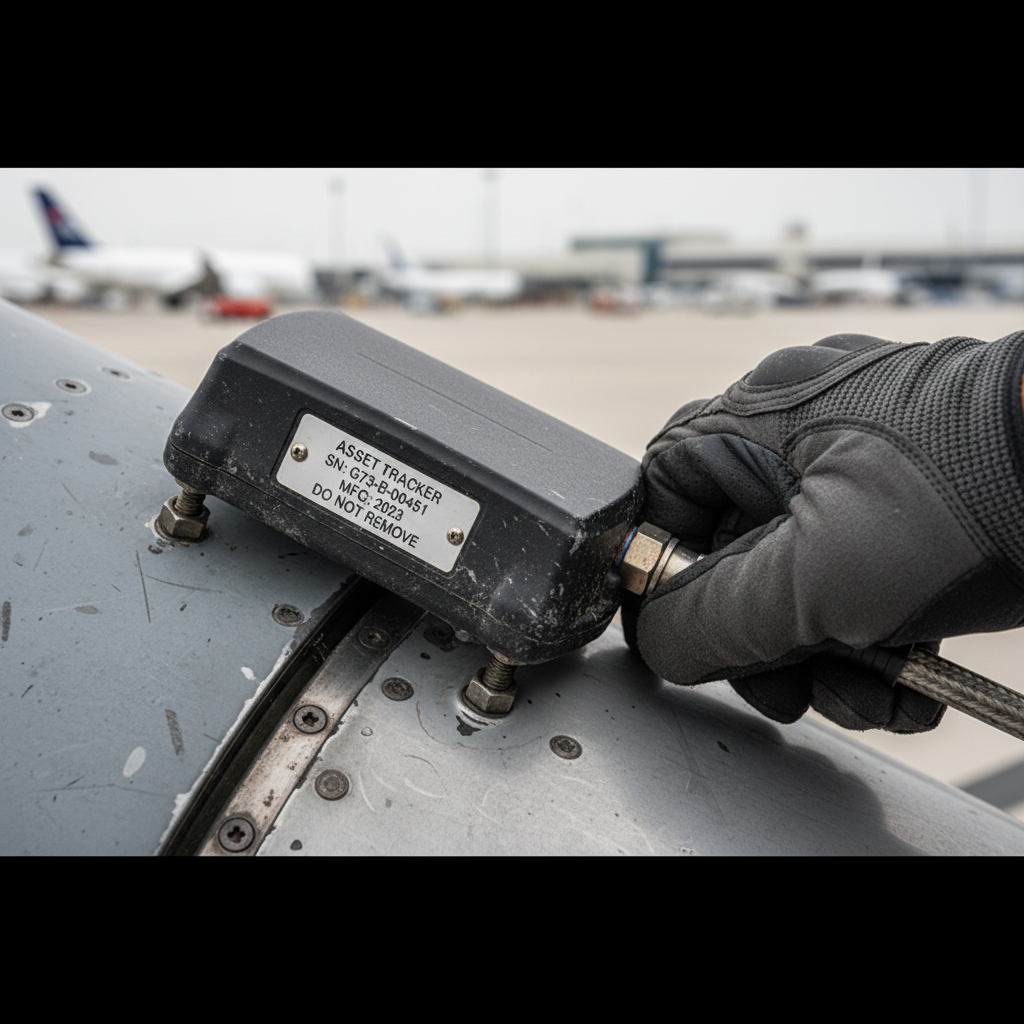
Why Aviation Assets Demand a Different Tracking Paradigm
Aviation isn’t retail logistics. A spare engine doesn’t sit in a warehouse and get sold once. It cycles between operators, lessors, MRO facilities, and transport stands—sometimes across continents, sometimes for years. The aviation asset management market reached $273 billion in 2025 and is projected to grow at 6.08% CAGR through 2034. That scale means millions of high-value components in perpetual motion, each requiring unbroken chain-of-custody documentation.
Three forces are reshaping how the industry approaches this problem:
1. Regulatory pressure is tightening—fast
ICAO’s Global Aeronautical Distress & Safety System (GADSS), born from the MH370 disaster, mandates that large aircraft manufactured after January 2024 autonomously transmit position data every minute during distress. But GADSS is just the tip. EASA now requires operators to verify serial-number provenance after the AOG Technics fraud scandal exposed thousands of falsely documented CFM56 parts circulating in the supply chain. A conviction followed in 2026—but the damage was already done: aircraft grounded, networks disrupted, trust eroded.
2. Theft is getting more sophisticated
In January 2026, twelve containers holding over 600 turbofan engine parts—destined for mutilation and destruction—were stolen in Spain. The thieves impersonated the contracted disposal provider and simply diverted the shipment. EASA issued an alert declaring those parts permanently unapproved. The lesson: chain-of-custody must extend to end-of-life. If you lose visibility of an asset at any point in its cycle, that asset becomes a liability.
3. GNSS integrity is no longer guaranteed
The FAA documented a 65% increase in the rate of GNSS signal loss per 1,000 flights in H1 2024 versus the prior year, driven by jamming and spoofing near conflict zones. Since ADS-B depends on GNSS for position data and transmits unencrypted, a spoofed signal can make a real aircraft appear in the wrong place—or create ghost targets on ATC screens. This isn’t theoretical. It’s daily operations in the Eastern Mediterranean, Baltic, and Black Sea regions.
The Technology Stack: In-Flight vs. Ground Logistics
Tracking high-value aviation assets requires understanding that “tracking” means two very different things depending on whether the asset is airborne or on the ground.
In-Flight Position Tracking
Space-based ADS-B (led by Aireon’s constellation on Iridium satellites) provides near-global coverage with median updates every 2 seconds and latency under 400 milliseconds. Combined with SATCOM datalinks (ADS-C, CPDLC via Inmarsat/Iridium Certus) and traditional radar, this creates layered surveillance. Aireon’s ALERT service has handled over 100 SAR assistance requests since 2019, narrowing search areas from thousands of square kilometers to as little as 1–2 km².
But space-based ADS-B tracks aircraft. It doesn’t track the engine sitting on a transport stand in a cargo facility in Singapore.
Ground & Transit Logistics Tracking
This is where most aviation organizations have the biggest blind spot—and the biggest opportunity for ROI. The technology options:
- Passive RFID: Excellent for warehouse kitting, tool control, and inventory counts. Low cost per tag, but requires proximity to readers. No autonomous position reporting.
- BLE/UWB (Real-Time Location Systems): High accuracy indoors (sub-meter with UWB). Ideal for MRO facilities tracking tooling and parts through repair bays. Limited range.
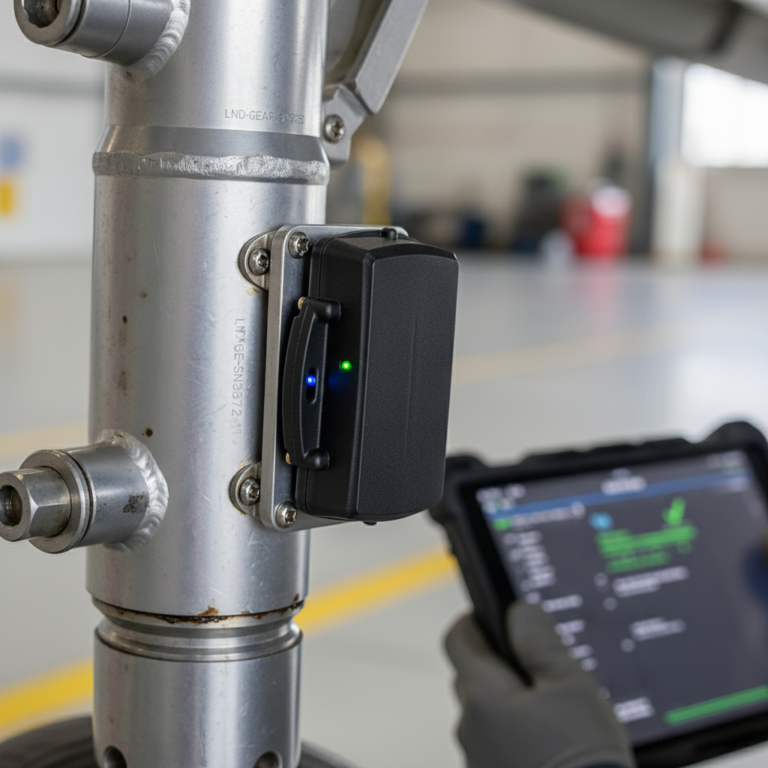
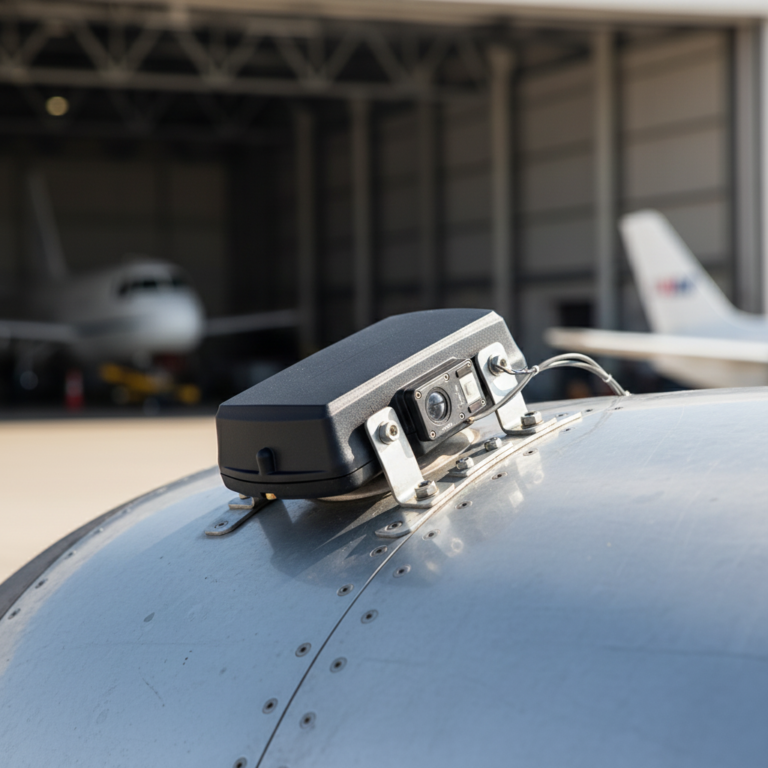
- Cellular IoT + GNSS: The workhorses for tracking mobile, high-value assets over distance. Modern LTE-M/NB-IoT trackers achieve 3–5 meter outdoor accuracy with multi-year battery life (10+ years on adaptive duty cycles). They integrate via REST APIs into MRO/ERP systems like AMOS, TRAX eMRO, or IBM Maximo.
- Satellite IoT: For assets that transit areas without cellular coverage—ocean crossings, remote airstrips, polar routes.
The right answer is rarely one technology. It’s a layered stack matched to asset value, movement patterns, and reporting requirements.
Five Myths About Aviation Asset Tracking
Myth 1: “We track shipments, so we track assets.”
Reality: Shipment tracking tells you a package arrived at Building C on Tuesday. Asset tracking tells you the engine stand has been dwelling at MRO Facility X for 47 days beyond its expected cycle time—and that’s $12,000/day in idle capital. The job doesn’t end at delivery.
Myth 2: “RFID solves everything.”
Reality: RFID is powerful for controlled environments with reader infrastructure. It doesn’t help when your $8M landing gear assembly is somewhere between Toulouse and Johannesburg on a flatbed. You need active cellular or satellite tracking for assets in transit.
Myth 3: “Tracking is a safety project, not a finance project.”
Reality: Safety is the regulatory driver. But the business case is operational dollars: reduced dwell time, lower container pool sizes, fewer lost/misrouted assets, faster MRO turnaround. One fleet operator we work with recovered 14% of their container pool capacity simply by gaining visibility into dwell patterns they couldn’t previously measure.
Myth 4: “Aviation certification makes IoT trackers impractical.”
Reality: DO-160 environmental testing certifies devices for airborne use. Trackers exist today that meet DO-160 requirements for vibration, altitude, temperature, and EMI. The Thingfox T2, for instance, is airfreight-approved and designed specifically for this use case. Certification is solved—adoption is the bottleneck.
Myth 5: “Our ERP already tracks everything.”
Reality: Your ERP tracks transactions—receipt, issue, return. It doesn’t know the physical location of an asset between those transactions. If a part sits in a bonded warehouse for six weeks without a transaction, your ERP shows its last known state. An IoT tracker shows its current position, movement history, and environmental exposure.
Reality Check: What Happens When Visibility Breaks
The AOG Technics case wasn’t a technology failure. It was a provenance failure. Thousands of engine parts entered the supply chain with forged documentation, and nobody caught it until aircraft were already flying with them. The investigation led to fleet-wide inspections, grounded aircraft, and a criminal conviction in 2026.
Now imagine a parallel scenario—but instead of forged documents, it’s stolen parts from Spain reintroduced to the market with plausible paperwork. If you can’t independently verify that your component was where it was supposed to be, at every stage of its lifecycle, you’re trusting paper. And paper, as we’ve learned, lies.
Asset tracking creates an independent, technology-verified chain of custody that exists alongside documentation. It doesn’t replace airworthiness paperwork—it corroborates it. If the tracker shows the part was in a bonded warehouse in Hamburg for 90 days and the documents say the same, you have confidence. If they diverge, you investigate before installation, not after an incident.
Three Measurable Outcomes
- Cycle time reduction of 20–35%: Visibility into dwell patterns reveals where assets stall. Operators consistently find that 30%+ of total cycle time is unplanned dwell—assets waiting for paperwork, forgotten in staging areas, or misrouted. You can’t fix what you can’t see.
- Container pool optimization of 10–20%: When you know exactly where every reusable container, engine stand, and transport fixture is, you stop over-purchasing replacements for “lost” units that are actually sitting idle across your network.
- Theft and diversion risk reduction: Geofencing with instant alerts means unauthorized movement triggers a response in minutes, not weeks. The Spain theft succeeded because nobody had real-time visibility on those containers. A cellular tracker with geofence would have flagged the diversion within hours.
The EASA–FAA Divergence: What It Means for You
If you operate transatlantic, you need to understand that compliance pathways are splitting. EASA has transposed ICAO GADSS mandates directly into EU law (Regulation 2022/2203), with prescriptive requirements for new aircraft. The FAA has filed differences, signaling that its existing surveillance infrastructure—ground-based ADS-B, radar networks—provides sufficient coverage, and formal rulemaking is still in progress.
For ground logistics, this divergence matters less. Whether you’re US- or EU-based, the operational need for asset visibility is the same. The difference is that EU operators face more explicit documentation and traceability mandates today, while US operators face market-driven pressure (insurance, lease requirements, customer audits) that achieves similar outcomes through commercial contracts rather than regulation.
Building Your Tracking Stack: A Practical Framework
Not every asset needs the same solution. The decision matrix is straightforward:
| Asset Type | Movement Pattern | Recommended Technology | Key Requirement |
|---|---|---|---|
| Engine/APU in transit | Cross-border, multi-modal | Cellular IoT + GNSS (e.g., Remora2, Oyster3) | Long battery life, global coverage, geofencing |
| GSE (tugs, loaders, stands) | Airport ramp, predictable zones | Cellular IoT with geofence (e.g., Yabby Edge) | Rugged, compact, utilization reporting |
| Parts in MRO facility | Indoor, controlled | RFID + BLE/UWB RTLS | Zone-level accuracy, ERP integration |
| High-value airfreight | Multi-leg, air + ground | DO-160 certified tracker (e.g., Thingfox T2) | Airborne certification, temperature monitoring |
| Reusable containers/fixtures | Pool circulation, global | Cellular IoT + satellite fallback (e.g., Hawk) | Multi-year battery, pool analytics |
The common thread: every solution must integrate with your existing systems. A tracker that generates data but doesn’t feed your MRO platform or ERP is creating work, not eliminating it. REST APIs, webhooks, and SFTP integrations aren’t nice-to-haves—they’re the difference between a visibility project and a visibility system.
What the Top-Ranking Articles Miss
Most content on this topic falls into one of two traps: either it’s laser-focused on RTLS for airport environments (wheelchairs, carts, baggage), or it discusses aircraft fleet valuation—financial modeling of aircraft worth over time. Neither addresses the operational reality of tracking a $12M engine from teardown to transport to overhaul to reinstallation.
The gap is the lifecycle. Aviation assets don’t exist in a single environment. They move between facilities, countries, operators, and states (serviceable, unserviceable, beyond repair). A tracking system that only works inside your four walls isn’t tracking—it’s inventory management. Real aviation asset visibility solutions follow the asset regardless of where it goes or who holds it.
If your container pool feels invisible after delivery, that’s exactly the gap asset tracking closes.
We build these systems. At Datanet IoT Solutions, we integrate DO-160 certified airfreight trackers, ruggedized cellular IoT devices, and environmental monitors into end-to-end visibility platforms for aviation operators, MROs, and freight forwarders. Fast implementation, scalable architecture, global coverage across North America, Europe, and Latin America. If the problem described here sounds familiar, talk to our team — info@datanetiot.com
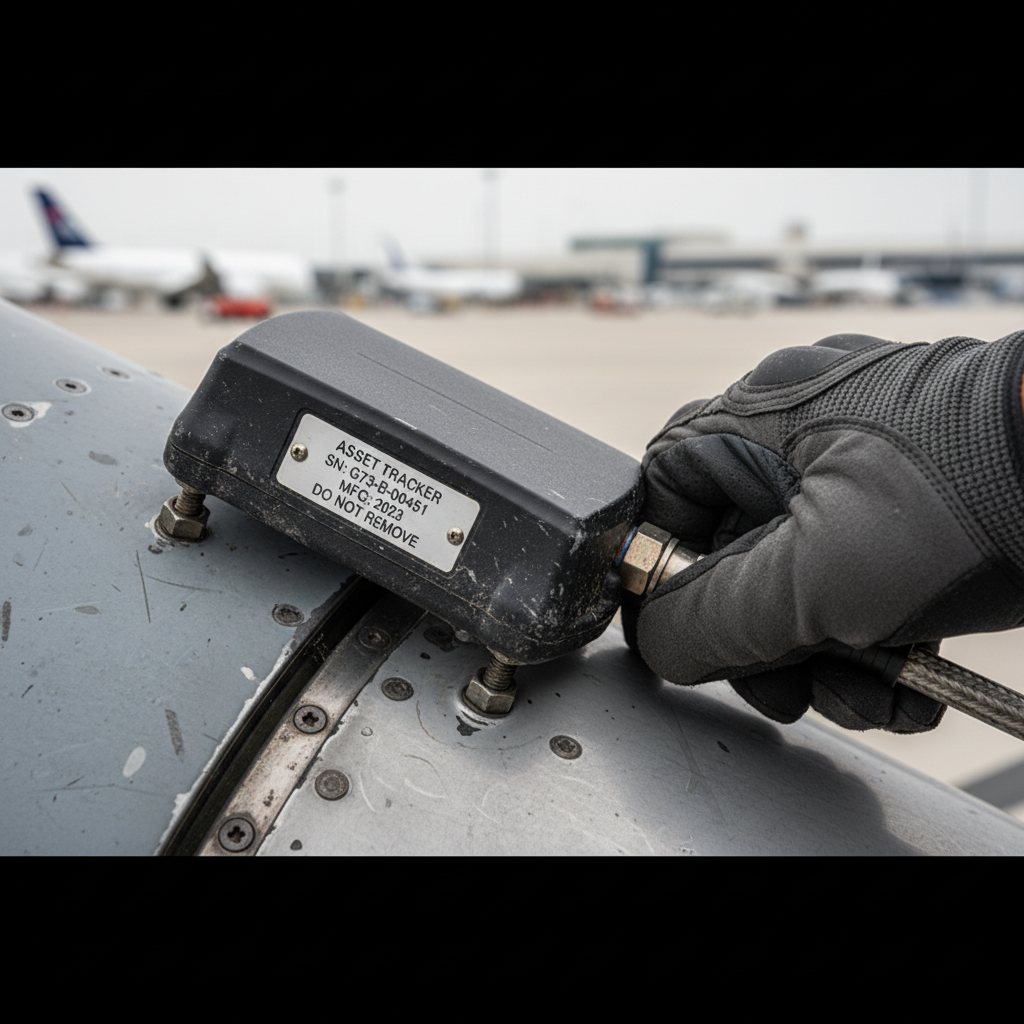
Frequently Asked Questions
What qualifies as a “high-value aviation asset” for tracking purposes?
High-value aviation assets include complete aircraft, engines, APUs, landing gear, avionics LRUs, flight recorders, ground support equipment, and high-value cargo consignments (spare engines in transit, pharmaceuticals). Generally, any component whose loss, theft, or undocumented movement creates significant financial or airworthiness risk.
What is the difference between shipment tracking and asset tracking in aviation?
Shipment tracking confirms a package reached its destination—the job ends at delivery. Asset tracking follows the component through its full lifecycle: transit, dwell, maintenance, reuse, and disposal. For aviation, where provenance equals airworthiness, lifecycle visibility is critical.
What is GADSS and how does it affect aviation asset tracking?
GADSS (Global Aeronautical Distress & Safety System) is an ICAO framework requiring new large aircraft (over 27,000 kg, certified after January 2024) to autonomously transmit position every minute during distress. It primarily addresses in-flight aircraft tracking but signals broader industry movement toward continuous asset visibility.
Do IoT trackers require aviation certification for use on aircraft or airfreight?
Yes—devices used in airborne environments must meet DO-160 environmental testing standards covering vibration, temperature, altitude, and electromagnetic interference. Certified options exist today, including devices specifically designed for airfreight and cargo hold environments.
How does GNSS jamming and spoofing affect aviation asset tracking?
GNSS jamming causes loss of position data; spoofing feeds false locations. Both increased 65% in H1 2024 versus H1 2023. Mitigations include multi-constellation receivers, inertial backup systems, and geofencing alerts that flag impossible movements—adding a verification layer beyond raw GNSS data.
What ROI can operators expect from implementing aviation asset tracking?
Typical measurable outcomes include 20–35% cycle time reduction through dwell visibility, 10–20% container pool optimization by locating “lost” idle units, and significant theft risk reduction through geofencing with real-time alerts. ROI is driven by reduced idle capital, fewer replacement purchases, and faster MRO turnaround.





 +1 508 292 2210