

A US electronics manufacturer used vehicle-mounted RFID to inventory 15,000 assets across 10 acres in a single hour at 98% accuracy. The old way took multiple shifts with handheld scanners. That gap is the core argument for warehouse asset tracking: not whose tag chip is faster, not which wireless protocol wins a spec shootout, but the operational time you stop wasting.
The RTLS market hit $5.84 billion in 2024 and is projected to reach $15.67 billion by 2030 at an 18.6% CAGR. Money is pouring in. But market growth doesn’t help you if your pilot never scales. DHL tested RFID for years and publicly concluded that the benefits come at a relatively high cost and the infrastructure needed is complex.
Both things are true at once. The ROI is real, and so is the risk of burning money on hardware that nobody uses. This article covers the space between those two realities: how to select technology without overspending, how to implement without stalling, and how to build a business case your CFO won’t laugh at.
What Warehouse Asset Tracking Actually Means
Warehouse asset tracking is the continuous identification and location of physical assets inside a facility: pallets, cases, individual items, forklifts, tools, totes, and increasingly, workers. It uses wireless identification technology layered on a location engine and business software to answer one question in real time. Where is this thing right now?
That sounds simple, but it’s a fundamentally different model than checkpoint scanning. A barcode read at receiving confirms something arrived. Warehouse asset tracking tells you it’s on rack 4, row B, third shelf, and it hasn’t moved in six days.
The modern stack has four layers:
- Tags or beacons attached to each asset. They can be passive (powered only when a reader pings them), active (battery-powered and broadcasting), or semi-passive. Beyond a unique ID, active tags can carry sensor data like temperature, shock, or tilt.
- Readers, anchors, or gateways distributed through the facility. They form a mesh network that captures tag signals and forwards them upstream.
- A location engine that calculates position by triangulating time-of-flight, angle-of-arrival, or signal-strength readings from multiple anchors.
- A business application providing floor maps, dashboards, alerts, and API connections into your WMS or ERP.
The WMS tells you what should be somewhere. Asset tracking tells you what is somewhere. When those two disagree, you’ve caught the problem before forty orders ship late.
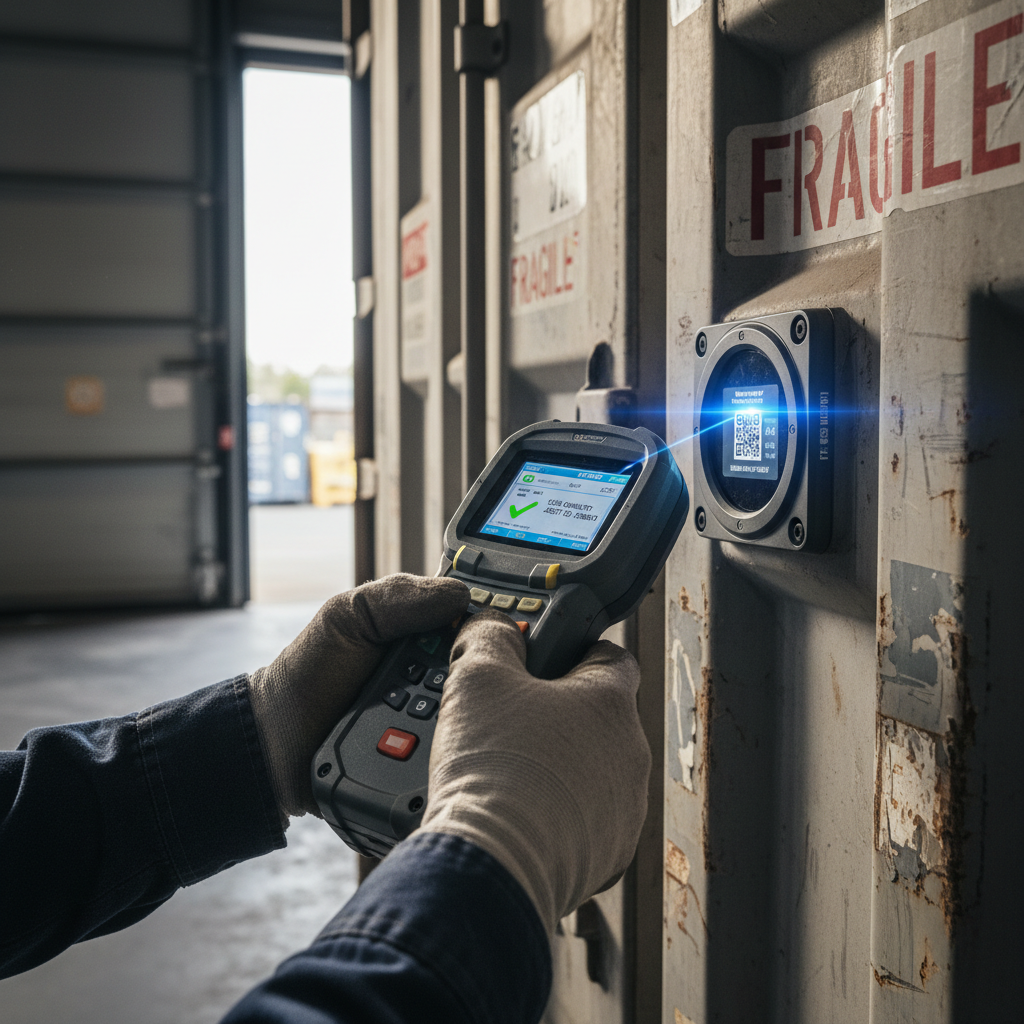
Five Technologies, One Decision Framework
Most teams start the conversation with “RFID or UWB?” That’s the wrong first question. The right one: what operational problem are you solving?
| Operational question | Best-fit technology | Typical accuracy | Tag cost range |
|---|---|---|---|
| Did this pallet pass through the dock door? | Passive UHF RFID | Centimeters to ~1 m | $0.10 to $0.50 |
| Where exactly is forklift #7 right now? | UWB | 10 to 30 cm | $50 to $100 |
| Is this tote in Zone B or Zone C? | BLE | 1 to 10 m (sub-meter with direction finding) | $10 to $35 |
| Is there physical damage on this carton? | Computer vision | Object/zone level | Camera + GPU |
| Is the asset somewhere on campus? | Wi-Fi scanning | 5 to 15 m | Reuses existing APs |
UWB is considered the gold standard for RTLS precision and handles multipath interference in metal-heavy warehouse environments far better than BLE or Wi-Fi. But you don’t need centimeter accuracy to confirm a pallet is in Building A rather than Building B. That’s an expensive answer to a cheap question.
Passive RFID remains the workhorse for high-volume scanning. A reader captures hundreds of tags in a single radio burst, no line of sight required, no battery on the tag, no battery to replace across 50,000 labels.
The deployments that scale don’t pick one protocol. They layer them. Zebra’s MotionWorks platform, for instance, supports passive RFID, BLE, and UWB simultaneously through a single software stack. The pattern I see in successful rollouts: RFID at dock doors and gates for checkpoint identification, BLE for zone-level presence across the floor, UWB only where centimeter precision justifies the tag cost (forklift safety zones, AGV coordination).
Computer vision is the newest addition to the stack. A 2025 survey in Engineering Applications of Artificial Intelligence cataloged warehouse vision implementations from 2013 to 2025, spanning autonomous robots, drones, robotic arms, and smart glasses. Vision covers what tags can’t: damage detection on incoming freight, untagged item identification, and empty-slot verification. Paired with RFID, the two close most visibility gaps that either one misses alone.
What Not Tracking Actually Costs
Labor absorbs 50 to 80% of warehouse operating costs. Every minute a picker spends hunting for a misplaced pallet, every hour a supervisor spends on manual cycle counts, every shift a maintenance tech loses searching for a tool: that’s the price of invisible assets. And it compounds every day you operate without visibility.
But labor hours aren’t even the largest number. Three hidden costs usually run higher.
Ghost inventory. Your WMS says 200 units. Reality says 140. You promise 180 to customers. Forty orders ship late or don’t ship at all. A Thai consumer-products manufacturer measured this gap directly: before deploying RFID, inventory location accuracy was 78.2%. After deployment, it hit 100%. Not 99.5. One hundred percent.
Assets replaced that weren’t actually lost. Warehouses routinely purchase replacement tools, handheld scanners, and equipment because the existing ones can’t be located. They’re not gone. They’re sitting on a shelf in Zone C behind a stack of unprocessed returns.
Cycle count paralysis. Full physical counts halt operations. Depending on facility size, a manual count can eat an entire shift, sometimes a full weekend. With RFID, that same count can happen in a fraction of the time and without shutting down the operation. The 15,000-asset, one-hour example above wasn’t theoretical. It was a production deployment.
The question isn’t “can we afford to track?” It’s “can we keep absorbing the error rate we’re currently not measuring?”
From Pilot to Enterprise: Where Most Deployments Stall
Warehouse asset tracking projects rarely fail at technology selection. They fail in the gap between a working pilot and facility-wide rollout.
The recommended path is clear: start with one zone, integrate BLE gateways into existing Wi-Fi infrastructure, layer UWB only where centimeter precision is mandatory. Scale zone by zone, not all at once. That’s the theory. Here’s where practice diverges.
Integration treated as an afterthought. Readers work. Tags scan. But the data never flows into WMS or ERP. You’re left with a standalone tracking system that nobody checks because it lives outside their daily workflow. API connections to your existing stack need to be scoped and budgeted before a single anchor goes on the wall. Not after.
The floor team doesn’t trust the data. If the system says a pallet is on rack 12 and it’s actually on rack 14, even once, the team stops believing. Early deployments require aggressive tuning: read zones calibrated, RF interference mapped, false reads eliminated. Trust builds one accurate read at a time. It evaporates in one wrong one.
Nobody redesigned the workflow. This is the big one. Walmart’s 2003 RFID mandate is the canonical example. They required their top 100 suppliers to tag pallets and cases by January 2005, later expanding to item-level tagging across toys, home goods, electronics, and sporting goods by September 2022. A 2023 analysis in the International Journal of Production Economics found that mandatory adoption alone didn’t deliver expected ROI. The tags worked. The workflows hadn’t changed to use the data. Tracking without acting on the data is expensive surveillance, not operations improvement.
Plan in this order:
- Define the operational outcome first: reduce cycle count time by X%, cut asset replacement spend by $Y, improve pick accuracy to Z%.
- Select the technology that answers that specific question at the lowest viable cost.
- Scope WMS/ERP integration from day one.
- Pilot in one zone, one use case. Measure against baseline. Tune until the floor team trusts the data.
- Scale only after the pilot delivers a result you can defend in a budget review.
That sequence sounds obvious. In practice, most projects start with “we bought 5,000 tags” and figure out the outcome later.
A Realistic ROI Framework
Published claims for asset tracking ROI range from 30% efficiency gains to 40 to 60% cost savings. Both come from vendor case studies. Apply the appropriate grain of salt. But even conservative estimates justify the spend for most mid-to-large warehouse operations.
I find it useful to model ROI in three buckets.
Labor recovered from cycle counts. If a full physical inventory takes 40 person-hours quarterly and RFID compresses it to 4, you recover 144 person-hours per year. Multiply by loaded warehouse labor rate. That number alone often covers the hardware cost.
Assets not repurchased. Tag your tools, scanners, carts, and reusable totes. Track utilization. Most operations discover 10 to 20% of “lost” assets within the first month. Each one not repurchased hits the P&L as a direct save.
Throughput gains from reduced search time. If pickers spend 15% of their shifts looking for inventory the WMS misplaced and tracking cuts that to 2%, the improvement flows directly into orders fulfilled per shift. In high-volume e-commerce fulfillment, those percentage points translate to meaningful revenue.
On the cost side, the stack breaks down roughly like this:
- Passive RFID tags: $0.10 to $0.50 per label
- Active RFID tags: $20 to $30 each
- UWB tags: $50 to $100 each
- Readers and anchors: $1,000 to $5,000 per unit
- Software licensing: varies widely
- Integration and professional services: often the single largest line item
The trap I see repeatedly: teams budget meticulously for tags and readers, then lowball integration. The tags are the cheap part. Making the data flow into existing systems, calibrating read zones, and training the floor team to act on what they see costs more than the hardware. A practical rule of thumb: if total hardware spend is X, budget at least X again for integration, tuning, and training. Anything less sets up a pilot that never graduates.
What 2026 Looks Like on the Warehouse Floor
Three shifts are reshaping warehouse asset tracking right now, and they all point in the same direction: the tag is becoming table stakes, and the value is migrating to what you do with the data.
AI analytics on location data. RTLS streams are time-series data. Modern machine learning is exceptionally good at time-series. Congestion forecasting, picker route optimization, dwell-time anomaly detection: these are production applications in 2026, not lab experiments. The tracking infrastructure generates the raw signal. The operational savings come from the optimization layer on top. If you’re deploying tags with no plan for analytics, you’re building the road and leaving the car in the garage.
Digital twins. Companies like Dexory are building dynamic, AI-driven digital replicas of warehouses that fuse RTLS data with autonomous robot scans and computer vision. Instead of querying the WMS for a shelf location, operators see a live 3D map of what’s actually on every rack. The distance between “what the system thinks” and “what’s physically true” approaches zero. Maersk’s own 2026 trend list includes AI-driven inventory as a top five warehousing priority.
Platform consolidation. Geotab acquired Link Labs (parent of AirFinder) in June 2026. RFiD Discovery acquired Tracktio. Capstone Partners counted 31 logistics-tech M&A deals in the first half of 2025. The market is consolidating from point solutions into integrated platforms that bundle RTLS hardware, location software, and WMS/ERP connectors. For buyers: fewer vendors to manage, but more lock-in risk. Prioritize platforms with open APIs and documented integration paths.
And one trend that’s not new but remains underappreciated: item-level RFID is expanding fast. Walmart’s mandate now covers tagging at the item level across toys, home goods, electronics, and sporting goods, with continued expansion through 2025. Any warehouse touching retail supply chains should build for item-level capability now. Retrofitting later is always more expensive.
Where to Start
If your warehouse assets disappear somewhere between the dock door and the shelf, the fix isn’t more hardware. It’s the right hardware, woven into the workflow your team already uses, measured against an outcome your finance team can verify.
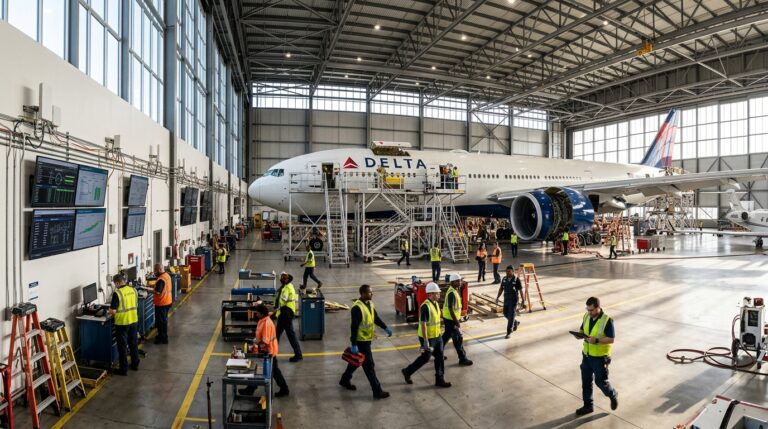
We build asset tracking solutions across industrial, aviation, and logistics operations. If the gap between what your WMS reports and what’s actually on the floor is costing you shifts, equipment, or customer trust, talk to our team. Or start by looking at the tracking devices we deploy and see what fits. info@datanetiot.com
Frequently Asked Questions
What is warehouse asset tracking?
The continuous monitoring and location of physical assets inside a warehouse (pallets, tools, forklifts, totes, inventory) using wireless technologies like RFID, BLE, UWB, or computer vision. These feed a software platform integrated with your WMS or ERP to provide real-time visibility into where every tracked asset sits at any given moment.
Which technology is most accurate for indoor warehouse tracking?
UWB delivers 10 to 30 cm accuracy and handles multipath interference in metal-heavy environments better than alternatives. BLE with Bluetooth 5.1 direction finding reaches sub-meter accuracy at lower tag cost. Passive RFID excels at fixed read points (dock doors, gates) but isn’t built for continuous real-time location. Most successful deployments layer two or more technologies based on what each zone requires.
How much does a warehouse asset tracking system cost?
Passive RFID tags cost $0.10 to $0.50 per label. UWB tags run $50 to $100 each. Readers and anchors range from $1,000 to $5,000 per unit. Integration, professional services, and training often equal or exceed the total hardware budget. Final cost depends on facility size, technology mix, and depth of WMS/ERP integration.
What ROI can I expect from warehouse asset tracking?
Published estimates range from 30% efficiency gains to 40 to 60% cost savings. Case studies report inventory accuracy jumping from 78% to 100%. Actual returns depend on your current error rate, labor costs, asset replacement spend, and how deeply you integrate tracking data into daily operations. Vendor-only claims should be discounted accordingly.
How long does implementation typically take?
A single-zone pilot can go live in weeks. Enterprise-wide rollout usually runs 3 to 12 months, driven primarily by WMS/ERP integration complexity and operational workflow changes, not by the hardware installation itself.
What is the difference between asset tracking and inventory management?
Inventory management tracks quantities and SKUs across the supply chain. Asset tracking monitors the physical location of specific objects in real time. They overlap at the pallet and item level, but asset tracking extends to non-inventory assets like forklifts, handheld scanners, tools, and returnable containers that inventory management systems typically ignore.






 +1 508 292 2210

2 Responses