

The enterprise asset management market is on track to reach $9.02 billion by 2030. Companies are spending record amounts on asset lifecycle management platforms, predictive analytics, and AI-driven maintenance engines. And yet, 55% to 75% of these implementations fail to meet their objectives.
I’ve spent over 15 years deploying IoT tracking across aviation, freight, and industrial operations. The pattern behind failing ALM programs is almost always the same: the organization invests heavily in software but loses physical visibility of the asset somewhere between procurement and disposal. The maintenance module shows a work order. Nobody can confirm where the asset actually is.
That is the stage most companies skip. Not planning. Not maintenance scheduling. Continuous physical visibility of the assets the entire program depends on.
What Asset Lifecycle Management Actually Means
Asset lifecycle management (ALM) is the discipline of managing physical or digital assets from planning through disposal, with the goal of extracting maximum value at the lowest total cost of ownership. IBM defines it as “the process by which organizations keep their assets running smoothly throughout their lifespan.” Accurate, but “running smoothly” undersells the scope.
ALM covers every decision made about an asset: whether to buy it, how to deploy it, when to maintain it, how to optimize its performance, and when to retire or replace it. Airlines use it for engines and ground support equipment. Logistics companies rely on asset management software for transportation to track container pools and trailers. Utilities use it for transformers, substations, and linear infrastructure like pipelines. It is the operating system for capital-intensive businesses.
Three terms overlap and confuse people. Worth separating them once:
- CMMS (Computerized Maintenance Management System) handles work orders, spare parts, and maintenance scheduling. It starts after the asset is installed. IBM notes that CMMS is “dedicated to MRO (maintenance, repair and operations)” at a single site.
- EAM (Enterprise Asset Management) extends CMMS with procurement, contract management, fleet tracking, warranty management, and multi-site support. It covers more of the lifecycle but still centers on software workflows.
- ALM encompasses EAM and adds the strategic layer: capital planning, acquisition analysis, performance optimization, sustainability compliance, and disposal decisions. It also includes the physical infrastructure (sensors, trackers, condition monitors) that feeds real-world data into the software.
The distinction matters because companies that equate ALM with “buying EAM software” start with an incomplete picture. Software is the brain. Without eyes (IoT sensors, GPS trackers, condition monitors), the brain operates on assumptions.
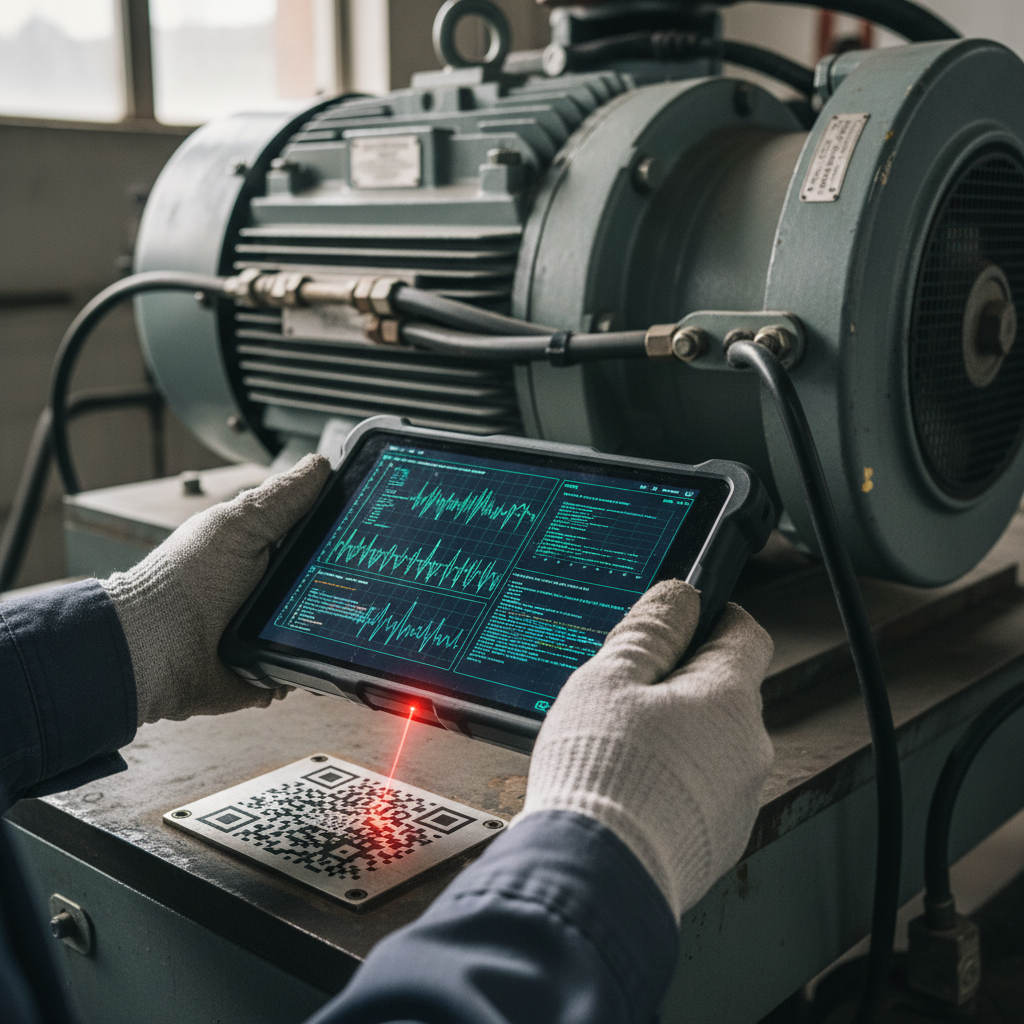
The Five Stages of the Asset Lifecycle
Frameworks vary. IBM uses four stages. Ansys uses six. Trimble uses five with an infinity loop. The number doesn’t matter much. What matters is that each stage has a specific failure mode that, left unaddressed, compounds into the next.
1. Planning
Before acquiring anything, organizations define what they need, why they need it, and what it will cost over its full life. This is where Total Cost of Ownership (TCO) calculations happen: purchase price, installation, training, operating costs, maintenance, and eventual disposal.
The failure mode here is underestimating lifecycle costs. Most teams model purchase price and installation competently. Far fewer model the cost of tracking, maintaining, and decommissioning an asset over 10, 15, or 20 years. Oil and gas platforms in the North Sea have been producing since the 1970s with operating lives extended to 2035. That is 60 years of lifecycle cost that needed to be in the original plan.
2. Acquisition and Deployment
The asset is purchased, received, configured, and put into service. Serial numbers get registered. Warranty periods start. The asset enters the enterprise system.
The failure mode is poor data capture at deployment. If the asset goes live without a unique identifier tied to a tracking system, it becomes progressively harder to locate and monitor as it moves through the operation. In reusable container pools (a scenario I see constantly in logistics), an asset leaves a warehouse tagged in the EAM system, gets shipped to a customer, and disappears from the system entirely until someone manually scans it months later.
3. Operation
The asset is doing its job. Generating revenue, supporting production, moving freight. This is the stage where the investment needs to pay off.
The failure mode is invisible utilization. The asset exists in the system, but nobody knows if it’s running at 30% or 90% capacity. In aviation ground support, a set of dollies or ULDs (Unit Load Devices) might sit idle at one station while another station orders more because they can’t see what’s available. Without real-time location and utilization data, the operation buys assets it doesn’t need and underuses the ones it has.
4. Maintenance
Preventive, predictive, or reactive. Most companies still operate reactively. Surveys compiled by ReliaMag show 88% of plants rely on preventive maintenance, while 51% let at least some assets run to failure. Predictive maintenance usage sits between 27% and 51%, depending on the sector.
The failure mode is treating maintenance as a cost center instead of a lifecycle extension strategy. A fuel refinery that shifted from reactive to preventive maintenance cut operational time lost to maintenance from 46% to 21%. That 25-percentage-point swing went straight to the bottom line.
5. Disposal and Replacement
The asset reaches end-of-life. It gets decommissioned, sold, recycled, or scrapped. A replacement decision is made or deferred.
The failure mode is holding on too long, or letting go too early. Without lifecycle data (maintenance history, performance trends, condition monitoring), the replacement decision becomes political. Some assets get replaced because a department wants new equipment. Others limp along past their useful life because nobody can prove that maintenance cost exceeds replacement cost. The Institute of Asset Management has linked this directly to circular-economy outcomes, arguing that proper lifecycle data enables better decisions about refurbishment, reuse, and responsible disposal.
Why Most ALM Programs Underdeliver
The 55-75% ERP failure rate from Gartner applies to enterprise asset management rollouts because they share the same implementation risks. After reviewing dozens of ALM deployments (some successful, many not), I keep seeing the same five causes. They align closely with practitioner analyses of IBM Maximo failures and published EAM post-mortems.
Configuring before understanding. Teams jump into software setup before mapping the real operational process. The software mirrors an imagined workflow, not the one that actually runs on the shop floor. Six months later, field technicians ignore the system because it doesn’t match how they work.
Data migration as a technical task. Legacy asset data gets dumped into the new system without cleaning, validation, or context. The new platform inherits 15 years of bad serial numbers, missing locations, and duplicate records.
Change management as a deliverable. Someone writes a training manual. Nobody reads it. The field team reverts to spreadsheets and radio calls within weeks.
No physical tracking infrastructure. This one is personal, because it’s where I live professionally. The EAM system has fields for asset location. Those fields get populated manually, if at all. Between updates, the asset’s position is a guess. Every maintenance plan, utilization report, and audit trail that depends on location data runs on stale information.
Wrong implementation partner. A generalist IT integrator wins the deal. They know ERP. They don’t know asset management. They don’t understand that a container pool behaves differently from a fleet of service trucks, or that MRO cycle times for aircraft components follow regulatory cadences that generic software can’t model out of the box.
The Visibility Layer Most ALM Programs Miss
Here is where I push back on the conventional ALM narrative. The standard story goes: buy software, define stages, configure workflows, train teams, optimize. That sequence is correct but incomplete. It assumes you can see the asset at every stage of its life.
In most operations, you can’t.
There is a distinction that doesn’t get enough attention in ALM conversations: shipment tracking versus asset tracking. Shipment tracking follows a package from origin to destination. The job ends at delivery. Asset tracking follows the asset through its entire lifecycle: deployment, operation, return, dwell time, reuse, maintenance, and eventual disposal. The job never ends until the asset is decommissioned.
For companies managing reusable assets (containers, ULDs, ground support equipment, tooling, pallets, trailers), this distinction changes everything. The EAM system might say 5,000 containers exist in your pool. But how many are in active use right now? How many are idle at a customer site, accumulating dwell time you’re paying for? How many are in transit? How many drifted out of the network entirely?
Without a physical tracking layer (GPS/GNSS, cellular, RFID, satellite), those questions have no real answers. The ALM program runs on faith.
IoT tracking devices close this gap. A cellular tracker mounted on a container reports its position at configurable intervals. It tells you whether the asset is moving or stationary, where it has been, and how long it sat there. For indoor environments or short-range tracking needs, Bluetooth asset tracking provides an energy-efficient alternative with precise location accuracy. Pair that with environmental sensors (temperature, humidity, shock), and you add condition data to location data. Now the maintenance stage of the lifecycle is not just scheduled by calendar. It is informed by what’s actually happening to the asset in the field.
In aerospace, the requirements are tighter. Devices need DO-160 certification for airfreight environments. They need to operate within the electromagnetic and environmental parameters of cargo holds. They need battery life measured in years, not months, because you can’t pull a tracker off a ULD mid-route.
This is not a nice-to-have layer. It is the foundation. Without it, every stage of the asset lifecycle runs on delayed, incomplete, or hand-typed data. With it, the EAM system finally receives clean, continuous input from the physical world. And layers 2, 3, and 4 of the technology stack (predictive analytics, digital twins, AI) become possible instead of aspirational.
Technologies Behind Effective ALM
Four technology layers define mature ALM programs today. They build on each other, and each depends on the one below it.
IoT and sensor telemetry. The ground floor. Vibration, temperature, pressure, current, location, motion: these signals stream from physical assets into condition-monitoring dashboards, triggering work orders when indicators decline. The predictive-maintenance market built on this data is expected to reach $23.79 billion by 2031, with AI-powered predictive maintenance already capturing over 30% of the market.
Predictive analytics and machine learning. Raw sensor data becomes actionable when ML models learn the failure signatures of specific asset types. A compressor doesn’t just “break.” It exhibits specific vibration patterns weeks before failure. ML turns that pattern into a work order before the breakdown. Adoption is still growing: MaintainX’s 2025 survey found 65% of organizations planned to implement AI-powered maintenance by 2026, with 44% already piloting.
Digital twins. A live virtual replica of the asset, updated by sensor data, used for simulation and scenario planning. Leading EAM platforms now use integrated 3D visualization so users can trigger work orders directly from the visual interface. For complex assets like turbines, aircraft engines, or refinery columns, the digital twin is where lifecycle decisions get tested before they get executed.
Generative AI. The newest layer. IBM shipped Maximo Assistant, a watsonx.ai-powered GenAI assistant, in June 2025. It lets users query asset data in natural language: “Which work orders are missing job plans?” or “Show me total cost of work orders per site.” IFS followed with AI-powered FMECA (Failure Mode, Effects, and Criticality Analysis) automation, backed by over 100 industrial AI deployments reported in FY2025.
Each layer feeds the next. IoT generates data. ML converts it into predictions. The digital twin contextualizes predictions on the physical asset. GenAI makes the insight consumable to a technician holding a phone on a tarmac or factory floor.
But here is the catch that gets consistently underestimated: layers 2, 3, and 4 are only as good as layer 1. Bad data from the physical layer produces bad predictions, unreliable twin models, and hallucinating AI. The tracking infrastructure (the sensors and devices generating clean physical-world data) deserves the same budget priority as the software platform sitting on top of it.
What Real ALM Outcomes Look Like
When the full stack works (planning, physical visibility, software, analytics, trained teams), the numbers are concrete:
- Shell’s AI-driven predictive maintenance cut unplanned downtime by 20% and maintenance costs by 15%. In oil and gas, where unplanned downtime runs up to $200,000 per hour, that 20% translates into millions recovered annually.
- SOCAR Turkiye reduced reactive maintenance by 20%, maintenance costs by 5%, and inventory costs by 7% using GE Vernova APM.
- A fuel refinery cut operational time lost to maintenance from 46% to 21% by shifting from reactive to preventive maintenance. Not a marginal improvement. A structural change in how the plant operates.
- IFS Cloud EAM reports typical outcomes of 20% more uptime, 16% less unplanned downtime, and 14% lower maintenance costs across its customer base.
- HP’s Workforce Experience Platform documented a three-month payback period for organizations that operationalized IT asset lifecycle management.
The common thread: data quality. Shell’s AI works because it has clean sensor input. SOCAR’s costs dropped because condition data drove decisions instead of calendars. The refinery transformed because they could see what was failing, where, and why. None of these outcomes came from software alone. They came from software fed by reliable physical-world data.
Starting an ALM Program That Doesn’t Fail
Given the failure rate, the question is not whether to pursue ALM. It is how to pursue it without becoming a statistic. Based on what I’ve seen work (and what I’ve seen collapse), here’s the sequence that delivers results.
Start with discovery, not configuration. Map how assets actually move through your operation today. Follow a container, a dolly, a maintenance tool through its real cycle. Don’t map the ideal process. Map the messy one. That’s your baseline.
Deploy physical visibility first. Before configuring your EAM platform, put trackers on a subset of critical assets. Cellular devices like the Oyster3 or Oyster Edge provide GPS/GNSS location with multi-year battery life. For airfreight environments, DO-160-certified devices like the Thingfox T2 handle the vibration, temperature, and EMI conditions of cargo holds. Start collecting real location and condition data before you build workflows around it. The data will reveal things your process maps didn’t.
Treat data migration as a business exercise. Clean your asset register. Validate serial numbers. Standardize naming conventions. Unglamorous work that prevents 80% of downstream pain. This is not a job for IT alone. Operations, maintenance, and procurement all need to own the data their decisions depend on.
Choose partners with vertical depth. An integrator who has deployed tracking and EAM for container logistics understands dwell time, pool management, and cycle-time optimization. One who works in MRO understands regulatory cadences and work-package structures. Generic ERP shops rarely bring that context.
Budget for change management as an ongoing function. Training doesn’t end with a launch-day webinar. It ends when the field team defaults to the system instead of working around it. That takes months of support, feedback loops, and iteration.
If your container pool, ground support fleet, or reusable asset base feels invisible after assets leave your facility, that is exactly the gap asset tracking closes. It is the foundation that makes everything else in the ALM stack deliver real returns. Our team works with operations leaders to design that visibility layer, from device selection to platform integration. Reach out if that conversation would be useful.

Frequently Asked Questions
What is asset lifecycle management?
Asset lifecycle management (ALM) is the discipline of managing physical or digital assets through every stage of their life: planning, acquisition, operation, maintenance, and disposal. The goal is to maximize value and minimize total cost of ownership across the full lifespan. It encompasses the software platforms (EAM, CMMS), the physical tracking infrastructure (IoT sensors, GPS devices), and the strategic decision-making that ties them together.
How is ALM different from EAM and CMMS?
CMMS focuses on maintenance work orders and repair scheduling at a single site. EAM extends that to procurement, fleet management, warranties, and multi-site operations. ALM goes further, adding strategic capital planning, performance optimization, disposal decisions, and the physical IoT tracking infrastructure that feeds real-world data into the software layer. Think of CMMS as maintenance, EAM as operations, and ALM as the full strategic discipline.
What ROI can organizations expect from ALM?
Published outcomes include 20% reduction in unplanned downtime (Shell), 15% lower maintenance costs (Shell), and a 25-percentage-point drop in operational time lost to maintenance (fuel refinery). IFS reports typical results of 20% more uptime and 14% lower maintenance costs. HP documented a three-month payback for IT asset lifecycle management. Results depend heavily on data quality and organizational commitment to the full program.
What are the main stages of the asset lifecycle?
Most frameworks use five stages: planning, acquisition and deployment, operation, maintenance, and disposal or replacement. Some models add a performance-optimization stage or break maintenance into preventive and predictive subcategories. The core principle is consistent: each stage generates data and decisions that affect the next, and skipping physical visibility at any stage degrades the entire program.
Why do ALM implementations fail so often?
Between 55% and 75% of ERP-class implementations fail to meet objectives, and EAM/ALM rollouts inherit the same risks. Common causes: configuring software before understanding real workflows, treating data migration as a technical (not business) exercise, neglecting change management, deploying without physical asset tracking, and selecting implementation partners without industry-specific expertise.
How does IoT asset tracking improve ALM?
IoT trackers provide continuous, real-time location and condition data for physical assets. This replaces manual data entry and periodic scans with automated, accurate input to EAM systems. The result: better utilization visibility, condition-driven maintenance, reduced asset dwell time, and a clean data foundation for predictive analytics and AI. Without this layer, every subsequent technology in the ALM stack runs on incomplete information.




 +1 508 292 2210