

The cargo tracking market is on track to hit USD 13 billion by 2035, up from roughly USD 3.4 billion in 2025. That is a 13.1% CAGR. Serious money flowing into solving a problem that, on paper, sounds simple: know where your stuff is.
And yet. Verisk CargoNet recorded 3,798 cargo theft incidents in 2024 alone, a 26% jump over the prior year. Q1 2025 added another 505 incidents, up 36% year over year. The World Shipping Council counted 1,478 containers lost at sea in 2025 out of 280 million transported. Microscopic percentage, enormous per-unit loss.
So if the technology exists and the spending is growing, why does cargo keep disappearing?
Because most companies are buying cargo tracking technology as if it were a single tool. It is not. It is a stack of decisions: sensing, connectivity, platform, and (the part everyone skips) what happens after the shipment arrives. I have spent 15+ years deploying IoT solutions across aviation, freight, and port operations. The technology itself has never been better. The gap is in how companies think about it.
What Cargo Tracking Technology Actually Covers in 2026
Cargo tracking technology is the combination of hardware, connectivity, and software that tells you where a shipment or asset is, what condition it is in, and whether something has gone wrong. That definition sounds obvious, but it matters because the industry constantly conflates three different things:
- Shipment tracking follows a consignment from pickup to delivery. The job ends when the proof of delivery is signed.
- Asset tracking follows the physical container, pallet, ULD, or equipment through its full lifecycle: loaded, in transit, delivered, empty, returned, redeployed.
- Freight visibility platforms aggregate data from multiple carriers and modes into a single dashboard, often adding predictive ETAs.
Most people searching for “cargo tracking technology” need one of these, or some combination. But vendors blur the lines because selling a GPS tracker is easier than explaining a lifecycle visibility strategy. The distinction between shipment tracking and asset tracking is the single most expensive misunderstanding in logistics IoT. If your container pool feels invisible after delivery, that is the gap asset tracking closes.
The Technology Stack: GPS Is Not the Whole Story
Every vendor leads with GPS. GPS is useful. It is also just one layer. Here is what the full stack looks like, with honest trade-offs.
| Technology | Range | Power | Cost | Best For |
|---|---|---|---|---|
| Barcode | Line-of-sight | None | Lowest | Warehouse check-in, last-mile label |
| Passive RFID | Up to ~10 m | Reader-energized | Low | Dock doors, yard portals |
| Active RFID | Up to ~100 m | Battery | Medium | Container yards, depot management |
| BLE | Up to ~100 m | Battery (low draw) | Low to Medium | Package-level telemetry, indoor zones |
| GPS + Cellular | Global | Battery or wired | Highest | In-transit visibility over road, rail, air |
| AIS (ship transponder) | Coastal + satellite | Ship-powered | Mandated, no marginal cost | Ocean vessel-level tracking |
| LEO Satellite IoT | Global | Battery | Medium | Remote regions, open ocean, no-cell zones |
Source data compiled from Radius’s technology comparison and field deployments.
The table looks clean. Reality is messier.
GPS gives you global range but drains batteries fast. An asset tracker that pings every 15 minutes will burn through power in weeks. One that pings every 6 hours can last years. That trade-off between update frequency and battery life is where most procurement conversations should start, and where they rarely do.
BLE is cheap and low-power, which is why FedEx built SenseAware ID around a small BLE sensor that transmits location every few seconds. But BLE requires nearby gateways or smartphones to relay data. On its own, in a remote yard, it is deaf.
LEO satellite IoT (providers like Astrocast, Hiber, Sateliot) is the newest production-ready layer. Roughly 80% of the Earth’s surface lacks cellular coverage. For ocean containers or cargo transiting central Africa, satellite fill is no longer optional. A major terminal operator deployed LEO services across its fleet in late 2025 specifically for uninterrupted cargo monitoring.
The takeaway: no single technology covers every scenario. The architectures that work treat GPS, RFID, BLE, AIS, and satellite as a menu. The platform orchestrates them. The hardware fits the use case.
Why Cargo Theft Keeps Climbing Despite Better Tracking
The numbers are hard to ignore. NICB estimates annual U.S. cargo theft losses at up to USD 35 billion, with a 27% increase in 2024 and a projected 22% further rise in 2025. Over-haul’s Q1 2026 report counted 574 incidents in the United States, 36% of them in California.
If tracking technology is everywhere, why is theft still surging?
Three reasons.
First, most tracking is reactive. A geofence alert fires after the container left the authorized zone. By the time dispatch sees the notification, the cargo is in a warehouse being repacked. The shift from reactive (where is it now?) to predictive (is this route deviation normal for this lane at this hour?) is where AI starts earning its keep, and most deployments have not made that shift yet.
Second, tracking data itself can be a vulnerability. If a thief knows the polling frequency of your tracker, they know how much time they have between pings. Few vendors discuss the cybersecurity of cargo location data, because it complicates the sales pitch. But every position broadcast is, in theory, information an adversary could use to plan a heist. Encrypted transmissions, randomized ping intervals, and strict API access controls are not features to skip.
Third, many shipments only carry a tracker to the delivery point. After that, the device is removed or the shipment is broken down, and the assets (containers, ULDs, pallets) go dark. A container sitting idle in a third-party yard for 18 days is not being tracked by the shipment system. It is invisible. That dwell time is where theft, loss, and misallocation happen.
The AI Layer: From “Where Is It?” to “When Will It Arrive?”
Static location pings are table stakes. The operational advantage in 2026 is predictive: machine-learning models that process historical lane data, weather, port congestion, and carrier performance to generate dynamic ETAs.
How good are these models? Up to 95% accurate within a 30-minute window in European freight lanes, according to recent benchmarks. That is not a lab number. It is production accuracy on trunk routes with consistent data feeds.
McKinsey pegs the broader impact of AI in supply chains at 5% to 20% logistics cost reduction, with reverse logistics alone representing a USD 200 billion annual cost pool ripe for optimization.
The visibility platforms leading this shift (project44, FourKites, Shippeo, Descartes MacroPoint) are no longer just aggregating carrier feeds. They are building predictive models on top of network-scale data. The largest platforms now process tens of billions of dollars in shipper freight spend annually. That data gravity is not just a commercial moat. More data trains better models, which produce tighter ETAs, which attract more shippers.
For fleet managers and logistics directors evaluating platforms: the question is not “does it show me a dot on a map?” That is solved. The question is “does it tell me, three hours before arrival, that this shipment will miss its window? And does it recommend an action?”
If the answer to either is no, you are paying 2026 prices for 2018 capability.
Ocean Cargo: Smart Containers and the AIS Ceiling
Ocean is the most technically challenging mode for cargo tracking. A container on a vessel in the mid-Pacific has no cellular signal. AIS (Automatic Identification System) tells you where the ship is, not where your specific container is on that ship, or whether it fell overboard yesterday.
AIS transponders broadcast position, course, and speed to other ships and coastal stations. Platforms like MarineTraffic and VesselFinder aggregate the global feed. But AIS is vessel-level, not container-level. The X-Press Pearl caught fire off Sri Lanka in 2021. The Dali struck the Francis Scott Key Bridge in Baltimore in 2024. In both cases, individual container fate was largely unknown despite full vessel tracking.
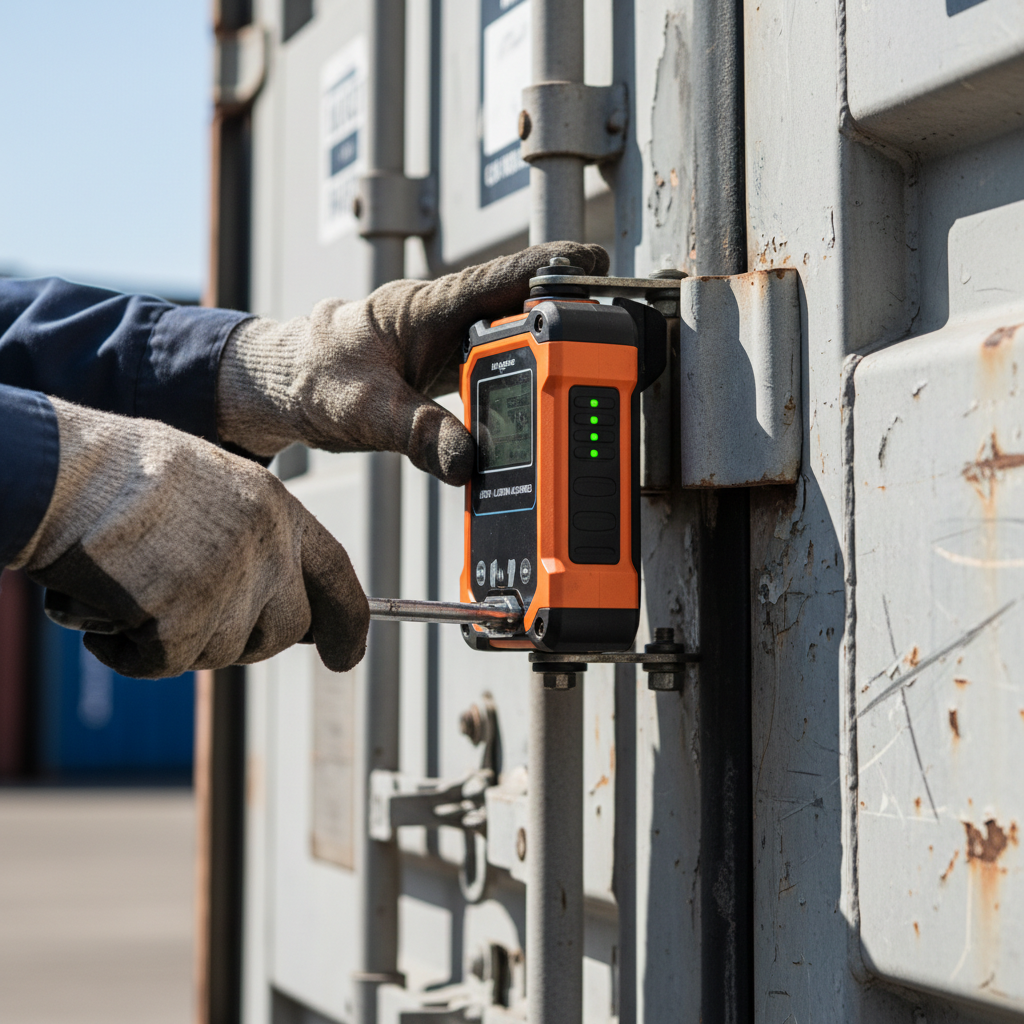
Smart containers close that gap. Traxens, Nexxiot, and the CMA CGM smart-container program fit standard ISO boxes with GPS, temperature, humidity, shock, and door-open sensors connected via cellular and satellite backhaul. These sensors are critical for pharmaceutical air cargo tracking, where temperature excursions can invalidate entire shipments. Traxens’ redesigned ATEX-certified tracker now delivers a 7-year battery life, a 50% improvement. That is significant because it means the device is fixed once and tracked for the container’s useful working life, not swapped on each voyage.
The February 2026 Hapag-Lloyd IoT container tracking pilot is the latest signal that carriers are pushing toward per-container intelligence with anomaly detection for deviations and delays.
For shippers moving high-value or time-sensitive cargo by sea, the question to ask your carrier is simple: do you track the vessel, or the container? One is free. The other is where the operational dollars are.
Air Cargo Tracking: Compliance Is Not Optional
The global air cargo market hit USD 185.3 billion in 2023 and is growing at 4.3% CAGR. Slower growth than ocean or road, but the highest value per kilogram, which means the tracking requirements are the most stringent.
Here is the reality many shippers discover too late: not every GPS tracker is approved for air transport. Airlines maintain lists of approved devices. If your tracker is not DO-160 tested (the environmental testing standard for airborne electronics), it may be rejected at check-in or, worse, flagged mid-transit.
For airfreight-approved solutions, devices like the Thingfox T2 are designed specifically to meet DO-160 requirements. Following IATA cargo tracking standards ensures end-to-end visibility across airline networks. That matters because strapping a consumer-grade tracker to a ULD and hoping for the best is not a tracking strategy. It is a compliance risk.
Regulatory compliance extends beyond the device itself. The FMCSA ELD mandate (in full force since December 2017) requires electronic logging for U.S. commercial motor vehicles. The SOLAS Verified Gross Mass rule (effective July 2016) blocks loading of any packed container without a declared VGM. Over 25 African countries require an ECTN certificate for ocean imports. Each mandate creates a baseline requirement that the right tracking solution can satisfy natively, rather than through manual workarounds.
Shipment Tracking vs. Asset Tracking: The Most Expensive Confusion in Logistics
This is the hill I will die on.
Shipment tracking follows the consignment. The job ends at delivery. The carrier confirms the POD, the system closes the record, and the tracker (if it was even on the asset and not the paperwork) comes off.
Asset tracking follows the physical thing: the container, the ULD, the reusable pallet, the engine stand. It follows through loading, transit, delivery, dwell at destination, return trip (empty or reloaded), and redeployment. The cycle never closes because the asset is reusable.
Most companies buy shipment tracking and wonder why their container pool is a black hole. They know exactly where a load is between Shanghai and Rotterdam. They have no idea that 40 of their containers have been sitting idle in a partner’s yard outside Memphis for three weeks.
Those three weeks of dwell time cost money. Idle containers tie up capital. They cannot be redeployed. Nobody knows to recall them because the tracking system’s job ended two weeks ago.
Cycle time (the total days from container dispatch to return-to-service) is the metric that separates logistics operators who manage assets from those who just ship freight. Every day shaved off cycle time is a container you do not need to buy. Multiply that across a pool of 500 or 5,000 units and the ROI stops being theoretical.
The hardware for asset tracking does not need to be exotic. Ruggedized, battery-powered GPS devices with configurable reporting intervals (like the Oyster3 or Oyster Edge from Digital Matter) are designed exactly for this: attach once, track for years, survive weather and handling. The cost per unit per month is a fraction of the cost of one lost or idle container day.
What to Require When Evaluating Cargo Tracking Solutions
Procurement teams tend to compare spec sheets. Battery life, update interval, certifications. Those matter, but they are inputs, not outcomes. Here is what I would insist on.
Multimodal, not single-mode. If your cargo moves by truck, then rail, then vessel, you need a platform (or at minimum a device) that handles all three without manual handoffs. A GPS tracker that only reports over cellular is useless mid-ocean.
Predictive ETA, not just position. A dot on a map tells you where the container is. A predictive model tells you it will miss its slot by two hours so you can rebook the drayage. That is the difference between data and decision support.
Asset lifecycle coverage. Ask explicitly: does the system track the container after delivery? Through empty repositioning? Through dwell at the consignee’s yard? If the vendor pauses, you have your answer.
Compliance readiness. For air: is the device DO-160 approved? For ocean: does the platform support VGM data? For Africa-bound cargo: does it generate ECTN documentation? Compliance retrofitted after deployment always costs more than compliance built in.
Data security. How is position data encrypted in transit and at rest? Who has API access? What are the retention and deletion policies? These questions are not paranoia. They are risk management, especially given that employee location tracking without consent creates legal exposure and cargo position data in the wrong hands is an operational risk.
Fast deployment. If it takes six months to integrate, the business case erodes. Turn-key solutions that minimize disruption to existing operations pay for themselves faster. This is not a nice-to-have. It is the difference between a pilot that scales and one that stalls in IT review.
Where the Market Is Heading
Four forces are shaping cargo tracking over the next 12 to 24 months.
AI copilots in visibility platforms will automate 30% to 50% of exception triage. Instead of a dispatcher reviewing 200 alerts, the system will surface the five that require a human decision and suggest a resolution for each.
LEO satellite IoT will move from premium to standard for ocean and remote cargo. The cost curve is dropping and the constellation coverage is filling in. By late 2027, “no coverage zone” will stop being a valid excuse for blind spots.
Insurance underwriting will require continuous geofence alerting. Periodic check-calls are already being replaced by real-time exception monitoring as a condition of coverage. If your fleet cannot prove continuous visibility, premiums will reflect that gap.
Privacy regulation will tighten. The U.S. Supreme Court has already ruled warrantless GPS tracking a Fourth Amendment violation, and GDPR applies to all EU logistics data flows. California, Illinois, and other states are adding layers. Vendors that solve consent UX as a feature (not a footnote in the terms of service) will pull ahead.
Perguntas frequentes
What is cargo tracking technology?
Cargo tracking technology is the combination of hardware (GPS devices, RFID tags, BLE sensors), connectivity (cellular, satellite, Wi-Fi), and software platforms that provide real-time or near-real-time visibility into the location and condition of freight. Modern systems extend beyond simple position reporting to include predictive ETAs, environmental monitoring, geofence alerts, and integration with TMS and ERP systems.
What is the difference between shipment tracking and asset tracking?
Shipment tracking follows a consignment from pickup to delivery and ends when the POD is signed. Asset tracking follows the physical container, ULD, or equipment through its full lifecycle, including return trips, idle dwell time, and redeployment. Asset tracking eliminates the visibility gap that causes container pools to become invisible after delivery.
Which tracking technology works best for ocean cargo?
Ocean cargo typically requires GPS devices with satellite backhaul (LEO IoT) because cellular coverage does not exist mid-ocean. AIS tracks the vessel, not individual containers. Smart container solutions (permanent IoT trackers with 5 to 7 year battery life) provide container-level data including position, temperature, shock, and door status throughout the voyage.
Are GPS trackers allowed on air cargo?
Not all GPS trackers are approved for air transport. Airlines maintain lists of approved devices, and most require compliance with DO-160 environmental testing standards. Using a non-approved tracker can result in rejection at check-in or regulatory issues. Always verify device approval with your carrier before shipping.
How accurate are AI-powered ETAs for freight?
Machine-learning ETA models have reached up to 95% accuracy within a 30-minute window on well-served European freight lanes. Accuracy varies by mode, lane density, and data quality. Ocean ETAs are improving but remain less precise due to weather variability and port congestion.
How big is the cargo tracking market?
The trailer and cargo container tracking market was estimated at USD 3.4 billion in 2025, projected to reach USD 13 billion by 2035. The related real-time freight visibility platform market was valued at USD 4.8 billion in 2025, forecast to reach USD 13.9 billion by 2034. Combined, the global enterprise wallet for cargo visibility is plausibly in the USD 15 to 20 billion range.
If your cargo disappears between the tracking system closing out a delivery and the next shipment loading, the problem is not the technology. It is the scope of what you are tracking. We build end-to-end visibility solutions that cover the full asset lifecycle, not just the shipment window. Talk to our team or explore our asset tracking devices to see what fits your operation.





 +1 508 292 2210

3 Responses