

Between $300 million and $1 billion in heavy equipment is stolen every year in North America. Less than 25% of those machines are ever recovered. Numbers like that sell GPS trackers on their own.
But theft is a fraction of what’s bleeding your fleet.
Construction fleets lose 30% to 40% of productive equipment time to idling. Crews burn hours searching yards for machines that may or may not be there—similar to challenges faced in airport equipment tracking where high-value assets move constantly across large operational areas. Rental customers run equipment 140 hours on an 80-hour contract, and without data, that dispute is just a phone argument. Maintenance runs on calendar intervals instead of actual machine condition, which means you’re either servicing too early (burning cash) or too late (burning an engine).
Construction equipment tracking addresses all of it. Not just “where is my excavator” but “how hard is it running, what’s about to break, and should I keep it or sell it.” Most of what’s written on this topic stops at the GPS dot on a map. This piece goes further, because that’s where the operational dollars live.
What Is Construction Equipment Tracking?
Construction equipment tracking uses GPS, cellular or satellite connectivity, and cloud software to monitor the location, utilization, and condition of heavy machinery, tools, and vehicles across job sites. It turns scattered, offline assets into a fleet you can actually manage from one screen.
The system runs on four layers:
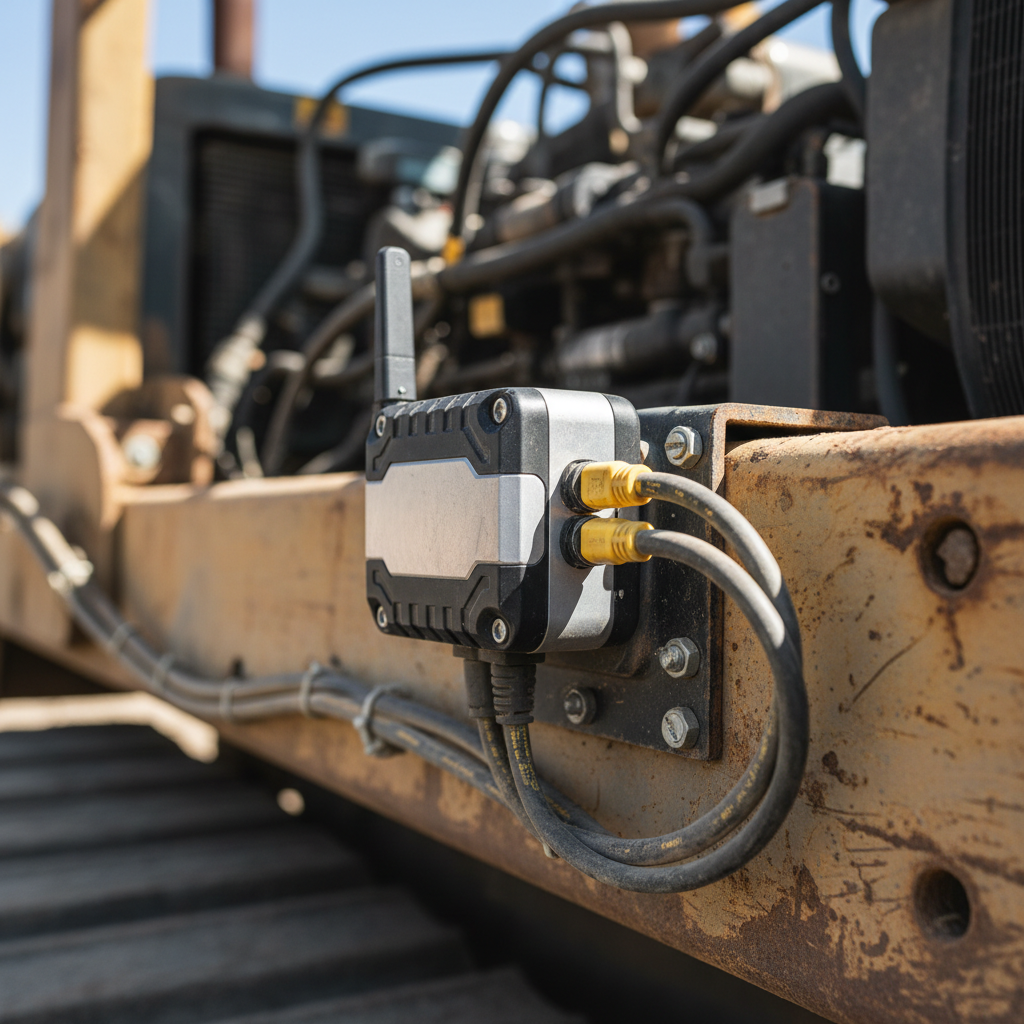
- Hardware. A GPS device installed on or hardwired into the asset. Hardwired units connect through the engine’s diagnostic port (J1939/CAN-bus) and pull engine hours, fault codes, and fuel level. Battery-powered asset tracking devices serve unpowered equipment like generators, trailers, and compressors.
- Connectivity. Cellular networks handle most sites. Satellite links cover remote projects where cell towers don’t reach.
- Cloud platform. Where data gets aggregated into dashboards, geofence rules, alerts, and reports.
- Integration. APIs that connect tracking data into your ERP, accounting, or project management system (Viewpoint, Procore, or whatever your team lives in). This is the layer that separates a gadget from a business tool.
One distinction worth making early. Shipment tracking tells you where something is until it arrives. Asset tracking follows the equipment through its entire lifecycle: deployment, utilization, site-to-site transfers, maintenance cycles, rental periods, and eventual disposal. Construction equipment demands asset tracking. A backhoe doesn’t stop mattering when it reaches the job site. That’s when the real tracking challenge starts.
Why Construction Fleets Are Harder to Track
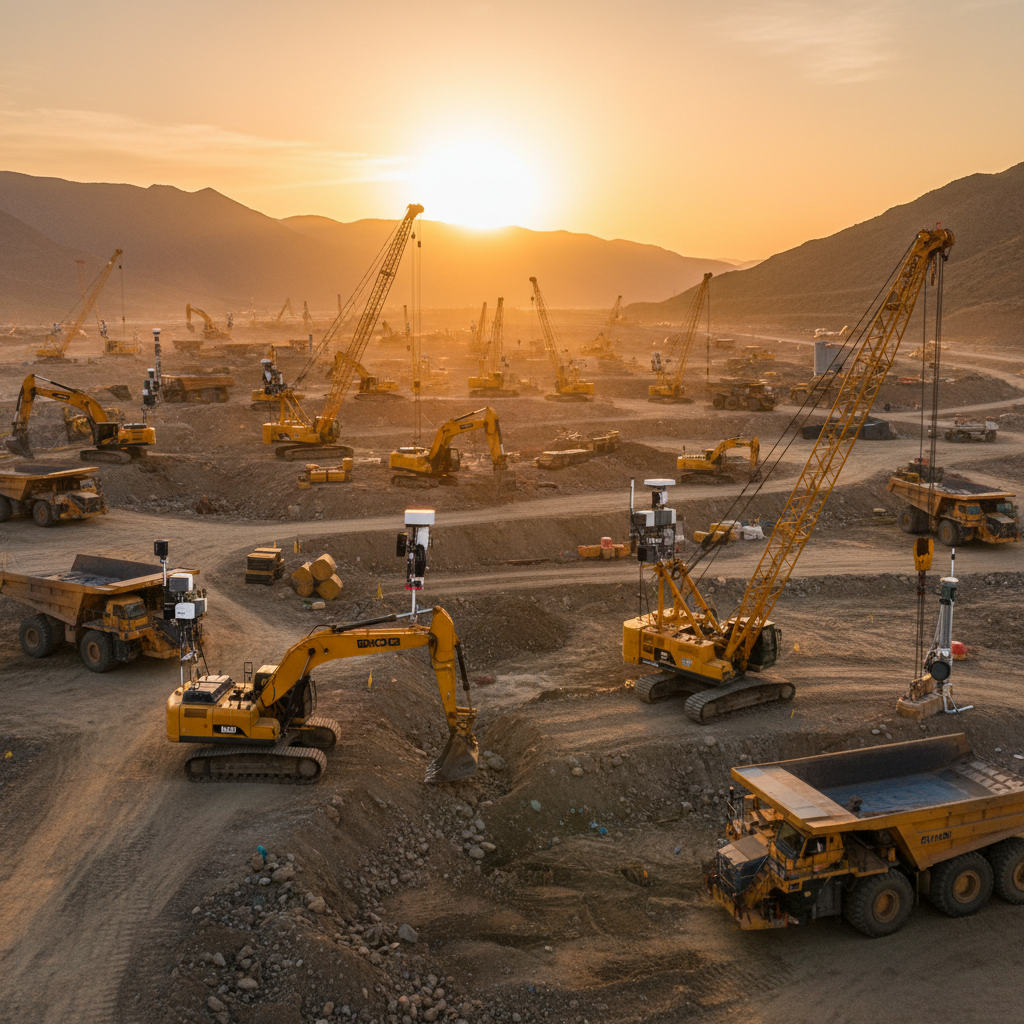
A trucking fleet runs one vehicle type, one diagnostic protocol, and predictable routes. A construction fleet has none of that.
Start with the brand problem. Most contractors run Caterpillar, Komatsu, John Deere, and smaller manufacturers in the same fleet. Each ships its own telematics (VisionLink, Komtrax, JDLink), and none of them communicate natively. Managing three OEM dashboards for one fleet is common. And wasteful.
Then add asset diversity. Your fleet isn’t just excavators. It includes generators, compressors, light towers, trailers, welders, and pickup trucks. Powered assets take hardwired trackers with full engine diagnostics. Unpowered ones need battery-operated devices with multi-year battery life, like the Oyster3, designed for years of maintenance-free operation in the field. One tracking solution rarely covers both categories cleanly.
Equipment also moves constantly. A skid steer might touch four job sites in a month. Go out on rental, sit in a yard, ship cross-country—the same yard-visibility problem that drives port equipment tracking. Without continuous location data, dispatchers guess which site has what. Guessing leads to redundant rentals and idle machines nobody knows about.
The physical environment is hostile. Dust, vibration, temperature swings, and exposed mounting positions destroy consumer-grade hardware in weeks. IP67-rated enclosures are the minimum. Remote infrastructure projects compound the problem with cellular dead zones, making passive tracking (store locally, upload when signal returns) a hard requirement—the same connectivity gaps that make marine equipment tracking so demanding once assets move offshore.
And unlike vehicles, construction equipment has no standardized ID system. No universal VIN. Universal ignition keys are still common on older machines. That structural gap makes theft easier and complicates any fleet-wide management effort.
None of this is edge-case territory. It’s the everyday reality for operations running more than a couple dozen assets. A system designed for logistics fleets will hit all five walls within the first month. Which raises the practical question: given the extra complexity, does construction equipment tracking actually pay for itself?
Three Sources of Tracking ROI
Most vendors lead with theft prevention because the numbers are dramatic and the demos are compelling. But the financial case for tracking comes from three sources, and theft is only one of them.
Theft Recovery
The headline stats hold up. Over $1 billion in annual theft, less than 25% recovery. A LoJack study found that 69% of recovered equipment had tracking systems installed. Documented recoveries paint the picture in specifics: Cable East recovered $2.5 million over four years. CR Jackson recovered $120,000. Emery Sapp & Sons recovered $150,000 in specialized machinery.
The honest version: tracking is a recovery tool, not a prevention tool. Geofencing and after-hours movement alerts help. They don’t stop a determined crew with a flatbed at 3 AM. What they do is shift the recovery odds sharply in your favor. For machines worth $25,000 to $150,000 each, that shift pays for the tracker many times over.
Predictive Maintenance
This is where the compounding money lives. AI-driven predictive maintenance can reduce unplanned downtime by up to 30% and extend equipment lifespan by shifting from calendar-based service intervals to condition-based intervention. Instead of servicing every 500 hours regardless of load, telematics monitors engine fault codes, operating temperature, and hydraulic pressure in real time, then flags the specific machines that need attention now.
The results at scale are large. Maxim Crane Works reported $13 million in maintenance savings after moving to predictive telematics. Sterling Crane Canada achieved over $3 million by unifying on-road and off-road visibility on a single platform. These aren’t projections. They’re real P&L impacts from fleets that made the switch.
The logic is straightforward. An excavator pulling 14-hour shifts in clay needs service far sooner than an identical unit doing light grading three days a week. Engine hours and fault codes tell you which is which. A calendar can’t.
Utilization and Idle Reduction
Construction fleets lose a staggering share of productive time to machines running with no load. Telematics can cut fuel costs by up to 25%, and Primoris Services Corporation documented $2 million in annual fuel savings through idle and route optimization alone.
But the utilization angle goes deeper than fuel. The most expensive question in fleet management is: “Do I need to rent another machine, or do I already own one sitting idle three sites away?” Without data, that question gets answered by gut feel, and gut feel consistently overspends. With real-time utilization data across every asset, redundant rentals drop and purchasing decisions get sharper. Ghilotti Bros eliminated dozens of labor hours annually just by ending yard searches.
Rental operators face their own version of this problem. Your customer rented a generator for two weeks. Returned it on day 18. Ran it 140 hours instead of the contracted 80. Without tracking, that’s a phone argument. With engine-hour logs and timestamped location history, that’s an invoice.
The question isn’t whether tracking pays. It’s which tracking approach fits your fleet.
OEM vs. Aftermarket vs. Specialist: Choosing Your Stack
Three categories of tracking systems compete for construction fleets. Each has real strengths and real limitations.
| Category | Strengths | Limitations | Best For |
|---|---|---|---|
| OEM telematics (VisionLink, Komtrax, JDLink) | Deepest engine diagnostics, factory-installed, often bundled free with new equipment | Single-brand data silo, no cross-fleet visibility, limited third-party integration | Single-brand fleets with mostly new equipment |
| General-purpose telematics (Geotab, Verizon Connect, Motive) | Cross-fleet visibility, open APIs, large marketplace ecosystems (350+ integrations in some cases) | Less depth on OEM-specific diagnostics, may lack construction-specific workflows | Large mixed fleets with IT teams that can build integrations |
| Construction specialists (Tenna, HCSS, Trackunit) | Built for job-site workflows, rental-yard economics, mixed asset types | Smaller platform scale, potentially fewer third-party connectors | Contractors and rental operators who need construction-first logic |
The practical reality for most mid-size contractors: OEM telematics covers your new CAT or Deere machines out of the box, but leaves your generators, trailers, legacy equipment, and rental assets invisible. You end up needing a second system for everything the OEM doesn’t touch. The telematics market hit $7.76 billion in 2025, with OEM channels dominating at $4.8 billion, which tells you how deeply factory-installed tracking has penetrated. But it also tells you how wide the gap remains for everything that doesn’t roll off a Tier 1 OEM assembly line.
The deciding factor is integration. Any system that can’t feed data into your ERP or project management tool creates a standalone dashboard that gets checked the first week and ignored by week three. Ask about open APIs before you ask about hardware specs. The prettiest dashboard in the world is worthless if it doesn’t connect to where decisions actually happen.
For mixed fleets that include both powered heavy equipment and unpowered assets, look for a provider that offers hardwired and battery-powered devices under a single platform. That’s the unification problem aftermarket integrators solve better than OEMs. But even with the right vendor and the right integration, the first 90 days after installation determine whether the deployment succeeds or stalls.
The Post-Installation Reality
The industry talks a lot about buying and installing trackers. Less about what happens once they’re live. Three problems consistently surface in the first 90 days.
The first is alert fatigue. A 50-asset fleet with geofencing, idle alerts, speed alerts, and maintenance triggers can generate dozens of notifications per day. Within two weeks, dispatchers start ignoring all of them. The fix isn’t fewer alerts. It’s smarter filtering: escalation tiers that distinguish routine movement from genuine anomalies, and digest reports that summarize fleet health without demanding constant attention.
The second is operator resistance. Drivers and equipment operators who’ve worked autonomously for years don’t always welcome a tracker on their machine. Frame it as a surveillance tool and you guarantee pushback. Frame it as a safety and scheduling improvement (faster maintenance response, more accurate shift records, less time searching for equipment) and the conversation changes. The fleets that get buy-in early are the ones that share data with operators, not just about them.
The third is the lifecycle question nobody asks at purchase time. Tracking data accumulates over months and years, and it tells you something no annual inspection can: the moment an asset’s maintenance costs outpace its productive value. That’s the right time to sell or dispose of it. Without longitudinal utilization and repair data, that decision gets made on gut feel or purely on age, both of which leave money on the table.
These problems are solvable. But they’re invisible during the buying process, and they determine whether your tracking system becomes a management tool or expensive shelf-ware. For fleets that get the deployment right, what’s coming next in the technology amplifies everything tracking already delivers.
What AI and Autonomy Change in 2026
Two shifts are reshaping construction equipment tracking this year.
The first is AI-driven maintenance moving from concept to default. Machine learning models now ingest engine sensor data, fault codes, and operating patterns at scale, identifying failure signatures weeks before they cascade into downtime. Industry analysts flag AI and ML as a core construction technology trend, and the vendor ecosystem has responded. Major platforms launched construction-specific AI features in the past 12 months, bringing machinery, specialty equipment, and on-road vehicles into unified environments. The labor angle reinforces the push: the U.S. construction industry needs to attract 439,000 new workers in 2025 alone, and telematics directly offsets headcount gaps by automating compliance, reducing search time, and enabling smaller crews to manage larger fleets.
The second is the convergence of tracking and autonomy. The autonomous construction equipment market is projected at $2.1 billion in 2025 with a 13.4% CAGR through 2032. Autonomous machines need precise positioning, geofencing, remote kill-switches, and real-time status monitoring. All standard telematics features. The tracking infrastructure you build today becomes the control backbone for autonomous equipment tomorrow.
One more data point worth watching: the OEM telematics installed base is forecast to reach 13.4 million units by 2029. Factory-installed tracking is becoming the default, which pushes aftermarket providers to specialize in what OEMs don’t do well: mixed-fleet management, legacy-asset coverage, and lifecycle tracking across brands. That specialization is exactly where the most practical value lies for contractors who don’t run a single-brand fleet.
Frequently Asked Questions
How does construction equipment tracking work?
A GPS device installed on the equipment transmits location and sensor data over cellular or satellite networks to a cloud platform. Dispatchers and fleet managers view real-time location, engine hours, geofence alerts, and maintenance indicators. Data can be integrated into ERP and project management software via open APIs.
Can you track equipment that has no power source?
Yes. Battery-powered GPS trackers attach magnetically or bolt onto unpowered assets like generators, trailers, and compressors. Devices like the Oyster Edge are designed for multi-year operation without external power, using low-power cellular technology and smart sleep modes to extend battery life.
What is the difference between OEM and aftermarket telematics?
OEM telematics (VisionLink, Komtrax, JDLink) ship factory-installed on new machines and offer deep brand-specific diagnostics. Aftermarket systems install on any brand, provide cross-fleet visibility, and integrate with third-party ERP tools. OEM works for single-brand fleets. Aftermarket fits mixed-brand operations better.
How much does construction equipment tracking cost?
Hardware ranges from a few hundred to a few thousand dollars per unit, depending on ruggedization and sensor depth. Software subscriptions typically run $10 to $60 per asset per month. Enterprise pricing for large fleets is usually quoted custom. Most documented deployments show positive ROI within 12 to 24 months.
Does GPS tracking actually prevent equipment theft?
Tracking improves recovery more than it prevents theft. Geofencing and after-hours movement alerts provide early warning, but they cannot physically stop a theft in progress. Industry data shows 69% of recovered equipment had tracking installed, compared to an overall recovery rate below 25%. The recovery value alone justifies the investment.
How long until equipment tracking delivers ROI?
Most documented case studies reach positive ROI within 12 to 24 months. Single-event theft recoveries can pay for years of tracking in one incident. Predictive maintenance savings and fuel reduction compound over time, with large fleets reporting millions in annual savings after the first full year of deployment.
If your fleet includes a mix of brands, powered and unpowered assets, and equipment that moves across multiple job sites, the tracking challenge is real and the return is clear. The gap most operations face isn’t hardware. It’s connecting location data, engine diagnostics, and maintenance logic into a single system that fits how your team actually works. That’s what we build at Datanet IoT Solutions: end-to-end asset tracking across equipment types, with hardware that survives construction conditions and integration that connects to your existing workflows. If your equipment pool goes invisible between sites, talk to our team. info@datanetiot.com







 +1 508 292 2210