

Aircraft maintenance entered a new phase of digital adoption in spring 2026, marked by Airbus launching Skywise as a standalone subsidiary on April 1, JetBlue signing on for fleet-wide predictive analytics on April 21, and drone-inspection firm Donecle closing a €10 million round on April 15 to expand AI-based inspections globally. (See also: aircraft equipment location tracking.) (See also: aerospace industry asset visibility trends.)
Airbus Consolidates Digital Operations Under Skywise
On April 1, 2026, Airbus officially launched Skywise as a wholly owned subsidiary, merging its Skywise data platform with Navblue flight operations into a single entity employing roughly 750 people worldwide. The move consolidates two previously separate digital arms into one organization tasked with delivering end-to-end solutions for both Airbus and non-Airbus fleets.
The platform now draws on data from over 12,000 connected aircraft, creating a digital thread that links flight operations telemetry with technical operations workflows. For airline technical teams, the practical implication is a single vendor relationship covering flight data, maintenance analytics, and operational scheduling rather than stitching together multiple point solutions.
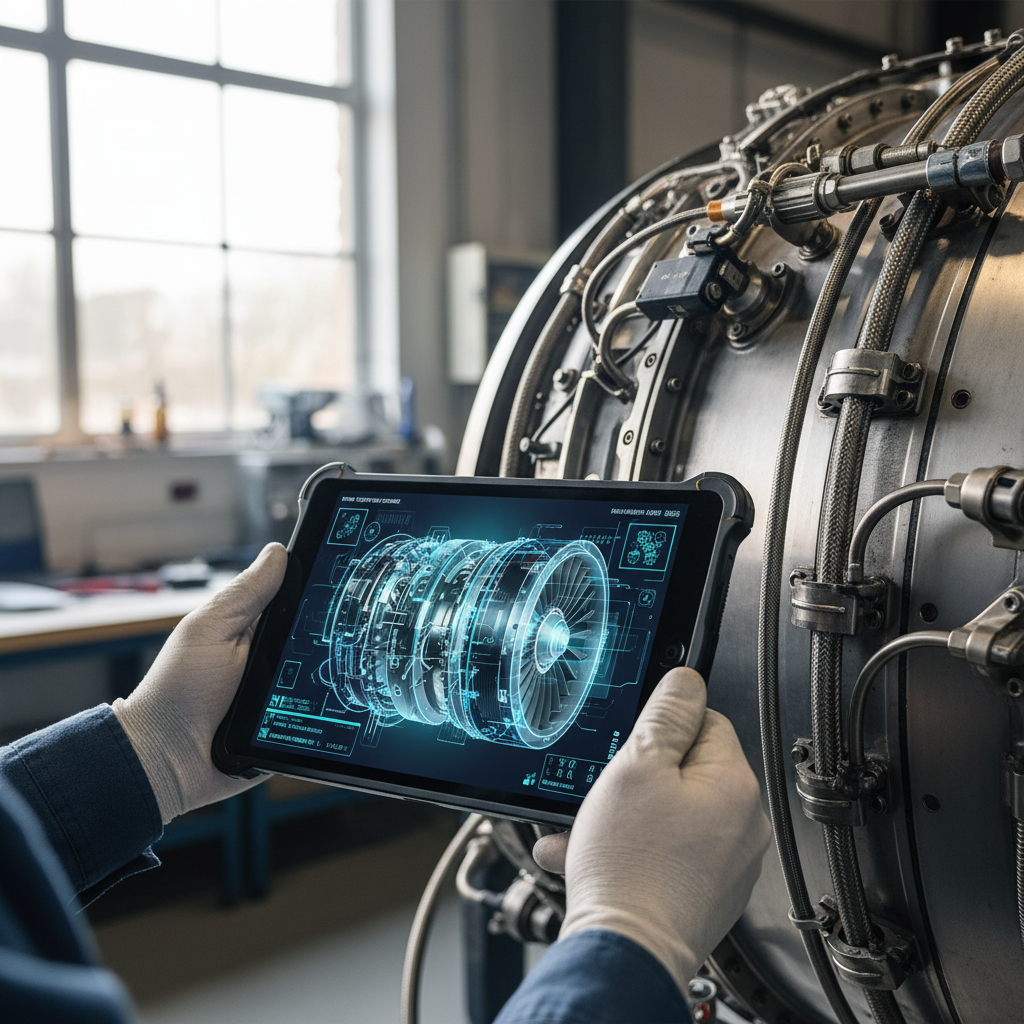
JetBlue Deploys Skywise Fleet Performance+ Across Entire Fleet
Three weeks after the Skywise subsidiary announcement, JetBlue signed an agreement to deploy Skywise Fleet Performance+ (S.FP+) across its A320 Family and A220 fleets. The platform uses aircraft sensor data and predictive analytics to optimize maintenance scheduling and reduce operational disruptions.
David Marcontell, Vice President of Technical Operations at JetBlue, stated: “By implementing state-of-the-art technology like Skywise Fleet Performance+, JetBlue is giving our Technical Operations team more advanced tools to monitor aircraft condition and health, respond more quickly, and plan maintenance more effectively.”
The deal signals a broader pattern: airlines are moving past pilot programs and committing to fleet-wide digital maintenance platforms.
Donecle Raises €10M to Scale Drone Inspections Globally
French drone-inspection company Donecle announced a €10 million funding round on April 15, 2026, aimed at international expansion of its AI-based visual inspection platform. The company now operates more than 40 drones in 15 countries, up from 30 at the start of 2025. Its solution holds certifications from Airbus, Boeing, EASA, and the FAA.
Matthieu Claybrough, co-founder and CEO of Donecle, said: “This new round of funding will give us the resources to scale up internationally and further confirm our market leading position by developing our technology and use of artificial intelligence.”
Donecle reports its patented solution completes inspections up to 10x faster than manual methods, cutting narrowbody general visual inspections to under 90 minutes compared to roughly 16 hours by hand. Customers include United, LATAM, DHL, Viva Aerobus, and Lufthansa. The funding arrives as the U.S. aviation industry faces a well-documented mechanic shortage, making automated inspection a labor necessity rather than a tech novelty.
Market Numbers: Digital MRO Growing Nearly Twice as Fast as Overall MRO Spend
Global MRO demand reached $136 billion in 2025, up 8% from $126 billion in 2024, with spending projected to approach $193 billion by 2030. The in-service commercial fleet stood at approximately 30,000 aircraft as of early 2026.
The digital layer is growing significantly faster. The digital aerospace MRO market is projected to grow from $1.02 billion in 2025 to $1.16 billion in 2026, a compound annual growth rate of 13.9%. Separate estimates from The Insight Partners project the segment reaching $4.56 billion by 2034 at a 12.13% CAGR.
Put simply: overall MRO is growing at roughly 8% per year. Digital MRO is growing at nearly 14%. The gap reflects how aggressively operators are investing in software, analytics, and automation relative to traditional maintenance spend.
Korean Air, Sahar Group Adopt Mobile-First Maintenance Workflows
Enterprise maintenance software deployments are also accelerating. Ramco Systems implemented its Aviation Suite at Korean Air, with over 400 mechanics now using mobile applications for paperless operations, reducing queue times for work orders. Separately, Sahar Group selected Ramco’s aviation software on March 5, 2026, to support its next growth phase.
These deployments join a broader shift toward mobile-first execution in the hangar. Swiss-AS, maker of the AMOS MRO platform, announced a new Electronic Data Interchange interface with Aeroxchange to streamline procurement workflows between MROs and suppliers. Operators are also adopting advanced tooling tracking systems to ensure critical maintenance equipment remains visible and available across multiple hangars.
Regulatory Framework Firms Up: FAA AC 120-78B Sets the Bar for Digital Records
The FAA’s Advisory Circular 120-78B now provides the definitive standard for electronic signatures, electronic recordkeeping, and electronic manuals in aviation maintenance. The circular mandates that systems uniquely identify the signatory, prevent unauthorized use, and create an immutable audit trail linking each signature to its specific record.
For MROs still running paper-based tech logs, the regulatory direction is clear. Compliance audits in the second half of 2026 are expected to scrutinize data integrity, version control, and identity management of electronic maintenance records with increasing rigor. Paper-based workflows are becoming a compliance risk, not just an efficiency problem.
Boeing and Ontic Expand Parts Distribution to Address Supply Chain Bottlenecks
Digital transformation in MRO extends beyond analytics and inspections into supply chain visibility. On April 23, 2026, at MRO Americas, Ontic and Boeing announced an expanded distribution agreement to supply Grimes engine valves to commercial airlines worldwide, adding more than 1,000 new parts to Boeing Distribution’s network.
William Ampofo, Senior Vice President at Boeing Global Services, stated: “By leveraging our capabilities, expertise and global network, this expanding agreement with Ontic ensures these critical engine valves are readily available where operators need them most, faster and more reliably.”

What to Watch: Q3 2026
Several developments are likely to shape the next quarter. Drone inspection approvals at major airline hubs are expected to accelerate following Donecle’s capital raise. API integrations between OEM platforms (Skywise, Lufthansa Technik’s AVIATAR) and execution systems like AMOS and Ramco will determine which vendors hold competitive ground. And generative AI tools purpose-built for maintenance manuals and fault-code troubleshooting are moving from pilot phases toward active hangar deployment.
The pattern across all these developments is consistent: digital MRO in 2026 is no longer about proving the concept. It is about scaling the infrastructure.








 +1 508 292 2210

5 Responses