

The global environmental monitoring market reached an estimated $15.33 billion in 2024 and is on track to surpass $21 billion by 2030. That is a lot of sensors, lab fees, and reporting software. Yet the most consequential environmental monitoring failure in recent American history was not caused by faulty equipment. In Flint, Michigan, the instruments measured lead just fine. The plan around those instruments collapsed at every layer that mattered.
An environmental monitoring plan (EMP) is a documented program that specifies what environmental conditions will be measured, where, when, by whom, using which methods, and what corrective action follows when a threshold is breached. It converts the predictions from an environmental impact assessment into repeatable evidence and accountable decisions.
That definition is clean on paper. In the field, the distance between “having a plan” and “having a plan that works” is where organizations lose money, permits, and public trust. This article covers what goes inside an EMP, where one is required, why they break down, and how connected technology is reshaping what these plans can actually detect.
What an Environmental Monitoring Plan Actually Covers
At its core, an EMP is an accountability document. It links five layers: baseline conditions before a project starts, the impact hypotheses from an environmental assessment, the indicators and sampling design chosen to test those hypotheses, the quality-assured data that comes from measurement, and the management actions triggered when something goes wrong.
UK EIA guidance frames the purpose well: monitoring should verify mitigation measures identified through the assessment, not serve as a general data-collection exercise. A plan that measures everything but decides nothing is expensive paperwork.
Most EMPs span three phases:
- Pre-construction (baseline). Documenting existing air quality, water chemistry, noise levels, and species presence before the project disturbs anything. Without this reference, you cannot prove later whether the project caused a detected change.
- Operational (construction or production). Active measurement during the period of highest impact. Dust, discharge, vibration, noise, erosion, habitat disturbance.
- Post-operational (restoration or closure). Verifying that the site recovers, that closure obligations are met, and that long-term impacts stay within predicted bounds.
The plan should also be proportionate. UK guidance specifies that monitoring should reflect the project’s nature, location, size, and effects. A small warehouse renovation does not demand the same intensity as an offshore wind farm or a deep-water dredging operation.
Here is what every working EMP needs to define:
| Component | What It Defines | Why It Matters |
|---|---|---|
| Purpose and decisions | The management question the data will answer | Without this, you collect data nobody uses |
| Baseline | Pre-project environmental conditions | The reference point for all future comparisons |
| Parameters | What you measure (pH, turbidity, PM2.5, species counts, noise dB) | Each must connect to a predicted impact or permit limit |
| Sampling locations | Where measurements happen, with spatial justification | Upstream vs. downstream, upwind vs. downwind, near vs. far |
| Frequency and timing | Continuous, daily, weekly, seasonal | Must match the dynamics of the parameter and the risk |
| Methods and instruments | Specific analytical or sensor methods, detection limits | Determines whether results hold up under regulatory scrutiny |
| Responsibilities | Who collects, who analyzes, who reviews, who acts | The single most common failure point |
| QA/QC | Calibration, blanks, duplicates, chain of custody, data validation | Without this, numbers are just numbers |
| Thresholds and triggers | Action levels, permit limits, ecological benchmarks | Defines when monitoring converts to intervention |
| Corrective actions | What happens when a threshold is breached | Stop-work orders, resampling, notification, remediation |
| Reporting | Who receives results, in what format, on what schedule | Transparency and regulatory compliance |
| Budget | Instruments, personnel, lab fees, data systems, maintenance | Underfunded plans decay into symbolic gestures |
A World Bank project plan shows this in practice: it assigns a specific organization to each monitoring activity, names sampling locations, and organizes the schedule by parameter and frequency. That level of specificity is what separates an actionable plan from a vague commitment.
EMP, EMS, and QAPP: Clearing Up the Alphabet
Three acronyms create most of the confusion, and they show up in almost every environmental permitting conversation.
An Environmental Management Plan (sometimes also abbreviated EMP) is the broader framework for preventing, mitigating, and controlling environmental impacts across a project. It covers operational procedures, training, waste handling, emergency response, and stakeholder communication. The monitoring plan sits inside it as the measurement and evidence layer.
An Environmental Management System (EMS), typically aligned with ISO 14001, is an ongoing organizational framework for managing environmental responsibilities enterprise-wide. It is not project-specific.
A Quality Assurance Project Plan (QAPP) is the evidence-quality companion to the monitoring plan. EPA’s QAPP standard requires defining data quality objectives so quality goals are explicit and communicated across the project team. The monitoring plan says what to measure and why. The QAPP says how to make the result defensible in court, in an audit, or in front of a regulator.
In practice, these documents overlap. Some organizations combine them. Some keep them separate. The form matters less than whether each function (management, monitoring, quality assurance) exists somewhere in writing, with named owners who actually read the document.
Where Environmental Monitoring Plans Apply
EMPs are not optional extras bolted onto a project for good optics. They are embedded in permits, environmental assessments, lender safeguards, and restoration programs across virtually every industry that touches the natural environment, from mining and construction to environmental monitoring in the pharmaceutical industry.
Water discharge and drinking water
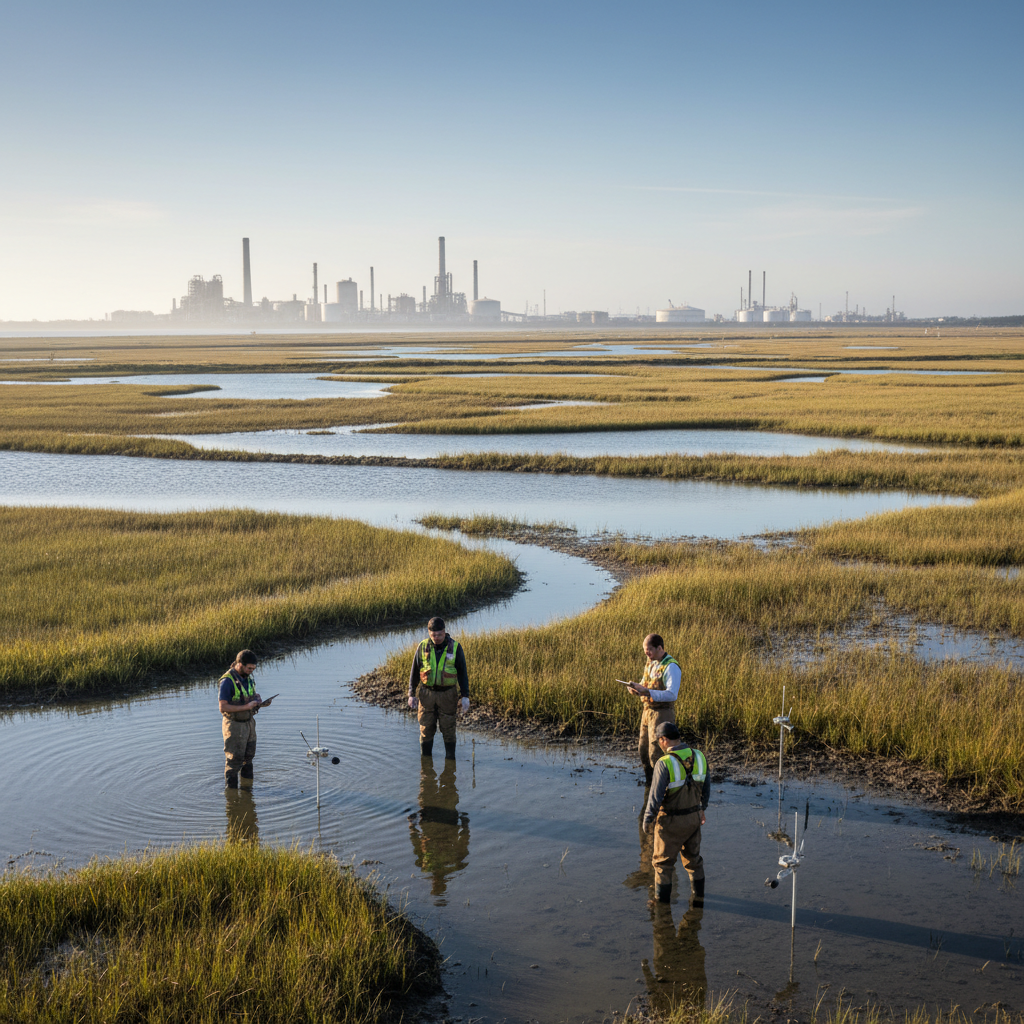
Under the US NPDES program, a discharge permit includes monitoring and reporting requirements designed to protect water quality. Facilities must sample effluent, submit results publicly, and notify EPA when they fall out of compliance. Enforcement tools range from administrative orders to criminal penalties.
The newest pressure point is PFAS. EPA’s drinking-water rule sets enforceable limits for six PFAS compounds, including individual maximums of 4.0 parts per trillion for PFOA and PFOS. Public water systems must complete initial monitoring by 2027 and implement treatment by 2029 where limits are exceeded. That first deadline is next year. If your system has not started planning the sampling protocol, you are behind.
Construction and infrastructure
Construction EMPs typically track dust, noise, vibration, stormwater discharge, erosion, waste, and community exposure. The best ones go further: they define stop-work order triggers, species-protection timing windows (no work near nesting raptors during breeding season), spill notification timelines (within two hours), and post-construction soil restoration checklists.
The common failure here is treating the plan as a permit-filing exercise. Dust monitors get installed but nobody checks them daily. Noise complaints come in but nobody correlates them to specific equipment or shifts. The plan exists on a shelf. The feedback loop does not exist at all.
Mining and resource extraction
Mining plans demand long time horizons. Groundwater, surface water, acid mine drainage, metals, dust, tailings stability, and closure obligations can extend decades beyond active extraction. A recent mining case study warns that water impacts can be more persistent, costly, and spatially extensive than standard reporting suggests, particularly when important pathways are left out of the monitoring scope.
That is the compliance-only trap at work. A plan that proves permit conditions were met while missing cumulative, downstream, or delayed effects is technically compliant. It is also practically insufficient.
Ecosystem restoration
Restoration projects show monitoring at its most extended. The Chesapeake Bay program spans more than 40 years of multi-jurisdictional effort, using monitoring data to track progress and recalibrate strategies. After Deepwater Horizon, NOAA’s damage assessment involved more than 20,000 field trips and 100,000 samples. Through 2024, trustees had approved 368 restoration activities, including nearly 1,200 acres of new marsh habitat in coastal Louisiana.
These are not compliance checkboxes. They are the only mechanism to determine whether the billions spent on environmental recovery actually produced ecological results, and they illustrate the real advantages of environmental monitoring at scale.
Why Environmental Monitoring Plans Fail
Most plan failures are not technical. They are organizational. The instruments measure. The governance around those instruments does not function.
Flint remains the textbook example. EPA’s Inspector General found that Michigan’s environmental agency did not issue a formal violation notice until August 2015, months after evidence of water quality problems emerged. EPA Region 5 received inaccurate information about corrosion-control treatment in February 2015. A disagreement over Lead and Copper Rule requirements persisted until a headquarters memorandum in November of that year. The OIG identified weaknesses in four specific areas: roles, risk assessment, communications, and proactive oversight.
Lead was in the water. The instruments detected it. The plan failed at every step after detection: who interprets the data, who must be notified, by when, and what action is mandatory when the numbers cross a line.
Three patterns recur across EMP failures in every industry I have seen:
- Responsibility without authority. The monitoring team collects data but cannot stop work, order resampling, or escalate to a regulator without navigating multiple approval layers. By the time the chain completes, the exceedance has been running for weeks.
- Thresholds without responses. The plan defines alert levels but says nothing concrete about what happens next. A breach gets logged, included in a quarterly report, and discussed at the next review meeting. That is a filing system, not a corrective action.
- Compliance-only scope. The plan measures exactly what the permit requires and nothing else. Cumulative impacts, downstream receptors, delayed effects, and community health concerns fall outside the monitoring perimeter. The project satisfies its permit while missing its actual footprint.
Designing around these failures is not complicated. It requires naming a specific decision-maker for every threshold, setting escalation deadlines in hours (not “as soon as practicable”), and including receptors and pathways that matter even when the permit does not explicitly demand them.
Technology Reshaping Environmental Monitoring
The shift from periodic grab sampling to continuous, connected monitoring is the most significant operational change in how EMPs function. It does not eliminate the need for laboratory analysis or human judgment, and continuous environmental tracking raises its own questions about data overload. But it compresses the gap between “something changed” and “someone knows.”
Connected sensors and IoT networks
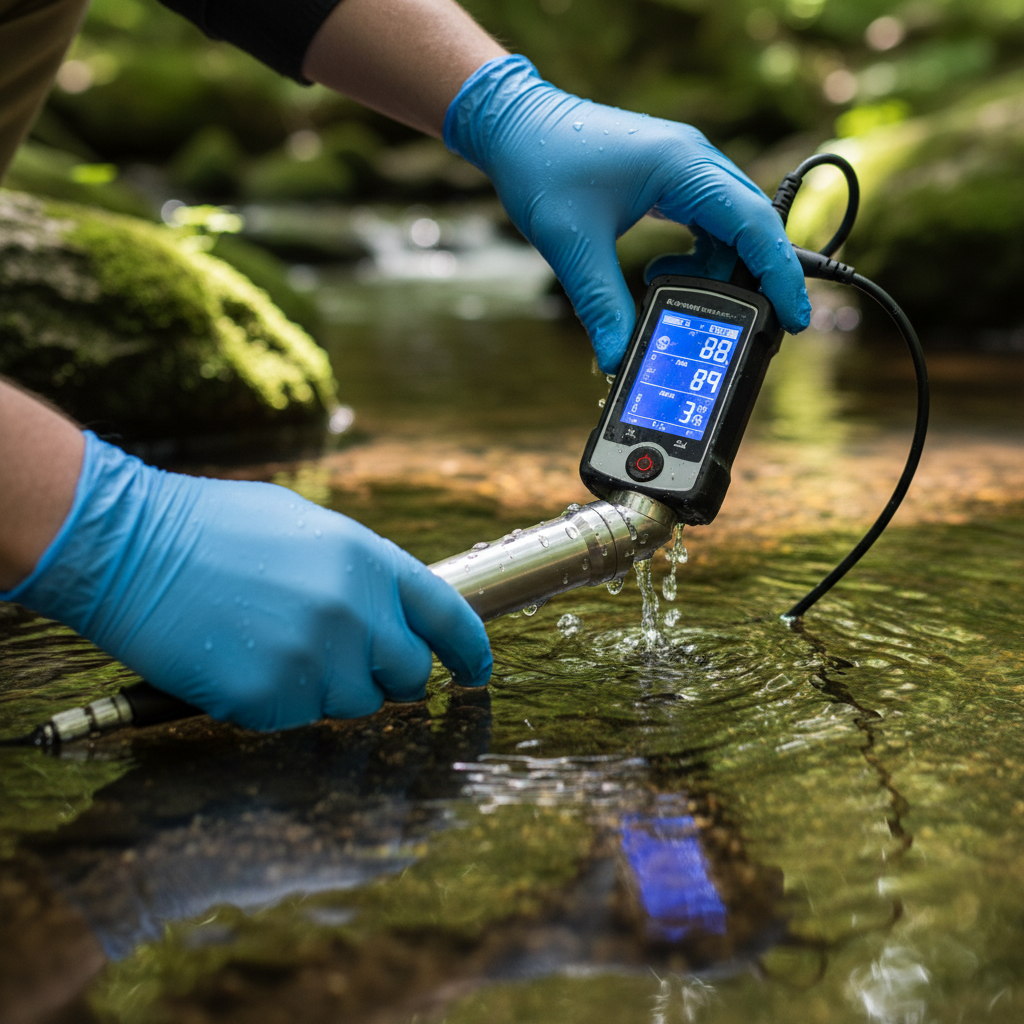
Online analyzers now track pH, dissolved oxygen, turbidity, ammonia, conductivity, and organic carbon continuously, flagging deviations in real time instead of waiting for a monthly lab report. Deployable IoT sensors for temperature, humidity, soil moisture, and water level have reached price points that make dense field networks feasible for projects that could never justify permanent monitoring stations.
The value is temporal resolution. A monthly grab sample captures one moment. A connected sensor captures the other 43,799 minutes in between. For fast-changing parameters (storm events, industrial discharges, temperature spikes in sensitive ecosystems), that difference separates catching a problem from documenting it after the damage is done.
The USGS already operates more than 13,500 real-time stream, lake, reservoir, and groundwater monitoring locations across the United States. That infrastructure gives a sense of scale. But most project-level EMPs still rely on periodic manual sampling, leaving significant time gaps in the data record.
The trade-off with sensors is maintenance. They drift, foul, lose power, and drop connectivity. A cheap sensor network that produces ambiguous data is not cheaper than a smaller, calibrated, decision-linked program. Every sensor in a monitoring plan needs a calibration schedule, a maintenance owner, a validation protocol, and a defined procedure for when it goes offline.
Remote sensing and satellites
AI-assisted satellite programs now translate methane observations into mitigation action for oil and gas operations at scales that ground networks cannot match. The EU’s recast ambient air quality directive (2024/2881) pushes toward more demanding monitoring that includes particle-number measurements alongside traditional mass-based PM metrics.
The correct design is layered. Satellite or aerial screening identifies anomalies. Ground sensors and lab samples verify them. Models estimate spatial extent. Repeat measurements test whether corrective action worked. Remote sensing extends coverage. It does not replace the verification step.
Environmental DNA
A 2025 review identifies eDNA and bioinformation technology as tools for detecting organisms from genetic traces in water, soil, and air samples. For restoration plans tracking species recovery, eDNA adds reach and scalability to conventional surveys. For regulatory compliance plans, the method is still finding its evidentiary footing. Expect wider adoption over the next few years, particularly in aquatic ecosystem monitoring.
Designing a Plan That Survives Contact with Reality
The single most useful design principle: work backward from decisions, not forward from instruments.
Start with the management question. What decision will this data support? Whether a discharge meets permit limits. Whether construction dust controls are actually controlling dust. Whether groundwater contamination is migrating. Whether a restored wetland is recovering habitat function. Every parameter in the plan should trace back to one of these questions. If it does not, cut it.
From there, six steps separate plans that work from plans that get filed and forgotten:
- Establish a real baseline before breaking ground. Pre-project data should cover at least one full seasonal cycle for parameters with natural variability. Skipping this step means every future measurement floats without a reference point.
- Pick indicators that trigger action, not just reports. For each parameter, define a numerical threshold. For each threshold, define a specific response: who is notified, within what timeframe, what authority they hold, and what the next concrete step is.
- Assign accountability to individuals, not departments. “The environmental team will review results” is not accountability. A named person with authority to issue a stop-work order, within a defined response window, is accountability.
- Build quality controls into the plan itself. Calibration schedules, duplicates, blanks, chain-of-custody protocols, data validation rules, and missing-data procedures belong in the monitoring plan or its paired QAPP. If they live in a separate document nobody opens, they do not exist.
- Budget for the full lifecycle. Instruments, people, laboratory fees, data platforms, replacement parts, corrective actions, and annual reviews. An underfunded monitoring program quietly degrades into symbolic compliance within 18 months.
- Schedule adaptive reviews. A static plan becomes irrelevant when conditions, regulations, or project scope change. Build in at minimum annual reviews, plus trigger-based reassessments when the data show unexpected patterns.
The environmental monitoring market is projected to reach $20.1 billion by 2030. That growth reflects tighter regulation, climate risk, water stress, and the demand for continuous evidence. A 79% decline in combined emissions of six common US air pollutants since 1970 shows what decades of sustained monitoring and enforcement can achieve at scale. But progress at the national level coexists with local exceedances and emerging contaminants. Site-level plans are where the actual accountability lives.
The organizations that benefit most are not the ones buying the most sensors. They are the ones building monitoring programs where every sensor answers a decision question and every question has an owner.
If your environmental monitoring plan depends on periodic sampling and you are evaluating whether continuous IoT sensors could close the time gaps in your data, our environmental tracking devices are designed for exactly that problem. Talk to our team at info@datanetiot.com.
Frequently Asked Questions
What is an environmental monitoring plan?
An environmental monitoring plan (EMP) is a documented program that specifies what environmental parameters will be measured, where, when, by whom, using which methods, and what corrective action follows when thresholds are exceeded. It converts the impact predictions from an environmental assessment into repeatable evidence and decisions with named owners.
How is an EMP different from an environmental management plan?
An environmental management plan is the broader framework covering impact prevention, mitigation, operations, training, and emergency response. The monitoring plan is the measurement and evidence layer within it. They are often combined into a single document but serve distinct functions: one manages, the other measures and verifies.
Who is responsible for implementing an EMP?
The project proponent (developer, operator, or permit holder) typically funds and executes the plan. Regulatory agencies oversee compliance and can enforce consequences. Internally, the plan should assign specific individuals to each monitoring task, with clear authority to escalate and act when thresholds are breached.
How often should environmental monitoring be conducted?
Frequency depends on the parameter, regulatory requirement, risk level, and how quickly conditions can change. Continuous sensor monitoring suits fast-moving variables like water discharge or air quality near active construction. Weekly or monthly laboratory sampling works for stable parameters or analytes requiring specialized methods. The plan should justify its chosen frequency and revise it when data reveal gaps.
Can IoT sensors replace laboratory sampling in an EMP?
Not entirely. IoT sensors provide high-frequency screening and real-time alerts that lab sampling cannot match for temporal coverage. But laboratories offer greater analytical specificity, lower detection limits, and stronger regulatory acceptance. The most effective plans layer both: sensors for continuous context and early warning, laboratories for confirmation and compliance-grade evidence.
What is the most common reason environmental monitoring plans fail?
Governance failures, not instrument failures. EPA’s investigation of the Flint water crisis found that unclear roles, weak communication, disputed data interpretation, and delayed escalation were the root causes. Plans fail when they define what to measure but leave ambiguous who decides, who acts, and by when.





 +1 508 292 2210

One Response