

A warehouse in Antwerp loses $400K in pharmaceutical stock because a cooler failed on a Friday night and nobody knew until Monday. A vineyard in Portugal’s Douro region avoids crop loss because eight LoRaWAN nodes report soil moisture and atmospheric conditions every 15 minutes, with zero communication losses over the growing season. Same category of technology. Wildly different outcomes. (See also: aquaculture water quality monitoring.)
The difference is not the sensor. It is the system behind it: connectivity choice, data quality, alert logic, and whether someone actually acts on the reading before damage is done. Wireless environmental monitoring is a $14-plus billion market, and most of the money wasted in it comes from treating it as a hardware purchase instead of a decision architecture.
I have spent 15 years deploying IoT tracking and monitoring systems across aviation, logistics, agriculture, and industrial supply chains. The pattern I see repeated is this: companies buy sensors, get dashboards, and still miss the event that matters. This article is a field-level breakdown of what wireless environmental monitoring actually requires, how connectivity choices shape outcomes, and where the real ROI lives.
What Wireless Environmental Monitoring Is (and What It Is Not)
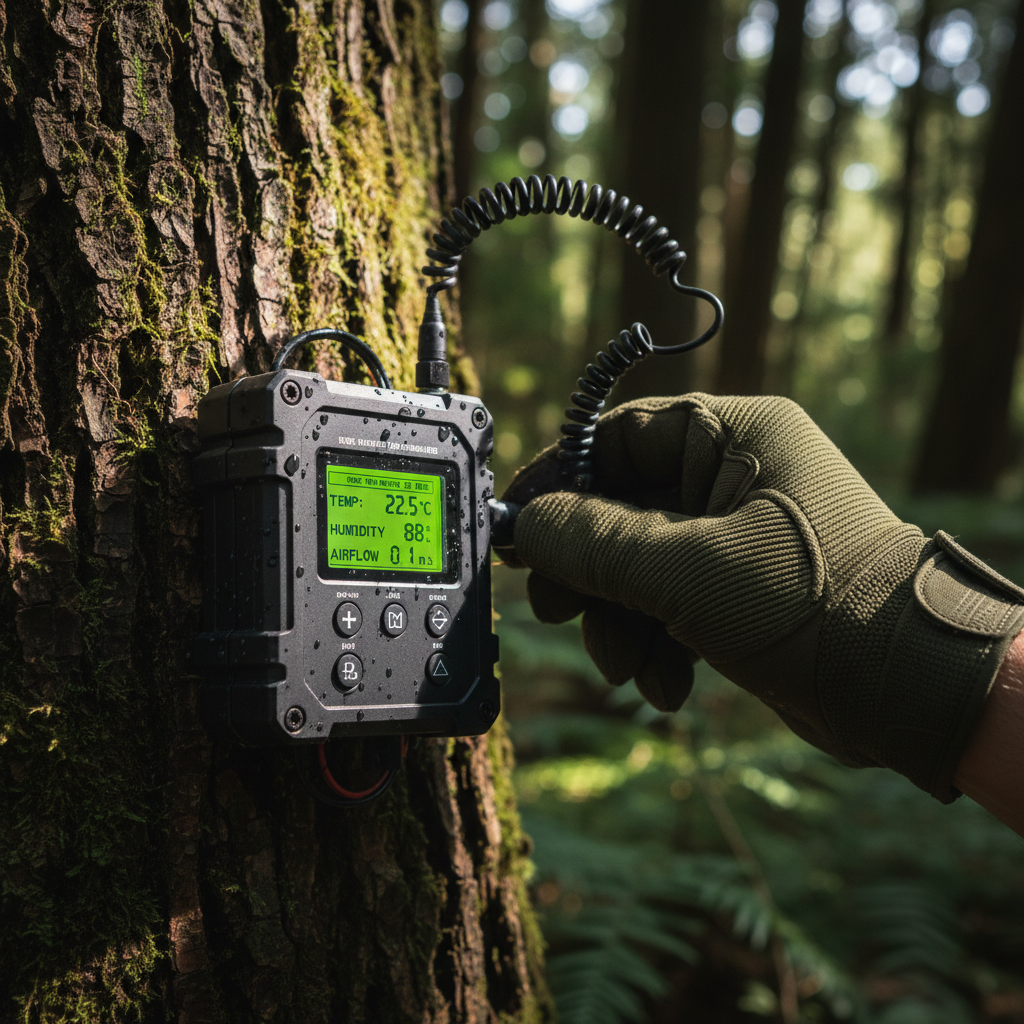
At its simplest, wireless environmental monitoring uses sensors, a wireless communication layer, and remote software to observe physical conditions and deliver data, alarms, or automated actions. The same architecture applies to air, water, soil, weather, indoor climate, habitat, noise, and industrial assets.
What it is not: a product you plug in and forget. Every deployment I have been part of, from cold-chain pharmaceutical tracking to port-side container monitoring, required decisions about four layers:
- Sensing: which physical parameter, at what accuracy, and how often.
- Connectivity: LoRaWAN, cellular, Wi-Fi, Bluetooth, satellite, or a combination.
- Processing: gateway buffering, cloud analytics, alarm routing.
- Action: who gets the alert, in what time, and what they do with it.
Strip any one of those layers and you have a data collection hobby, not a monitoring system. A 2024 smart-water study defines the minimum architecture as sensing, communication, and head-end systems, with the head end responsible for acquisition, analysis, storage, management, and control. That last word is the one most buyers overlook.
The Real Connectivity Decision (WiFi vs LoRaWAN vs Cellular vs Satellite)
Every vendor page will tell you their radio technology is the right one. Here is what the field teaches: the right technology is the one that fits your geography, power budget, and message payload. Nothing else.
| Technology | Best Fit | Range / Power | Main Trade-Off |
|---|---|---|---|
| LoRaWAN (LPWAN) | Wide-area fixed sensors: farms, warehouses, water, cities | Up to 15 km range, up to 10 years battery life | Small message payloads. Requires gateway planning. |
| Cellular (NB-IoT, LTE-M, 4G/5G) | Moving assets, managed wide-area, sites inside carrier coverage | Carrier-dependent. Higher power draw than LPWAN. | Subscription cost. Less control than private gateways. |
| Wi-Fi / BLE | Buildings, equipment clusters, commissioning, short-range | Tens of meters. Bluetooth’s Environmental Sensing Service supports a wide range of parameters. | Needs gateway for cloud backhaul. Range limits in industrial settings. |
| Mesh (802.15.4, Zigbee) | Obstructed sites, dense installations | Nodes relay around obstacles | Failed relay nodes affect downstream paths. More maintenance. |
| Satellite / NTN | Oceans, wilderness, remote agriculture, maritime | Global, but delay-tolerant. 3GPP Release 17 standardizes NTN for IoT coverage. | Higher latency, higher message cost, terminal power. |
The LoRa Alliance reported more than 125 million LoRaWAN end devices deployed globally at a 25% ecosystem CAGR. That is mainstream, not experimental. But “mainstream” does not mean universal. A cold-chain trailer crossing three countries on a 48-hour route needs cellular, not LoRaWAN. A container sitting at a port for weeks needs something battery-efficient and wide-area. An aircraft maintenance facility with concrete walls and metal racking needs to test signal propagation before committing to any protocol.
The emerging option is hybrid connectivity. Multiple vendors now offer devices that combine 5G NTN and cellular routing in a single device family, automatically selecting the cheapest available path. GSMA projects 38.7 billion IoT connections by 2030, with ambient IoT, eSIM, and NTN as growth drivers. 3GPP Release 17 standardizes NTN for IoT coverage, laying the groundwork for these hybrid architectures. For environmental monitoring in mixed-coverage zones (think maritime to inland, or rural to urban), hybrid eliminates the “choose one” constraint.
My recommendation: specify the application payload and latency first. Then test the radio in the actual terrain, building material, and weather conditions. A $200 pilot sensor that proves your gateway covers the facility is worth more than a $50,000 deployment that discovers dead zones on day two.
What You Can Measure (and What Actually Matters)
The list of measurable parameters is long: temperature, humidity, pressure, PM2.5, CO2, VOCs, noise, pH, dissolved oxygen, turbidity, nitrates, chlorophyll, soil moisture, radiation, wind, precipitation. USGS continuous water-quality monitoring tracks temperature, conductance, dissolved oxygen, turbidity, nitrate, chlorophyll, cyanobacteria, and pH across more than 13,500 real-time locations.
But here is where operational thinking diverges from catalog thinking. The question is not “what can we measure?” It is “what measurement, at what accuracy and frequency, triggers an action that protects value?”
In aviation MRO, a temperature excursion in a parts storage area does not just risk product quality. It voids warranty terms and creates compliance exposure. Facilities tracking these readings often overlap with their broader emissions accounting, since equipment and on-site combustion tie directly into scope 1 emissions and shape the ESG reporting requirements they must satisfy, often aligned to established sustainability reporting standards. In cold-chain pharma, the measurement itself is the compliance record. In agriculture, soil moisture data only matters if it reaches the irrigation controller before the crop stress window closes.
The parameter choice drives the sensor cost, calibration burden, battery life, and data volume. Measuring temperature and humidity with a $100 device every 15 minutes is a solved problem. Measuring PM2.5 with a low-cost sensor and expecting regulatory-grade accuracy is not. EPA’s Air Sensor Toolbox makes this explicit: low-cost sensors can incorrectly estimate pollutant levels relative to regulatory-grade monitors. The toolbox emphasizes performance evaluation, collocation with reference monitors, and data interpretation.
The Cost Nobody Talks About: Calibration, Maintenance, and Data Trust
The GAO published a technology assessment that every environmental monitoring buyer should read. Typical low-cost sensor purchase prices range from $100 to $5,000, while instruments used in approved national ambient monitoring methods cost $15,000 to $40,000. That price gap is real, and it has enabled massive sensor density. EPA’s AirNow Fire and Smoke Map network included nearly 13,000 crowdsourced PurpleAir sensors, collocated and corrected against reference data at more than 70 U.S. locations.
But the GAO report also notes that calibration, maintenance, data storage, and installation add costs beyond the device. This is where I see budgets break in practice. Teams buy 200 sensors, deploy them in a week, and then discover six months later that 30% have drifted, 10% have dead batteries, and nobody owns the calibration schedule.
A 2024 calibration review identifies cross-sensitivity, temperature, wind speed, relative humidity, and turbulence as confounders that degrade sensor accuracy over time. One evaluated comparison showed an R² of 0.89 against a reference instrument. Acceptable for trend detection. Dangerous for regulatory compliance decisions.
The practical rule: budget 30-50% of hardware cost for annual calibration, battery replacement, firmware updates, and data-quality audits. If your vendor cannot tell you what the calibration protocol looks like in year three, you do not have a monitoring solution. You have a sensor collection.
Security is not optional
NIST warns that wireless physical attacks can manipulate sensor results and recommends device inventories, vulnerability management, access control, activity monitoring, and information-lifecycle governance. A false temperature reading in a pharma cold room does not just waste product. It creates a compliance breach with regulatory and legal consequences.
Secure the entire chain: device identity, encrypted transport, least-privilege access, firmware patching, and retention rules. The sensor and the data it produces are one security surface, not two.
Where Wireless Environmental Monitoring Delivers Measurable ROI
Let me walk through real deployments, not hypotheticals.
Civil infrastructure
Libelium’s deployment at the Villaperez water-treatment-plant construction in Oviedo, Spain used four Waspmote Plug & Sense platforms connected to a Meshlium gateway. The reported outcomes: 40-80% reduction in measurement and impact-monitoring time, 90% shorter alarm response time, and 40% cost savings. Those are vendor-reported numbers, so ask about the baseline and observation period. But the direction is consistent with what I see in the field: the ROI is in response time, not sensor price.
Precision agriculture
The Portuguese vineyard study combined atmosphere, plant, and soil sensors using Class A LoRaWAN modules transmitting every 15 minutes through a gateway connected via GSM/LTE. Eight modules operated with no communication losses and battery voltages above 4V across the monitoring period. For a vineyard where irrigation timing directly affects yield and quality, that data flow is worth multiples of the hardware cost. The same LoRaWAN water-quality principles apply to dissolved oxygen monitoring in aquaculture, fish farm monitoring, and broader remote aquaculture monitoring, where a delayed reading can wipe out an entire stock.
Regulated facilities
Pharmaceutical warehouses, biotech labs, hospitals, and food storage require continuous monitoring with audit trails. Vaisala’s Jade Smart Cloud and viewLinc systems support wireless temperature and humidity monitoring across GxP-regulated environments with Part 11/Annex 11 compliance records. The value here is not just “knowing the temperature.” It is having a defensible, timestamped, tamper-evident record when the auditor arrives.
Air quality networks
EPA worked with more than 30 state, local, and tribal air agencies to collocate PurpleAir sensors at more than 70 locations, then developed correction equations so that crowdsourced data could be displayed alongside regulatory and temporary smoke monitors. The result: a 13,000-sensor network that gives communities real-time spatial detail during wildfire events. The network works because it pairs cheap sensors with calibration discipline, not because the sensors are cheap.
How to Choose a Wireless Environmental Monitoring System
After deploying and integrating systems across industries, I use a six-step framework that starts with the decision, not the device.
- Define the action. What will someone do when the reading crosses a threshold? If the answer is unclear, the monitoring system will produce dashboards nobody acts on.
- Specify accuracy and latency. Regulatory compliance needs different accuracy than trend monitoring. A freezer alarm needs minutes, not hours. A soil moisture decision for weekly irrigation can tolerate longer intervals.
- Select sensors and calibration methods. Match the transducer to the parameter, environment, and maintenance capacity. Budget for collocation, drift checks, and replacement cycles.
- Choose connectivity and power. Use the table above. Test in the actual physical environment. Concrete, metal racking, motor interference, and weather all change radio performance.
- Design for failure. What happens when the gateway loses power? When the cloud goes offline? When a sensor battery dies? Local safety rules should operate even when connectivity is down.
- Pilot before scaling. Deploy 5-10 nodes in the hardest conditions at your site. Run for 30-60 days. Validate coverage, battery life, alert latency, and data quality. Then scale.
The mistake I see most often is inverting this sequence: teams pick a radio brand first, buy sensors second, and define the action last. That is how you end up with 500 connected devices and no operational improvement.
The Gap Most Systems Leave Open
Here is something the SERP does not cover. Most wireless environmental monitoring discussions treat the sensor as a stationary object. But in logistics, aviation, and industrial supply chains, the assets move. A reusable container goes from warehouse to truck to port to ship to destination, then (hopefully) back. An aircraft GSE cart moves across a tarmac in varying temperature and humidity conditions.
If your environmental sensor only reports when it is within range of a single gateway, you have a building monitoring system, not an asset monitoring system. The environmental data is only useful if it stays attached to the asset identity across the full cycle: outbound, dwell, return, reuse.
This is where environmental tracking meets asset tracking. The two are not the same product category, but they share an architecture, and the best deployments combine them. A temperature logger inside a pharma container is an environmental sensor. Knowing which container it is, where that container has been, how long it dwelled at the port, and whether the temperature stayed within spec across the entire journey: that is an environmental monitoring system that actually protects value.
Perguntas frequentes
What is wireless environmental monitoring?
It is the use of sensors combined with wireless communications and remote software to observe physical or environmental conditions (temperature, humidity, air quality, water quality, soil moisture, and more) and convert those readings into alerts, records, or automated actions. The same architecture serves indoor facilities, outdoor infrastructure, agriculture, water systems, and mobile assets.
Which wireless technology is best for environmental monitoring?
There is no universal answer. LoRaWAN suits wide-area, low-data, battery-operated fixed deployments. Cellular fits moving assets and managed wide-area needs. Wi-Fi and Bluetooth work for buildings and local clusters. Satellite or NTN covers remote and maritime zones. The right choice depends on geography, message payload, latency, power budget, and maintenance capacity.
Can low-cost wireless sensors replace regulatory-grade monitors?
Not as direct replacements. EPA states that low-cost sensors can incorrectly estimate pollutant levels relative to regulatory monitors. However, when collocated with reference instruments and corrected, low-cost networks add valuable spatial detail. The best approach treats them as supplemental sources, not substitutes.
How long do batteries last in wireless environmental sensors?
Published figures cite up to 10 years for LoRaWAN and certain commercial products using low reporting intervals. Actual life depends on transmission frequency, radio retries, temperature extremes, signal quality, and sensor warm-up requirements. Always validate the energy budget against your worst-case operating conditions, not the laboratory specification.
What does wireless environmental monitoring cost?
Low-cost sensors range from $100 to $5,000 per unit, while regulatory-grade instruments cost $15,000 to $40,000. But the total cost of ownership includes calibration, maintenance, data storage, gateway infrastructure, connectivity subscriptions, and integration. Plan for 30-50% of hardware cost annually in operational expenses.
How do I secure a wireless environmental monitoring deployment?
NIST recommends maintaining a device inventory, authenticating devices, restricting physical and logical access, patching firmware, monitoring for anomalous activity, encrypting data in transit and at rest, and governing the full information lifecycle. Wireless sensor security and measurement assurance are linked, because a compromised sensor produces false data.
If your environmental monitoring stops at the facility door, or if your sensor data cannot follow an asset through its full operational cycle, that is the gap worth closing. Our team at Datanet builds wireless environmental monitoring systems that combine environmental tracking hardware with asset-level visibility across the entire journey. If you want to talk through what that looks like for your operation, reach out to us directly, or drop a line at info@datanetiot.com.








 +1 508 292 2210

12 Responses