

Cargo theft losses hit an estimated $725 million in 2025, with the average value per incident jumping 36% year-over-year to $273,990. Tampering attempts rose 27% over the previous year. These numbers aren’t random. They point to a specific failure: the air cargo chain of custody breaks not where people expect (forged documents, corrupt agents) but in the physical gaps between documented handoffs.
If you manage compliance, logistics security, or freight operations for anything moving by air, this is the piece I wish existed when I started working custody problems in the field. We’ll cover what chain of custody actually means in regulatory terms, where it structurally fails, and how continuous asset visibility (not just paperwork) closes those gaps.
What Air Cargo Chain of Custody Actually Means
Chain of custody in air cargo is the documented, auditable record of every transfer of physical or documentary control from the point of origin to the moment goods are loaded on the aircraft. The ICC Compliance Center defines six legally distinct security controls in the sequence:
- Manufacturer safeguards (product integrity at source)
- Shipper safeguards (packaging, Known Consignor declaration)
- Transportation safeguards (in-transit between origin and handler)
- Ground-handling safeguards (warehouse acceptance, storage)
- Acceptance by the regulated agent (the formal “acceptance point”)
- Cargo acceptance into airline custody (load-ready)
Each link carries its own documentation requirement. At minimum, an international air shipment needs an Air Waybill (AWB), Commercial Invoice, Packing List, Certificate of Origin, and applicable import/export licenses. For dangerous goods, pharmaceuticals, or CITES-regulated species, the stack grows.
The chain of custody is both a security artifact (proving no unauthorized access) and a legal instrument (establishing liability at each transfer). When a seal is broken, a temperature log gaps, or a handoff goes unrecorded, the chain isn’t “weakened.” It’s severed. And severed chains cost real money: rejected shipments, insurance disputes, regulatory penalties, or worse.
The Regulatory Framework: TSA, ACAS, ACC3, and ICAO Annex 17
Four regulatory regimes govern air cargo custody depending on your geography and role in the supply chain.
TSA and the Certified Cargo Screening Program (CCSP)
In the United States, TSA mandates 100% screening of cargo on passenger aircraft at a level commensurate with passenger baggage. The CCSP allows shippers, indirect air carriers (IACs), and independent cargo screening facilities (CCSFs) to perform that screening upstream, rather than at the airport. Every individual with unescorted cargo access must pass a Security Threat Assessment (STA). The original 2006 rule estimated total industry compliance cost at $51 million.
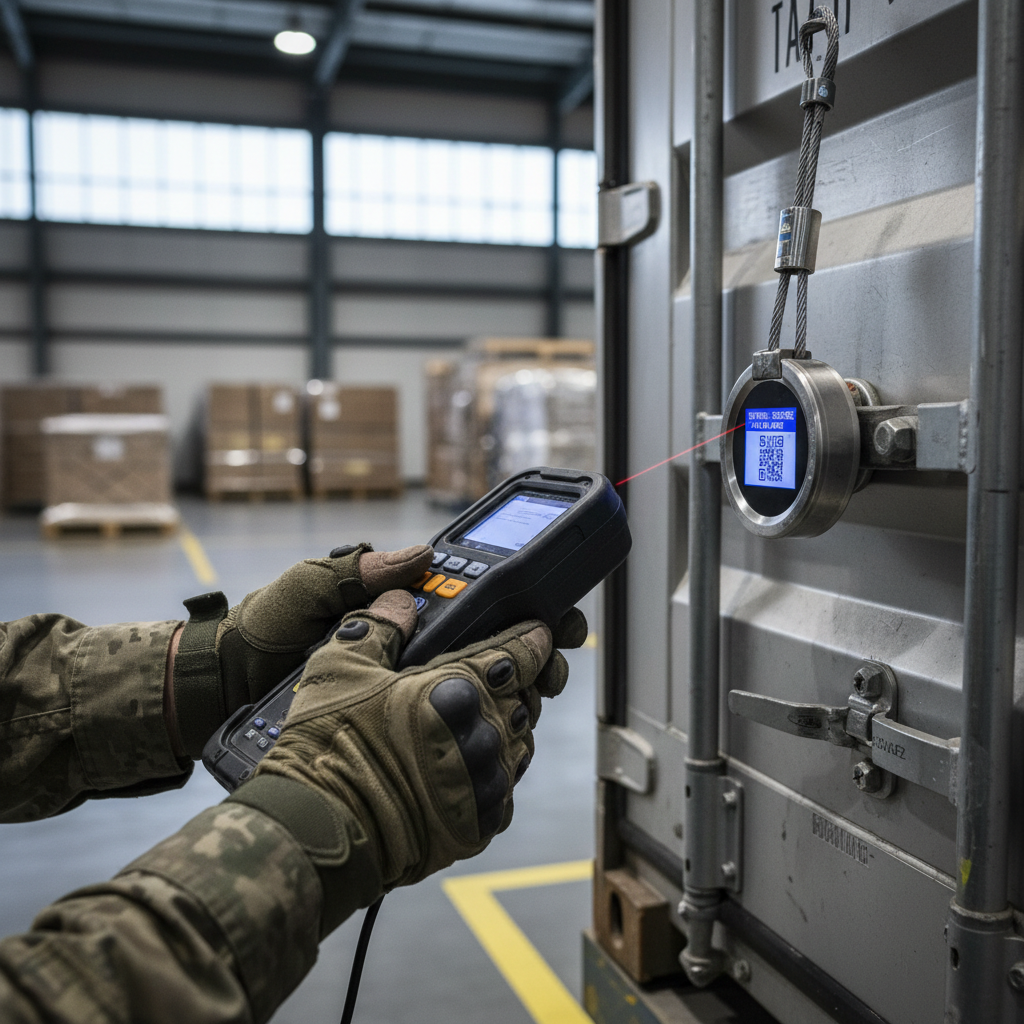
The operational effect: once cargo is screened at a CCSP-certified facility and sealed with a tamper-evident device, the chain of custody must remain unbroken until airline acceptance. Any break (seal removed, cargo accessed, vehicle left unattended without proper locks) means the shipment must be re-screened.
ACAS (Air Cargo Advance Screening)
CBP’s ACAS program, effective since June 2018, requires advance electronic transmission of master AWB and house AWB data at least four hours before a laden aircraft departs for the United States. This is the digital pre-departure layer: it lets CBP flag high-risk shipments before they enter U.S. airspace. For shippers, it means your data quality directly affects whether your cargo clears or gets held.
EU ACC3 Designation
For flights entering the European Union from third-country airports, the operating air carrier must hold an ACC3 designation (Air Cargo or Mail Carrier operating into the Union from a third country airport). Cargo must either be physically screened or originate from a validated secure supply chain with Known Consignor (KC3) and Regulated Agent (RA3) status. The European Commission’s aviation security framework makes this a non-negotiable condition of carriage.
ICAO Annex 17
At the international level, ICAO Annex 17 sets the baseline standards that national programs (TSA, EU) implement. It establishes the principle that cargo must be subjected to appropriate security controls before being loaded, and that the supply chain must be documented end-to-end.
Here’s the tension all four share: they define what the chain of custody SHOULD look like on paper. They don’t tell you what happens in the 47 minutes between warehouse door and tarmac when your tracking goes dark.
Where the Chain Actually Breaks
I’ve seen custody breakdowns across three recurring patterns. None of them involve dramatic espionage. All of them involve gaps in physical visibility that paper processes can’t close.
Pattern 1: The transit blind spot
Cargo leaves a CCSF in a sealed truck. The seal number is logged. The truck arrives at the airport cargo terminal 90 minutes later. Between those two points, nobody can verify whether the truck stopped, whether the seal was tampered and replaced, or whether the cargo environment (temperature, shock) stayed within spec. The paper says “sealed at 14:02, received at 15:34.” What happened at 14:38? Nobody knows.
In April 2022, crew members of Pivot Airlines discovered roughly $23 million of cocaine concealed in their aircraft’s cargo hold at Punta Cana. The digital paperwork looked clean. A ground handler had accepted concealed contraband into the supply chain, and without continuous physical monitoring (RFID-tagged ULDs, seal-integrity sensors, GPS tracking), there was zero systemic detection mechanism. A human noticed. Systems did not.
Pattern 2: The handoff without a timestamp
Globally, there are over 1,000,000 Unit Load Devices (ULDs) in active service, each worth $5,000 to $10,000 or more. When a ULD changes hands between a ground handler and a carrier, that transfer often exists only as a signature on a paper form. If the form is timestamped wrong (or at all), and a claim arises three airports later, the liability dispute becomes a multi-month forensic exercise. No continuous location record means no provable custody timeline.
Pattern 3: The environmental excursion nobody catches in time
For pharmaceuticals, biologics, and high-value electronics, a temperature excursion IS a custody failure. The product may not be stolen, but it’s destroyed. Without continuous IoT monitoring (temperature, humidity, shock, light exposure), the excursion goes undetected until the consignee opens the package. By then, the liability window is closed and the finger-pointing begins.
These patterns share one root cause: the chain of custody was designed as a document trail in an era of paper. The physical reality of 2026 cargo operations (multiple ground handlers, multi-airport routing, belly-hold mixing with dedicated freighter, intermodal connections) has outgrown what documents alone can verify.
The Digital Layer: e-AWB, ONE Record, and Cargo iQ
The industry isn’t standing still. Three parallel digitization efforts are reshaping how custody data flows.
e-AWB penetration has crossed 90% globally through IATA’s e-freight initiative. The paper Air Waybill is functionally dead for most major trade lanes. This eliminates one class of custody error (lost, misrouted, or forged paper AWBs) but doesn’t solve the physical-visibility problem.
ONE Record is IATA’s next-generation standard: an API-based, JSON-LD data model where carriers, ground handlers, forwarders, and customs agencies share a federated “master record” of the shipment in near real time. Unlike legacy CXML and CARGOIMP messaging (which pushed batched updates), ONE Record creates a living digital twin of the shipment that every authorized party can query. It’s moving from pilot status to operational baseline in 2026.
Cargo iQ (the IATA-backed quality consortium of roughly 60 airlines, forwarders, and ground handlers) measures over 800,000 milestone events per month across the shipment lifecycle: Book-to-Acceptance, Acceptance-to-Build-up, Build-up-to-Departure, Departure-to-Arrival, Arrival-to-Delivery. These milestones create a digital heartbeat for custody compliance. Miss one, and the system flags the gap.
Together, these three layers solve the data-exchange problem. What they don’t solve: what happens between milestones, at the physical asset level, when nobody is scanning a barcode.
IoT Closes the Gap Between Milestones
This is where continuous asset tracking changes the custody equation. Not as a replacement for regulatory documentation, but as the evidentiary layer that fills the silence between handoff timestamps.
RFID on ULDs and containers
RFID tags engineered for vibration, impact, and temperature extremes (the operating conditions of an aircraft cargo hold) produce a digital handoff log across loading, recovery, return, and transfer workflows. When a ULD passes through a reader at each custody boundary, the system records the exact time, location, and handler identity without requiring manual scan discipline. The coverage is passive and continuous.
Cellular and satellite trackers for in-transit visibility
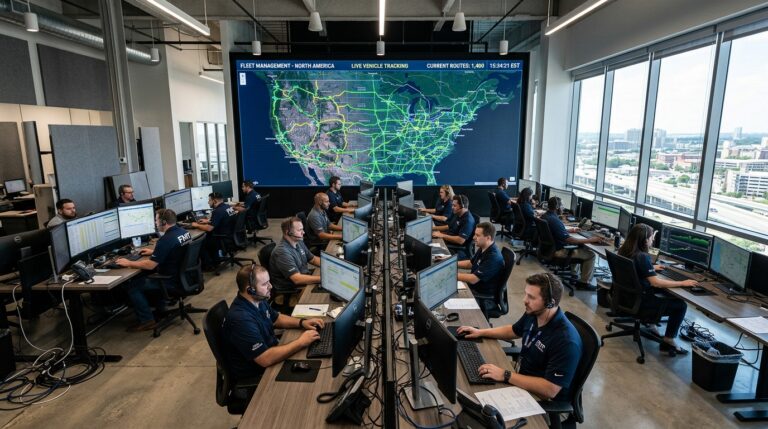
Between warehouse and tarmac (or between airports on interline routes), cellular trackers with GNSS provide location, motion, and geofence-breach data every few minutes. For high-value or high-risk cargo, real-time cargo tracking eliminates Pattern 1 entirely: you know where the shipment is, whether it stopped where it shouldn’t, and whether its environment changed.
For airfreight specifically, devices need DO-160 certification to be carried aboard aircraft. Not every tracker on the market qualifies. The ones that do (like the Thingfox T2) are engineered to survive altitude, pressure differential, and vibration profiles that would kill a consumer GPS unit.
Environmental sensors for cold chain and sensitive cargo
IoT wearable and in-package sensors measuring temperature, humidity, light exposure, and shock produce the continuous log that IATA CEIV-Pharma certification now requires. The sensor data becomes the chain-of-custody evidence for pharmaceuticals and biologics: not just “who had it” but “what happened to it while they had it.”
Tamper-detection and seal integrity
Smart seals conforming to ISO 17712 can transmit a breach alert the moment they’re cut or removed. Combined with a GPS timestamp, this converts a custody break from a post-hoc discovery into a real-time event with coordinates, time, and responsible party identified.
The pattern here: IoT doesn’t replace the regulatory chain of custody. It makes it provable. When an auditor or an insurer asks “was custody maintained between 14:02 and 15:34?”, the answer shifts from “we believe so, the seal was intact on arrival” to “here is the continuous location, temperature, and seal-status record for those 92 minutes.”
The Blockchain Lesson: Technology Without Ecosystem Dies
It would be irresponsible to discuss digital custody without addressing the blockchain question. In 2018, Maersk and IBM launched TradeLens as the world’s highest-profile blockchain-enabled trade platform. By November 2022, Maersk discontinued TradeLens, citing “lack of industry collaboration and support.”
Four years, billions in development, and TradeLens couldn’t convince enough carriers, forwarders, and customs agencies to share data on someone else’s ledger. The Port of Barcelona’s PierNext analysis summarized the lesson: technology alone is not enough. The chain of custody is social, contractual, and regulatory before it is technical.
ONE Record survives where TradeLens didn’t because IATA, governments, and customs agencies are all signatories to its governance model. It’s neutral ground. The practical takeaway for shippers: don’t bet your custody infrastructure on a platform that needs competitor buy-in to function. Bet on open standards (ONE Record, Cargo iQ milestones) and augment with hardware you control (your own trackers, your own sensor data, your own tamper-evident seals).
Blockchain still has a narrow, viable role in air cargo financing and pharmaceutical provenance. But as a chain-of-custody ledger for mainstream freight? The market spoke.
What 2026 Demands: Compliance + Continuous Visibility
The air cargo market in 2026 runs on two simultaneous pressures. IATA reports full-year 2025 CTK growth of approximately 4.3% YoY, with 2026 forecast at +2.6%. Record volumes. And alongside them, tightened TSA chain-of-custody documentation standards specifically designed to counter the 27% tampering surge.
More cargo, more handoffs, more regulatory scrutiny, higher theft values. The only sustainable response is treating chain of custody as two things simultaneously:
- A regulatory artifact: tamper-evident ISO 17712 seals, Known Consignor declarations, STA-checked personnel, ACAS pre-departure filings, ACC3 designations. This is table stakes. Without it, you can’t ship.
- A continuous digital record: alignment with ONE Record data exchange, Cargo iQ milestone tracking, and (this is where most companies still have a gap) IoT-driven physical evidence between milestones. Without it, you can’t prove custody was maintained when things go wrong.
The companies I see winning this race aren’t choosing one or the other. They’re layering hardware-level visibility through comprehensive cargo tracking solutions (DO-160 certified trackers, RFID-tagged ULDs, environmental sensors) on top of the regulatory paperwork. The paperwork gets you permission to fly. The sensor data gets you defensible custody evidence, faster insurance resolution, and the ability to pinpoint exactly where and when things went wrong.
If your air cargo custody ends at the AWB and a seal number, you’re operating on a standard that hasn’t caught up with how cargo actually moves in 2026. The gap between your last scan and your next scan is where $725 million in losses lives.
We build end-to-end tracking solutions for aviation and freight, including DO-160 approved devices for airfreight custody monitoring. If that gap exists in your operation, let’s talk about closing it.

Frequently Asked Questions
What is chain of custody in air cargo?
It is the documented, auditable record of every transfer of physical and documentary control over a shipment, from the Known Consignor’s declaration at origin through six security-control stages until the cargo is accepted into airline custody for loading. Each transfer must identify the responsible party, timestamp, and security measures applied.
What regulations govern air cargo chain of custody?
Four primary frameworks: TSA’s Certified Cargo Screening Program (CCSP) in the U.S., CBP’s Air Cargo Advance Screening (ACAS) for inbound U.S. flights, the EU’s ACC3 designation for flights entering from third countries, and ICAO Annex 17 at the international baseline level. Each mandates documented custody and screening before loading.
How does IoT improve air cargo chain of custody?
IoT devices (GNSS trackers, RFID tags, environmental sensors, smart seals) provide continuous, timestamped evidence of location, condition, and seal integrity between documented handoffs. This converts the chain of custody from a series of discrete checkpoints into a verifiable, unbroken record that satisfies both regulatory audits and insurance claims.
What is IATA ONE Record and how does it relate to custody?
ONE Record is IATA’s API-based, JSON-LD data standard replacing legacy messaging formats (CXML, CARGOIMP). It creates a federated digital record of the shipment accessible by all authorized parties in near real time, enabling continuous visibility and reducing the custody gaps inherent in batched message exchanges.
Why did blockchain fail as an air cargo custody solution?
TradeLens (Maersk + IBM) shut down in late 2022 after four years because it could not secure broad industry participation. Carriers, forwarders, and customs agencies refused to share data on a platform controlled by a competitor. The surviving approach is neutral, standards-body-governed data exchange (ONE Record) rather than proprietary consortium ledgers.
What tracking devices are approved for use aboard aircraft?
Devices carried in the cargo hold of commercial aircraft must meet DO-160 environmental testing standards (vibration, altitude, temperature, pressure). Consumer-grade GPS trackers do not qualify. Purpose-built airfreight trackers (such as DO-160 certified units) are engineered specifically for this operating envelope.






 +1 508 292 2210

3 Responses