

The cargo visibility technology market is growing at nearly double the rate of air freight itself, projected to hit USD 12.99 billion by 2030. That 10% CAGR tells you something: shippers are tired of losing sight of their cargo the moment it leaves the warehouse floor. If you’re looking for how to track international air cargo with Griffin Air, you’ve probably hit that same wall between “departed origin” and “arrived destination” one too many times. (See also: how griffin air improves airfreight tracking.)
Before we go further, a disambiguation. Three companies use the name “Griffin” in air logistics, and they do very different things. The Digital Matter Griffin Air is a GPS tracking device purpose-built for air freight, launched mid-2026. Griffin & Company Logistics is a Minneapolis freight forwarder that’s been operating since 1983, with its own iTrack shipment portal. And Griffin Transport Services is an IATA-registered forwarder based in Reno, Nevada.
This article covers the Digital Matter Griffin Air in detail, because that’s where the compliance, deployment, and ROI questions get interesting. If you’re a Griffin & Company customer tracking a live shipment, head to wlgriffin.com and enter your AWB or reference number. For supply chain managers, freight forwarders, and logistics teams evaluating hardware-level visibility for international air cargo: keep reading.
What the Griffin Air Is (and What It Won’t Replace)
The Griffin Air is a portable electronic tracking device (PETD) manufactured by Digital Matter, a company that’s been building IoT hardware since 2000. It was designed from the ground up for air cargo, which distinguishes it from the general-purpose fleet trackers that get shoehorned into freight operations.
The device tracks location using multi-constellation GNSS (GPS, GLONASS, Galileo, BeiDou), with Wi-Fi MAC address scanning as a fallback in warehouses and cell tower triangulation when neither is available. For data transmission, it runs 4G Cat 1bis as its primary modem, 2G as fallback, and activates a Globalstar satellite modem when cellular coverage disappears entirely (transoceanic flights, remote airstrips). Bluetooth 5.2 handles short-range communication with nearby BLE sensors, and doubles as a gateway for relaying data from multiple BLE tags. More on that later.
Onboard sensors capture temperature, humidity, shock, vibration, tilt, and ambient light. That sensor suite is what makes real cargo condition monitoring possible, letting you reconstruct what happened to your cargo at every stage: ground handling, cargo hold, layover, customs, last mile.
What the Griffin Air does not do: replace your air waybill. The AWB remains the contractual backbone of every international air shipment. The device adds a continuous visibility layer that AWB milestone tracking was never designed to provide. Think of it as the difference between knowing your cargo “departed Seoul” and knowing it sat on a hot tarmac in Almaty for four hours at 38°C before the connecting flight.
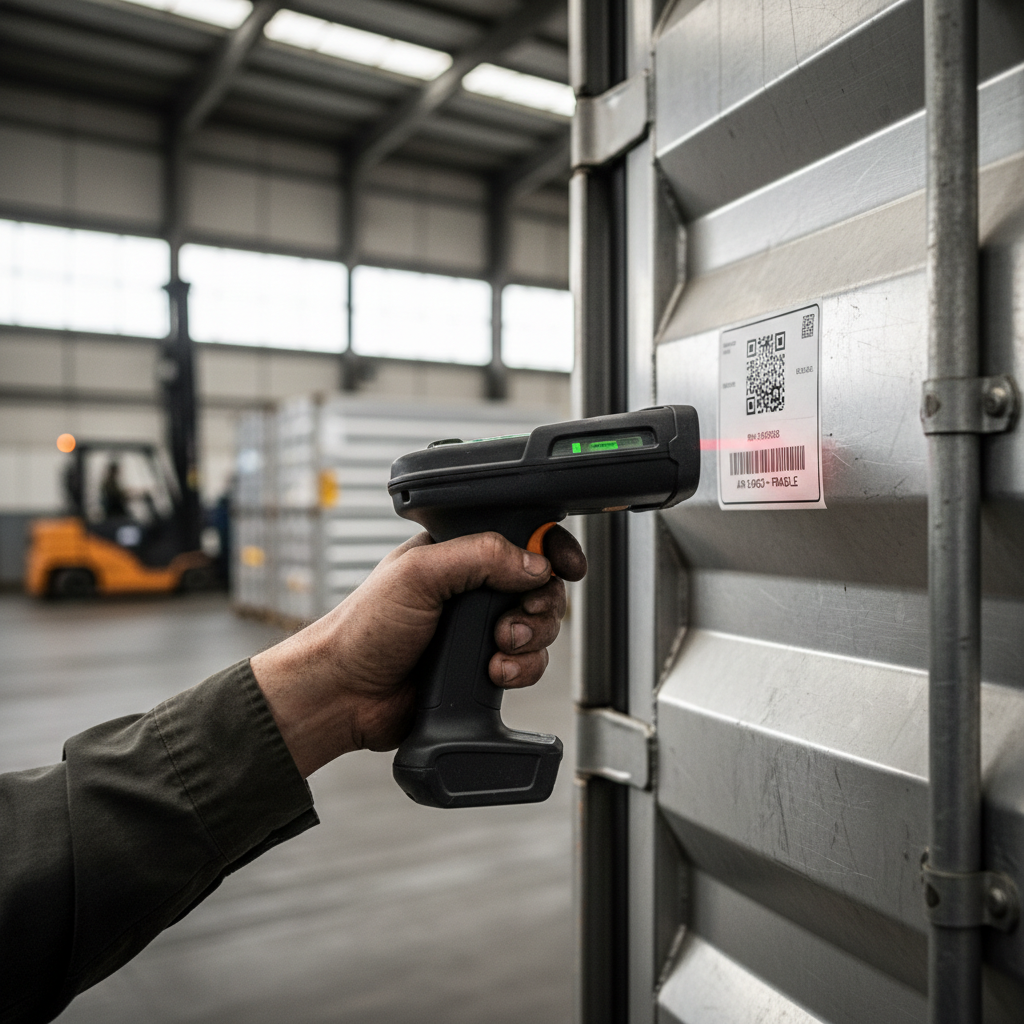
How Flight Compliance Works Without Manual Intervention
This is the single biggest technical hurdle in air cargo tracking, and the reason most generic GPS trackers can’t be used on aircraft.
ICAO and IATA are clear: any tracking device with a transmitting function must automatically shut down inside the aircraft. No manual toggles, no ground crew procedures, no “we’ll turn it off before boarding.” If the device can’t prove automated, reliable radio shutdown during flight, it’s non-compliant. Non-compliant means your cargo gets held, delayed, or returned.
The Griffin Air solves this with a barometer-based flight detection algorithm. It reads altitude and pressure changes in real time and disables the cellular radio the moment it determines it’s airborne. When it senses landing, it re-enables transmission. Zero manual intervention at any point in the chain.
This isn’t a minor design choice. The FAA recorded 55 lithium battery incidents on aircraft in 2022. Airlines enforce strict controls on what goes into the cargo hold, and every carrier maintains its own approved device list. If your tracker doesn’t have certified auto-shutdown, don’t expect it to fly.
Which Airlines Accept It
As of mid-2026, the Griffin Air holds approvals from seven carriers: Korean Air, United Cargo, American Airlines Cargo, Etihad Airways, FedEx, French Bee Airlines, and Hawaiian Airlines. For a device that launched in June 2026, that’s fast traction.
But “approved” requires context. Each airline manages its own list. American Airlines Cargo’s version 7 approved device list alone catalogs over 60 manufacturers with model-level certifications. Being approved on Korean Air doesn’t automatically carry to United or Etihad. You need to verify each carrier on every leg of your routing.
I’ve seen teams learn this the hard way. They deploy trackers on a Seoul-to-Chicago lane, the origin carrier accepts the device, but the connecting carrier in Anchorage doesn’t. The cargo keeps moving. The tracker gets pulled at the transfer point. The visibility gap opens exactly where they needed coverage most.
Verify before you book. Every leg. Every carrier.
AWB Tracking vs. Device Tracking: Where the Gap Actually Lives
Every international air shipment gets an 11-digit Air Waybill number. That number feeds carrier portals and aggregator platforms to deliver milestone updates: received, departed, in transit, arrived, delivered.
Milestones are free. They’re built into the system. And for routine commercial goods, they’re often enough.
The problem starts when milestones aren’t enough. Between “departed Hong Kong” and “arrived Frankfurt,” you have zero data. You don’t know if the container sat on a ramp in 42°C heat for three hours during a layover in Dubai. You don’t know if someone opened it at a transfer point (that’s what the light sensor catches). You don’t know the exact location during a 14-hour transoceanic leg. This is exactly where the air cargo chain of custody breaks down and where costly disputes originate.
A device like the Griffin Air fills that space with continuous data: location pings, temperature logs, humidity readings, shock events. For pharmaceutical cold chains, aerospace components, or any shipment where temperature monitoring for air freight and the cost of a blind spot (spoilage, damage, insurance claims, compliance failures) exceeds the cost of a tracker, the math changes quickly.
This isn’t theoretical. The IATA 2026 Air Cargo Technology Trends report surveyed over 120 industry professionals and rated Connected Devices and Real-Time Visibility Platforms as “Very High impact” technologies, with mainstream adoption expected within five years. The industry is moving. The question is whether your visibility infrastructure is moving with it.
One Device, Multiple Packages: The BLE Gateway Most Teams Miss
Korean Air limits lithium-battery tracking devices to two per Master Air Waybill. That sounds like a hard ceiling on visibility per shipment. It’s not, if you use the architecture correctly.
The Griffin Air includes a Bluetooth 5.2 gateway. One cellular-connected device can relay sensor data from multiple low-cost BLE tags in its proximity. Instead of two trackers covering two items, you deploy two Griffin Air units as gateways and attach inexpensive BLE tags to every individual parcel in the shipment.
Example: a pharma shipper moves 20 temperature-sensitive cartons on a single Korean Air MAWB. Two Griffin Air devices serve as gateways. Twenty BLE tags, one per carton, send temperature readings to the nearest gateway, which aggregates and transmits via cellular or satellite. Item-level condition monitoring across the full shipment, within the airline’s safety limits, at a fraction of the cost of 20 individual cellular trackers.
IATA added BLE to its technology radar for the first time in 2026, rating it “High impact.” The Griffin Air is already built around it. That alignment between device architecture and industry direction matters if you’re planning deployments that need to scale over the next three to five years.
Reusable vs. Disposable Trackers: Running the Numbers
The Griffin Air is a reusable device. Deploy, track, recover, redeploy. With three AA batteries (LiFeS2 recommended), it runs for 2+ years. The 34,000 mAh Max rechargeable pack extends that further. Over dozens of shipment cycles, per-trip cost drops significantly.
The alternative: disposable trackers. Ship once, discard. No recovery logistics, no recharging, no worrying about a device sitting forgotten in a warehouse in Nairobi.
The trade-off is real, and I don’t think either model wins universally.
Reusable devices demand reverse logistics. On an international route, getting the tracker from your consignee in São Paulo back to your origin hub in Rotterdam requires process, compliance documentation, and a consignee who actually puts the device in the return chain. If your recovery rate is below 70%, the per-trip advantage erodes. Below 50%, you’re likely spending more than if you’d gone disposable.
Disposable devices eliminate that friction. You pay more per trip. You generate electronic waste. But the operational simplicity is genuine.
Most teams I work with end up running both. Reusable on stable, high-frequency lanes where recovery processes are established. Disposable on ad-hoc, low-frequency routes or lanes where the consignee is unreliable. The Griffin Air is best suited for the first category. If you’re evaluating it for a lane you ship twice a year with a different consignee each time, reconsider.
What to Verify Before Deploying on International Routes
If you’re evaluating the Griffin Air for production deployment, here’s the sequence I’d walk through:
- Confirm carrier approval on every leg of your routing. Not just the origin carrier. If the connecting flight operates on a different airline, check their approved list separately. A gap in any leg means a gap in your visibility chain.
- Map cellular coverage on the route. The Griffin Air’s 4G Cat 1bis modem covers most industrialized regions, with 2G as fallback and satellite for oceanic legs. But 2G networks are being decommissioned across parts of North America, Western Europe, and Australia. If your routes pass through regions with no 4G Cat 1bis and shuttered 2G, you’re relying on satellite alone. Functional, but with higher latency between pings.
- Choose the right battery configuration for the shipment cycle. Three AA batteries at standard reporting intervals give 2+ years. The 34,000 mAh Max pack supports more aggressive reporting. Match the configuration to how often you need updates and how long the device sits between recovery and redeployment.
- Verify platform integration before procurement. The Griffin Air connects to over 1,000 third-party platforms, which is unusually open. But “connects to” and “integrated with your TMS” are not the same thing. Confirm data ingestion, alert routing, and dashboard compatibility with your existing visibility stack.
- Check the device’s status with IATA’s Air Cargo Device Assessment Program. Launched in December 2024, this program is becoming the de facto validation standard for air cargo trackers. As more carriers reference IATA’s validated list rather than maintaining individual ones, devices that clear the program get a faster path to multi-carrier acceptance. Whether Digital Matter has submitted the Griffin Air to this program is not publicly confirmed as of mid-2026. Ask the question before you commit.
- Build your reverse logistics plan before ordering hardware. Who recovers the device at destination? How does it ship back? What’s the target recovery rate that keeps per-trip cost below your threshold? If you can’t answer these questions, price out disposable alternatives for comparison.
Where the Griffin Air Fits in a Broader Tracking Strategy
The Griffin Air excels in a specific operational context: international air cargo on high-frequency lanes, where continuous location and condition data prevents losses that cost more than the tracker itself, and where your team has (or is building) the infrastructure to deploy, recover, and redeploy hardware at scale.
It doesn’t replace AWB tracking for routine shipments. It doesn’t eliminate your need for a visibility platform to aggregate data and trigger actions. And it doesn’t solve the organizational challenge of aligning operations teams, forwarders, and consignees on tracker handling procedures.
What it does, deployed correctly, is close the gap between “shipped” and “visible.” For pharmaceutical cold chains, MRO components, aerospace parts, and high-value electronics, that gap is where spoilage happens, claims originate, and compliance failures start. Closing it has a measurable dollar value and is central to effective air cargo risk management.
For a deeper technical comparison of the Griffin Air against other approved devices, we put together a field guide covering the competitive landscape, regulatory context, and deployment considerations.
If you’re evaluating air cargo tracking options and want help matching the right device to your lanes, reach out to our team. We work with the Griffin Air and other air cargo tracking devices, and the right answer depends on your routes, your cargo profile, and your operational reality. info@datanetiot.com

Frequently Asked Questions
What is the Digital Matter Griffin Air?
A rugged GPS tracking device built specifically for air freight. It provides continuous location monitoring via GNSS, Wi-Fi, cell tower, and satellite, along with environmental sensors for temperature, humidity, shock, tilt, and light. A barometer-based system automatically disables radio transmission during flight, complying with ICAO and IATA regulations.
Is the Griffin Air the same as Griffin & Company Logistics?
No. Griffin & Company Logistics is a Minneapolis-based freight forwarder (IATA code 0110424) with a shipment tracking portal at wlgriffin.com. The Digital Matter Griffin Air is a hardware device. They are completely separate companies serving different functions.
Which airlines accept the Griffin Air?
As of mid-2026: Korean Air, United Cargo, American Airlines Cargo, Etihad Airways, FedEx, French Bee Airlines, and Hawaiian Airlines. New approvals are ongoing. Always confirm acceptance with every carrier on your routing before deploying the device.
How long does the Griffin Air battery last?
With three user-replaceable AA batteries (LiFeS2 recommended), over 2 years at standard reporting intervals. The 34,000 mAh Max rechargeable battery pack supports longer or more frequent reporting deployments. Actual life depends on ping frequency and connectivity conditions.
Can one Griffin Air track multiple packages?
Yes. Its Bluetooth 5.2 gateway relays data from multiple nearby BLE tags. This lets you attach inexpensive BLE sensors to individual cartons while using the Griffin Air as the cellular backhaul, effectively monitoring an entire shipment cluster from one or two cellular devices.
Does the Griffin Air work over oceans?
Yes. When cellular networks are unavailable, the device activates a Globalstar satellite modem. Updates have higher latency than cellular, but you maintain connectivity on transoceanic routes and through remote airspace where 4G coverage doesn’t reach.








 +1 508 292 2210

4 Responses