

The global aquaculture industry loses an estimated USD 6 billion a year to disease alone. That figure does not include storm damage, equipment failure, escaped fish, feed price swings, or regulatory shutdowns. It is one line item in a much longer ledger.
Yet most aquaculture risk management conversations start with insurance. That sequence is backwards. Insurance transfers residual loss after controls have done their work. When it becomes the first line of defense, premiums climb, claims get denied for insufficient documentation, and the next mortality event hits just as hard as the last one.
I spend most of my time working with operators who track high-value assets across harsh environments: ocean freight, aviation, industrial supply chains. The pattern is consistent across every sector. Organizations that survive catastrophic events built their defenses in a specific order: prevent, detect, respond, then transfer. Aquaculture follows the same logic, and this guide breaks it down into risk domains, economics, technology, and a practical layered framework you can act on.
What Aquaculture Risk Management Actually Covers
Aquaculture risk management is the continuous process of identifying, preventing, detecting, responding to, and transferring the biological, environmental, operational, financial, and regulatory risks that threaten farmed aquatic production, ecosystem integrity, worker safety, and market access. It is not a single plan, policy, or piece of technology. It is a layered system where each layer reinforces the others.
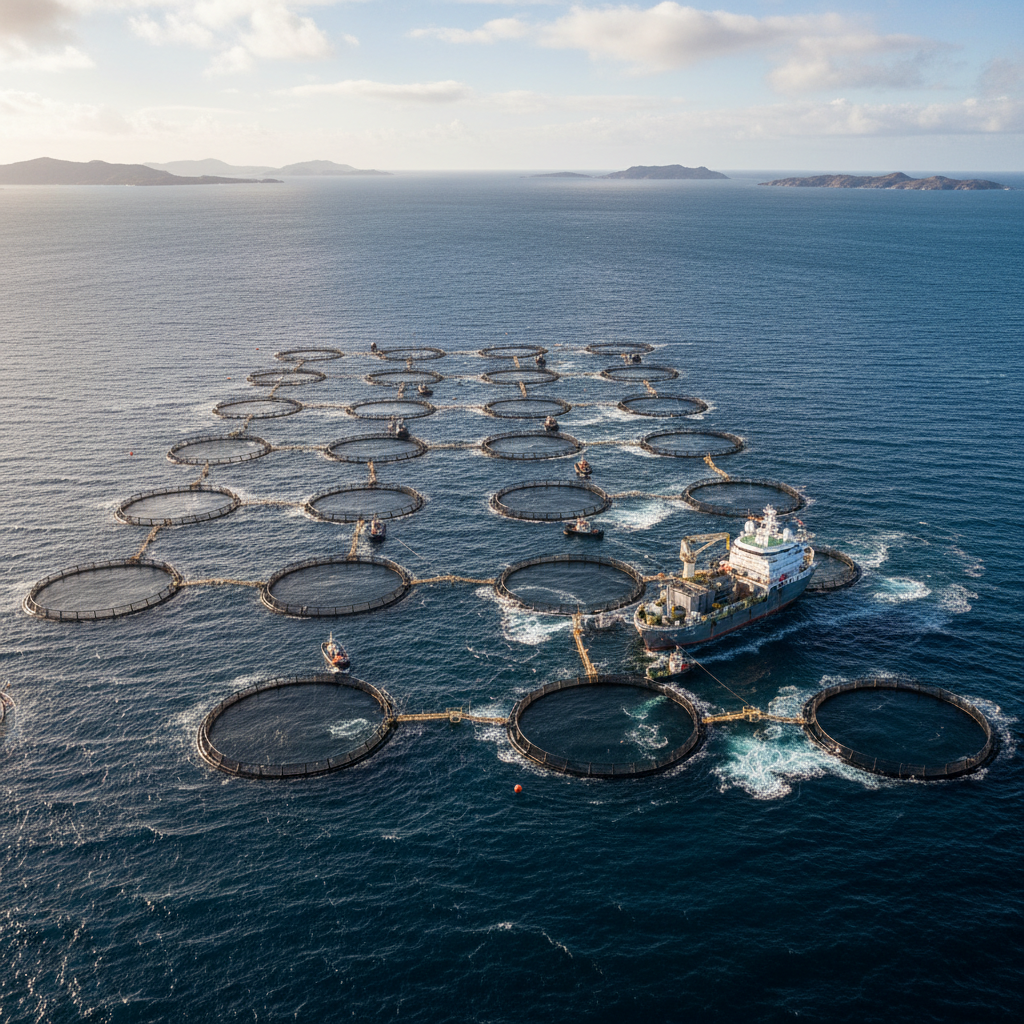
The scope is broader than most operators realize. Six risk domains intersect in every aquaculture operation, and ignoring any one of them weakens the rest.
| Risk Domain | What Can Fail | Core Controls |
|---|---|---|
| Disease and biosecurity | Pathogens enter through water, animals, equipment, or people and amplify through the population | Barriers, water treatment, quarantine, surveillance, vaccination, emergency containment |
| Water quality and system failure | Dissolved oxygen, temperature, pH, ammonia, or flow move outside tolerances; equipment or power fails | Redundant power, calibrated sensors, alarms, preventive maintenance, emergency drills |
| Climate and extreme weather | Heat, storms, flooding, acidification, and sea-level change affect animals, infrastructure, and inputs | Scenario analysis, hazard mapping, structural reinforcement, stocking calendar adjustments, species diversification |
| Escapes and containment | Net, mooring, or handling failure releases farmed animals into wild ecosystems | Engineering inspection, underwater cameras, inventory reconciliation, recapture plans, incident reporting |
| Feed, drugs, and discharge | Uneaten feed and waste discharge nutrients; drug misuse creates resistance and residue risk; feed costs fluctuate | Feeding precision, waste monitoring, approved veterinary protocols, withdrawal compliance, ingredient diversification |
| Financial and market | Mortality, price drops, energy costs, construction delays, or lost certification reduce cash flow | Sensitivity analysis, liquidity reserves, diversified buyers, certification, insurance |
The common mistake is treating these as separate checklists. Disease control without water quality monitoring is half a program. Climate adaptation without financial reserves is an academic exercise. Insurance without documented prevention is expensive and frequently denied at the claims stage.
Disease Is the Cross-Cutting Risk You Cannot Insure Away
Disease is the single largest cross-cutting exposure in aquaculture. A 2025 review put global losses at approximately USD 6 billion per year. Chilean salmon farming alone lost roughly USD 2 billion from Infectious Salmon Anemia (ISA) between 2007 and 2010. Sea lice costs have been estimated at 9 to 22 percent of salmon farming value depending on the country. European trout loses about USD 140 million annually to a single parasite.
In the United States, a study on salmonid aquaculture found that each 1 percent loss in annual sales translated to approximately USD 2.1 million in direct losses, USD 3.9 million in total output, and 15 jobs. A 25 percent yield reduction corresponded to about USD 98.7 million in output and 541 jobs. Smaller farms face disproportionate distress: short-term financial problems appeared with yield reductions as low as 7 percent in some models.
These numbers reframe the prevention conversation. A biosecurity program (controlled access, water treatment, quarantine for new stock, health surveillance, vaccination where approved, and a tested emergency plan) costs a fraction of a single mortality event. The World Organisation for Animal Health supports this with regional disease reporting and surveillance systems designed for early detection before a local outbreak becomes a regional crisis.
Insurance covers some disease losses. But policies typically carry waiting periods, density restrictions, documentation requirements, and exclusions for pre-existing conditions. If you cannot show what you did to prevent the event, the claim is harder to win. Prevention is not the opposite of insurance. It is the foundation that makes insurance viable.
RAS Concentrates Risk Instead of Eliminating It
Recirculating Aquaculture Systems (RAS) can recycle up to 99 percent of water and give operators precise control over temperature, dissolved oxygen, pH, and biosecurity. For investors and planners, that control is compelling. It is also easy to overestimate.
Consider two Norwegian land-based salmon producers who reported 2024 results.
Salmon Evolution reported 4,891 tonnes of head-on-gutted salmon, revenue of NOK 471.6 million (up from 168.4 million), EBITDA of positive NOK 71.4 million (up from a loss of 84 million), 96 percent superior-grade fish, and minimal mortality. Their system uses filtered and UV-treated deep seawater, continuous oxygen and CO2 monitoring, separate tanks and zones, and limited handling. This is what a well-executed RAS operation looks like: control translating directly into quality, throughput, and cash generation.
Atlantic Sapphire told a different story. Inadequate cooling capacity allowed warm water in Q3 2023 to trigger premature maturation, reducing weight, quality, and price through the first half of 2024. The company reported 6.4 percent mortality, water use of 235 liters per harvested kilogram (above its target of under 200), and a biomass gain of 5,500 tonnes live weight. The response: replacing cooling capacity, reducing batch sizes, and de-bottlenecking the system.
The lesson is not that RAS is risky by nature. It is specific. When you concentrate all environmental parameters into a single controlled system, one parameter drifting for too long can cascade into a production, quality, and financial event. The stress test matters more than the design specification.
For any RAS evaluation, model these variables: time to detect a parameter deviation, time to isolate affected stock, backup capacity for critical systems (cooling, oxygen, power), the mortality curve under various failure durations, quality downgrade paths, cash burn during recovery, and lender tolerance for production shortfalls.
Climate Adaptation Runs on Process, Not Prediction
Climate change does not present a single risk. It hits aquaculture through multiple channels at once. Temperature changes animal physiology. Acidification affects metabolism. Sea-level rise alters brackish production opportunities. Storms damage infrastructure. Each of these interacts with disease prevalence, feed availability, labor, and market access.
FAO’s Aqua-Adapt framework provides a structured approach that moves through five stages: define the production unit, assess vulnerability through climate scenarios, select adaptation options, implement them with assigned owners and budgets, then monitor indicators and adjust. The value is procedural. It prevents the common failure of addressing one symptom (stronger nets) while ignoring the connected chain (rising water temperature, disrupted feed supply, climbing insurance premiums, exposed communities).
Practical adaptation options include deeper ponds, higher dykes, stronger moorings, altered stocking calendars, water-source diversification, and species changes. None of these are universal. The right combination depends on the site, species, regional climate projections, and financial capacity. But the process of evaluating them systematically, assigning ownership, and tracking indicators against triggers is universal.
Every aquaculture operation should maintain a climate register: critical thresholds for each parameter, responsible owners, trigger conditions for action, capital options, and review dates. Without that register, climate adaptation is a slide in a presentation, not a management process.
Monitoring Closes the Gap Between Data and Decisions
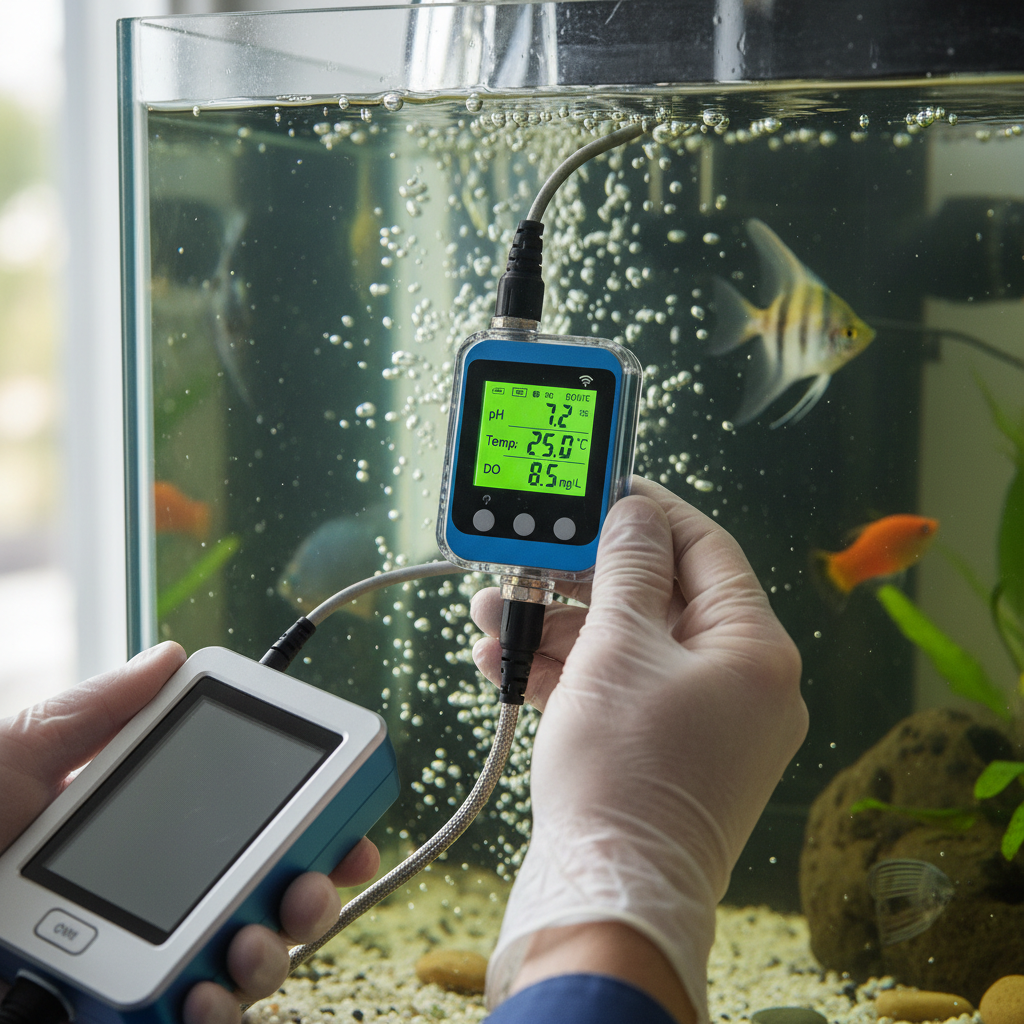
The most common monitoring failure in aquaculture is not missing sensors. It is sensors connected to dashboards that nobody watches at 2 AM when dissolved oxygen drops below 4 mg/L.
The parameters that kill fastest: dissolved oxygen, temperature, ammonia, pH, salinity, and carbon dioxide. In open-water systems, add current speed, turbidity, and harmful algal blooms. In RAS, add flow rate, nitrite, and critical equipment status. These parameters can move from safe to lethal in hours. Sometimes minutes.
IoT-based monitoring has moved beyond passive visibility. Recent research describes systems that compare sensor readings against species-specific thresholds and automatically activate alarms, aerators, heaters, or other response devices. The value is not the sensor. It is the closed loop: measure, compare, alert, act. A sensor that logs data for later review is useful for compliance. A sensor that triggers an aerator and sends an alert to the duty manager at 2 AM is useful for keeping fish alive. These capabilities are the foundation of smart aquaculture systems that integrate monitoring, analytics, and automated response.
The evaluation test for any monitoring investment: does it improve a measured outcome? Survival rate, feed conversion ratio, mean time to detect an anomaly, recovery time after an event, or quality of evidence for an insurance claim. If the best answer is “it gives us a dashboard,” the system is incomplete.
Environmental monitoring solutions designed for harsh conditions (salt water, temperature extremes, remote or unmanned sites) are now accessible to operations of any size. If your farm cannot tell you in real time whether dissolved oxygen or temperature is trending toward a critical threshold, that gap is where the next loss will originate. See what is available in environmental tracking devices purpose-built for these conditions.
Insurance Belongs at the End of Your Risk Program
Aquaculture insurance has expanded substantially. AXA XL describes coverage spanning stock mortality from disease, pollution, theft, predation, storms, freezing, mechanical and electrical breakdown, deoxygenation, salinity changes, property, and equipment. WTW emphasizes stock mortality from disease, parasites, and extreme weather events. The breadth of available cover is real.
So are the conditions. Before placing a policy, ask specifically about:
- Exclusions (which diseases and causes of loss are not covered)
- Deductibles and waiting periods
- How partial mortality is valued (not just total loss scenarios)
- Whether quality downgrades trigger coverage or only outright death
- Valuation method (market value, cost of production, or replacement)
- Business interruption provisions
- Evidence requirements at claims stage (sensor logs, maintenance records, veterinary reports)
Documented prevention makes insurance work better for both sides. Underwriters offer better terms to operations that can demonstrate biosecurity protocols, maintenance schedules, monitoring systems, and emergency drill records. When a claim does occur, those same records substantiate the loss, the cause, and the response faster.
Parametric insurance is an emerging option worth watching. Instead of assessing actual farm losses, parametric products trigger payouts based on measurable conditions: water temperature exceeding a threshold, storm category, or drought index. The advantage is speed (days instead of months). The risk is basis mismatch: the trigger can pay when measured conditions are severe without matching your actual loss, or fail to pay when local damage falls outside the trigger definition.
The sound model is layered. Prevention reduces event frequency. Reserves handle small, expected losses. Indemnity insurance covers catastrophic residual. Parametric products can supplement for payout speed. No single layer works alone.
Six Layers of a Resilient Aquaculture Operation
Every risk framework I have seen across industries (logistics, aviation, ocean freight, aquaculture) follows the same logic when it works. You build from the inside out. Each layer assumes the one beneath it is functioning.
| Layer | Mechanism | What It Protects Against | Key Trade-off |
|---|---|---|---|
| 1. Biosecurity and vaccination | Prevent pathogen entry and reduce amplification | Disease introduction and spread | Requires consistent discipline before any visible payoff |
| 2. Engineering and containment | Physical controls, RAS design, structural standards | Equipment failure, escapes, environmental discharge | Higher capital concentration and technical dependency |
| 3. Continuous monitoring | Sensors, IoT, automated alarms and responses | Slow parameter drifts and fast water quality crashes | Calibration, false alarms, data quality, automation bias |
| 4. Emergency response | Drilled protocols, communication chains, isolation procedures | Mortality events, escapes, contamination incidents | Plans must be practiced and updated, not just filed |
| 5. Compliance and certification | Audits, regulatory reporting, ASC or BAP standards | Regulatory action, market access loss, reputational damage | Compliance is a necessary floor, not proof of resilience |
| 6. Financial transfer | Insurance, reserves, parametric products | Catastrophic residual loss after all other layers | Exclusions, basis risk, documentation requirements |
For large vertically integrated producers, each layer justifies dedicated staff, budgets, and systems. For smaller operations, the economics point toward shared resources: cooperative laboratories, extension services, pooled monitoring infrastructure, group purchasing of sensors and connectivity, and mutual insurance or cooperative risk pools.
The principle is sequence. Skip a layer and the ones above it weaken. Insurance without monitoring data is harder to claim. Monitoring without response protocols is just a detailed record of how things went wrong. Biosecurity without engineering is discipline on a weak foundation.
Global aquaculture production reached 103 million tonnes of aquatic animals in 2024, worth USD 371 billion at the farm gate. That scale makes every unmanaged risk more consequential. The farms that will still be operating in ten years are the ones building these layers now, not after the next event.
If you need the monitoring layer (real-time environmental tracking across remote or challenging conditions), that is what we build at Datanet IoT Solutions. Talk to our team or reach us at info@datanetiot.com.
Frequently Asked Questions
What is the single biggest risk in aquaculture?
There is no universal answer, but disease is the most cross-cutting. It can cause mortality, treatment costs, trade restrictions, and impacts on wild populations simultaneously. In RAS, equipment and power failures can dominate. In open-water systems, storms, parasites, and escapes may be the primary exposure. Rank risks by expected financial loss, speed of onset, and recovery time for your specific operation.
Does RAS eliminate disease and environmental risk?
No. RAS reduces some exposures through water recirculation (up to 99 percent) and environmental control, but intensive recirculating systems concentrate dependency on cooling, power, oxygen supply, and monitoring. A single sustained failure (as Atlantic Sapphire experienced with cooling in 2023) can cascade into mortality, quality loss, and financial distress. RAS is a control strategy, not a guarantee.
What should a farm’s biosecurity plan include?
At minimum: controlled site access, treated or screened water intake, equipment segregation between zones, quarantine for new or returning stock, health observation and sampling protocols, vaccination where approved, a reporting chain to regional authorities, isolation or fallowing rules, and a tested emergency communication plan. The plan should be practiced through drills, not stored as a document.
What does aquaculture insurance typically cover?
Depending on the policy, coverage can include stock mortality from disease or parasites, pollution liability, theft, predation, storms, freezing, deoxygenation, salinity events, mechanical or electrical breakdown, property, and equipment. Always check exclusions, deductibles, partial mortality treatment, quality downgrade coverage, valuation method, and what evidence the insurer requires at the claims stage.
How can small aquaculture operations afford proper risk management?
Through shared resources. Cooperative laboratories reduce diagnostic costs. Extension services provide free or subsidized technical guidance. Group purchasing makes sensors and IoT connectivity affordable. Mutual insurance or cooperative risk pools spread catastrophic exposure. The layered framework applies at any scale; the implementation path adjusts to the operation’s resources.
How should I evaluate monitoring technology for my farm?
Ask whether the system improves a measurable outcome: survival rate, feed conversion, time to detect an anomaly, or insurance claim evidence quality. Require comparable reference data from similar species and conditions. Check calibration frequency, false alarm rates, offline operation capability, data ownership terms, cybersecurity practices, and whether a manual fallback exists. A dashboard without response protocols is incomplete.





 +1 508 292 2210

One Response