

A detachable screwdriver tip sat inside a Jetstar A320 engine for over 100 flights. Then came compressor damage, fatigue cracking, blade failure, engine surge, and a rejected takeoff. The item was tiny. The consequences were not.
When quality managers search for FAA tool control requirements, most expect a single, clean regulation: do this, track that, use this technology. That regulation does not exist. What exists is a layered system of performance rules, equipment-control obligations, calibration procedures, and operator-specific manuals that together define what the FAA expects from anyone touching an aircraft.
With global MRO demand reaching roughly $140 billion in 2026 and roughly 30,000 commercial aircraft in service, the volume of maintenance activity keeps growing. So does the exposure when tool controls fail.
This article maps the actual regulatory framework, separates the myths from the mandates, and walks through building a program that survives an audit. More importantly, one that keeps forgotten tools out of engines.
The Regulations That Actually Govern Tool Control
FAA tool control is not one rule. It is a stack: performance rules for all maintenance personnel, organizational requirements for repair stations, manual requirements for airlines, advisory guidance, and each operator’s own approved procedures. What applies to you depends on who you are and what work you do.
| Regulation | Who It Applies To | What It Requires for Tools |
|---|---|---|
| 14 CFR 43.13 | Any person performing maintenance, preventive maintenance, or alterations | Use prescribed methods or acceptable alternatives. Use necessary tools. Use acceptable equivalents for manufacturer-recommended special equipment. Work must leave the article at least equal to its original condition in qualities affecting airworthiness. |
| 14 CFR 145.109 | Certified repair stations | Maintain necessary equipment, tools, and materials on premises and under station control when work is performed. Calibrate test and inspection equipment used for airworthiness determinations to an FAA-acceptable standard. Use manufacturer-recommended tools or FAA-accepted equivalents. |
| 14 CFR 145.211 | Certified repair stations (quality control system) | Include calibration procedures and intervals in the quality-control manual. |
| 14 CFR 121.369 | Part 121 air carriers | Maintenance manuals must address periodic inspection and calibration of precision tools, measuring devices, and test equipment. |
| 14 CFR 135.427 | Part 135 operators | Corresponding manual requirements for maintenance programs. |
| 14 CFR 145.205 | Repair stations serving Part 121/125/135 operators | Follow the operator’s maintenance program and applicable manual sections when performing covered work. |
The layering matters. Section 43.13 sets the floor for everyone: use the right tools, follow the right methods, leave the aircraft airworthy. Section 145.109 adds organizational controls for certified repair stations: equipment must be on-site, under station control, and calibrated where airworthiness determinations are involved. Parts 121 and 135 layer operator-specific manual requirements on top.
Then 145.205 ties the knot: when a repair station performs work for a Part 121 or 135 operator, the operator’s maintenance program and applicable manual sections apply in addition to the station’s own obligations. A repair station’s generic tool procedure may not satisfy a particular airline customer. If your station serves multiple carriers, you may be operating under multiple overlapping tool-control requirements simultaneously.
A mechanic doing an annual inspection on a Cessna 172 is governed by 43.13. A Part 145 station overhauling turbine engines for a Part 121 carrier operates under 43.13, 145.109, 145.211, 145.205, and the carrier’s own program. Same tools, different accountability structures.
Calibration: Two Myths That Cost Real Money
Calibration is where I see the most confusion in MRO shops. Two beliefs circulate widely. Both are wrong.
Myth 1: Every tool must be calibrated annually. No blanket 12-month interval appears in the core regulations. AC 145-9A states that intervals are usually established by the manufacturer or the repair station. Applying a universal annual cycle to every instrument regardless of use frequency, environmental conditions, or manufacturer recommendation creates unnecessary cost and a false sense of compliance.
Myth 2: Calibration must go through NIST. Also not in the regulations. AC 145-9A describes traceability to a standard acceptable to the FAA. NIST is one recognized route. It is not the only one.
What the FAA actually expects, per AC 145-9A and the applicable regulations:
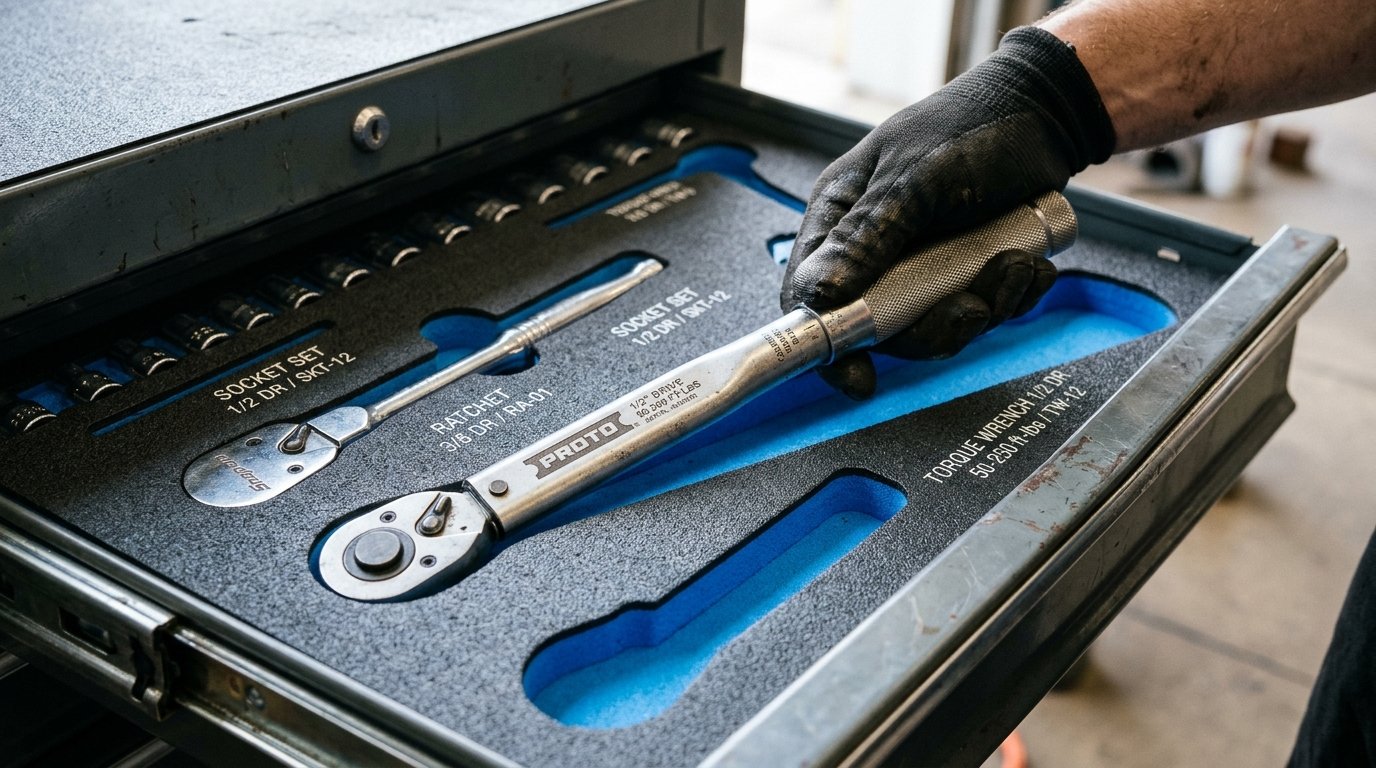
- Scope it correctly. Identify which equipment requires calibration. The focus is instruments used for airworthiness determinations, not every hand tool in the drawer.
- Justify your intervals. Base them on manufacturer guidance, usage patterns, and station experience. Document the reasoning and the process for adjusting them.
- Establish traceability. Link calibration to an accredited laboratory or recognized standard. Document the reference chain.
- Record meaningful results. Performer, dates, next due date, standard used, method, and actual readings. A pass/fail stamp without measurement data is a sticker, not evidence.
- Control overdue equipment. Prevent inadvertent use. Establish recall procedures.
- Address out-of-tolerance discoveries. When an instrument reads out of spec, every article it was used on since its last known-good calibration is potentially affected. Trace the impact. Recalibrating and closing the ticket is not sufficient.
That last step is where most programs fall short. It requires traceability from instrument to work order. Without it, you cannot scope the downstream impact of a bad reading.
And falsifying calibration records is not just a quality issue. In 2011, the owner and chief inspector of Aviation Engine Services pleaded guilty to false statements after returning commercial engine parts to service using equipment that had not been timely calibrated. The false representations involved an Almen gauge used to measure shot-peening intensity. Parts went into a commercial aircraft turbine engine. That crossed the line from paperwork deficiency to criminal fraud.
Employee-owned tools are not exempt either. AC 145-9A includes employee-owned measuring and test equipment used for airworthiness determinations within the calibration program scope. Same standard. Same documentation requirements. Ownership does not change the physics of a miscalibrated torque wrench.
When Tool Control Breaks: Real Incidents, Real Consequences
Regulations on paper do not prevent tools from being left in aircraft. Procedures do, when they are actually followed. The cases below illustrate different failure modes, different tool sizes, and different outcomes. The systemic problem is the same in each one.
Jetstar A320, 2020: the piece nobody counted
A detachable screwdriver tip was left inside a Jetstar A320 engine. It remained there for over 100 flights before causing compressor damage, fatigue cracking, blade failure, engine surge, and a rejected takeoff.
The tool was not a wrench or a flashlight. It was a small, detachable piece, the kind that does not register as “missing” during a standard toolbox count. This is why inventory reconciliation that only counts complete tools misses the problem. Bits, tips, safety wire pliers with detachable cutters, consumable hardware: all of it needs accountability.
Qantas A380, 2024: the procedure that existed but was not followed
During engine maintenance in Sydney, a 1.25-meter nylon turning tool was left inside an A380 engine. The tool remained for 34 flight cycles and 294 hours before discovery. Engineers did not detect it during foreign-object clearance inspections, did not commence the lost-tool procedure after identifying it as missing, and released the aircraft with the tool unaccounted for.
The tool deformed from airflow but caused no observed engine damage. That outcome was luck, not process.
Qantas A380, 2026: the electronic record that never reached the right person
In January 2026, an A380 underwent air-conditioning maintenance in Sydney, flew to Dallas-Fort Worth, and returned with a work light left inside its wing. The ATSB investigation found that the maintenance information system provided no prompt alerting the certifier to the unreturned tool or the unactioned report. Foreign-object clearance inspections, tool return, end-of-shift checks, and certification for release to service all failed.
This case is the one I find most instructive. The tool exception was recorded somewhere in the electronic system. But that record did not reach the person responsible for the release decision. The system knew. The certifier did not.
Recording an exception and acting on it are fundamentally different capabilities.
The common thread
Each case involved a different tool, a different duration, and a different outcome. The systemic failure was identical: the gap between knowing something was outstanding and preventing an aircraft release with that exception unresolved. A correctly calibrated torque wrench returned to the correct drawer can still be the wrong tool for the task. A shadow board can still be “checked” by someone who does not look carefully. A camera-equipped cabinet can still produce an alert that nobody acts on.
Technology can strengthen every link in this chain. But it cannot replace the chain.
Technology the FAA Does Not Mandate (But You Probably Need)
The FAA does not require RFID, camera cabinets, barcodes, or any specific tracking technology. The regulations specify obligations: control, accountability, calibration, reconciliation. How you meet those obligations is your decision.
That said, some methods are demonstrably better at certain tasks. And “we use shadow foam” is not a complete answer when your operation runs three shifts across two hangars.
| Approach | What It Does Well | Where It Falls Short |
|---|---|---|
| Shadow foam (manual visual) | Makes a missing tool immediately visible. Simple, zero power, low cost. | No record of who took what or when. Does not catch detachable components. Entirely dependent on someone actually looking. |
| Barcode scanning | Creates transaction records linking tool, person, and work location. British Airways Maintenance reported roughly 40% lower tool consumption and consolidated from 150 suppliers to 53 after implementing barcode-based crib management. | Requires manual scan discipline. That 40% figure is an inventory savings metric, not a measured safety improvement. Different outcomes. |
| Camera-based recognition | Photographs drawer contents automatically. Identifies removed, returned, and incorrectly placed tools. Prince Aviation deployed nine camera-equipped workstations in 2025 alongside a hangar expansion. | Limited to drawer-level recognition. Does not track tools once they leave the cabinet. An adoption announcement is not a measured safety result. |
| RFID tagging | Automated reading of tagged tools through cabinet readers or portal gates. Potential for real-time inventory without manual scanning. | Tag durability varies by tool type and operating environment. Advertised accuracy must be validated in your actual installation, not a showroom. |
| IoT-enabled asset tracking | Real-time location across facilities, geofenced boundaries, automated custody logs. Works beyond the toolbox: hangars, ramps, line stations. | Requires network infrastructure and integration with maintenance systems. Most effective for high-value or high-risk portable equipment rather than every socket in the drawer. |
| Release-linked workflow | Connects tool-return status to the aircraft-release decision in maintenance software. An airline case study describes integration linking tool dispensing to SAP aircraft release. | Requires IT integration and process change. Only as strong as the exception-handling procedure behind it. |
The critical insight from the Qantas 2026 case: the most valuable feature of any tool-control technology is not how it identifies tools. It is whether unresolved exceptions reach the person signing the release.
If your system tells you a tool is missing but cannot flag (or block) an aircraft release, you have inventory software. You do not have tool control.
Building a Program That Survives the Audit
A defensible tool-control program is not a cabinet purchase. It is a documented chain from task requirements through custody, calibration, reconciliation, and release. Here is a practical sequence, drawn from the regulatory framework above, best practices in aerospace tool control, and NBAA’s 2025 guidance on tool control for safer aircraft maintenance.
Start with the work, not the hardware
Identify the maintenance tasks your organization performs. For each, determine the required tools, applicable technical instructions, and any measurement or test equipment used for airworthiness determinations. This scoping step defines what needs to be in your program. Skip it, and you will either over-control hand tools that carry minimal risk or under-control measurement instruments that carry enormous risk.
Establish tool baselines
Every portable kit, toolbox, and crib location needs a defined baseline: what should be there. Shadow foam works for fixed stations. Digital baselines work for portable kits. The method matters less than the discipline of maintaining it when tools are added, removed, or replaced.
Control custody, not just location
A tool on a shelf is not “controlled” unless someone is responsible for it. Issue and return transactions should identify the person, the tool, and (where applicable) the work order or aircraft. This is where barcode, RFID, or IoT-based tracking adds the most value: creating an auditable custody record without relying on a clipboard and a signature nobody reads.
Run calibration as a parallel track
Calibration and custody solve different problems. A torque wrench can be in the right drawer and three months overdue for calibration. Build calibration intervals, recall procedures, and out-of-tolerance protocols as a separate but connected system. NBAA recommends standardized issue, return, calibration, and inspection steps with defined responsibilities for technicians and quality-control inspectors.
Write the lost-tool procedure before you lose a tool
Your procedure should specify: who gets notified, which work and aircraft are affected, how searches are documented, escalation timelines, and who has disposition authority. Then run missing-tool drills. NBAA recommends them explicitly. If the first time your team executes the lost-tool procedure is during an actual event, the procedure is untested, and untested procedures fail under pressure.
Connect exceptions to release
This is the gap most programs leave open. Your maintenance release process must expose unresolved tool exceptions to the person signing the aircraft back to service. Whether that connection is a software integration, a mandatory checklist step, or a physical sign-off requirement, it needs to exist. And it needs to be tested.
Measure the system, not just the tools
NBAA recommends tracking: lost-tool events per 1,000 labor hours, audit-pass percentage, average time to locate tools, and monthly out-of-calibration exceptions. I would add one more: did unresolved exceptions reach the release decision in every case? If you cannot answer that, you are measuring inventory, not control.
The November 2026 Rule Update
On November 10, 2026, FAA published a final rule covering inspection programs and miscellaneous maintenance-related updates, effective January 11, 2027. Among the Part 145 changes: the word “current” was removed from the technical-data wording in 145.211(c)(1)(v).
This is not a new RFID mandate, a universal calibration interval, or a tool-tracking technology requirement. It is a language refinement to technical-data provisions. Organizations should review the full rule for applicability to their operations, but do not confuse it with a fundamental change to the tooling model. The core obligations under 43.13, 145.109, and 145.211 remain structurally the same.
Closing the Visibility Gap
I lead growth at an IoT integration company, so let me be direct about my perspective. But the connection between tool control and asset tracking is genuine.
The core problem exposed by every case above is one we see across aviation operations: knowing where a physical asset is, who has custody of it, and whether its status is current. Inside a toolbox, shadow foam and camera cabinets do useful work. Outside the toolbox (portable kits on the hangar floor, calibration equipment moving between facilities, ground support tools crossing ramp zones) visibility tends to disappear.
IoT-enabled tracking devices close specific gaps in the tool-control chain: real-time location of portable kits and high-value equipment, automated custody records that do not depend on a scan, calibration-status alerts integrated with planning systems, and geofenced boundaries that flag when controlled equipment leaves a designated area.
This is not about replacing shadow boards. It is about extending visibility beyond the drawer. If your tool control ends at the toolbox lid, you have a gap between the toolbox and the tarmac.
If that sounds like your operation, our asset tracking devices are built for exactly this kind of environment. Or just reach out to our team and tell us where visibility breaks down. We will tell you honestly whether IoT solves it or whether the fix is procedural.

Frequently Asked Questions
Is there one FAA regulation that covers all tool control?
No. FAA tool control requirements are distributed across multiple provisions. 14 CFR 43.13 sets performance rules for everyone performing maintenance. 14 CFR 145.109 adds equipment-control and calibration requirements for repair stations. Parts 121 and 135 add operator-specific manual requirements. Advisory Circulars provide acceptable means of compliance but are not the only path.
Does the FAA mandate RFID, cameras, or a specific tracking technology?
No. The regulations specify obligations (control, calibration, accountability) rather than a particular technology. Shadow boards, barcodes, RFID, cameras, and IoT tracking are all implementation choices. An operator’s approved manual may require a specific method, but the core regulations do not prescribe one.
Must every tool be calibrated on an annual cycle?
No blanket annual interval exists in the regulations. Calibration requirements under 145.109(b) apply specifically to test and inspection equipment used for airworthiness determinations. AC 145-9A notes that intervals are typically set by the manufacturer or the repair station, with documented justification.
Are personal or borrowed tools exempt from the program?
No. FAA guidance includes employee-owned measuring and test equipment used for airworthiness determinations within the calibration program scope. All necessary equipment must be under station control when work is performed. Ownership does not create an exemption.
What should happen when a tool goes missing before aircraft release?
Follow the organization’s lost-tool procedure: notify responsible supervision, identify affected work and aircraft, document searches and disposition, and do not release the aircraft with an unresolved exception. The 2024 Qantas investigation found that engineers failed to commence the lost-tool procedure before releasing the aircraft with a tool unaccounted for.
How long must tool and calibration records be retained?
Repair station work records require at least two years of retention under 14 CFR 145.219. AC 145-9A recommends retaining calibration records for at least two years or the calibration term, whichever is longer. Operator-specific manuals may impose additional retention requirements.







 +1 508 292 2210

4 Responses