

The indoor farming sensor market is projected to reach $2.3 billion by 2026, growing at nearly 13% per year. Most controlled-environment agriculture (CEA) operations spent 2025 doing exactly what that market wanted: buying sensors, wiring them up, building dashboards. One industry review frames 2026 as the year farms must finally extract real value from that foundation.
Some of the most heavily instrumented farms in the industry filed for bankruptcy. AeroFarms. Plenty. Bowery. Fifth Season. All had sensors. All had data. The sensors worked fine. The businesses didn’t.
That pattern tells you something about indoor farming sensors: the question is not which ones to buy. It is which measurements connect to a decision that improves margin per saleable kilogram. This guide covers the sensor stack that matters, the data-quality traps that create false confidence, the energy metric that filters everything else, and the case studies that prove technology alone does not guarantee profit.
The Essential Sensor Stack for Indoor Farms
An indoor farm is a closed system. Every variable you control (light, temperature, humidity, CO2, water, nutrients) interacts with every other. A sensor becomes useful only when its reading is calibrated, correctly placed, time-stamped, connected to an actuator or workflow, and checked against a plausible operating range.
The essential stack, organized by decision zone:
| Zone | Key sensors | Decision enabled | Common pitfall |
|---|---|---|---|
| Air and climate | Temperature, relative humidity, CO2, VPD (derived), airflow, PAR/PPFD light, spectrum | HVAC setpoints, dehumidification, ventilation, CO2 dosing, photoperiod, light intensity | A single room-level reading hides rack-to-rack variation. CO2 sensor accuracy, stability, and range vary widely between models. |
| Root zone and nutrients | pH, EC, dissolved oxygen (DO), water temperature, flow rate, water level, substrate moisture | Irrigation timing, nutrient dosing, acid/base injection, recirculation control | Probes foul in nutrient solutions. Calibration drift in high-humidity, chemically active environments is constant and underestimated. |
| Plant and canopy | RGB cameras, multispectral/hyperspectral imaging, thermal, chlorophyll fluorescence, NDVI | Stress detection, disease identification, growth staging, harvest timing, canopy closure | Dense foliage blocks optical penetration. LED grow-light spectra interfere with camera readings. Sensor durability in wet environments is limited. |
| Utility and operations | Electricity meters (per circuit), water flow meters, pump/compressor status, network uptime | Energy cost per kg, water footprint, predictive maintenance, cost allocation by zone | Rarely budgeted. Most farms measure the crop environment but ignore the cost environment entirely. |
A vertical farming monitoring study published in MDPI Sensors lists air temperature, RH, CO2, light wavelength, illuminance, irradiance, chlorophyll, water flow, and a network analyzer for carbon footprint among recommended measurements. The minimum set changes with your crop, substrate, recirculation design, and whether the facility uses any natural sunlight.
Most farms over-invest in air-zone sensors and under-invest in root-zone calibration and energy metering. The air zone is visible. Root-zone drift and electricity spend are not. That imbalance is where money disappears quietly.
Why Sensor Placement Beats Sensor Count
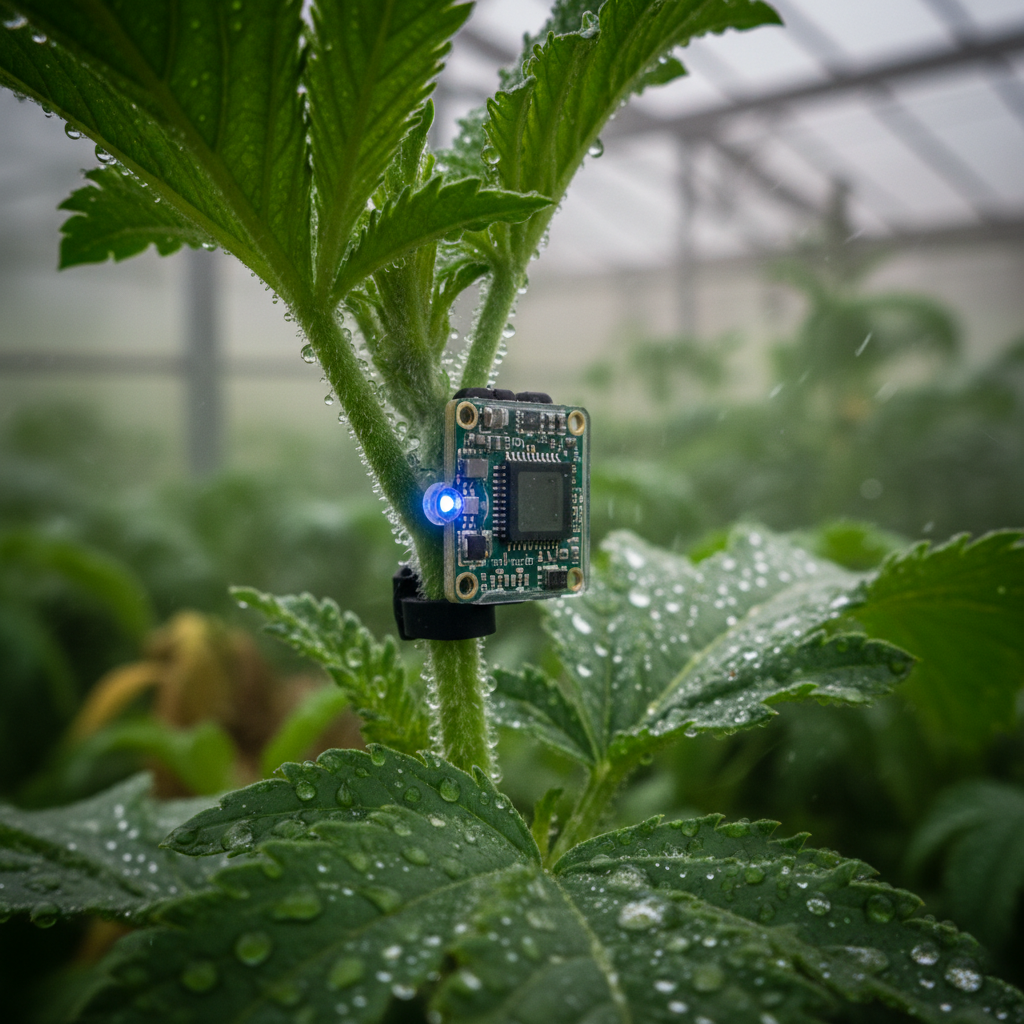
A room average temperature of 22°C means nothing if the top rack sits at 26°C and the bottom rack at 18°C. Indoor farming sensors are only as useful as their spatial resolution.
CO2 illustrates the problem clearly. Vaisala’s analysis of indoor farming measurement emphasizes that CO2 sensor accuracy, stability, and measurement range are the difficult selection criteria, not price. A cheap sensor that drifts 200 ppm over six months will over-dose or under-dose CO2 across an entire growing cycle. No alarm will fire because the reading looks plausible.
A 2025 lettuce production study put numbers on this. Researchers collected sensor data at 10-second intervals across 50 parameters, generating over 302,400 data points per parameter per trial. They found that hardware differences between sensors affected data quality, that increased agricultural operations correlated with more outliers, and that values beyond 3.29 standard deviations required flagging. Their recommendation: multiple sensors and cross-verification as a baseline practice.
One sensor per zone is a single point of failure. Two sensors per critical variable give you redundancy and drift detection. Three give you voting logic. The cost of a second pH probe is trivial next to a nutrient batch ruined by a reading that looked fine but wasn’t.
From Dashboard to Control Loop
Dashboards do not grow lettuce. A dashboard tells you what happened. A control loop tells the equipment what to do next. The gap between those two is where most indoor farming sensor investments stall.
Most sensor failures in CEA are not hardware failures. They are loop failures. A sensor reads correctly, the data reaches a screen, and nothing happens fast enough. The operator was asleep, the alarm was muted, or the threshold was never configured.
A practical architecture puts safety-critical control (pumps, HVAC, lighting, alarms) on local logic and uses the cloud for history, reporting, model training, and multi-site comparison. One published CEA architecture samples sensors every 15 minutes, uploads to the cloud every 30 minutes, and supports both remote and local-server operation. If internet drops at 2 AM, local logic keeps the pumps running and the alarms sounding.
AI enters as decision support, not autonomy. A 2024 review of IoT and AI in vertical farming describes edge machine learning that predicts optimal conditions and triggers actuators for nutrient dosing, irrigation, and lighting. In one cited experiment, a Random Forest model reduced power consumption by 20.4% during temperature and water-level regulation and 82.1% during light regulation. Another example achieved 97.9% accuracy in aquaponics automation.
These numbers are real, but they describe specific experiments on specific crops with specific hardware. Validate any model on your crop, your cultivar, your lighting rig, and your sensor hardware before letting it close the loop. An untested model running a pump at 3 AM is not intelligence. It is a liability.
Energy Per Kilogram: The Metric That Filters Everything
If you track only one number from your sensor system, make it kilowatt-hours per saleable kilogram.
A 2025 benchmark review of vertical farming energy efficiency reports that current lettuce production consumes 10 to 18 kWh per kilogram. The technical target, under optimistic assumptions about LED efficiency, HVAC performance, and crop density, is 3.1 to 7.4 kWh/kg. The gap between reality and target is where sensor-driven optimization earns its keep.
A PNAS Nexus analysis of CEA describes the potential to synchronize light with plant physiological demand and dynamically optimize temperature, humidity, CO2, ventilation, water, and nutrients. But it warns that current indoor systems carry much higher energy demands than field agriculture. Its modeled experimental grain unit requires roughly 650 kWh/kg.
That number is not a typo. It is a reminder that crop choice matters more than sensor sophistication. A perfectly instrumented vertical farm growing the wrong crop at the wrong energy price will lose money faster than an uninstrumented greenhouse growing the right crop in the right climate.
The operational takeaway: install electricity meters on every major circuit (lighting, HVAC, pumps, dehumidification). Pair those readings with harvest weight and rejection rate. Calculate kWh per saleable kilogram every week. If that number is not trending down, your sensor system is collecting data, not creating value.
What Sensors Cannot Fix: Three Industry Lessons
The hardest lesson in indoor farming is that a well-instrumented failure is still a failure.
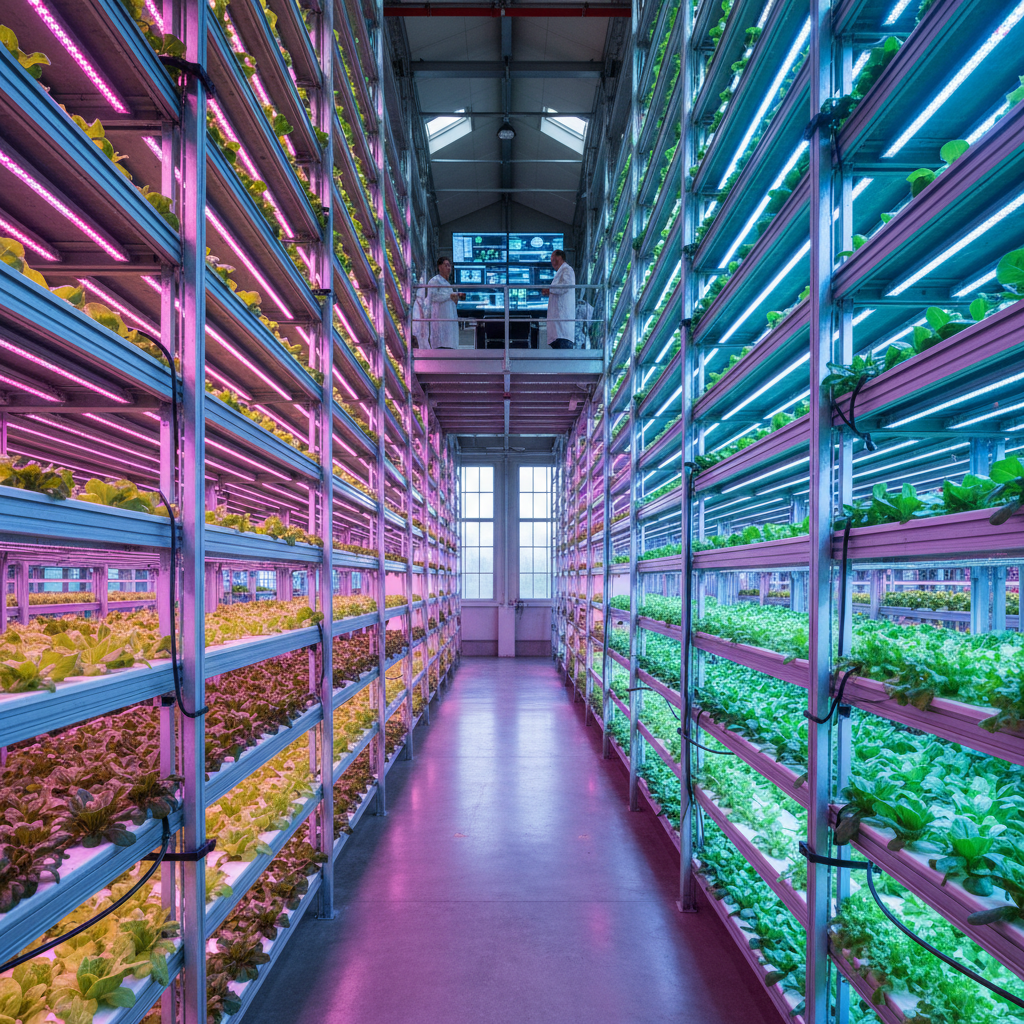
AeroFarms partnered with Nokia Bell Labs to deploy autonomous camera drones, wireless networking, computer vision, and analytics across a 13,000-square-meter facility in Newark. The system tracked canopy closure, leaf color, curvature, and growth in real time. By any sensor metric, it was world-class. AeroFarms filed for bankruptcy in 2023, then reported profitability for two consecutive quarters in 2025 after narrowing to microgreens and retail channels including Whole Foods and Costco. The sensors did not cause the bankruptcy or the recovery. The crop mix, distribution strategy, and unit economics did.
Plenty emerged from Chapter 11 on May 29, 2025, backed by restructuring funding from One Madison and SoftBank Vision Fund 2. It narrowed its focus to strawberries at its Richmond facility. The problem was never measurement quality. It was scaling a capital-intensive platform against crops that could not cover the cost.
Fifth Season shut down its automated indoor farm in 2022. Bowery closed the following year. Both had modern sensor and automation systems.
The pattern: sophisticated monitoring coexisted with business failure in every case. Sensors are necessary infrastructure. They are not sufficient for profitability. The farms that survived or recovered did so by aligning crop selection, energy cost, labor model, and distribution with unit economics, then using sensors to optimize within those constraints.
How to Evaluate an Indoor Farming Sensor System
The procurement mistake I see most often, across every industry and not just agriculture, is evaluating sensors by their spec sheet instead of their total cost of ownership and control-loop fit. Here is a framework that works in the field.
Start with decisions, not devices. List every control action your farm takes: HVAC setpoint changes, CO2 injection, irrigation cycles, nutrient dosing, light scheduling, harvest triggers, alarms. For each action, identify which measurement drives it. If a sensor does not map to a control action, you do not need it yet.
Budget for calibration and replacement from day one. pH probes in nutrient solution have a finite life. CO2 sensors drift. Humidity sensors in 90%+ RH environments corrode. Your year-one hardware cost is not your operating cost. A review of smart irrigation and energy-efficient agriculture reports 20 to 30% lower unnecessary water pumping and a modeled three-to-five-year payback for sensor-driven HVAC. Those numbers assume maintained, calibrated equipment.
Require open data interfaces. If your sensor vendor does not export data via API, CSV, or MQTT, you are buying a dashboard, not a data asset. Interoperability matters because your control platform, lighting system, and nutrient dosing system will likely come from different vendors. Proprietary lock-in becomes expensive the moment you need to change one component.
Design for failure. Local fail-safe logic for every actuator. Redundant sensors on pH, EC, and CO2 at minimum. Manual override accessible without software. A network outage at 2 AM should not mean crop loss at 6 AM.
Stage the deployment. Phase one covers air climate, root zone, flow, and energy metering with local control. Phase two adds camera-based canopy monitoring and AI-assisted optimization. Phase three introduces plant-level spectral or VOC sensing, only where it prevents a specific, measurable crop loss. This staged approach keeps capital aligned with validated value at each step.
The Measurement-to-Margin Chain
Indoor farming sensors are evolving fast. Plant-wearable sensors, hyperspectral imaging, and volatile organic compound detection are moving from lab papers to pilot deployments. The market is growing. And the failures are teaching the industry which measurements actually earn money.
The winning architecture is not the one with the most sensors. It is the one that produces reliable data, turns that data into a safe control action, and proves the action improved saleable yield or lowered cost per kilogram. Everything else is a dashboard.
If you are building or retrofitting an indoor farming operation and need environmental sensing that closes the loop (from hardware selection through deployment and data integration), that is what we do at Datanet. Explore our environmental tracking devices or reach out to our team directly.
Frequently Asked Questions
What are the minimum sensors needed for an indoor farm?
At minimum: air temperature, relative humidity, CO2, PAR light, water temperature, water level, flow rate, pH, and EC. Adding dissolved oxygen, root-zone temperature, substrate moisture, and electricity meters gives you meaningful control and cost visibility. The exact set changes with crop type, substrate, and recirculation design.
How often do indoor farming sensors need calibration?
pH and EC probes in hydroponic nutrient solution typically need calibration every one to four weeks, depending on solution chemistry. CO2 sensors can drift over months. Similar calibration challenges exist in water quality sensors for fish farming, where aquatic systems face comparable drift in chemically active environments. A 2025 CEA stability study found that hardware differences and operational activity both increased data outliers, and recommended redundant sensors with cross-verification as standard practice.
Can indoor farming sensors reduce water consumption?
Sensors enable the feedback loop, but the savings come from the control action and system design. Empirical studies report 20 to 30% lower unnecessary water pumping in sensor-driven irrigation systems. To quantify real savings, measure water supplied, recirculated, drained, and converted into saleable produce.
Should sensor data go to the cloud or stay local?
Both. A hybrid architecture keeps safety-critical equipment control (pumps, HVAC, alarms) on local logic and uses the cloud for history, reporting, model training, and multi-site comparison. This way, an internet outage does not become a crop emergency.
Are plant-level optical sensors worth the cost in 2026?
For most farms, not as a first deployment. Hyperspectral, thermal, and fluorescence sensors detect stress before visual symptoms, but they add calibration complexity, have durability limits in wet environments, and require data science capacity. Deploy them in a later phase, only where they prevent a measurable crop loss.
Why do well-instrumented indoor farms still go bankrupt?
Because sensors measure the growing environment, not the business environment. Crop selection, energy pricing, labor cost, distribution, and financing determine viability. Sensors optimize within those constraints. They do not create them. AeroFarms, Plenty, Bowery, and Fifth Season all confirm that unit economics, not sensor count, decide outcomes.





 +1 508 292 2210