

Plenty raised nearly $1 billion, built a flagship farm, and filed for Chapter 11 in March 2025. AeroFarms went bankrupt in 2023, restructured, and posted two consecutive profitable quarters by mid-2025. Same category of technology. Opposite outcomes.
Vertical farming technology is not a single product you install. It is a stack of interdependent systems: growing methods, LED lighting, climate control, water management, sensors, automation, software, and energy infrastructure. When the stack is configured for the right crop in the right market, it works. When it is not, a billion dollars in funding will not save it.
The market sits at roughly $9 billion in 2026, with forecasts stretching anywhere from $39B to $71B by the mid-2030s depending on who you ask. That spread tells you exactly how much uncertainty the sector still carries.
Below: the full technology stack, which pieces matter most, where the money goes, what the failures reveal, and why the sensor and data layer is the one most operations underestimate until the damage hits the balance sheet.
What Vertical Farming Technology Actually Means
The USDA defines vertical farming as indoor, stacked-layer crop production using systems like hydroponics, aeroponics, and aquaponics. That definition is accurate but incomplete. It describes the growing method and says nothing about the other seven layers that determine whether the operation earns money or burns it.
A more operational definition: vertical farming technology is controlled-environment agriculture (CEA) in which crops grow in vertically stacked layers, indoors, without sunlight, without soil, under full environmental control. Every variable that nature handles for free in a field (light, temperature, humidity, CO2 concentration, water delivery, pest exclusion) must be engineered, powered, measured, and adjusted continuously.
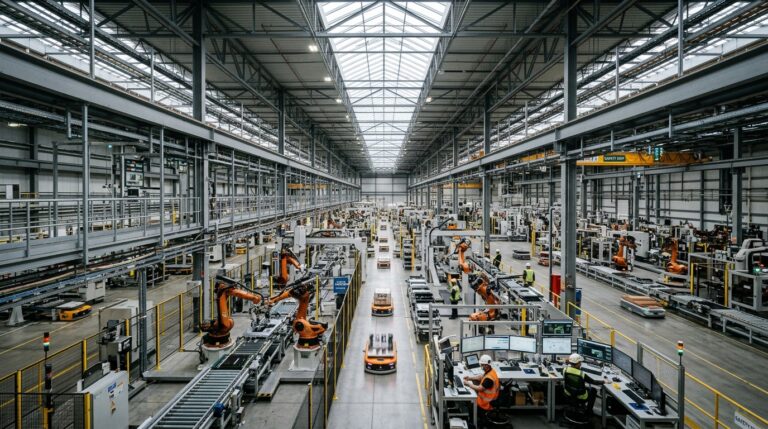
That is the core tension. Total control means total responsibility for every input. And every input costs energy.
The concept traces back to Dickson Despommier’s work at Columbia University starting in 1999, but the practical technology only became commercially viable in the past decade as LED efficiency improved and sensor costs dropped. US controlled-environment agriculture operations more than doubled from 1,476 in 2009 to 2,994 in 2019, and the pace has accelerated since.
A quick distinction that gets confused constantly: vertical farming is not the same as a greenhouse (greenhouses use sunlight on a single growing plane). It is not the same as a container farm (container farms are a format subset, not a synonym). And it is not interchangeable with hydroponics (hydroponics is one growing method used inside vertical farms, not the farm itself).
The Complete Tech Stack: Eight Layers
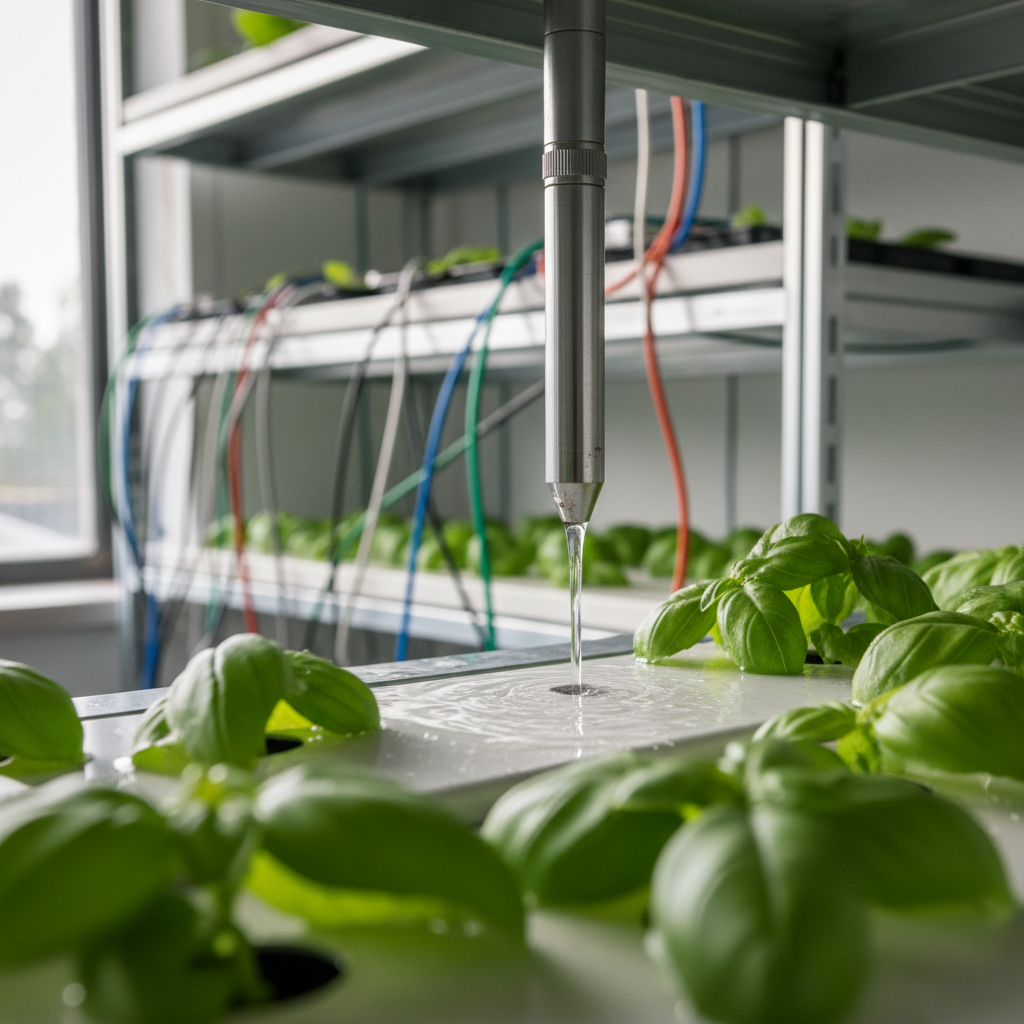
Every vertical farm, from a shipping container to a 300,000-square-foot facility, runs on the same eight layers. What changes is the scale, the sophistication, and whether the operator treats these as one integrated system or as separate purchases bolted together after the fact.
1. Growing systems
The method delivering water and nutrients to roots. Hydroponics (roots in nutrient solution), aeroponics (roots misted in air), aquaponics (fish waste feeds plants), nutrient film technique, and deep-water culture all fall here. This layer gets the most attention. It is rarely the reason a farm fails.
2. Lighting
Programmable LED arrays that replace sunlight entirely. Spectrum, intensity, photoperiod, and daily light integral must be tuned per crop and growth stage. Lighting consumes 42% to 80% of a vertical farm’s energy costs. Fluence, Signify, and Heliospectra are the main commercial suppliers, with Fluence releasing vertical-farming-specific LEDs with improved spectral control and compact form factors in late 2024.
3. Climate control
Temperature, humidity, CO2 concentration, airflow, and vapor-pressure deficit. HVAC and dehumidification systems manage these variables and account for another 16% to 43% of energy costs. Get the vapor-pressure deficit wrong by two kilopascals and you trigger tip burn across an entire lettuce cycle. Hours of drift, weeks of lost yield—making environmental monitoring technology essential for catching deviations before they cascade into crop failures.
4. Water and nutrient management
Filtration, sterilization (UV or ozone), pH and electrical-conductivity management, automated dosing, nutrient recycling, and wastewater control. Well-designed systems recirculate over 95% of water. The “98% less water than field agriculture” claim is real for closed-loop systems, but only if filtration and monitoring keep contaminants from accumulating silently.
5. Sensors and environmental monitoring
Temperature, humidity, CO2, light levels, root-zone moisture, nutrient concentration, dissolved oxygen. This is the layer that turns a controlled environment into a measured one. Without accurate, continuous sensor data, every other layer runs on assumptions. Inaccurate measurement cascades into wasted energy, inconsistent yields, and missed crop cycles. Most operators discover this the expensive way.
6. Software and data
Dashboards, predictive analytics, machine vision, crop-record management, and recipe control (the precise set of light, climate, and nutrient parameters for a specific crop at a specific growth stage). This is where IoT telemetry from the sensor layer becomes actionable decision-making. Most commercial platforms remain proprietary and fragmented, creating integration problems at scale.
7. Automation and robotics
Seeding, tray movement, plant inspection, harvesting, grading, and packing. Large vertical farms producing over 1 million kilograms of leafy greens annually require machine vision and AI because workers simply cannot inspect every plant. Oishii’s acquisition of Tortuga AgTech’s robotics IP in early 2025 signals that harvesting automation has moved from nice-to-have to strategic asset.
8. Energy infrastructure
The layer that either makes the business viable or kills it. Grid electricity, on-site solar, battery storage, heat recovery, HVAC optimization. A 2025 benchmarking study puts current lettuce energy consumption at 10 to 18 kWh per kilogram, with a technical benchmark of 3.1 to 7.4 kWh/kg. The distance between where most farms operate and where they need to be remains wide.
Growing Systems Compared
| System | Mechanism | Water Efficiency | Best Crops | Primary Risk |
|---|---|---|---|---|
| Hydroponics (NFT / DWC) | Roots sit in or flow through recirculating nutrient solution | High | Leafy greens, herbs, microgreens | Root disease propagation through shared solution |
| Aeroponics | Roots suspended in air, misted with nutrient solution | Very high | Leafy greens, strawberries, root crops | Nozzle clogging; rapid root desiccation on system failure |
| Aquaponics | Fish waste provides plant nutrients; plants filter water for fish | High (dual-use) | Leafy greens, herbs, tilapia | Dual-biology complexity; two living systems to manage |
Hydroponics dominates commercial vertical farming because it is the simplest to automate and the most forgiving at scale. AeroFarms built its operation around aeroponics and achieved strong yields, but the operational complexity also contributed to the costs that nearly sank the company. Aquaponics remains a niche method in commercial settings because managing fish health and plant health in one system doubles the monitoring burden.
The right growing system depends on the crop, the scale, and (this matters more than most vendors admit) the quality of environmental monitoring behind it. A poorly monitored hydroponic system will underperform a well-monitored aeroponic one every time.
The Energy Equation That Decides Everything
Energy is not one problem among many in vertical farming. It is the problem. Crop selection, facility size, location, growing method, automation level: every other decision flows from it.
A 2025 academic review estimates total system energy use at 400 to 1,260 kWh per square meter per year, with lighting taking the largest share and climate control taking second. Together they account for 58% to over 90% of total energy cost, depending on facility design and local climate.
A 2025 Nature review pegs energy at roughly 25% of operating costs in large US vertical farms, second only to labor. The same study found that indoor vertical farms carry carbon footprints 5.6 to 16.7 times those of open-field agriculture. Renewable electricity drops that ratio significantly, but most commercial operations still run on grid power.
This is why site selection for a vertical farm is as much an energy decision as a logistics one. A farm in a region with cheap, renewable electricity and mild ambient temperatures starts with a structural cost advantage that no LED upgrade can replicate elsewhere.
The energy equation also explains why vertical farming will never replace field agriculture for staple crops. A 2025 study concluded that vertically farmed dried staple crops have limited viability even at low energy prices. Wheat, rice, corn: they need sunlight at scale. Replicating it with LEDs is like heating a swimming pool with a space heater. The math does not close.
Which Crops Actually Make Money
The list of crops that pencil out in a vertical farm is short and specific:
- Leafy greens (lettuce, spinach, arugula): the default. Fast growth cycles, high density, consistent demand. Academic data puts yields at 60 to 105 kg fresh weight per square meter per year.
- Microgreens: higher margin per kilogram than full-grown greens, shorter cycles. AeroFarms pivoted here post-bankruptcy and reached profitability.
- Herbs (basil, cilantro, mint): premium pricing, quick turnover, reliable demand from restaurants and meal-kit companies.
- Premium strawberries: the emerging high-margin play. Oishii built its model around Japanese-style berries at $50+ per box. Requires advanced pollination and harvesting technology, but the unit economics can work at the luxury end.
What does not work: grains, root vegetables at commodity scale, most tree fruits, anything where the retail price cannot absorb $2 to $5 per kilogram in energy costs alone.
A 2026 economic model published in Frontiers found that lettuce could approach Dutch greenhouse benchmark costs under advanced performance assumptions, but tomato cost parity required conditions not yet demonstrated at commercial scale. The authors were explicit: their framework identifies required performance targets, not predictions of actual outcomes.
The USDA projects vertical farms could capture 50% of the US leafy greens market within the next decade, but only about 5% of strawberries and tomatoes. Those numbers tell you precisely where the technology has real economic gravity and where ambition still outruns arithmetic.
What $2 Billion in Failures Revealed
Between 2023 and 2025, the vertical farming industry lost three of its highest-profile companies. Combined capital raised across Plenty, Bowery Farming, and AeroFarms exceeded $2 billion. Each collapse teaches something different.
Plenty raised nearly $1 billion from investors including SoftBank and chased strawberries at scale before unit economics were proven. The lesson: venture capital timelines and agricultural cycle times are structurally mismatched. Investors expect exponential growth. Plants do not care about your funding round.
Bowery Farming shut all facilities in late 2024. Despite strong branding and retail partnerships, the cost structure outran revenue. Bowery illustrates the gap between high private valuations and durable farm-level economics. A billion-dollar valuation does not reduce your electricity bill.
AeroFarms is the most instructive case because it experienced both failure and recovery. After bankruptcy in 2023, the company narrowed its crop focus to microgreens, secured retail distribution through Whole Foods and Costco, and reached profitability. Then in December 2025, a key investor pulled out of its Virginia operations, putting 173 jobs at risk. By May 2026, the company preserved more than 100 of those positions. AeroFarms proves the technology can reach profitability. It also proves that financing fragility can undo operational progress overnight.
The pattern across all three is consistent. The technology worked. The business model around it did not. Specifically:
- Scaling facility size before proving unit economics at a smaller one
- Choosing crops with margins too thin to cover energy and labor
- Underinvesting in operational monitoring while over-investing in physical infrastructure
- Operating on venture timelines instead of agricultural ones
What the Survivors Got Right
The vertical farms working in 2026 share common traits. None of them are trying to feed the world. All of them obsess over a narrow product-market fit.
Oishii launched its 237,500-square-foot Amatelas Farm in New Jersey with robotics, water purification, solar adjacency, and data-driven crop management. It grows premium strawberries for the high-end market and acquired Tortuga AgTech’s AI and robotics IP in early 2025 to vertically integrate harvesting. Oishii does not compete on price. It competes on a product that field agriculture cannot replicate at the same quality level.
Bustanica in Dubai operates a three-story, 330,000-square-foot facility producing over 1 million kilograms of leafy greens per year. It works because Dubai imports the vast majority of its food, has cheap energy, extreme heat that makes outdoor farming nearly impossible, and Bustanica ships directly to Emirates Flight Catering. The farm was not built to prove a concept. It was built to serve a captive market with structural demand.
80 Acres Farms runs a fully automated indoor operation producing salads, microgreens, herbs, tomatoes, and baby cucumbers. Full automation is the strategy: controlling labor costs (the second-largest expense after energy) rather than tolerating them.
The common thread: crop specialization, geographic advantage (proximity to high-value markets or import-dependent regions), automation as a genuine cost-reduction strategy, and relentless focus on cost per kilogram rather than facility square footage.
The Monitoring Layer Most Farms Underestimate
I deploy IoT sensors across industrial supply chains for a living. Ports, airlines, freight operations, MRO facilities. The pattern I see in vertical farming is the same one I see everywhere else: operators invest heavily in hardware (racks, LED panels, HVAC units, irrigation rigs) and underinvest in the sensor infrastructure that tells them whether the hardware is actually performing.
A vertical farm is a closed system with no margin for environmental drift. If humidity rises 5% above setpoint in a growing zone and nobody catches it for six hours, condensation forms on leaf surfaces, fungal growth triggers, and a crop cycle worth weeks of labor and energy goes to waste. That sequence takes hours to start, not days.
Accurate, continuous environmental monitoring (temperature, humidity, CO2, light levels, nutrient concentration, water quality) is the foundation of every other layer. Without it:
- Climate control runs on programmed schedules instead of real conditions, burning energy to cool zones that are already cool
- Nutrient dosing drifts without feedback loops, causing deficiency or toxicity that only shows up in the harvest
- Yield variability climbs, making revenue unpredictable quarter to quarter
- Root-cause analysis after a crop failure becomes guesswork instead of forensics
Each growing zone needs its own environmental telemetry feeding a central dashboard. In a 50,000-square-foot facility with 15 zones, that means dozens of sensor nodes reporting temperature, humidity, CO2, and light data every few minutes. Wireless IoT devices with long battery life and reliable connectivity are not optional here. They are the nervous system of the operation.
This is the domain I work in. At Datanet IoT Solutions, we deploy environmental tracking devices across operations where environmental conditions directly drive product quality and operational cost. Vertical farming is one of the clearest cases: a facility where temperature accuracy of plus or minus one degree Celsius can mean the difference between a sellable harvest and compost.
If you are building, scaling, or troubleshooting a vertical farm and the sensor layer still feels like an afterthought, that is the gap worth closing first. Reach out to our team, or email us at info@datanetiot.com.
Frequently Asked Questions
What is vertical farming technology?
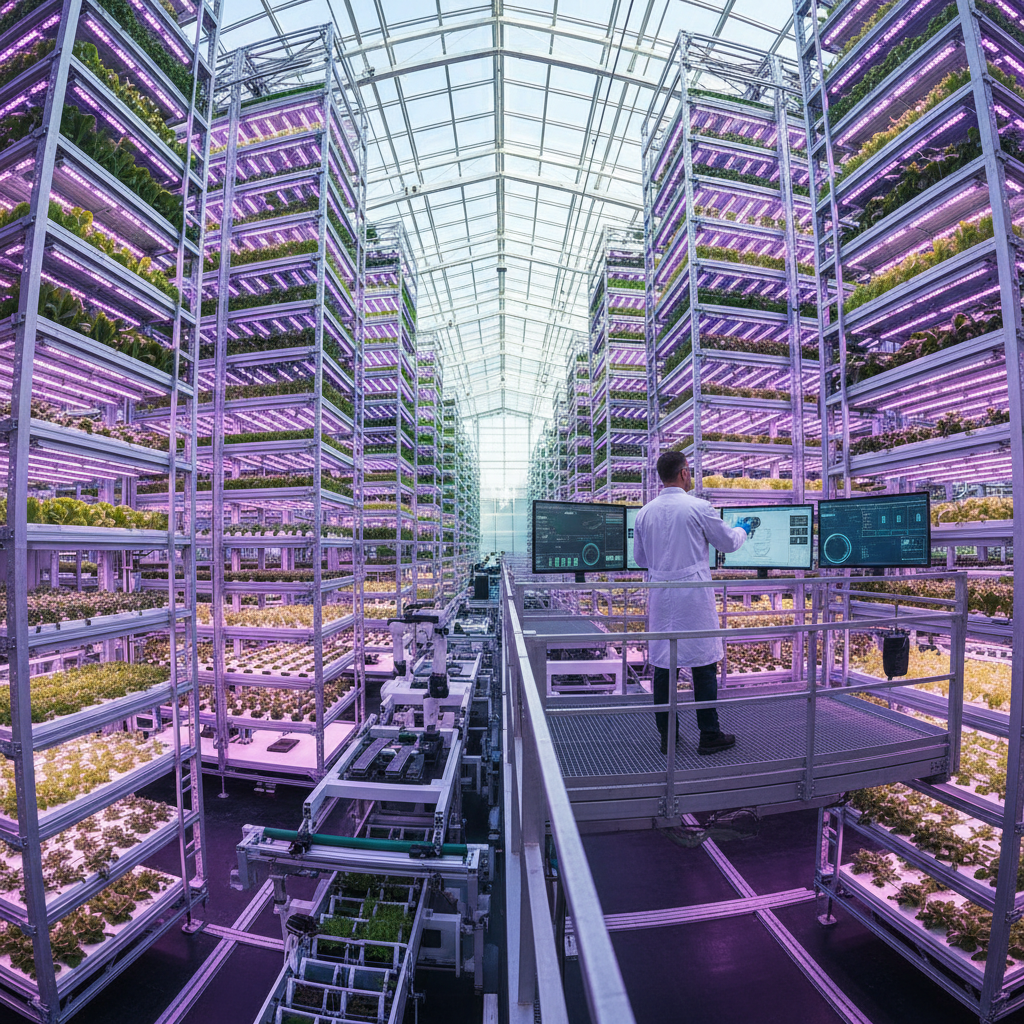
Vertical farming technology is the full set of systems used to grow crops indoors in stacked layers without sunlight or soil. It includes LED lighting, climate control (HVAC), hydroponic or aeroponic growing systems, automated nutrient delivery, environmental sensors, analytics software, robotics, and energy infrastructure. All eight layers must function as an integrated system for the farm to be both productive and profitable.
How much does it cost to build a vertical farm?
A container-based micro farm can start under $200,000. Commercial facilities of 30,000 square feet or more typically require $5 million to $20 million, depending on crop type, automation level, and climate. Energy infrastructure and ongoing sensor and monitoring systems represent a significant portion of operating costs beyond the initial capital investment.
Which crops are most profitable in vertical farms?
Leafy greens (lettuce, spinach, arugula), microgreens, culinary herbs (basil, cilantro, mint), and premium strawberries currently offer the strongest unit economics. These crops combine fast growth cycles, high planting density, and retail prices that absorb indoor production energy costs. Grains and commodity root vegetables are not economically viable.
Why do vertical farming companies fail?
Most failures trace back to business model miscalculation, not broken technology. Common patterns include scaling facility size before proving unit economics, selecting low-margin crops, underestimating energy and labor costs, and building on venture capital timelines that conflict with agricultural realities. Companies that survived (AeroFarms, Oishii, Bustanica) succeeded by narrowing crop focus and aligning with specific market demand.
How much energy does a vertical farm consume?
Current estimates range from 400 to 1,260 kWh per square meter per year. Lighting takes 42% to 80% of energy costs, and climate control takes 16% to 43%. Lettuce production currently requires 10 to 18 kWh per kilogram at most commercial operations, though technical benchmarks suggest 3.1 to 7.4 kWh/kg is achievable with optimized LED and HVAC systems.
Can vertical farming replace traditional agriculture?
No. Vertical farming complements field agriculture for specific high-value, perishable crops. It cannot economically replace conventional production for staple grains, most tree fruits, or commodity-scale vegetables. Its strength is producing consistent, pesticide-reduced greens, herbs, and berries closer to urban consumers, year-round, independent of weather and season.




 +1 508 292 2210

2 Responses