

The global vehicle tracking device market will reach $3.27 billion in 2026. More industrial GPS tracking device options exist today than at any point in the last decade. With 19.2 million active fleet management systems in North America alone, adoption is no longer the question. Choosing correctly is.
And most buyers still get it wrong.
Not because the hardware fails. Because the buying decision does. A fleet manager compares spec sheets, picks the cheapest IP67-rated unit, installs it, and six months later discovers the tracker answers “where is it?” but never “what should I do about it?”
I’ve deployed industrial IoT across aviation, logistics, port operations, and MRO for over 15 years. The pattern repeats regardless of vertical: organizations default to either the cheapest hardware or the biggest brand. Both shortcuts end in the same place. Underused technology that never closes the operational loop.
This is the decision framework I wish I’d had before my first large-scale rollout.
What Makes a GPS Tracker Industrial Grade
Every vendor calls their device “industrial.” The word has no regulated definition, so you have to know what actually matters once the device leaves the warehouse.
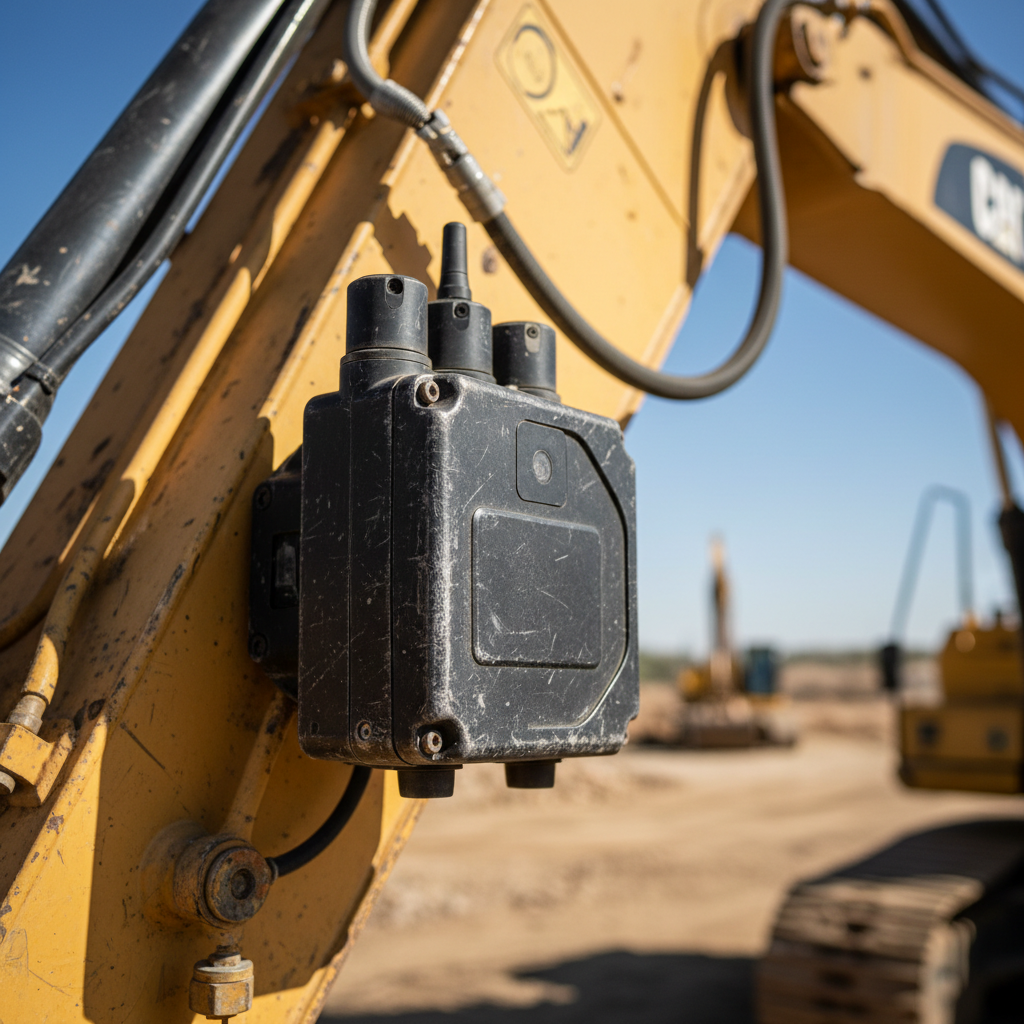
Start with the enclosure. IP67 means the device survives temporary immersion. IP68 means continuous immersion under specified conditions. For construction sites, port yards, mining, and outdoor staging areas, IP67 is the floor. Temperature range matters just as much: a device rated for 0°C to 45°C won’t survive a Texas summer inside a steel container or a Canadian winter on an exposed trailer hitch.
But ruggedness is only the visible layer.
What separates an industrial GPS tracking device from a consumer tracker is what happens when conditions degrade. A consumer device assumes reliable power, strong cellular signal, and clear sky view. An industrial device must handle intermittent power (or none), patchy cell coverage, obstructed satellite visibility, and months of idle storage. CISA confirms that GPS signals are weak at ground level and degrade further inside buildings, metal containers, and urban canyons. A properly engineered device detects stale fixes, buffers data locally when connectivity drops, and resumes transmission without losing records once signal returns.
Then there’s firmware logic, where the real engineering sits. Smart power management (wake on motion, sleep during storage, adaptive reporting intervals) is what turns a 6-month battery into a multi-year one. Without it, you’re sending technicians across hundreds of assets every quarter just to swap batteries.
Five Device Architectures and When Each Wins
There is no universal industrial GPS tracker. There are five distinct architectures, each designed for a different operational reality. Picking the wrong one isn’t a hardware failure. It’s a mismatch.
| Architecture | Power Source | Data Depth | Best For | Key Trade-off |
|---|---|---|---|---|
| Vehicle gateway | Vehicle battery + ignition | GPS, CAN bus, engine diagnostics, driver behavior, fuel | Trucks, vans, service fleets | Requires professional installation and continuous vehicle power |
| Powered asset gateway | Machine or equipment power | Location, engine hours, fault codes, sensor inputs | Generators, compressors, heavy equipment | Wiring complexity varies by machine make and model |
| Battery-powered tracker | Internal batteries (AA or lithium) | Location, motion, tamper events | Trailers, containers, tools, rental assets | Reporting frequency trades directly against battery life |
| Satellite or hybrid tracker | Battery or external | Location and sparse telemetry | Remote mining, agriculture, offshore, cross-border logistics | Higher airtime cost, antenna requirements, smaller data payloads |
| Environmental monitor | Battery or external | Temperature, humidity, light, location | Cold chain, pharma, perishable cargo | Sensor calibration and compliance documentation overhead |
The right choice depends on the asset, not the brand. A powered vehicle gateway delivers rich diagnostics and second-by-second location, but it’s useless on an unpowered trailer. A battery tracker like the Oyster3 runs on three replaceable AA batteries with a manufacturer claim of 10+ year battery life. It excels on assets that sit idle for weeks between moves. But it won’t read engine hours or fault codes.
For aviation and airfreight, requirements tighten further. DO-160 certification is mandatory for devices operating inside aircraft cargo holds. The Thingfox T2 meets that standard. Most general-purpose industrial trackers do not.
Match the architecture to the asset first. Compare vendors within that architecture second.
The Gap Between Shipment Tracking and Asset Tracking
This is the distinction that costs organizations the most money and gets the least attention.
Shipment tracking follows a package from origin to destination. The job ends at delivery. The tracking record is a straight line: picked up, in transit, delivered, done.
Asset tracking follows the asset through its entire lifecycle. Deployment, use, return, dwell, maintenance, redeployment. The tracking record is a loop. And the most expensive operational gaps hide in the parts of that loop nobody watches: containers sitting idle at the wrong depot, tooling stuck in a return queue for weeks, reusable packaging that never comes back at all. Organizations often evaluate RFID vs GPS asset tracking to determine which technology best suits their full-lifecycle visibility needs.
Most organizations buying their first industrial GPS tracking device default to shipment thinking. They want to know where the truck is or when the container arrives. Valid starting point. If you’re still wondering where can I buy a tracking device, start with the asset type before the vendor. But if your container pool goes invisible the moment goods are unloaded, you’re paying for half the picture. Specialized GPS tracking for containers addresses exactly this full-lifecycle visibility gap.
The difference is operational, not academic. Shipment tracking data feeds a delivery confirmation. Asset tracking data feeds utilization rates, cycle time analysis, dwell time reduction, and return logistics optimization. One answers a customer question. The other answers a P&L question.
For reusable transport assets (containers, ULDs, pallets, ground support equipment), the ROI of visibility through the full cycle almost always exceeds the ROI of tracking only during transit. That’s where full-lifecycle asset tracking pays for itself.
Connectivity Is a 10-Year Decision
The 3G sunset should have taught the industry a permanent lesson. AT&T began phasing out 3G in February 2022, and Verizon followed shortly after. Millions of tracking devices became e-waste overnight. Not because the GPS receiver failed. Because the modem could no longer reach a tower.
Your connectivity choice will outlast your first batch of hardware. Treat it accordingly.
LTE-M is the current standard for low-power, low-bandwidth asset tracking. It sends small telemetry payloads efficiently and supports the sleep-wake patterns that stretch battery life to years. NB-IoT fills a similar niche with even lower power draw and narrower bandwidth, better suited for static or very slow-moving assets. Both protocols are designed to survive the 4G-to-5G transition because they share the same spectrum infrastructure.
Satellite fills the coverage gap. If your assets cross borders, travel rural corridors, or operate offshore, cellular alone will leave blind spots in exactly the places where visibility matters most. Hybrid devices that try LTE-M first and fall back to satellite provide the best reach, at higher per-message cost.
Before selecting a device, map your actual routes and storage locations against real carrier coverage. Not the marketing map. The real one, tested with the actual hardware at the actual sites. A tracker that reports perfectly from a distribution center parking lot may go silent inside a stacked container block at a port.
How to Calculate ROI Before the Purchase Order
The industry loves quoting theft prevention as the primary ROI driver. Equipment theft losses are real and recovery rates without trackers are dismal. But for most industrial operations, theft is not the biggest cost a GPS tracker prevents.
Utilization recovery is.
A battery tracker on every trailer, container, or rental asset tells you not just where it sits, but whether it’s earning. Idle assets parked at the wrong location represent missed revenue, unnecessary rental extensions, and duplicate capital purchases to cover a shortage that doesn’t actually exist. This is where IoT tracking sensors turn raw location data into real utilization intelligence. Industry sources consistently estimate heavy equipment telematics growing at 13.4% CAGR through 2032, and that growth is driven more by utilization intelligence than by antitheft alone.
A straightforward three-year model should quantify four things:
- Theft and loss avoidance: sum your last three years of insurance claims, unrecovered assets, and replacement costs. Divide by fleet size.
- Utilization improvement: even a 10-15% increase in asset turns changes the math on whether you need to buy or rent additional equipment.
- Maintenance optimization: shifting from calendar-based to hours-based service intervals reduces both premature maintenance and catastrophic failures.
- Administrative time recovered: how many person-hours per week do dispatchers, project managers, or MRO coordinators spend locating equipment by phone?
On the cost side, don’t stop at the monthly subscription. Published examples put fleet tracking at $15 to $50 per vehicle per month, but that headline number rarely includes hardware, professional installation, cellular airtime, battery replacements, software integrations, technical support, and contract exit fees. Calculate total cost per tracked asset over three years. Then compare that against the operational losses above.
When you model it this way, the device is not a line-item cost. It’s the measurement instrument for costs you’re already paying, invisibly.
What the Spec Sheet Never Mentions
Three risks sit outside every product brochure. All three can turn a solid deployment into an expensive regret.
Security is the most underestimated. In 2022, BitSight reported six severe vulnerabilities in the MiCODUS MV720 GPS tracker, a device deployed across 1.5 million vehicles. Attackers could alter location data, disable tracking entirely, or access sensitive movement histories. Cheap hardware from vendors without a security development lifecycle creates risk wildly disproportionate to its price tag. Ask every vendor you evaluate: how do you handle firmware updates, vulnerability disclosure, encryption in transit and at rest, and device authentication? Vague answers are disqualifying.
Then there’s workforce adoption. Tracking a trailer raises no eyebrows. Tracking a vehicle with a person inside it triggers legal and cultural friction simultaneously. Ireland’s Data Protection Commission warns that employer vehicle tracking carries a high risk of interfering with employee privacy rights. In the U.S., vehicle geolocation data collection is under active legislative review. Beyond compliance, the practical issue is simpler: if your field crew sees tracking as surveillance rather than operational support, they will resist it, distrust the data, or find creative ways to defeat it. Define coaching protocols, data access rules, retention periods, and off-duty boundaries before a single device goes live.
Finally, data portability. Can you export your complete location history? Can a third-party platform ingest your device’s telemetry via open API? What happens to the hardware if you cancel the subscription? Some vendors brick the device. Others charge exit fees that make switching prohibitively expensive. The strongest deployments maintain data ownership from day one, use open integration protocols, and never let a subscription contract hold the hardware hostage.

Frequently Asked Questions
What is an industrial GPS tracking device?
A rugged location and telemetry endpoint designed for vehicles, equipment, trailers, containers, or other industrial assets. It combines GNSS positioning with cellular or satellite communications, and typically adds motion detection, tamper alerts, or environmental sensing. “Industrial” implies resistance to temperature extremes, water ingress, vibration, and firmware engineered for intermittent connectivity and long deployment cycles.
How long do batteries last in industrial GPS trackers?
It depends on reporting frequency, temperature, signal environment, and motion profile. Manufacturers like Digital Matter advertise 10+ years on three AA batteries for event-based reporting. A tracker pinging every 60 seconds will drain the same battery in months. Always ask for expected life at your specific reporting interval and operating conditions, not the maximum headline number.
What is the difference between GPS tracking and telematics?
GPS provides position and time. Telematics combines positioning with two-way communications, vehicle or asset diagnostics, cloud software, analytics, alerts, and operational workflows. A GPS receiver knows where it is. A telematics system tells a fleet manager where the asset is, what it’s doing, and what action to take next.
Do industrial GPS trackers work without cell coverage?
Standard cellular trackers lose real-time communication outside coverage zones, though well-designed devices buffer data locally and transmit stored records when signal returns. For consistently remote operations (mining, agriculture, offshore, cross-border), satellite or hybrid cellular-satellite devices maintain connectivity via LEO or GEO networks, at higher per-message cost.
How much does industrial GPS tracking cost per month?
Published comparisons range from $20 to $45 per vehicle per month for small-business fleet tracking and $15 to $50 in broader fleet deployments. Actual cost depends on hardware ownership, installation, airtime, cameras, software tier, integrations, support, contract length, and replacement policy. The only honest comparison is total cost per tracked asset over three years.
Can GPS signals be jammed or spoofed?
Yes. CISA confirms GPS signals are weak at ground level and vulnerable to intentional jamming, unintentional interference, and building obstruction. Industrial deployments should detect stale or implausible fixes, cross-check GNSS with cell-tower positioning, buffer data during outages, and maintain a documented response plan for extended signal loss.
If you’re evaluating industrial GPS tracking devices for fleet, equipment, or reusable asset visibility and want help matching the right architecture to the right operational problem, reach out to our team. That’s what we do: info@datanetiot.com.







 +1 508 292 2210

4 Responses