

You have cargo in transit somewhere between a factory floor and a receiving dock. It could be airborne over the Pacific, stacked on a vessel in the Strait of Malacca, or sitting on a chassis at a congested port gate. Your job: know where it is and when it arrives.
In fifteen years of working with freight operators and airlines, the core question hasn’t changed. But the tools to track cargo worldwide have. In 2026, the real-time freight visibility market alone hit $4.8 billion, and it’s projected to nearly triple by 2034. The technology exists for every mode and every budget. What hasn’t kept pace is understanding of what “tracking” actually delivers for each mode, where it goes silent, and when a tracking number alone isn’t enough to protect your cargo or your assets.
This guide covers every practical method available right now, explains what to do when tracking stops updating, and draws a hard line between shipment tracking (which dies at delivery) and the continuous asset visibility that actually saves operational dollars.
Six Methods to Track Cargo Worldwide
Not all tracking is built equal. Here are the six primary methods, ordered from simplest entry point to most comprehensive.
1. Carrier Portals
The most authoritative source for any single shipment is the carrier moving it. Maersk’s tracking portal accepts a Bill of Lading, container number, or booking reference. DHL’s international tracking works by tracking number, though events can take 24 to 48 hours to appear after pickup. FedEx, UPS, and every major airline cargo division offer similar portals. If you have the carrier name and a valid identifier, start here.
2. Universal Aggregators
When you manage shipments across multiple carriers or you’re unsure who’s handling a leg, aggregators save time. 17TRACK covers over 2,500 carriers worldwide, including USPS, FedEx, UPS, and DHL. AfterShip integrates with 1,326 carriers and exposes APIs that e-commerce merchants plug into storefronts. Both accept a tracking number and route it to the right carrier automatically. The tradeoff: aggregators can lag minutes to hours behind the carrier’s own portal.
3. Air Waybill (AWB) Lookup
Air cargo uses an 11-digit AWB formatted as a 3-digit airline prefix, a hyphen, and an 8-digit serial (for example, 020-12345675). Most airline cargo sites accept AWB lookup directly. For broader searches, track-trace.com covers 241 airlines and validates the check digit before querying. Freight-only or forwarder-consolidated shipments may require your logistics provider’s portal instead of the airline’s.
4. Enterprise Visibility Platforms
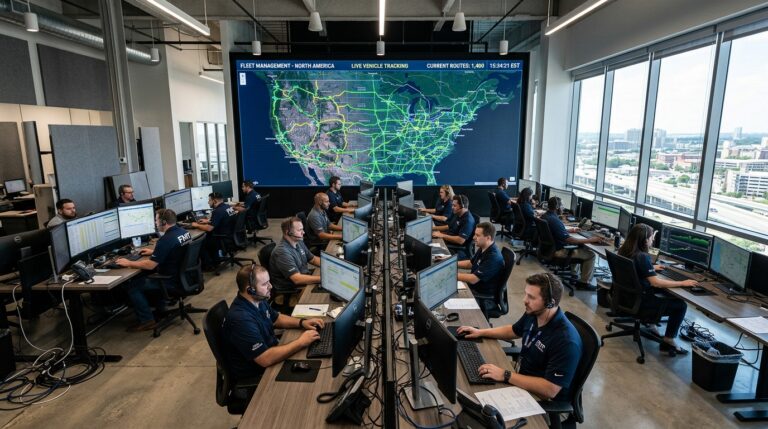
For high-volume shippers managing hundreds or thousands of shipments per week, single-carrier portals don’t scale. Platforms like project44 integrate with over 240,000 carriers across 185+ countries and process more than a billion shipments per year. FourKites, Shippeo, and Descartes MacroPoint serve similar roles. These platforms add predictive ETAs, exception management, and AI agents that can rebook failed shipments automatically. Subscription-based, sold primarily to logistics companies, manufacturers, and large retailers.
5. IoT Sensor Devices
When you need more than “which checkpoint did it last pass through,” IoT hardware on the asset itself is the answer. GPS/GNSS trackers provide continuous location. Multi-sensor devices add temperature, humidity, shock, light, and pressure monitoring. FedEx SenseAware, for example, monitors temperature from +60°C to -200°C, tracks location down to street level, and alerts you if a shipment is opened en route. For businesses that own reusable containers, ULDs, or ground equipment, devices like the Oyster Edge or the DO-160 certified Thingfox T2 provide tracking that persists well beyond the shipment itself.
6. UPU Global Track and Trace
For postal and EMS shipments without a commercial courier, the Universal Postal Union’s Global Track and Trace accepts UPU-formatted tracking numbers (like EE15080001XCH or CP225658529JP) for any participating postal operator. Web-only, no phone support. It works, but update frequency varies significantly between national postal services.
Know Your Identifier: AWB, Bill of Lading, Container Number
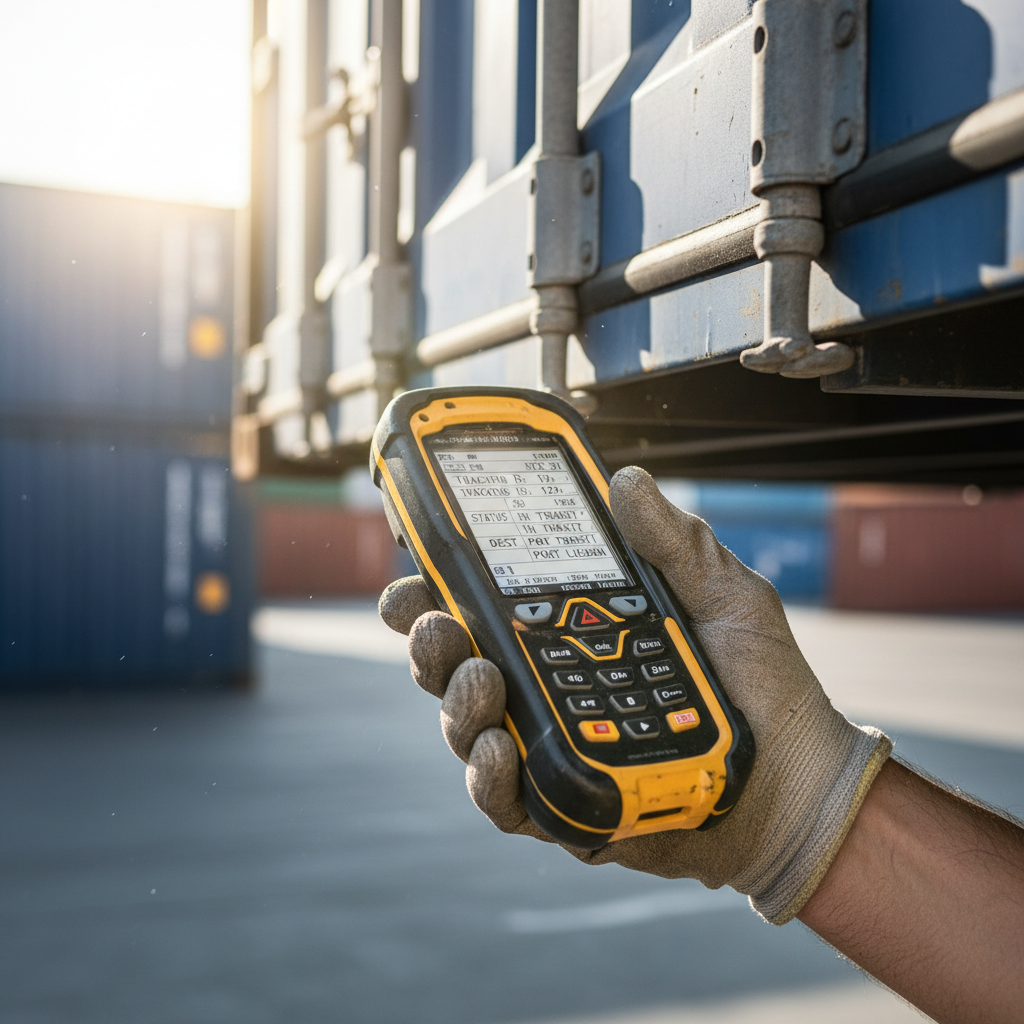
Tracking only works if you feed it the right code. Four identifier types cover virtually all worldwide cargo.
| Identifier | Format | Used For | Where to Enter It |
|---|---|---|---|
| Air Waybill (AWB) | 3-digit prefix + 8-digit serial (e.g., 020-12345675) | Air freight | Airline cargo portal, track-trace.com, 17TRACK |
| Bill of Lading (B/L) | Carrier prefix + 9 to 12 digits (varies by line) | Ocean freight (legal document of carriage) | Shipping line portal (Maersk, Hapag-Lloyd, CMA CGM) |
| Container Number | 4-letter prefix + 7 digits, ISO 6346 (e.g., MSKU1234567) | Physical ocean container | Shipping line portal, port community systems |
| Tracking Number | Carrier-specific alphanumeric string | Parcels, express, courier | Carrier portal, 17TRACK, AfterShip |
A Bill of Lading is not a container number. One B/L can cover multiple containers. One container can carry goods from multiple B/Ls in the case of LCL consolidation. When tracking ocean cargo, you’ll often need both: the B/L for cargo-level status from the shipping line, and the container number for the physical unit’s port movements.
Prefix matters, too. The first three digits of an AWB identify the airline (020 is Lufthansa Cargo, 057 is Air France Cargo). The first four letters of a container number identify the operator (MAEU for Maersk, CMAU for CMA CGM). If you don’t recognize the prefix, paste the full number into 17TRACK or AfterShip and let the aggregator route it for you.
Air, Ocean, Road: How Tracking Differs by Mode
This is where expectations and reality diverge the most.
Air Freight
Air cargo tracking is checkpoint-based. You see events like “Received from shipper,” “Departed,” “Arrived,” “Customs release,” and “Delivered.” Between those checkpoints, the shipment is invisible. There is no mid-flight positional ping for your specific AWB. (The aircraft is tracked by ATC and ADS-B, but the individual consignment is not.) Typical visibility: 3 to 6 events per shipment, sometimes fewer on forwarder-consolidated loads.
Ocean Freight
Ocean tracking combines vessel-level AIS (Automatic Identification System) pings with port event data. A container on a major carrier’s vessel gets position updates when the ship pings AIS satellites, which can be every few minutes in coastal waters but far less frequent at mid-ocean. Container-specific events (loaded, discharged, gated out) only fire at port terminals. On a 14-day Pacific crossing, that means silence after departure and before arrival.
This is exactly why IoT devices mounted directly on containers exist. They bridge the gap between vessel-level AIS and port-event data with continuous GPS, cellular, or satellite pings from the physical unit itself.
Road Freight
Road has the best native visibility. ELD (Electronic Logging Device) mandates in the US and EU mean most trucks broadcast GPS position continuously. Enterprise visibility platforms aggregate these feeds to show shipment-level location in near real time. If your cargo is on a truck, you’re likely getting updates every few minutes. The exception: last-mile delivery in regions without ELD mandates or where subcontracted carriers don’t share data.
The Multimodal Handoff Problem
The hardest cargo to track worldwide isn’t on a single mode. It’s the one that moves from a factory in Shenzhen onto a truck, into a port, onto a vessel, off at Rotterdam, onto a rail car, and finally onto another truck for final delivery. Each handoff can change the carrier, the identifier, and the tracking system.
No single platform covers every leg natively. Enterprise platforms try (project44 handles air, ocean, road, and rail in one interface), but even they rely on carrier data-sharing agreements that aren’t universal. If you ship multimodal at volume, you’re either operating a visibility platform or calling freight forwarders. There is no “paste a number and see everything” solution for complex multimodal chains. Not yet.
Why Tracking Goes Dark (and What to Do)
Every logistics professional has stared at a tracking status that simply stops updating. Before assuming the worst, consider the common causes.
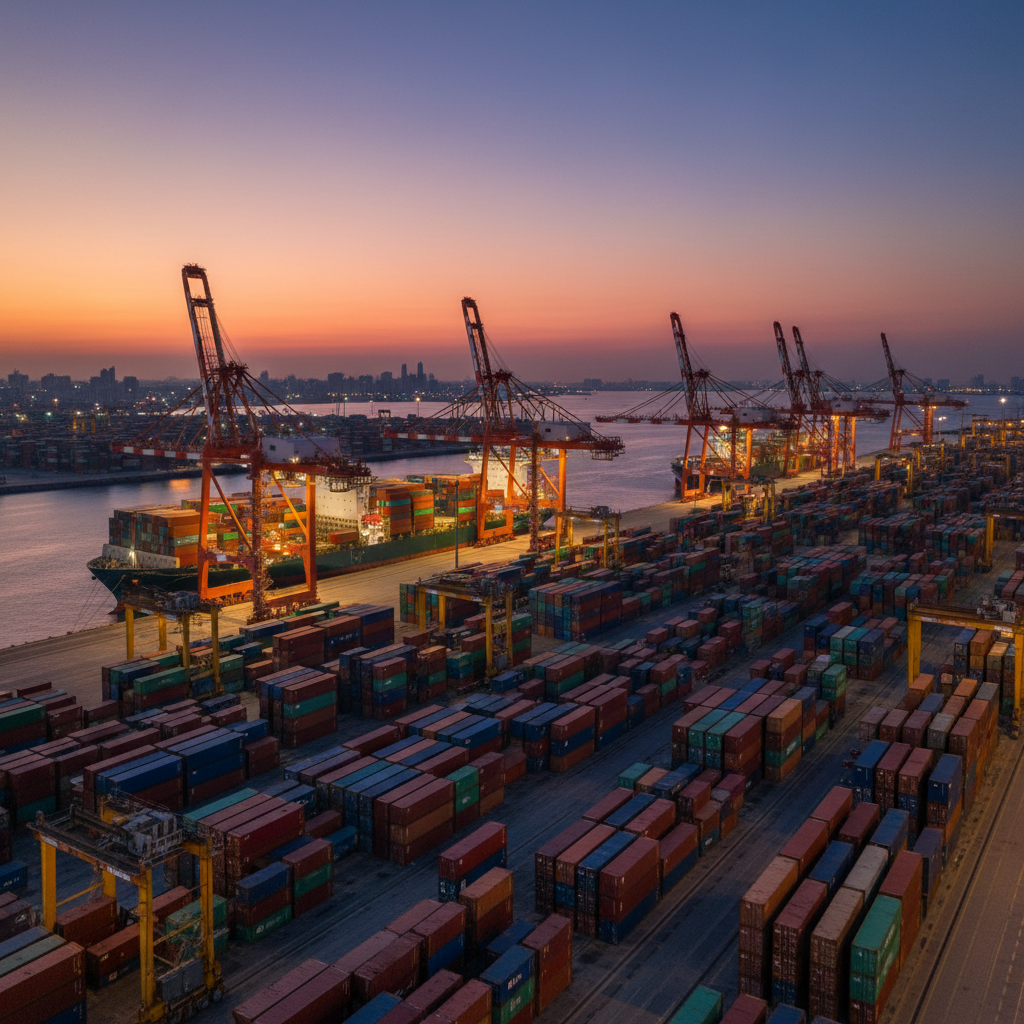
Mid-ocean transit is the most frequent one. Container vessels on long-haul routes (transpacific, Asia-Europe) can go 10 to 14 days without a port call. AIS provides vessel position, but container-level events won’t fire until the next port discharge or transshipment.
Customs processing creates a different kind of silence. Cargo held for examination or documentation review doesn’t generate tracking events. It sits. Your status will read “Arrived” or “Manifested” with no update for days. This is normal at high-volume ports and for shipments flagged by risk algorithms.
Carrier system lag catches people off guard. Some carriers update tracking in batch, not real time. DHL’s own portal notes tracking events may take 24 to 48 hours to appear. Smaller carriers and postal services can lag even longer.
Transshipment gaps are the trickiest. When a container is discharged at a transshipment port and loaded onto a different vessel, there’s often a gap between the “discharged” event on the first vessel and the “loaded” event on the second. In congested hubs (Singapore, Colombo, Tanjung Pelepas), this gap can stretch to a week or more.
What to do: start with the carrier’s customer service, armed with your B/L or AWB number. If the carrier portal shows “Arrived” at a port, check the port community system or terminal operator’s website for gate-out status. For time-sensitive cargo, your freight forwarder should be your first call, since they have direct communication channels the carrier portal doesn’t expose. If silence extends beyond 48 hours with no event and no port call in between, escalate. That’s when a missing-container investigation starts.
The $35 Billion Cargo Theft Problem Tracking Numbers Can’t Solve
Knowing where your cargo is and knowing it’s safe are two different things.
Cargo theft in the US and Canada jumped 27% in 2024, reaching 3,625 reported incidents with an average loss exceeding $202,000 per theft. The National Insurance Crime Bureau estimates annual losses at up to $35 billion. The trajectory is getting worse: NICB projected another 22% increase through 2025, and US rail cargo theft jumped from 4% to 10% of incidents in the same period.
Trucks are the primary target in 76% of cases. 41% of incidents occur during transit, not at rest stops. Strategic theft (fraudulent pickups using fictitious carrier identities) accounts for 18% of all US incidents and has expanded well beyond California into Illinois, Indiana, and Ohio.
A tracking number that says “in transit” is useless if the truck was intercepted by someone posing as the scheduled driver. What actually reduces theft losses is a different layer of visibility: tamper-evident sensors that alert when a container is opened, route deviation alerts that fire when a vehicle leaves its planned corridor, geofenced zones around known high-risk areas, and direct integration with theft databases like CargoNet.
This is where the line between “tracking a shipment” and “tracking an asset” stops being academic.
Shipment Tracking vs Asset Tracking: Where Real Visibility Starts
Most of what we’ve covered so far is shipment tracking. A shipment gets a tracking number at booking, generates events as it moves, and the number expires at delivery. Job done.
But what about the container the shipment was in? The ULD it was loaded on? The pallet, the reusable crate, the ground support equipment that handled it at the airport?
Shipment tracking answers: “Where is this cargo right now?”
Asset tracking answers: “Where is this physical asset across its entire lifecycle, and how efficiently are we using it?”
For anyone operating a pool of reusable containers, ULDs, or equipment, the shipment-level answer is only half the picture. After delivery, those assets need to return, be inspected, repositioned, and reused. Without continuous tracking, you lose visibility at exactly the moment when the most expensive problems happen: dwell time at customer sites, lost or unreturned containers, dead stock sitting in the wrong geography.
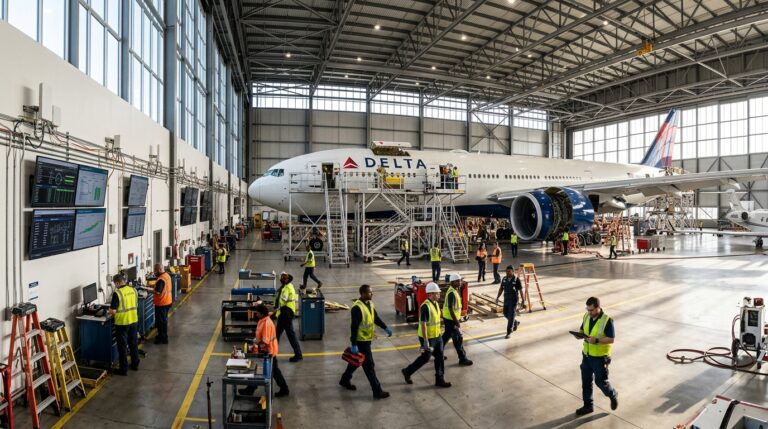
I see this constantly in aviation and ground support. An airline knows exactly where the cargo is until it’s delivered. But the ULD that carried it? The dolly that moved it on the tarmac? Those assets go dark the moment the shipment closes out. Three months later, someone runs an inventory count and discovers 15% of the pool is unaccounted for.
The technology that solves this is the same GPS/GNSS and cellular hardware used for shipment tracking, deployed differently. Instead of attaching a sensor to a shipment, you attach it to the asset. Devices like the Oyster3 or the Oyster Edge report position for years on a single battery, giving you cycle time, dwell time, and utilization data across the entire pool. For airfreight-specific assets that need DO-160 compliance, the Thingfox T2 is built for exactly that environment.
The ROI isn’t abstract. Blue Diamond Growers cut $1 million in annual transportation costs after implementing continuous visibility with AI-driven decision intelligence. At the asset level, savings compound: fewer lost containers, shorter cycle times, smaller pool sizes to serve the same demand, and procurement decisions grounded in actual utilization data instead of guesswork.
What’s Changing in Cargo Visibility Right Now
Three shifts are reshaping how companies track cargo worldwide over the next 12 to 24 months.
Agentic AI Is Moving From Dashboards to Decisions
The agentic AI segment in supply chain hit $8.67 billion in 2025, projected to nearly double by 2030. The shift: instead of displaying a dashboard and waiting for you to act, AI agents rebook a failed shipment, contact the carrier for an updated ETA, notify your customer, and clean the data record. All without human intervention. The caution: agents acting on bad data without review is the failure mode everyone is watching.
LEO Satellites Are Closing the Ocean Gap
Starlink Maritime and Iridium Certus are now standard offerings for container shipping lines. Even mid-size vessels generate continuous position pings from open ocean. This is stabilizing ocean visibility quality and narrowing the gap between tier-one carriers and smaller lines. Fewer “dark days” on long-haul routes, and more accurate predictive ETAs from platforms ingesting satellite data.
Scope 3 Emissions Are Becoming a Tracking Deliverable
Visibility platforms are bundling carbon accounting into the same subscription. Route data combined with emission factors produces audit-ready CO2 dashboards aligned with ESG and Scope 3 reporting standards. For shippers buying a tracking platform in 2026, emissions reporting is becoming as important as location pings.
Frequently Asked Questions
How do I track cargo worldwide with just a tracking number?
Paste the number into a universal aggregator like 17TRACK (2,500+ carriers) or AfterShip (1,326 carriers). The aggregator identifies the carrier and returns status events automatically. For the most current data, use the carrier’s own portal, since aggregators can lag by minutes to hours.
What is the difference between a Bill of Lading and a container number?
A Bill of Lading (B/L) is the legal contract of carriage for an ocean shipment. It may cover multiple containers. A container number (ISO 6346 format, e.g., MSKU1234567) identifies one physical box. You often need both: the B/L for cargo-level status from the shipping line, and the container number for port gate movements and terminal events.
Why does my cargo tracking stop updating for days?
Common causes include mid-ocean transit with no port events for 10 to 14 days, customs examination generating no tracking updates, carrier system lag (some batch-process events 24 to 48 hours after they occur), and transshipment gaps between vessels. If tracking silence extends beyond 48 hours outside of ocean transit, contact your carrier or freight forwarder to investigate.
Can I track air cargo the same way I track a FedEx parcel?
Not directly. Air cargo uses Air Waybills (AWBs), which are 11-digit codes with an airline prefix. AWBs generate checkpoint events (received, departed, arrived, customs release), not continuous GPS updates. Consolidated freight under a house AWB may only be trackable through the forwarder’s platform, not the airline’s public portal.
What is the difference between shipment tracking and asset tracking?
Shipment tracking follows a consignment from booking to delivery and expires at that point. Asset tracking follows the physical equipment (container, ULD, pallet, dolly) through its full lifecycle: delivery, return, dwell, maintenance, and reuse. Asset tracking captures cycle time and utilization data that shipment tracking never touches.
How accurate is real-time cargo tracking in 2026?
Road freight with ELD provides near-continuous GPS, making it the most accurate mode. Ocean tracking depends on AIS vessel pings and port events, with gaps at mid-ocean. Air cargo is checkpoint-based with typically 3 to 6 events per shipment. AI-driven predictive ETAs have improved accuracy by 30% to 45% over raw data, particularly for ocean and intermodal routes.
If your container pool goes invisible after delivery, you’re operating with the same blind spot most logistics teams only discover at inventory count. That’s the gap asset tracking closes. We can help: reach us at info@datanetiot.com or explore our asset tracking catalog.





 +1 508 292 2210

3 Responses