

The GPS tracking device market hit $3.4 billion in 2024, projected to reach $12.94 billion by 2035. That kind of growth has one driver: invisible assets cost real money.
Most companies treat “geolocation tracking” and “GPS” as synonyms. They’re not. GPS is one of six positioning technologies, and it fails in exactly the environments where high-value assets spend their time: warehouses, shipping containers, aircraft holds. The right geolocation tracking approach depends on where your assets live, what accuracy you need, and whether the cost produces a clear return. (See also: geolocation tracking device.)
After 15 years deploying IoT tracking across aviation, logistics, and maritime, I keep seeing the same cycle. A team buys a GPS tracker. It goes dark indoors. They start shopping again. Below: six positioning technologies, their real costs, their blind spots, and the legal shifts reshaping what’s permissible.
What Is Geolocation Tracking?
Geolocation tracking is the process of determining and continuously monitoring the geographic position of a device, asset, vehicle, or person using one or more positioning technologies. Those technologies include GPS, cellular triangulation, WiFi positioning, IP address lookup, Ultra-Wideband (UWB), and Bluetooth Angle of Arrival (AoA).
The keyword here is “one or more.” A single technology rarely covers the full lifecycle of a physical asset. A reusable container starts in a yard (GPS works), enters a warehouse (GPS dies), gets loaded onto a vessel (cellular drops), reaches port (cellular returns), and hits the receiving dock (GPS dies again). Tracking that asset across all five stages requires a hybrid approach, not a single chip.
Geolocation technologies serve use cases from fraud prevention in banking to fleet optimization in logistics. But enterprise value unlocks when tracking follows the asset through its full cycle, not just one leg of a shipment. That distinction between shipment tracking (the job ends at delivery) and asset tracking (the job follows the asset through return, dwell, and reuse) is where most organizations leave money on the table.
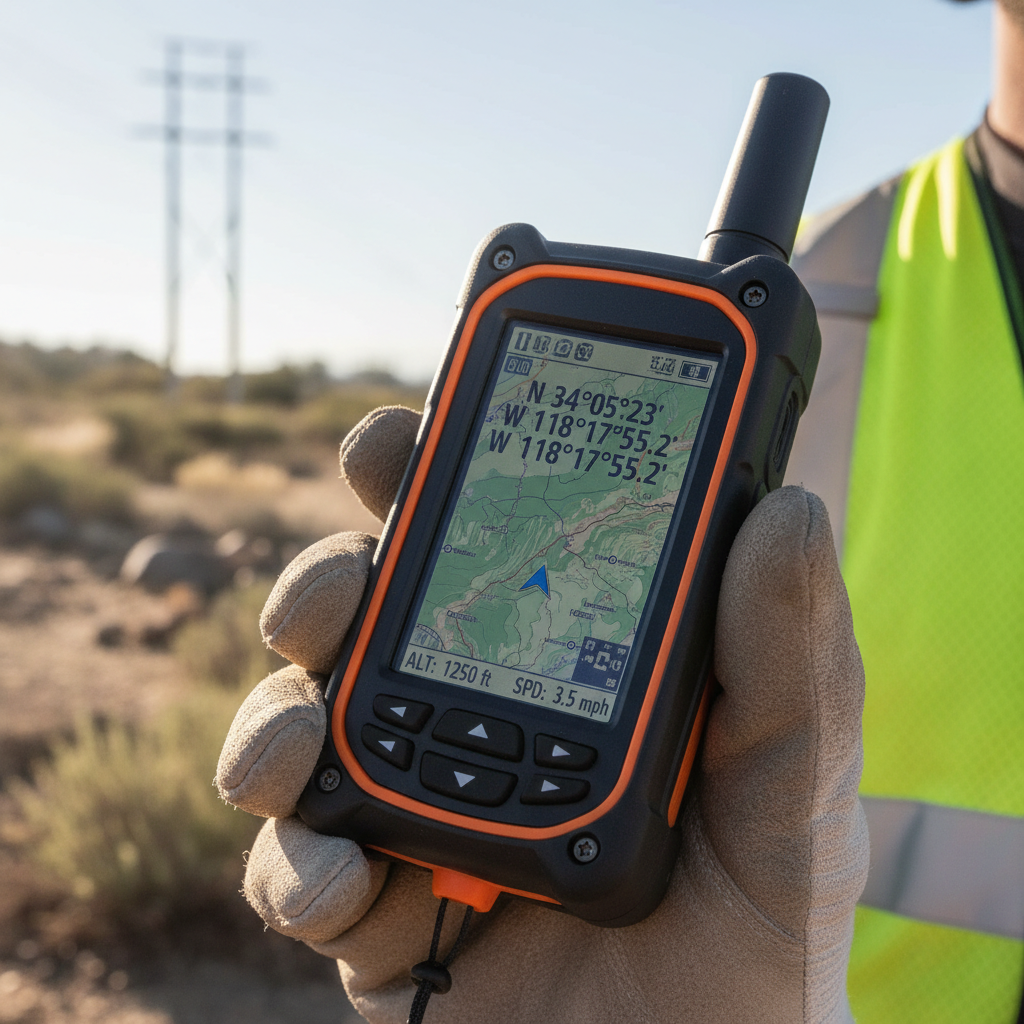
How Geolocation Tracking Actually Works
Each positioning technology makes a different trade-off between accuracy, power draw, indoor coverage, and cost. Choosing wrong means burning battery for accuracy you don’t need, or saving power while your data goes blind at the worst possible moment.
GPS (Global Positioning System)
GPS calculates position by measuring signal travel time from at least four orbiting satellites. In open-sky conditions, standard receivers achieve 2 to 5 meters of accuracy. Cold start takes 30+ seconds. Power draw sits around 20 to 30 mA during active fix acquisition.
The limitation is physics: GPS requires line-of-sight to satellites. Inside buildings, metal containers, or dense urban canyons, signal degrades or disappears. For assets that live outdoors (fleet vehicles, yard equipment, ground support), GPS is the backbone. For anything that spends time enclosed, it has to be paired with something else.
Cellular Triangulation
Cellular triangulation estimates position by measuring signal strength and timing between the device and multiple nearby cell towers. Accuracy ranges from 50 to 500 meters, with denser urban networks performing better.
The advantage: cellular signals penetrate walls, containers, and enclosures that block GPS entirely. The trade-off is coarser accuracy and 1 to 2 minutes of connection latency while signals from multiple towers aggregate. For knowing which city a container is in (rather than which shelf), cellular fills the gap GPS leaves.
WiFi Positioning
WiFi positioning scans nearby access points, records signal strength, and cross-references observed MAC addresses against a database of known positions. In dense WiFi environments, accuracy reaches 10 to 20 meters. High-density deployments narrow that to a few meters.
The power math is compelling. A WiFi scan requires 1 to 2 seconds of active processing, far less than a GPS fix. For battery-powered trackers operating inside warehouses, airports, or distribution centers where WiFi networks already exist, this is often the best accuracy-per-milliwatt option available.
IP Geolocation
A comparative study of ten major IP geolocation providers found metropolitan-area accuracy (within 50 km) ranges from 50% to 75%, while city-level precision (within 10 km) drops to 15% to 35%. IP geolocation maps a device’s internet address to an approximate geographic area using database lookups.
That’s useful for regional ad targeting or flagging suspicious web transactions. It requires zero hardware on the asset. But if you need to know which warehouse bay your container occupies, IP geolocation won’t help.
Ultra-Wideband (UWB)
UWB delivers approximately 10-centimeter accuracy with a range of about 50 meters, using time-of-flight measurements across wide-spectrum radio pulses. Apple’s U1 chip brought UWB to consumer devices, but the enterprise applications are where precision matters most: surgical equipment in hospitals, tooling carts in MRO facilities, automated guided vehicles on factory floors.
Cost per anchor node is higher than Bluetooth or WiFi. UWB is a precision play, not a coverage play.
Bluetooth Angle of Arrival (AoA)
Bluetooth AoA uses directional antenna arrays to calculate the angle of incoming signals, achieving sub-meter positioning that reaches 0.1-meter accuracy in optimized deployments. Where UWB wins on raw precision, BLE AoA wins on cost per square meter covered.
Healthcare facilities, warehouses, and manufacturing floors increasingly adopt BLE AoA as the indoor positioning layer when centimeter-level accuracy isn’t required but room-level or zone-level precision is.
Comparison at a Glance
| Technology | Accuracy | Indoor? | Power Draw | Best For |
|---|---|---|---|---|
| GPS | 2-5 m | No | High | Outdoor fleet, yards, ramp ops |
| Cellular | 50-500 m | Yes | High | Coarse transit tracking |
| WiFi | 10-20 m | Yes | Very low | Battery-powered indoor assets |
| IP Geolocation | ~50 km (city-level) | Yes | None | Web regionalization, fraud flags |
| UWB | ~10 cm | Yes | Low | High-value precision indoor |
| Bluetooth AoA | 0.1-1 m | Yes | Low | Cost-effective zone-level indoor |
Active vs. Passive Tracking: Two Architectures, Different Economics
This distinction gets glossed over in most tracking conversations, but it directly affects your infrastructure cost and how fast data reaches your operations team.
Active GPS trackers transmit location data in real time via cellular or satellite networks. You get live monitoring, geofence alerts, and current position data. The cost: monthly cellular subscriptions ($7 to $45+ per device) and higher battery drain from continuous transmission.
Passive GPS trackers log position data locally. To access it, someone physically retrieves the device and downloads the file. No subscription. No real-time visibility. Every data point is historical.
For fleet management, active tracking is non-negotiable because real-time route optimization and exception alerts drive the ROI. For cycle-time analysis on a pool of reusable containers, passive logging can work if you only need dwell patterns at the end of each rotation. Most operational environments land somewhere between: active for high-value or time-sensitive assets, passive for bulk analysis where latency is tolerable.
Where Geolocation Tracking Creates Measurable ROI
Technology specs only matter if they move an operational number. Here’s where geolocation tracking has the clearest financial case.
Fleet Management and Logistics
Transportation holds the largest share of the GPS tracking device market. According to Market Research Future, companies deploying GPS fleet tracking solutions can reduce operational costs by up to 20% through improved route optimization, and industry surveys consistently show that about one-third of fleet tracking users report positive ROI in less than six months, with nearly half seeing it within the first year.
Those numbers explain why fleet telematics has scaled aggressively. Geotab serves over 100,000 customers. When you show a fleet manager that tracking pays for itself in under six months, the conversation moves from “can we afford it?” to “how fast can we deploy?”
Healthcare RTLS
Healthcare is the fastest-growing end-user segment for location tracking. Hospitals lose hundreds of hours per month to staff searching for mobile equipment: infusion pumps, wheelchairs, portable monitors. Real-time location systems eliminate that friction. The RTLS market hit $5.84 billion in 2024 and is projected to reach $15.67 billion by 2030, with healthcare driving a disproportionate share of that growth.
Aviation and MRO
This is our lane at Datanet. In aviation, the assets that matter most (ULDs, ground support equipment, rotable parts cycling through MRO) move between airside, warehouse, and maintenance hangars constantly. GPS covers the ramp. Goes dark in the hangar. Returns on the tarmac. Disappears again inside the cargo hold. Reliable airport equipment tracking and meeting aviation asset tracking compliance requirements while maintaining visibility across these environments requires hybrid positioning architectures.
Hybrid tracking with devices like the Thingfox T2 (DO-160 airfreight approved, combining GNSS with cellular and WiFi fallback) keeps the location thread intact through environments where any single technology drops it. The operational outcome: reduced search time, faster turn cycles, fewer lost or misrouted assets, whether you’re managing ULDs or running a baggage cart tracking system.
Maritime and Container Pools
Shipping containers are the textbook “invisible after delivery” problem. A freight forwarder knows when the container was loaded and when it was delivered. What happens between those points, and after delivery when an empty container sits at a depot for weeks, is often a complete blind spot.
Ocean equipment tracking closes that gap. GPS for port and vessel positioning. Cellular for urban depot coverage. The business outcome: reduced dwell time, faster container turns, smaller pool needed to serve the same volume.
Location-Based Marketing and Geofencing
On the software side, the geofencing market reached $2.74 billion in 2024 and is projected to hit $25.48 billion by 2034. Retailers deploy geofenced zones around stores to trigger proximity-based promotions. Financial institutions use device geolocation to flag transactions from unexpected locations. Same core positioning technologies (GPS, WiFi, cellular), entirely different application layer from physical asset tracking.
What Geolocation Tracking Costs
Costs split into two buckets: hardware and connectivity.
Hardware ranges from $15 to $50 for basic consumer trackers, up to $100 to $500+ for professional fleet or satellite-connected devices. Monthly subscriptions run from $6.99 (basic hourly-update plans) to $45+ (real-time tracking with frequent pings). Annual billing saves 30% to 50% over monthly plans. Fleet solutions from major telematics providers typically run $15 to $50 per vehicle per month, including platform access and reporting.
Three things inflate cost beyond the sticker price:
- Battery replacements for devices with poor power management. Some cheap trackers burn through batteries in weeks when cold starts are frequent.
- Overage charges for update frequency you don’t need. Pinging every 30 seconds when every 15 minutes would serve the use case wastes data budget and battery.
- Platform lock-in where switching providers means replacing all hardware.
The ROI math, done correctly, is straightforward. If tracking one container through its full cycle saves two days of dwell time per rotation, and you run 500 containers, the savings compound fast. If fleet tracking reduces fuel waste by 12% and cuts unauthorized vehicle use, the subscription pays for itself in months. Tracking the right asset tracking key performance indicators turns these gains into a repeatable model, and building a CFO-ready asset tracking business case means tying these savings to numbers finance can trust.
The Legal Lines Around Location Data
The legal landscape around geolocation tracking has shifted faster in the last four years than in the previous twenty. Three vectors are converging.
Constitutional Limits on Government Surveillance
In 2012, the Supreme Court ruled in United States v. Jones that attaching a GPS device to a vehicle and monitoring its movements is a Fourth Amendment search. In 2018, Carpenter v. United States extended that principle to historical cell-site location records, finding that location data provides “an intimate window into a person’s life.”
Now, the Court has agreed to hear Chatrie v. United States to decide whether geofence warrants (which sweep location data from every device in a geographic area) are constitutional. A ruling against geofence warrants could invalidate one of law enforcement’s most commonly used digital investigation methods.
Corporate Accountability
Google paid $392 million to 40 states in 2022 for continuing to collect location data through “Web & App Activity” even when users had turned off “Location History.” A separate California settlement added $93 million in 2023. The FTC sued data broker Kochava for selling geolocation from hundreds of millions of mobile devices, data precise enough to track individuals to reproductive health clinics and places of worship.
The lesson for any company collecting location data: transparency about what you collect, when, and why is a legal obligation.
Device Manufacturer Liability
Between April 2021 and April 2024, Apple received over 40,000 stalking reports related to AirTags. A federal class action survived a motion to dismiss in March 2024, establishing that tracking device manufacturers owe a duty of care to potential stalking victims. The court rejected Apple’s argument that the Find My network’s general utility offsets the product’s misuse risk.
For enterprise tracking deployments, the practical takeaway: track assets, not people (unless you have explicit consent and a documented legal basis). Tie location data to equipment IDs, not employee identities. Retain data only as long as the operational use case demands.
Where Geolocation Tracking Is Heading
5G Sub-Meter Indoor Positioning
Ericsson’s 5G Advanced location services promise sub-meter positioning indoors and outdoors, rivaling GPS without line-of-sight to satellites. For enterprises tracking assets in warehouses, hospitals, or dense urban areas, 5G-based positioning could reduce the need for dedicated UWB anchor nodes or BLE beacon infrastructure. The constraint: it depends on carrier 5G rollout, which remains uneven globally.
Hybrid Multi-Source Positioning
Single-technology tracking is giving way to platforms that dynamically select among GPS, cellular, WiFi, UWB, and Bluetooth based on the device’s environment and power state. An asset tracker that locks onto GPS in the yard, switches to WiFi scan inside the warehouse, and falls back to cellular in transit keeps a continuous location thread while protecting battery life.
This isn’t theoretical. It’s the architecture modern asset tracking hardware already operates on. The question is whether your current setup uses it, or relies on GPS alone and accepts the blind spots between fixes.
AI-Enhanced RTLS
Machine learning layered onto real-time location data shifts the value proposition from “where is this asset now?” to “where will this asset be, and is that a problem?” Predictive analytics flag anomalies (a container that usually turns in 4 days sitting idle for 8), redistribute equipment before shortages form, and surface patterns humans miss at scale. The RTLS market’s projected growth to $15.67 billion by 2030 reflects this shift from reactive visibility to predictive operations.
Privacy-First Architecture
Between the Google settlements, AirTag litigation, and FTC enforcement against location data brokers, the industry is moving toward privacy-first tracking design by regulatory force. On-device data processing where possible. Minimal retention policies. Explicit consent mechanisms. Clean separation between asset tracking and personal tracking. Companies building or buying tracking systems today should treat privacy architecture as a core feature, not an afterthought bolted on for compliance.
If your tracking goes dark the moment assets move indoors, into containers, or between facilities, that’s the visibility gap a properly designed geolocation system closes. We help organizations across aviation, logistics, and maritime build tracking architectures that follow assets through their full cycle. Reach out to our team or drop a line at info@datanetiot.com.

Frequently Asked Questions
What is geolocation tracking?
Geolocation tracking is the process of determining and monitoring the physical location of a device, person, or asset using technologies such as GPS, cellular triangulation, WiFi positioning, Bluetooth, UWB, or IP address lookup. It enables both real-time and historical location monitoring across consumer, industrial, and government applications.
How accurate is geolocation tracking?
It depends on the technology. GPS achieves 2 to 5 meters outdoors. WiFi positioning reaches 10 to 20 meters indoors. Cellular triangulation ranges from 50 to 500 meters. UWB delivers approximately 10 centimeters. IP geolocation resolves to a metropolitan area (50 to 75% accuracy within 50 km). Hybrid systems combine multiple technologies to optimize accuracy across environments.
Is geolocation tracking legal?
Context matters. Law enforcement generally needs a warrant for prolonged GPS or cell-site tracking, per United States v. Jones (2012) and Carpenter v. United States (2018). Commercial tracking requires informed consent under federal and state privacy laws. The constitutionality of geofence warrants is currently before the Supreme Court in Chatrie v. United States.
What does geolocation tracking cost?
Hardware ranges from $15 for basic consumer devices to $500+ for professional trackers. Monthly subscriptions run $7 to $45+ depending on update frequency and features. Fleet solutions cost $15 to $50 per vehicle per month. Annual billing typically saves 30% to 50%. About one-third of fleet tracking users see positive ROI within six months.
What is the difference between active and passive GPS tracking?
Active trackers transmit location in real time via cellular or satellite networks, enabling live monitoring and geofence alerts but requiring monthly subscriptions. Passive trackers log data locally and need physical retrieval to download it. Active suits real-time fleet management. Passive works for post-cycle analysis where data latency is acceptable.
Can geolocation tracking work indoors?
GPS cannot function reliably indoors, but four other technologies can. WiFi positioning provides 10 to 20 meters of indoor accuracy. UWB achieves about 10 centimeters. Bluetooth AoA reaches sub-meter precision. Cellular triangulation covers 50 to 500 meters through walls and enclosures. Modern hybrid trackers switch automatically between GPS outdoors and WiFi or BLE indoors.








 +1 508 292 2210

3 Responses