

You can track a $20 pizza in real time from oven to doorstep. But hand a freight forwarder a $500,000 pharma shipment over the Atlantic, and for roughly 14 hours, the best answer anyone can give you is “in transit.”
That gap is the defining failure of airfreight tracking. And it’s the exact problem the Griffin Air was built to close. At Datanet, we’ve deployed asset trackers across aviation supply chains for years. The Griffin Air, Digital Matter’s airline-certified tracking device, is the first hardware we’ve worked with that genuinely resolves the compliance-versus-visibility tradeoff that makes airfreight so much harder than ground or ocean freight. Here’s how Griffin Air improves airfreight tracking at every stage, and why the distinction matters for anyone responsible for high-value cargo.
The Compliance Problem Nobody Wants to Solve
Every other freight mode (ocean, rail, road) lets you keep a cellular tracker pinging the entire journey. Airfreight doesn’t. Airlines prohibit active cellular transmitters in cargo holds during flight because RF emissions can interfere with avionics. This isn’t a suggestion. It’s a hard safety rule enforced carrier by carrier.
The practical result: most air cargo trackers either need to be manually switched off before loading (adding a human-dependent compliance step that routinely gets missed) or go completely dark during the flight phase. Either way, the longest and most vulnerable segment of the journey produces zero usable data.
Compound that with a February 2026 survey showing 95% of airlines report data definition problems and 74% report revenue leakage tied to poor data quality. The in-flight tracking gap isn’t just an inconvenience. It feeds directly into a data crisis that costs the industry real operational dollars.
Automatic Flight Detection: No Buttons, No Blackouts
This is the Griffin Air’s defining capability, and the reason we recommend it for airfreight over every other tracker in our portfolio.
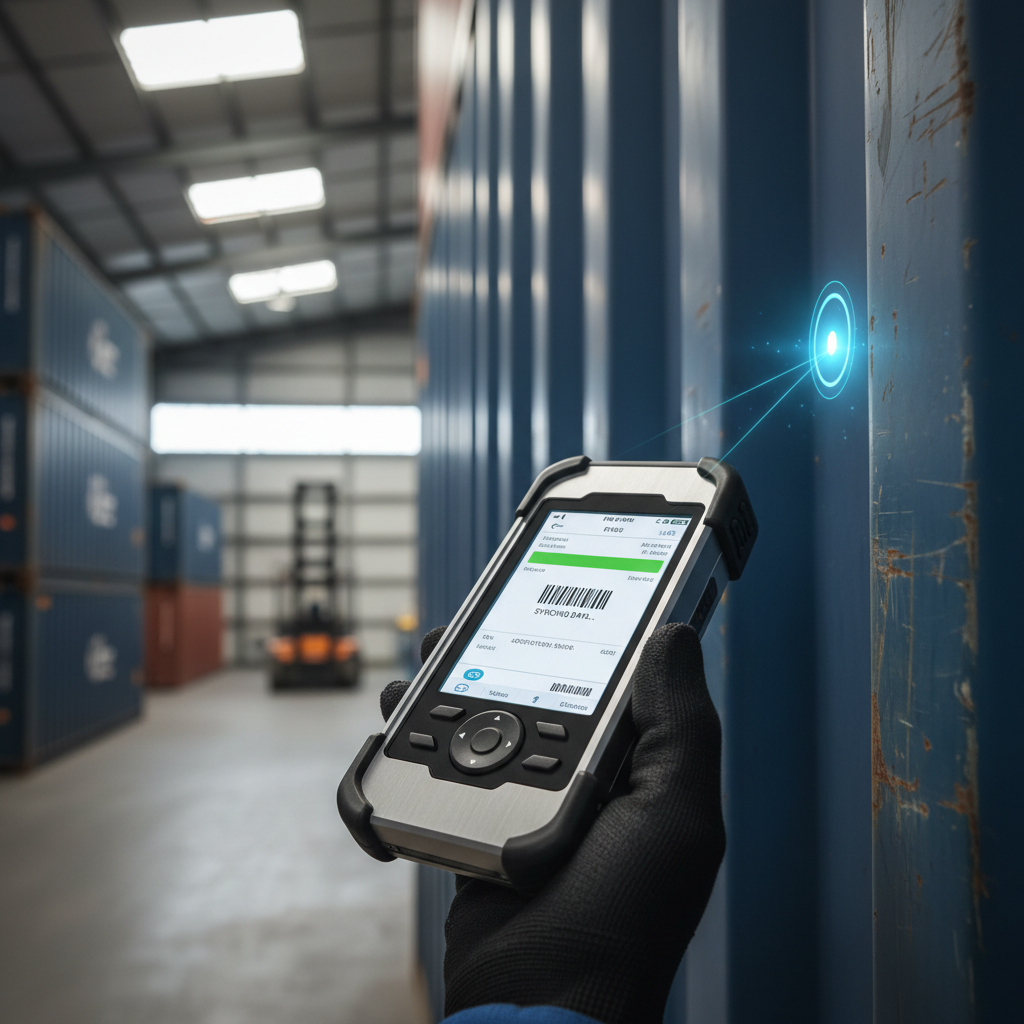
Automatic Flight Detection uses onboard barometric pressure sensors and accelerometer patterns to detect when the aircraft takes off. The moment flight conditions are confirmed, the cellular modem shuts itself off. No human intervention. No pre-flight checklist item. No compliance risk from a ground handler who forgot to press a button.
Here’s the part that changes everything: while cellular is off, the device keeps logging. GNSS position, impact data, tip and rotation readings, and condition data from connected Bluetooth sensors all continue recording to internal memory throughout the flight. When the aircraft lands and the Griffin Air detects ground conditions, cellular reconnects and uploads the full buffered dataset.
The practical outcome: continuous data across the entire journey, including the flight segment, with full compliance with airline RF regulations. No blackout. No gap in your tracking timeline.
Compare that to the manual power-down approach most of the industry still relies on. One missed step by ground crew, and you’re either non-compliant (device transmitting during flight) or blind (device turned off for the entire trip because nobody reactivated it after landing). Both outcomes cost money, and only one of them also carries safety liability.
A Battery That Outlasts Your Routing Contracts
Battery life in airfreight trackers isn’t a spec sheet detail. It’s an operational constraint that determines how often you pull devices off assets, ship them back for service, swap power sources, and redeploy. Every cycle is a disruption, a cost, and a window where the asset goes untracked.
The Griffin Air runs on three standard AA lithium iron disulfide batteries and delivers 3 to 5 years of battery life depending on update frequency. At one ping per day, Digital Matter rates it at roughly 7 years. At four pings daily (a reasonable cadence for active shipments), approximately 2.5 years.
The leading competitor’s reusable air cargo tracker runs about 100 days on a rechargeable battery. That’s 12 to 18 recharge or swap cycles over a period where the Griffin Air simply keeps working.
The batteries are user-replaceable. No depot return, no proprietary charging dock. When they eventually run low (the device sends battery-low and battery-critical alerts well in advance), you swap three AAs in the field and redeploy. For anyone managing hundreds of trackers across a global freight network, that difference in maintenance burden adds up fast.
The efficiency comes from two design choices. First, adaptive tracking: the device sleeps when stationary and activates when accelerometer data detects movement. Second, cloud-based location solving: GPS computation is offloaded from the device to Digital Matter’s servers. Less on-device processing means less power drain, which is how you get multi-year life from commodity batteries.
BLE Gateway: Container-Wide Visibility From a Single Device
Most airfreight trackers give you one data point: where is the ULD or pallet? The Griffin Air gives you that, plus granular visibility into what’s happening inside it.
The device includes a Bluetooth 5.2 gateway that communicates with nearby BLE tags and sensors. Attach inexpensive Bluetooth tags to individual packages within a ULD, and the Griffin Air relays their data through its single cellular connection. Temperature sensors, humidity monitors, light exposure indicators: all feeding through one cellular device.
This hub-and-spoke model is particularly valuable for pharmaceutical cold chain. A single container might hold dozens of temperature-sensitive packages from different shippers. Instead of equipping every package with its own cellular tracker (cost-prohibitive and often impractical), one Griffin Air per container handles connectivity while BLE tags handle per-item sensing.
The same logic applies to tagged asset management. Reusable packaging, specialized tooling, high-value components moving inside larger containers: the BLE gateway gives you item-level visibility without multiplying your hardware investment.
42+ Airline Approvals and Why That Number Keeps Growing
A tracking device that can’t fly is a paperweight. And airline approval is the gatekeeper. There’s no single global certification body for cargo tracking hardware. EASA has explicitly stated it does not certify or approve cargo tracking devices, leaving approval to each airline individually.
As of early 2026, the Griffin Air holds approvals from 42+ airlines including American Airlines, United Airlines, Lufthansa Cargo, Emirates, Qatar Airways, Cathay Pacific, Cargolux, Singapore Airlines Cargo, and Turkish Airlines. That covers most major global freight lanes without needing to swap hardware per carrier.
The count is climbing. IATA’s Interactive Cargo program and its Air Cargo Device Assessment are working to standardize the approval process, which should accelerate certifications for devices that already meet the safety bar. The Griffin Air has a structural advantage here: airlines are more comfortable approving a device that automatically disables cellular during flight than one that depends on a ground handler remembering a manual step.
What This Looks Like in the Field
The most documented validation of this tracking architecture comes from Digital Matter’s jet engine tracking deployment. One of the world’s largest aircraft parts manufacturers deployed thousands of tracking devices across its global supply chain after a catastrophic loss during the 2020 lockdowns. Critical components sat unmonitored in uncontrolled environments for weeks. Humidity-driven corrosion destroyed parts worth hundreds of millions of dollars.
That deployment (using the Oyster Edge, the Griffin Air’s predecessor platform) delivered real-time location and condition monitoring across production, storage, and delivery, and won the 2022 Top Supply Chain Projects Award. The Griffin Air builds on the same platform, adding airline certification and Automatic Flight Detection for the in-transit segment the Oyster Edge wasn’t designed for.
The use cases we deploy most at Datanet fall into three categories:
- High-value cargo protection. Pharma, aerospace parts, electronics. Continuous tracking plus impact, tip, and rotation sensors plus BLE condition monitoring creates a forensic evidence trail. When damage occurs, you can pinpoint exactly where in the chain it happened and build a defensible insurance claim.
- Reusable container and ULD tracking. For freight forwarders and airlines managing asset pools, the 3-5 year battery life means deploy once and track through hundreds of cycles without touching the device. Dwell time, cycle time, and utilization rates become visible instead of estimated.
- Multi-carrier freight lanes. When a single shipment touches three or four airlines, one approved device across all carriers eliminates the logistics nightmare of swapping trackers at each handoff.
If your containers or ULDs go invisible the moment they leave your dock, that’s the gap the Griffin Air closes. Our asset tracking page has the full hardware specs and deployment options.
The Data Problem the Griffin Air Quietly Solves
Global air cargo hit record volume in 2025, with cargo tonne-kilometers up 3.4% year over year. The industry is moving more freight than ever. But volume growth without data accuracy is just more chaos at higher speed.
That same data quality survey found 21% of airlines estimate more than 10% of their Air Waybills contain errors. When your foundational shipping documents have a double-digit error rate, every downstream system (billing, customs clearance, analytics, AI models) inherits the noise.
Machine-generated tracking data from devices like the Griffin Air doesn’t fix AWB errors directly. But it creates a parallel data stream that’s accurate by default: timestamped, geolocated, sensor-verified, and untouched by manual entry. When the AWB says the shipment arrived at 14:00 but the tracker shows it was still on the tarmac at 16:30, you have a factual basis for dispute resolution, process correction, and carrier accountability.
That clean, automated data layer is also the prerequisite for any serious AI adoption in cargo operations. You cannot train models on data that 95% of airlines admit is poorly defined. The Griffin Air doesn’t position itself as an AI product. But it generates the kind of reliable, structured data that makes AI possible down the road.

Frequently Asked Questions
Does the Griffin Air transmit cellular signals during flight?
No. Automatic Flight Detection disables the cellular modem when barometric and accelerometer data confirm takeoff. GNSS and sensor data continue logging internally throughout the flight. When landing is detected, cellular resumes and buffered data uploads automatically. No manual steps required.
How long does the Griffin Air battery last?
3 to 5 years on three user-replaceable AA LiFeS2 batteries, depending on update frequency. At one daily ping, battery life extends to approximately 7 years. At four pings per day, roughly 2.5 years. The device sends advance alerts before battery depletion.
Which airlines have approved the Griffin Air?
42+ airlines as of early 2026, including American Airlines, United Airlines, Lufthansa Cargo, Emirates, Qatar Airways, Cathay Pacific, Singapore Airlines Cargo, and Cargolux. Digital Matter maintains the current list on its airline approvals page.
Can it monitor temperature inside air cargo containers?
Yes, through its Bluetooth 5.2 gateway. The Griffin Air relays data from connected BLE temperature and humidity sensors, enabling per-package condition monitoring within a single container. This is especially relevant for pharmaceutical cold chain airfreight.
How does the Griffin Air compare to disposable tracking labels?
Disposable labels eliminate return logistics but cost more per shipment on high-frequency lanes. The Griffin Air is reusable with multi-year battery life, making it more cost-effective for assets that cycle repeatedly through freight networks. Disposable labels suit one-off or infrequent shipments better.
Can Datanet deploy Griffin Air across our freight operations?
Yes. We handle end-to-end deployment: hardware provisioning, platform integration, and ongoing support. Talk to our team or email info@datanetiot.com to scope your operation.








 +1 508 292 2210

3 Responses