

If you searched “griffin air for international cargo tracking,” you landed here for one of two reasons. Either you have a shipment through a company called Griffin and need a tracking portal. Or you’re evaluating the Griffin Air cargo tracking solutions, built by Digital Matter, for your international air freight operations. (See also: safety-certified tracking devices for aircraft equipment.) (See also: how griffin air improves airfreight tracking.)
Both are valid questions. They lead to very different answers. Let me sort this out first, then go deep on what the Griffin Air can and can’t do once your cargo crosses borders.
Which “Griffin” Are You Looking For?
This causes confusion constantly. Three entities share the name:
- Griffin Air is an IoT asset tracker manufactured by Digital Matter, an Australian hardware company founded in 2000. It’s a physical device you attach to cargo for real-time location and condition monitoring. That’s the focus of this article.
- Griffin & Company Logistics is an IATA-registered freight forwarder based in Minneapolis, operating since 1983 with contracts across 26 ocean lines. If you have a shipment through them, head to their tracking portal at wlgriffin.com.
- Griffin Transport Services is another IATA-registered freight forwarder, based in Reno, Nevada. Completely separate entity.
If you need a tracking number lookup, those links will get you there. If you’re evaluating hardware for international visibility, keep reading.
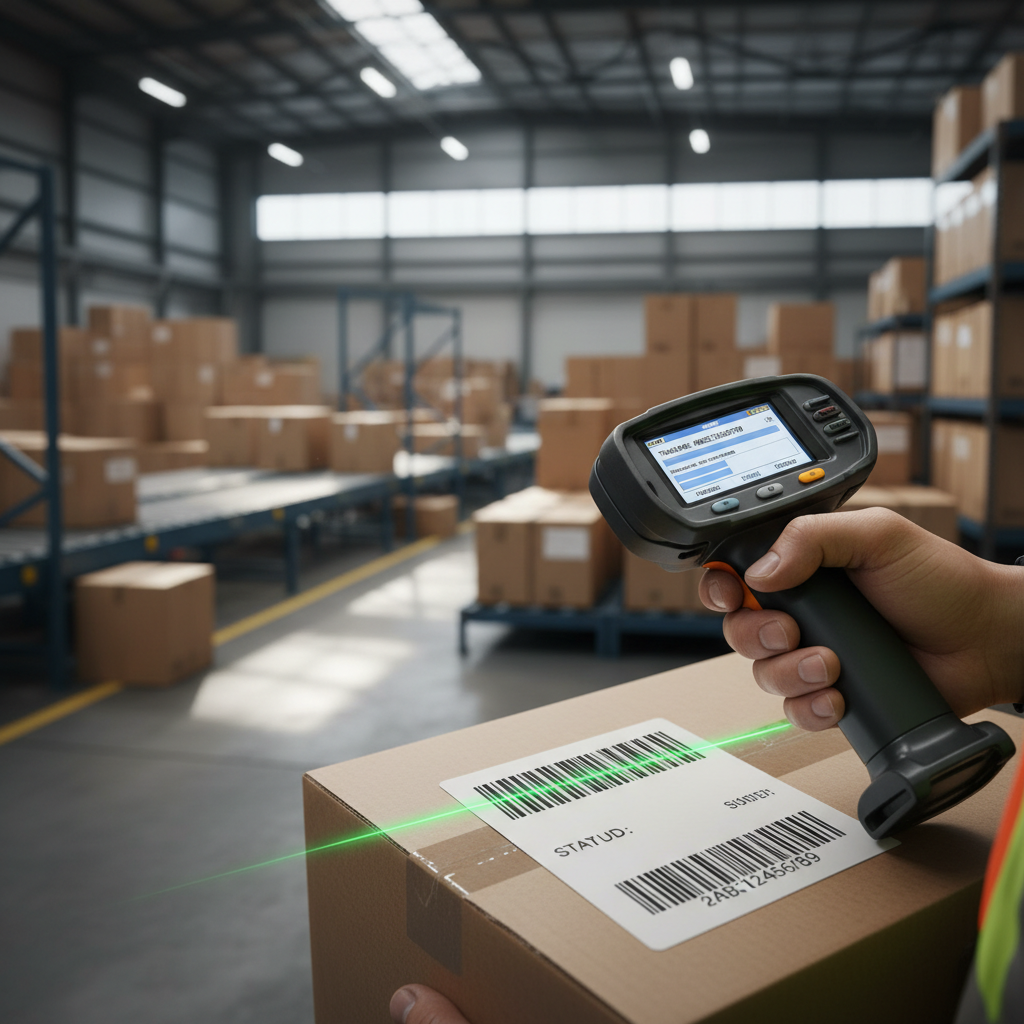
What the Griffin Air Does on International Routes
Digital Matter designed the Griffin Air specifically for the constraints of airfreight: rough handling, multi-country transit, and aviation safety regulations that most GPS trackers can’t satisfy.
The core specs:
| Feature | Griffin Air |
|---|---|
| Positioning | Multi-constellation GNSS + Wi-Fi MAC scanning + cell tower triangulation |
| Flight safety | Barometer-based auto radio shutdown (detects altitude, kills cellular during flight) |
| Connectivity | 4G Cat 1bis + 2G fallback, single nano SIM, global |
| BLE gateway | Bluetooth 5.2, relays data from nearby BLE sensors and asset tags |
| Battery | 3x AA user-replaceable (LiFeS2 recommended), 2+ years at default settings |
| Sensors | Impact, tip, rotation, barometer |
| Protection | IP67 (dust-tight, submersion to 1m) |
| Platform integration | 1,000+ third-party platforms (no vendor lock-in) |
Two features matter more on international routes than domestic ones. First, the flight safety mode. The onboard barometer autonomously detects when the device is airborne and shuts down the cellular radio to comply with ICAO and IATA rules. No manual toggle, no ground crew intervention. Data keeps logging internally and pushes to the cloud after landing. For cargo that touches multiple flights across time zones, this automation removes a compliance step at every leg.
Second, the BLE gateway. On international ULD (Unit Load Device) shipments carrying mixed cargo, one Griffin Air can scan and relay data from multiple BLE temperature sensors and sub-asset tags inside the same container. One cellular connection, many data streams, which is exactly what usable cargo condition monitoring depends on. I’ll get into why this changes the math later.
The Airline Approval Bottleneck
Here is where international cargo tracking separates from domestic. Every airline maintains its own approved device list. Approval on one carrier does not transfer to another.
As of mid-2026, the Griffin Air holds approvals on at least six airlines: American Airlines, Asiana Airlines, Atlas Air, Austrian Airlines, Korean Air, and United Cargo. The list is growing. Korean Air added it in December 2024 (entry FT-GPS-24-021). United Cargo authorizes it in the cargo compartment of all mainline aircraft for all cargo product types.
Six approvals is meaningful. But international routes rarely stay on one carrier. A shipment from Brussels to Ho Chi Minh City might transit through European metal to a hub, then connect on an Asian carrier for the final leg. If that second carrier hasn’t approved your tracker, you have a problem.
Lufthansa Cargo’s approved tracker document (Version 23, May 2026) states explicitly that devices “are not approved for transportation on interline routings with other carriers.” Each leg of the journey requires its own clearance.
Compare this to certain disposable trackers that hold approvals on 170+ air carriers. Broader carrier acceptance is the primary advantage of the disposable model, and on international routes with multiple interline transfers, it’s a genuine operational advantage.
This doesn’t disqualify the Griffin Air. It means you need to verify every carrier your cargo might touch before deployment. And it means the approval gap is a real constraint, not a footnote, especially for routes with unpredictable interline connections. Treating it as a core part of your air cargo risk management keeps these gaps from turning into costly surprises.
Connectivity Across Borders: Where the Signal Drops
The Griffin Air runs on 4G Cat 1bis as its primary network, with 2G as fallback. For North America, Europe, and most of East Asia, this works reliably. The device connects, pushes stored data, and goes back to sleep within minutes of landing.
The complication is that 2G sunsets are not synchronized globally. The US shut down most 2G networks years ago. Parts of Africa and Southeast Asia still run 2G as the dominant network. In between, you have a patchwork where 4G coverage thins out around smaller airports and rural transit points.
What happens in coverage gaps? The device logs data internally and uploads when it reconnects. No information is lost permanently. But real-time shipment visibility, the thing you’re ultimately paying for, has blind spots on certain international legs. A shipment landing at a secondary airport in Central Asia may not report its position for hours until it reaches a connected area.
This is not unique to the Griffin Air. Every cellular-based cargo tracker faces the same constraint. Before committing to any device for international routes, map your actual lanes against regional network coverage. The answer will differ by corridor.
The Reverse Logistics Problem Nobody Talks About
I’ve seen this kill the ROI on reusable trackers more often than battery failure.
The Griffin Air’s economic argument is compelling on paper. With a 2+ year battery life across hundreds of shipping cycles, the per-use cost drops well below disposable alternatives that last 30 to 100 days. Over 100 cycles, the cost per shipment becomes a fraction of the device price.
On domestic or short-haul routes, the loop closes naturally. Ship, arrive, retrieve, repeat. On international routes, the return leg is where things break down.
If you ship a Griffin Air from Chicago to Shanghai, somebody at the destination needs to pull the device off the cargo, store it, and send it back. That “somebody” might be your consignee (who has no incentive to help), a local warehouse team (who may not know the protocol), or a freight forwarder (who wasn’t contracted for device recovery). These handoffs are exactly where the air cargo chain of custody tends to break down.
Across 15+ years of deploying tracking solutions across customer operations, I’ve found three approaches that actually work:
- Round-trip lanes. If your cargo flows in both directions on the same corridor (containers go full both ways), the tracker rides back naturally. This is the ideal scenario and where reusable trackers shine brightest.
- Hub-and-spoke recovery. Designate collection points at your highest-volume destinations. Batch-return devices weekly or monthly. The shipping cost of returning 20 trackers in a single box is trivial.
- Freight forwarder agreements. Build device recovery into your forwarder contracts. Some will handle it for a modest fee. The cost is still lower than buying a new disposable tracker for every shipment.
If none of these fit your operation, a disposable tracker might genuinely deliver better total cost of ownership on your international lanes. The most expensive reusable device is the one sitting in a warehouse 8,000 miles away.
The BLE Gateway Advantage for International ULDs
This is where the Griffin Air creates disproportionate value on international routes, especially for cold chain and high-value cargo.
Consider a ULD heading from Frankfurt to São Paulo carrying 15 pharmaceutical boxes, each requiring documented temperature monitoring under GDP (Good Distribution Practice) standards — a textbook case for shipment condition monitoring. You can either install a cellular tracker on every box (15 SIM cards, 15 data plans, 15 devices to manage and recover) or mount one Griffin Air on the ULD and pair it with low-cost BLE temperature sensors inside each box.
The Griffin Air’s BLE 5.2 gateway scans nearby sensors, collects their temperature readings, and transmits everything through a single cellular connection. One SIM. One data plan. Fifteen temperature streams plus location data.
The global air cargo market reached $172.74 billion in 2024 and is projected to hit $273.50 billion by 2032. Pharmaceutical logistics is one of its fastest-growing segments. The ability to monitor an entire cold chain ULD from a single gateway device is not a feature. It’s a cost structure advantage that compounds with volume.
On international routes where cellular costs multiply across roaming agreements, collapsing 15 connections into one is the difference between a tracking program that scales and one that gets cut at the next budget review.
Regulatory Compliance on International Flights
Three regulatory bodies shape what you can attach to international air cargo.
IATA published Recommended Practice 1693 (RP 1693) to standardize the approval process for tracking devices and data loggers on aircraft. It provides guidelines, but does not create a universal clearance. Airlines still approve individually, using RP 1693 as a framework rather than an automatic pass.
EASA has issued separate guidance on cargo tracking devices, adding compliance requirements for routes touching EU airspace. The FAA classifies cargo tracking devices as a distinct hazard category, flagging battery-powered devices in cargo as a safety consideration.
One quiet advantage of the Griffin Air here: its LiFeS2 (Lithium Iron Disulfide) AA batteries avoid the UN3481 dangerous goods classification that applies to lithium-ion cells. IATA recommends lithium-ion batteries be shipped at no more than 30% state of charge, a restriction that adds handling complexity for trackers powered by lithium-ion. The Griffin Air sidesteps this entirely.
The bottom line: regulatory harmonization across IATA, EASA, and the FAA is incomplete. For international operations, your compliance checklist is longer than for domestic routes. Plan for it.
When the Griffin Air Fits Your International Operations (and When It Doesn’t)
After working with customers across aviation, freight forwarding, and supply chain operations, here’s how I’d frame the decision.
The Griffin Air makes strong sense when:
- Your cargo moves on carriers already on the approved list, or you’re willing to wait for approvals to expand.
- You operate recurring international lanes with enough volume to justify a device recovery process.
- You’re tracking ULDs or palletized cargo where the BLE gateway collapses per-asset costs.
- Your routes cross regions with solid 4G LTE coverage.
- You need impact, tip, and rotation monitoring for high-value or fragile cargo (MRO parts, electronics, pharmaceuticals).
It’s a harder fit when:
- Your cargo routes through interline connections on carriers not yet approved.
- You ship infrequently on international lanes (the reusable ROI doesn’t materialize without volume).
- Your destinations lack a reliable process to recover and return devices.
- You need built-in, NIST-traceable temperature monitoring without adding BLE sensors.
No single tracker dominates every international corridor. The market is splitting between disposable devices that trade longevity for broad carrier acceptance and reusable devices that trade carrier breadth for lifecycle economics. Your optimal choice depends on your routes, your shipment frequency, and your ability to close the return loop.
If you’re mapping out which approach fits your international cargo lanes, talk to our team. We deploy the Griffin Air alongside other tracking hardware across aviation, freight, and supply chain operations. Sometimes the Griffin Air is the right answer. Sometimes a different configuration makes more sense. Browse our asset tracking solutions here, or reach us directly at info@datanetiot.com.

Frequently Asked Questions
Is “Griffin Air” a logistics company or a tracking device?
The Griffin Air is an IoT GPS tracking device manufactured by Digital Matter. It is unrelated to Griffin & Company Logistics, an IATA-registered freight forwarder in Minneapolis, or Griffin Transport Services in Reno. If you need to track a shipment through a company called Griffin, visit wlgriffin.com.
Which airlines have approved the Griffin Air for cargo?
As of mid-2026, approved carriers include American Airlines, Asiana Airlines, Atlas Air, Austrian Airlines, Korean Air, and United Cargo. The list is actively expanding. Digital Matter maintains an updated certification page in their support portal.
How does the Griffin Air comply with in-flight radio restrictions?
An onboard barometer detects altitude and pressure changes associated with flight. When airborne, the device automatically shuts down its cellular radio per ICAO and IATA regulations. Data continues logging internally and uploads to the cloud after landing. No manual activation required.
Can the Griffin Air monitor temperature for cold chain shipments?
Not with a built-in sensor. It functions as a BLE 5.2 gateway, relaying data from nearby Bluetooth temperature sensors. Pair it with BLE loggers to get location and temperature from a single cellular connection, covering an entire ULD without multiplying connectivity costs.
How does reusable compare to disposable trackers on international routes?
Disposable trackers offer broader airline acceptance (some cover 170+ carriers) but last only 30 to 100 days. The Griffin Air’s 2+ year battery life drives down per-use cost across hundreds of cycles. The trade-off: fewer airline approvals and the operational need to recover devices from international destinations.
What happens when the Griffin Air loses cellular coverage during transit?
The device logs all position and sensor data internally until connectivity returns. No data is permanently lost. However, real-time visibility will have gaps on routes through regions with limited 4G LTE coverage. The device uploads stored data automatically once it reconnects.








 +1 508 292 2210

4 Responses