

Every air cargo shipment has a blind spot. The plane takes off, and for the next 6 to 14 hours your tracking dashboard goes silent. That gap is exactly what Griffin Air tracking was built to close.
Quick clarification: if you need to track a shipment through Griffin Global Logistics, head to griffinglobal.com/tracking. This article covers something different. The Digital Matter Griffin Air is an airline-certified IoT asset tracker designed for continuous cargo visibility across air, road, and ocean, including the hours when your cargo is at 35,000 feet and every other tracker on the market goes dark. (See also: global airfreight tracking with griffin air.) (See also: griffin air freight visibility platform.)
What Is the Digital Matter Griffin Air?
The Griffin Air is a battery-powered GPS asset tracker made by Digital Matter, a company with 2.5 million+ devices deployed across 130 countries and 1,500+ channel partners worldwide. It runs on 4G LTE Cat 1bis with 2G fallback, carries an IP67 rating for dust and water resistance, and lasts 3 to 5 years on three user-replaceable AA batteries. This positions it among the leading aerospace asset tracking technology solutions available today.
None of that is what makes it interesting.
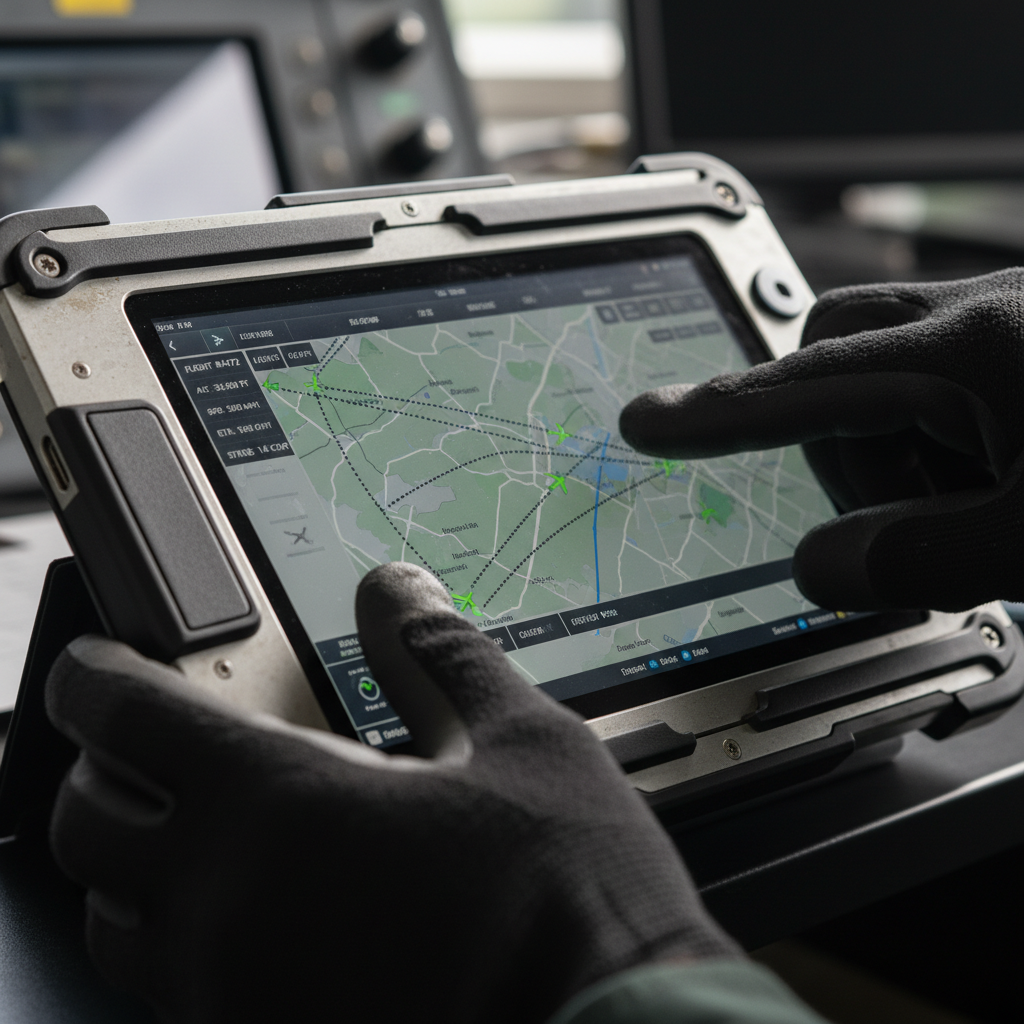
What separates the Griffin Air from every other battery-powered tracker we deploy at Datanet is one feature: automatic flight detection. The device senses when it’s aboard an aircraft, disables its cellular radio to comply with aviation regulations, keeps logging GPS and sensor data internally, and pushes everything to the cloud the moment wheels touch the runway. No manual toggling. No ground crew intervention. No data gaps in your tracking record.
That single capability earned it certification from 42+ commercial airlines and is the reason the device exists as its own product line, not just a firmware option on Digital Matter’s broader tracker range. It enters a market where IoT-based asset tracking hit $4.12 billion in 2025 and is projected to reach $9.23 billion by 2035, driven by aerospace industry asset visibility trends demanding continuous tracking. The air cargo segment, specifically, has been underserved by trackers that go silent at altitude.
How Automatic Flight Detection Works
Most cellular trackers handle air transit with a blunt instrument: turn the device off before boarding, turn it back on after landing. For a single shipment, that’s manageable. At scale, where hundreds of ULDs cycle through airports daily, manual toggling becomes a bottleneck that defeats the purpose of real-time tracking.
The Griffin Air solves this with a built-in barometric pressure sensor that continuously monitors altitude. When pressure patterns match a takeoff profile, the device automatically disables cellular transmission.
During the flight, the device stays active internally. The multi-constellation GNSS receiver logs position fixes. The 3-axis accelerometer records movement, vibration, and impact events. The barometric sensor tracks altitude throughout the cruise. All data is stored on-device until it’s safe to transmit.
Once readings indicate descent and landing, the Griffin Air re-enables its cellular radio, connects to the nearest 4G network, and uploads the entire flight log. Your platform shows a continuous position trail, including the airborne segment. No gap. No “last seen 14 hours ago.”
The firmware behind this behavior has matured substantially. Release notes track progression from v1.0 (preproduction) through v1.14, adding BLE tag scanning, pressure monitoring refinements, High-G event logging up to 16G, and a dedicated ground mode service. This isn’t a beta product. It’s a production system with over a dozen firmware iterations behind it, each one refining how the device distinguishes “on a taxiway” from “climbing through 10,000 feet.”
Which Airlines Have Approved the Griffin Air?
An airline approval for a cargo tracking device isn’t a rubber stamp. Each carrier evaluates the device against its own safety protocols for lithium battery content and RF emission behavior. EASA published guidelines on cargo tracking devices in December 2020, but each airline interprets and applies that framework independently. Approval by one carrier doesn’t automatically unlock the rest.
The Griffin Air’s current approved list exceeds 42 airlines, spanning:
- Cargo heavyweights: Lufthansa Cargo, Cargolux, Atlas Air, FedEx, Polar Air Cargo, Kalitta Air
- Passenger carriers with major belly-cargo operations: American Airlines, United, Southwest, Emirates, Qatar Airways, Turkish Airlines, ANA, Cathay Pacific
- Recent additions: Korean Air granted approval FT-GPS-24-021 in December 2024, with a maximum of 2 GPS trackers per Master Air Waybill (MAWB)
For logistics operators routing through Dubai, Frankfurt, Hong Kong, Chicago, or Anchorage, the practical implication is straightforward: the airlines carrying your freight have almost certainly already approved this device. That eliminates the weeks-long compliance review that typically delays tracker deployment on new routes.
One caveat for large-scale rollouts: per-carrier limits vary. Korean Air caps it at 2 trackers per MAWB. Other carriers may set different thresholds. Your operations team should verify limits with each carrier in your rotation, not just confirm the device is on the approved list.
The Specs That Affect Your Operating Cost
Battery life runs 3 to 5 years on three AA LiFeS2 cells, depending on how often you configure GPS fixes and uploads. The batteries are user-replaceable, not proprietary and not rechargeable. When a unit triggers a “battery low” alert, your warehouse team swaps three standard AAs and the device is live in under a minute. At fleet scale (hundreds of tracked ULDs or containers), this eliminates the reverse-logistics cost of cycling devices back to a charging station, taking them offline, and redeploying.
Digital Matter’s Energy Saving Stack (ESS) pushes this further: up to double the battery life and twice the location updates through cloud-optimized power management. The key detail is that ESS benefits existing deployed units via firmware update. No hardware change needed. Your first-generation Griffin Air fleet gets longer life without a swap-out.
Connectivity runs on 4G LTE Cat 1bis as the primary mode. This matters because 2G networks are disappearing globally: AT&T shut theirs in 2017, T-Mobile in 2022, European operators are phasing out through 2025-2026. The NB-IoT and LTE-M segment is growing at 11.15% CAGR through 2031, and Cat 1bis sits at the center of that growth. A tracker that depends on 2G as its primary connection will not survive a full 5-year deployment cycle. The Griffin Air’s 4G-first architecture addresses this, though planning for the eventual loss of its 2G fallback in certain regions is worth doing at deployment time.
Bluetooth 5.2 gateway functionality turns each Griffin Air into a hub for multiple low-cost BLE sensors. Attach BLE temperature, humidity, or shock tags to individual packages inside a ULD, and the single Griffin Air relays all their readings over its cellular connection. Instead of one cellular tracker per box, you deploy one per container and BLE tags on the contents. That’s a fundamentally different cost structure for condition-monitored air freight.
The 3-axis accelerometer with High-G event logging captures impacts up to 16G with precise timestamps. When cargo arrives damaged, you don’t negotiate about which handler or which leg caused it. The data shows a 12G impact at 14:37 UTC during the Frankfurt ground-handling window. Insurance claims resolve faster. Accountability gets clearer.
Where the Griffin Air Earns Its Keep
ULD and reusable container tracking is the most direct application. A unit load device leaves a warehouse by truck, crosses town to an airport, flies 8,000 miles, lands, gets trucked to a distribution center, and eventually cycles back. The Griffin Air rides the entire loop: cellular on the ground, logging during flight, cellular again on landing. One continuous record across every transport mode.
Jet engine logistics raises the stakes by orders of magnitude. One of the world’s largest aircraft parts manufacturers uses Digital Matter devices to track engines moving through global supply chains. A single engine can be worth tens of millions. When it ships as cargo on a commercial flight, the tracker needs airline certification. When it moves by road or sea, it needs cellular coverage. The Griffin Air handles both transitions automatically. Beecham Research highlighted this use case as an exemplar of high-value aviation asset tracking in their IoT for Asset Tracking report.
Impact documentation is less obvious but equally valuable for sensitive cargo. Nefab, a global industrial packaging company, uses Digital Matter devices with enhanced impact detection to protect assets during transit. For anyone shipping medical equipment, precision-machined parts, or aerospace components, the High-G event log creates an objective, timestamped record of every handling incident. It transforms post-delivery damage disputes from “he said, she said” into data-backed resolutions with exact G-force readings and geographic coordinates.
What connects these cases is a distinction I keep drawing for customers at Datanet: shipment tracking ends at delivery. Asset tracking follows the asset through its entire lifecycle, including the return leg, the dwell time at a facility, and the next deployment. The Griffin Air is built for the second model. Its replaceable batteries and rugged enclosure are designed for years of continuous use on reusable assets, not a single one-way trip.
How the Griffin Air Compares to Alternatives
The airline-certified cargo tracker market is narrow. Only a few manufacturers have completed the carrier-by-carrier approval process at meaningful scale. Two architectural approaches compete.
The Griffin Air represents the first: user-replaceable batteries, multi-year deployment cycles, and a BLE gateway for hub-and-spoke sensor coverage. You attach the device to a ULD or container, and it stays there for years. Battery swaps happen in the field. No charging stations, no device rotation logistics.
The second approach uses rechargeable batteries and targets per-shipment deployment. You track a single cargo movement, retrieve the device at destination, and cycle refreshed units back into service. Some competitors in this space claim 60+ airline approvals and offer disposable tracker options for lower-value freight.
Neither approach is universally better. If you track owned, reusable assets (ULDs, engine stands, ground support equipment, container pools), the replaceable-battery model eliminates the reverse-logistics overhead of device charging cycles. If you track one-way shipments to consignees who won’t return hardware, the per-shipment model has a cleaner workflow.
Where the Griffin Air pulls ahead is ecosystem depth. Digital Matter supports 1,000+ third-party platform integrations through its partner network. The device connects to whatever logistics software your operation already uses. At deployment scale, across multiple regions and different software environments, integration breadth is often the difference between a two-week rollout and a six-month one.
Getting Started with Griffin Air Tracking
If your operation moves high-value cargo by air and your tracking record still shows a blank during every flight leg, the Griffin Air was built for that exact gap.
At Datanet, we’re Digital Matter partners. We deploy their full device range for airlines, MRO facilities, freight forwarders, and supply chain operators. That includes matching the right tracker to your asset type, connecting it to your existing platform, and getting units into the field without disrupting your workflow. Browse our asset tracking device catalog for the full range (including the Thingfox T2 for DO-160 certified airfreight environmental monitoring), or talk to our team directly. You can also reach us at info@datanetiot.com.

Frequently Asked Questions
What is the Digital Matter Griffin Air?
A battery-powered GPS asset tracker with 4G LTE Cat 1bis connectivity, designed for air cargo and multimodal logistics. Its defining feature is automatic flight detection: the device disables cellular radio during flight while logging data internally, then uploads the complete record upon landing. It’s certified by 42+ commercial airlines.
How long does the Griffin Air battery last?
Between 3 and 5 years on three user-replaceable AA LiFeS2 batteries. Actual life depends on GPS fix frequency and upload intervals. Digital Matter’s Energy Saving Stack can extend battery life up to 2x through firmware-level power optimization.
Which airlines accept the Griffin Air?
Over 42 carriers, including Lufthansa Cargo, FedEx, Emirates, Cargolux, American Airlines, United, Cathay Pacific, Qatar Airways, Turkish Airlines, Korean Air, and Southwest. The list is actively expanding as Digital Matter pursues additional certifications.
Does the Griffin Air transmit during flight?
No. A barometric pressure sensor detects takeoff, the cellular radio shuts down automatically, and GPS, accelerometer, and environmental data are logged internally throughout the flight. Upon landing detection, the device reconnects and uploads the complete in-flight record.
How much does the Griffin Air cost?
Pricing varies by volume and integration scope and is not publicly listed. Contact a Digital Matter partner like Datanet IoT Solutions for current pricing and deployment planning.
Can the Griffin Air monitor temperature and humidity?
Not with its onboard sensors directly, but its Bluetooth 5.2 gateway relays data from paired BLE temperature, humidity, and shock sensors in its vicinity. This lets one Griffin Air serve as the cellular hub for an entire ULD’s worth of condition-monitoring tags.








 +1 508 292 2210

8 Responses