

At its worst-performing site, SEKISUI Aerospace was hitting 30% on-time delivery. Customers showed up at the factory, waiting for parts nobody could locate on the production floor. The parts were there. They just sat at unknown workstations inside a facility full of composite layups, cure cycles, and manual handoffs. (See also: griffin air for international cargo tracking.) (See also: aircraft maintenance asset visibility.) (See also: track international air cargo with griffin air.) (See also: aviation maintenance inventory tracking.) (See also: aerospace production asset monitoring.)
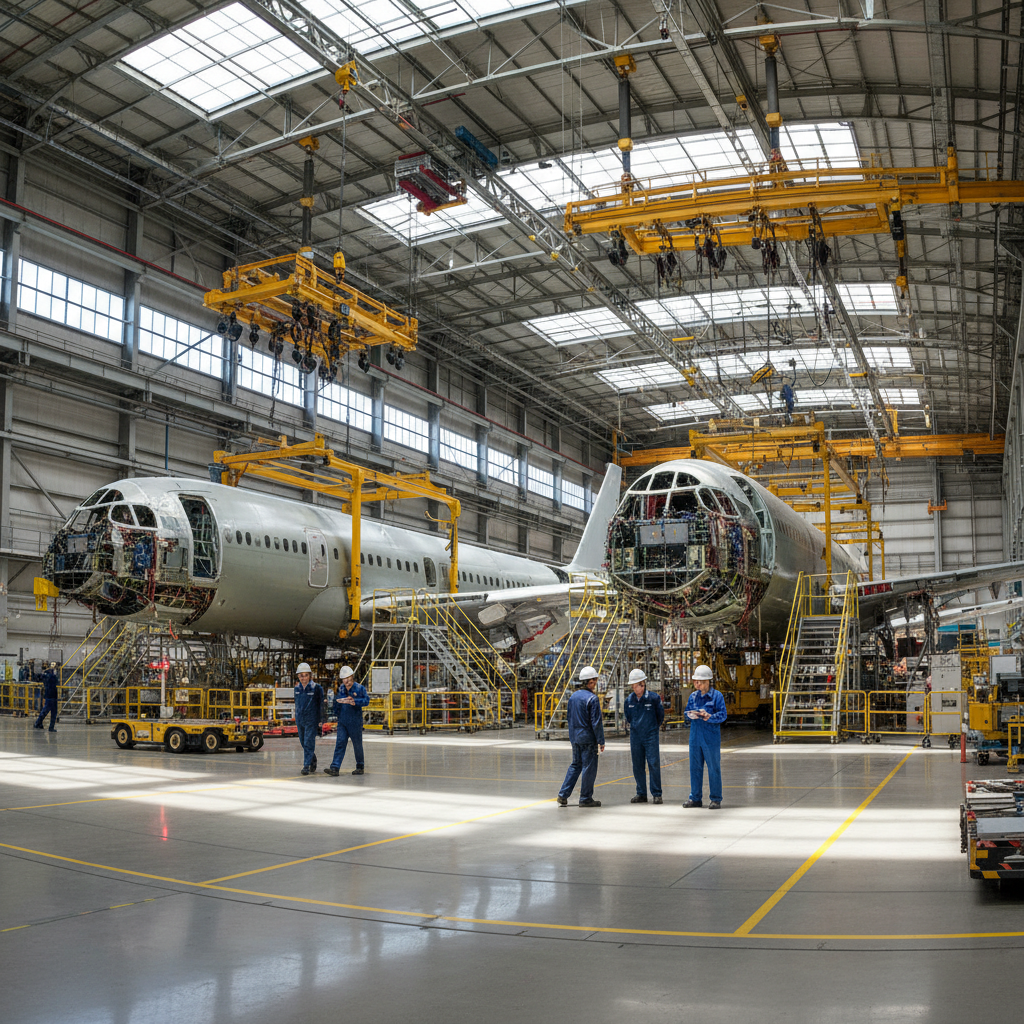
Aircraft assembly asset tracking exists to kill that problem. Not generically. Specifically: real-time knowledge of where every tool, jig, fixture, and work-in-progress component sits across facilities that routinely exceed a million square feet, sometimes spanning multiple countries.
This is not the same challenge as tracking cargo across the Pacific or monitoring a leased 737’s flight cycles. Assembly tracking operates under a unique set of constraints: metal-heavy environments that eat radio signals, FAA regulations that dictate which technologies can touch an airframe, and production schedules where a single misplaced tool can ground an entire station. Here is what the real deployments look like, what technologies actually perform in these conditions, and where the numbers prove the investment.
What Aircraft Assembly Asset Tracking Covers
The scope is narrower and harder than most asset tracking conversations suggest. In aircraft assembly, you are tracking five categories of physical assets inside production environments:
- Work-in-progress (WIP): sub-assemblies, fuselage sections, wing panels, composite structures moving between cure, trim, drill, and final assembly stations.
- Tooling and jigs: large fixtures (some weighing tons) that hold airframe sections in position during assembly. These travel between buildings, sometimes between countries.
- Hand tools and calibrated instruments: torque wrenches, drill motors, measurement devices. Losing one inside an airframe creates a foreign object debris (FOD) risk that can ground a delivered aircraft.
- Time-sensitive materials: composite prepregs, sealants, adhesives with strict freezer-life and out-time limits that expire whether you track them or not.
- Ground support equipment (GSE): stands, platforms, carts, towbars shared across production bays.
The common thread: these assets exist inside enclosed, metallic structures where GPS does not work, where Wi-Fi coverage is spotty, and where a single misplaced item can cascade into hours of delay. At a major U.S. aerospace propulsion facility, workers in some shops spent entire shifts manually scanning WIP locations before their RTLS deployment. That is the baseline most plants are working from, whether they admit it or not.
Why No Single Technology Works Across the Assembly Floor
Every vendor has a preferred technology. The assembly floor does not care about preferences. It demands different capabilities in different zones, and the only honest answer is a layered stack.
Ultra-Wideband (UWB) delivers the highest indoor precision available commercially: 10 to 30 cm accuracy using time-of-flight calculations across nanosecond pulses. That precision matters when you need to know which work bay a fuselage section occupies or whether a tool has left a restricted zone. The tradeoff is cost. UWB requires a dense network of fixed anchors, and infrastructure CAPEX runs 3 to 5x higher than RFID. Metal surfaces also reflect and absorb UWB signals, which means careful RF site surveys and strategic anchor placement in every production bay.
Bluetooth Low Energy (BLE) hits a practical sweet spot for broader coverage. Standard BLE (RSSI) gives you 2 to 5 meter accuracy. The newer Angle-of-Arrival (AoA) method narrows that to 0.5 to 1 meter, closing the gap with UWB at a fraction of the infrastructure cost. Battery life is the real advantage: Airbus’s IoT deployment runs BLE trackers with configurable 5 to 10 year battery life through aggressive power management. For warehouse tool tracking and indoor asset location across large campuses, BLE is becoming the pragmatic default.
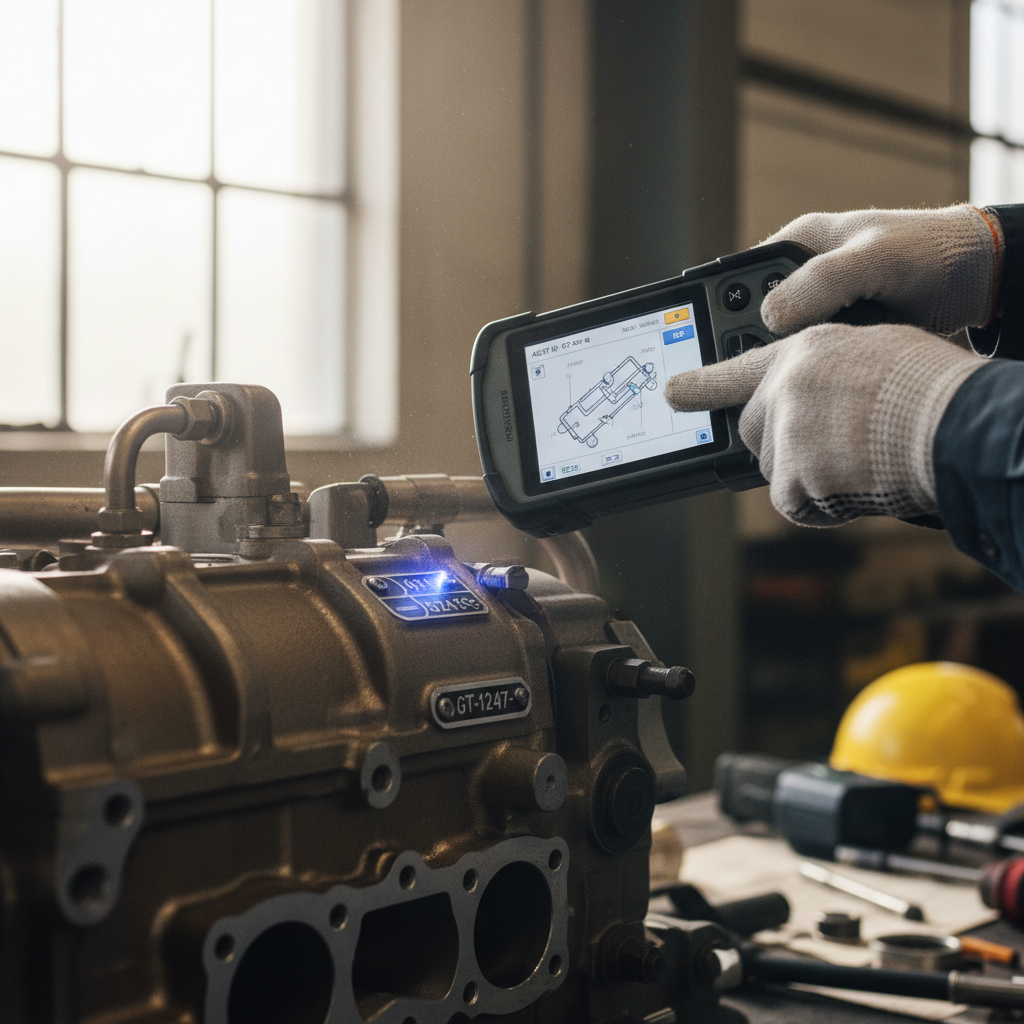
Passive RFID excels at identification rather than location. No battery, effectively unlimited lifespan, zero per-tag power cost. Boeing attaches RFID labels to approximately 7,000 components per single aircraft, generating automatic readiness logs that replace manual visual checks. The limitation: passive RFID only reports when a tag passes a reader. It answers “what is this part and when did it pass this checkpoint,” not “where is this part right now.”
Active RFID adds autonomous transmission at longer range, but comes with a hard regulatory constraint I will cover below. On the factory floor (not on the aircraft), active RFID works well for larger assets like jigs and GSE.
NB-IoT with GNSS serves the wide-area layer. When jigs and fixtures travel between Airbus production sites in France, Germany, and the UK, cellular NB-IoT combined with GPS/GNSS provides outdoor positioning. Indoor, the same trackers fall back to Wi-Fi scanning for coarse location. This is the backbone for cross-border multi-site visibility.
| Technology | Accuracy | Power | Best Assembly Use | Relative CAPEX |
|---|---|---|---|---|
| UWB | 10–30 cm | Powered anchors | Zone-level WIP and process control | High |
| BLE (AoA) | 0.5–1 m | Battery, 5-10 yr possible | Indoor tool and warehouse tracking | Medium |
| BLE (RSSI) | 2–5 m | Battery, 18-24 mo | Broad indoor coverage | Low-Medium |
| Passive RFID | Checkpoint-based | No battery | Part identification, readiness logs | Low |
| Active RFID | Variable | Battery | Large assets (factory-only) | Medium |
| NB-IoT + GNSS | 5–15 m outdoor | Multi-year battery | Cross-border jig and fixture logistics | Low-Medium |
The practical takeaway: reserve UWB for high-value process








 +1 508 292 2210

3 Responses