

Air cargo moves nearly $6 trillion in goods every year, roughly 35% of global trade by value. Semiconductors, vaccines, aerospace parts, fresh produce. High-stakes freight on tight timelines.
Yet most airfreight cargo tracking still comes down to five status updates between origin and destination. You enter an AWB number, see “In Transit,” and wait. If the update stalls for hours (or days on a multi-leg route), you’re left refreshing browser tabs and calling handlers. (See also: mro asset tracking solutions.) (See also: digital tracking for aircraft manufacturing plants.)
That silence between “Departed” and “Arrived” is where cargo gets stolen, temperature excursions destroy pharma loads, and delays compound without anyone noticing until it’s too late. This guide covers how airfreight cargo tracking actually works, where it falls short, and what’s replacing it.
How AWB-Based Tracking Works
Every air cargo shipment receives an Air Waybill (AWB) number at booking. It’s an 11-digit code consisting of a 3-digit IATA airline prefix, a 7-digit serial number, and a single check digit. Prefix 288 belongs to Air Hong Kong. Prefix 006 is Delta. The prefix routes your tracking query to the correct carrier system.
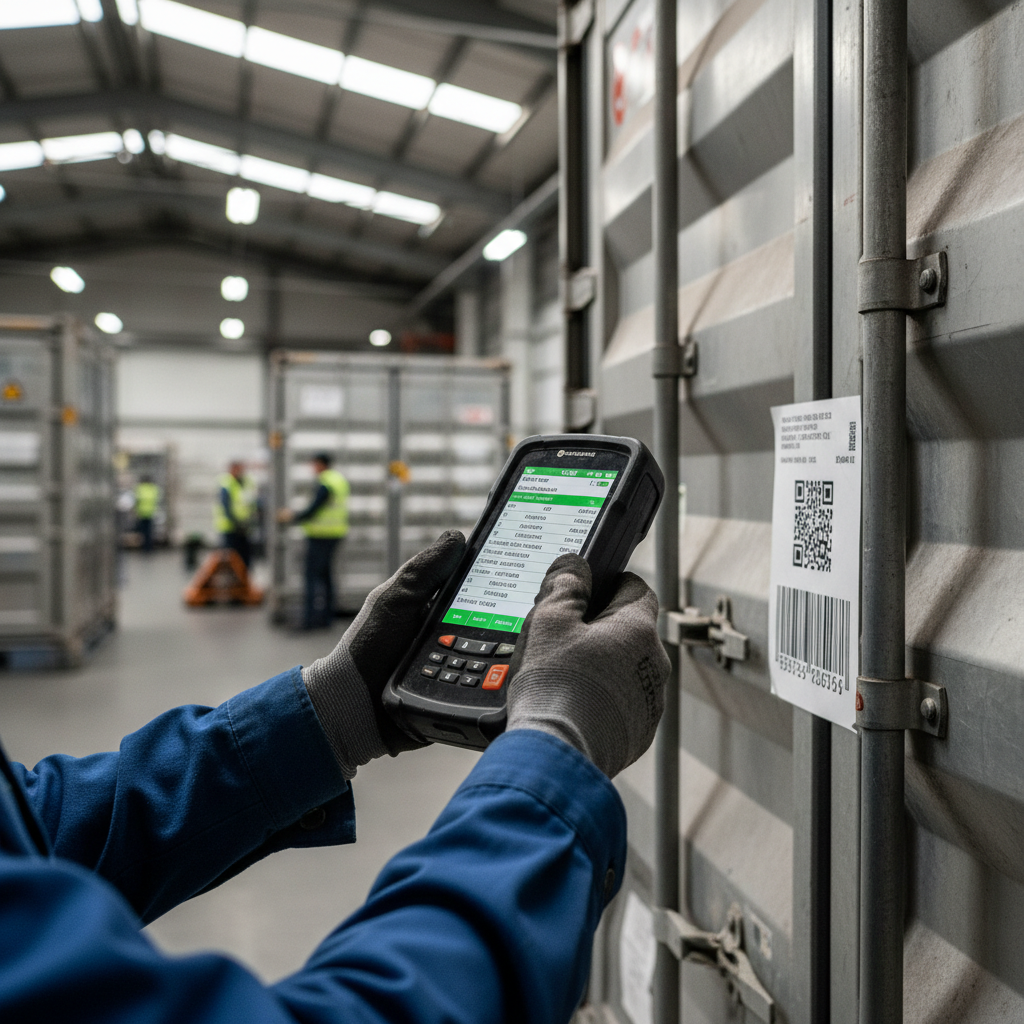
To check status, enter the AWB on the issuing airline’s cargo site, or use a multi-carrier aggregator like AirRates, which covers 370+ airlines in one tool. The system returns milestone statuses, and there are five that matter:
- Booked: confirmed in the carrier’s system, awaiting physical handover.
- Accepted: cargo physically received at the origin warehouse.
- Departed: loaded on the aircraft, flight has left.
- Arrived: aircraft landed at destination airport.
- Delivered: cargo released to the consignee or their agent.
These events follow the Cargo iQ framework (formerly Cargo 2000), which standardizes what carriers must report and when. Over 66% of shipments now use electronic Air Waybills (e-AWBs) instead of paper, speeding up the data exchange between stakeholders.
The system works. It also misses a lot.
When Tracking Goes Silent
The most common complaint I hear from freight forwarders and logistics teams: the status reads “Departed,” followed by nothing. For hours. Sometimes for days on multi-leg itineraries.
Three things cause this.
The in-flight blind spot. GPS and cellular devices inside cargo holds cannot transmit at cruising altitude. A tracker might be logging data internally, but it won’t upload until the aircraft lands and ground connectivity resumes. During flight, the only visibility available is the aircraft itself, through services like FlightAware. Not the cargo inside it.
Ground-handler data lag. When cargo arrives at a transit hub, the ground handling agent scans it. If that system batches scans, or the handover between carrier and handler is slow, the “Arrived” milestone can appear hours after the plane actually touched down. Every transit stop adds another potential gap in the timeline.
System outages. On July 19, 2024, a faulty CrowdStrike software update cancelled 15 to 20% of flights worldwide and cut outbound cargo capacity by 27.4% at peak. Schiphol, Heathrow, Frankfurt, Munich: all went dark simultaneously. Delta paused all flights. United Cargo’s site returned error pages. For hours, airfreight tracking systems produced nothing useful, because the infrastructure underneath had collapsed.
When tracking goes silent, the practical playbook is short. Check the aircraft via flight tracking to confirm it’s airborne, landed, or cancelled. Call the origin station, because ground handlers at departure can confirm whether cargo was physically loaded. Contact your forwarder, since a good one has back-channel contacts with handling agents and can get answers faster than any system refresh.
None of these workarounds should be necessary. With milestone-only tracking, they still are.
Beyond Milestones: Real-Time IoT Tracking
Milestone tracking answers one question: where was the cargo at the last checkpoint? Real-time IoT tracking answers a different one: where is it right now, and what condition is it in?
The distinction matters most in three scenarios:
- High-value goods where theft risk justifies continuous monitoring
- Temperature-sensitive cargo (pharma, biologics, perishables) where a mid-transit deviation can destroy the entire shipment
- Reusable assets like ULDs and containers, where visibility doesn’t end at delivery but follows the equipment through return, repositioning, and reuse
That last point deserves attention. AWB-based tracking is shipment tracking: the job ends at delivery. Airlines and forwarders also need to track their own equipment (ULDs, pallets, containers) beyond delivery, through the full cycle. That’s asset tracking. It solves a fundamentally different problem, and it’s where operational dollars hide.
The technology stack for real-time airfreight tracking:
| Technology | Range | Power | Real-Time? | Best Use |
|---|---|---|---|---|
| GPS + Cellular | Global (outdoor) | Battery | Yes (ground only) | Vehicle, aircraft, outdoor asset tracking |
| BLE (Bluetooth Low Energy) | 30 to 100m | Very low | Yes (near reader) | ULD and pallet tracking inside terminals |
| Passive RFID | 1 to 5m | None (reader-powered) | No (scan only) | Gateway and warehouse checkpoints |
| Active RFID | Up to 100m | Battery | Proximity only | Yard and dock monitoring |
| IoT Sensors | Varies | Low | Yes (ground) | Condition monitoring (temp, humidity, shock) |
BLE is gaining ground fastest. Unlike passive RFID, which needs a reader within a few meters and line-of-sight, BLE tags work at 30 to 100 meters without line-of-sight constraints. Descartes has deployed a global BLE reader network, including solar-powered units that don’t need airport electrical infrastructure. The result: continuous ULD and pallet visibility through cargo terminals, not just at scan points.
In March 2026, Lufthansa Cargo became the launch customer for Jettainer’s next-generation IoT tracking across more than 100,000 ULDs at 500 locations worldwide. The system uses a combination of stationary and mobile readers to eliminate blind spots, even at airports with limited infrastructure. When the carrier behind 9.1 billion freight tonne-kilometers per year deploys IoT across its entire ULD fleet, that tells you where the industry is headed.
For device-level tracking on individual shipments, the hardware question matters more than most buyers realize. Standard GPS trackers are not certified for aircraft cargo holds. You need devices tested to DO-160 (the environmental standard for airborne equipment), which ensures the tracker won’t interfere with avionics. Non-certified devices may simply be rejected at cargo acceptance.
Why the Shift to Real-Time Is Accelerating
Four forces are converging, and they explain why the electronic cargo tracking market is growing at 12.9% CAGR toward $1.8 billion by 2030.
Cargo theft is surging. 3,625 cargo theft incidents were recorded across North America in 2024, a 27% year-over-year increase. CargoNet logged 884 incidents in Q2 2025 alone, up 13% from the same quarter the year before. Airports are not exempt. Real-time geofencing and movement alerts turn tracking from a passive record into an active security layer.
Digital fragility is now proven. The CrowdStrike outage showed that tracking systems built entirely on centralized cloud infrastructure go blind when that infrastructure fails. The takeaway is specific: tracking needs offline fallback modes, local data caching, and multi-vendor redundancy. Edge computing at cargo hubs (processing data locally even when the cloud drops) is moving from concept to requirement.
Pharma compliance keeps tightening. GDP (Good Distribution Practice) mandates continuous temperature monitoring for drugs and vaccines throughout transport. A temperature excursion at 35,000 feet can render an entire pallet worthless. IoT sensors recording temperature, humidity, and light exposure provide the audit trail regulators demand. DHL has invested heavily in IoT and data-mining solutions for pharma cold chain specifically because the cost of a single failed shipment dwarfs the cost of monitoring.
E-commerce raised the bar. Cross-border consumers now expect package-level visibility from the moment they click “buy.” That expectation flows upstream to carriers and forwarders, who need more frequent and more granular updates than five milestones can deliver.
ONE Record and the Future of Airfreight Data
IATA’s ONE Record standard is the biggest structural change to airfreight data sharing in decades. It became IATA’s preferred data-sharing framework on January 1, 2026.
The problem it solves is architectural. Legacy cargo messaging (Cargo IMP and Cargo-XML) is document-centric. A static message gets created, copied, reformatted, and re-entered every time a new party touches the shipment. Five handling parties means five redundant copies of the same data, each one a chance for errors and delays.
ONE Record replaces this with linked data. Every piece of shipment information gets a unique web address (URI). Authorized parties pull real-time data from a single source instead of waiting for message copies. Redundancy drops. Update speed increases. And the part that matters most for tracking: the standard supports IoT sensor data natively. Temperature logs, humidity readings, and shock events can all feed directly into the shipment record alongside location milestones.
Where does adoption actually stand? Over 70% of industry respondents are aware of ONE Record, nearly 50% report readiness, and more than 30 pilot projects are active worldwide. Turkish Cargo is running shipment-level tracking across all its cargo. Cathay Pacific is using it for e-AWB submission. A Schenker/Riege/Lufthansa partnership is delivering end-to-end tracking from forwarder TMS straight into airline systems.
The gap between 70% awareness and 50% readiness tells the story. The direction is set. The migration is not complete. Smaller carriers and regional forwarders will take longer. But the tracking implication is concrete: instead of querying five airline websites with five different interfaces, you’ll eventually access a single record that every party in the chain reads from and writes to. Pair that with live IoT data flowing into the same record, and you get something approaching true end-to-end airfreight visibility.
Choosing the Right Tracking Setup
Not every shipment needs a sensor on it. The right setup depends on what you’re moving, where it’s going, and what’s at stake if something goes wrong.
AWB-based milestone tracking works fine for standard freight on direct routes with reliable carriers. You get departure and arrival confirmation. If the cargo is not time-critical, not temperature-sensitive, and not in a high-theft corridor, milestones cover it.
Real-time IoT tracking earns its cost when:
- Cargo value justifies the device cost (pharma, electronics, aerospace components, luxury goods)
- Regulatory compliance demands continuous condition monitoring (GDP, HACCP)
- The route includes hubs with historically poor data quality or long dwell times
- You need proof-of-condition for insurance claims or customer SLAs
- Theft patterns affect your specific lane or commodity type
If you’re evaluating IoT trackers for airfreight, start with certification. DO-160 compliance is non-negotiable for any device going inside a cargo hold. Then look at connectivity: does the tracker support LTE-M or NB-IoT for ground reporting? Does it cache data during flight for upload after landing? Can it report temperature, humidity, and shock alongside location?
We work with airlines, freight forwarders, and MRO operations that need exactly this kind of visibility. The Thingfox T2 is one of the few trackers certified to DO-160 for airfreight use, and it’s part of our broader asset tracking portfolio. If your cargo visibility ends at “Departed” and picks up again at “Arrived,” that gap is exactly where operational risk lives.
Questions about your setup? Talk to our team or reach us at info@datanetiot.com.

Frequently Asked Questions
How do I track an airfreight shipment?
Enter your 11-digit Air Waybill (AWB) number on the issuing airline’s cargo website or a multi-carrier aggregator like AirRates, which covers over 370 airlines. The AWB consists of a 3-digit airline prefix, a 7-digit serial number, and a check digit. The system returns milestone statuses from booking through delivery.
Why does my air cargo tracking stop updating?
Most often because the shipment is in flight. GPS and cellular devices inside cargo holds cannot transmit at cruising altitude. Updates resume after landing when ground systems process arrival scans. Ground-handler data lag at transit hubs and broader system outages also cause stale statuses.
What is the difference between milestone tracking and real-time tracking?
Milestone tracking reports five checkpoint events (booked, accepted, departed, arrived, delivered) based on ground scans. Real-time tracking uses IoT sensors to continuously monitor both location and conditions such as temperature, humidity, and shock. Real-time tracking is critical for high-value, temperature-sensitive, or theft-prone cargo.
Can I track cargo while the plane is in the air?
Not the cargo directly. Tracking devices inside cargo holds can’t transmit at altitude. You can monitor the aircraft carrying the freight via flight tracking services like FlightAware. IoT sensors log data internally during flight and upload it once the aircraft lands and ground connectivity resumes.
What is IATA ONE Record?
ONE Record is IATA’s data-sharing standard that replaces legacy Cargo IMP and XML messaging with a linked-data model. Each shipment gets a single digital record accessible by all authorized parties in real time. It supports IoT sensor data natively and became IATA’s preferred standard from January 1, 2026, with over 30 pilot projects active worldwide.
Do tracking devices need special certification for air cargo?
Yes. Any device placed inside an aircraft cargo hold must meet DO-160 environmental testing standards, which verify the device won’t interfere with avionics or aircraft systems. Non-certified trackers may be rejected by the carrier at cargo acceptance. Always verify DO-160 compliance before deploying sensors on airfreight shipments.







 +1 508 292 2210

6 Responses