

A typical MRO facility loses track of roughly 38 tools per month. Not misplaced for an afternoon. Lost. Gone from the accountability chain entirely. Multiply that across the global fleet, and you arrive at what the Aerospace Industries Association estimates as approximately $4 billion in annual Foreign Object Debris damage to the aerospace industry. (See also: griffin air for international cargo tracking.) (See also: aircraft maintenance asset visibility.) (See also: track international air cargo with griffin air.) (See also: aviation maintenance inventory tracking.)
Those numbers are why tracking tools in maintenance hangars has moved from “nice efficiency upgrade” to existential operational requirement. The NTSB, in its investigation of a Delta Air Lines Boeing 717 gear-up landing in Charlotte, cited the lack of an automated tool tracking system as a contributing factor. A technician used a damaged tool. No electronic record flagged it. No system traced it to a work order. The result was metal-on-metal damage that propagated across maintenance cycles until the gear failed.
If you manage a hangar, a tool crib, or an MRO line, the question is no longer whether to automate tool tracking. It is which layer of technology matches your actual problem, how it integrates into your existing workflow, and how fast it pays for itself.
Why Hangars Are Among the Hardest Environments to Track Anything
Before talking solutions, it helps to understand why this problem is so stubborn. Hangars are not warehouses. They present a specific combination of physical and operational constraints that break assumptions imported from retail or logistics.
Start with the RF environment. A maintenance hangar is a metal shell. Steel framing, aluminum cladding, and aircraft fuselages create reflective surfaces that scatter radio signals in every direction. GPS is useless indoors. Cellular coverage is unreliable. Wi-Fi signals bounce and attenuate unpredictably. Any tracking technology that depends on clear line-of-sight or satellite signals fails within seconds of entering the building.
Then consider scale. Large repair facilities routinely manage inventories exceeding 50,000 individual tools. Torque wrenches, borescopes, safety wire spools, calibrated gauges. Each may carry calibration dates, usage limits, and FAA/EASA compliance requirements. Manual tracking at this scale does not degrade gracefully. It collapses.
The tools themselves create a third problem: they are metal. This sounds obvious until you try attaching an RFID tag to a chrome-vanadium wrench. Metal surfaces create a detuning effect that destroys a standard tag’s read range. Without purpose-built on-metal tags, your tracking system reads air and misses the tools it was installed to find.
Finally, the chemical environment. Jet fuel, hydraulic fluid, Skydrol, de-icing compounds. Tags must survive repeated exposure to all of them without delaminating or losing adhesion. Temperature swings between a tarmac at noon and a climate-controlled calibration lab add another variable.
These constraints narrow the technology options significantly. Walk into this problem without understanding the environment, and you will buy the wrong system.
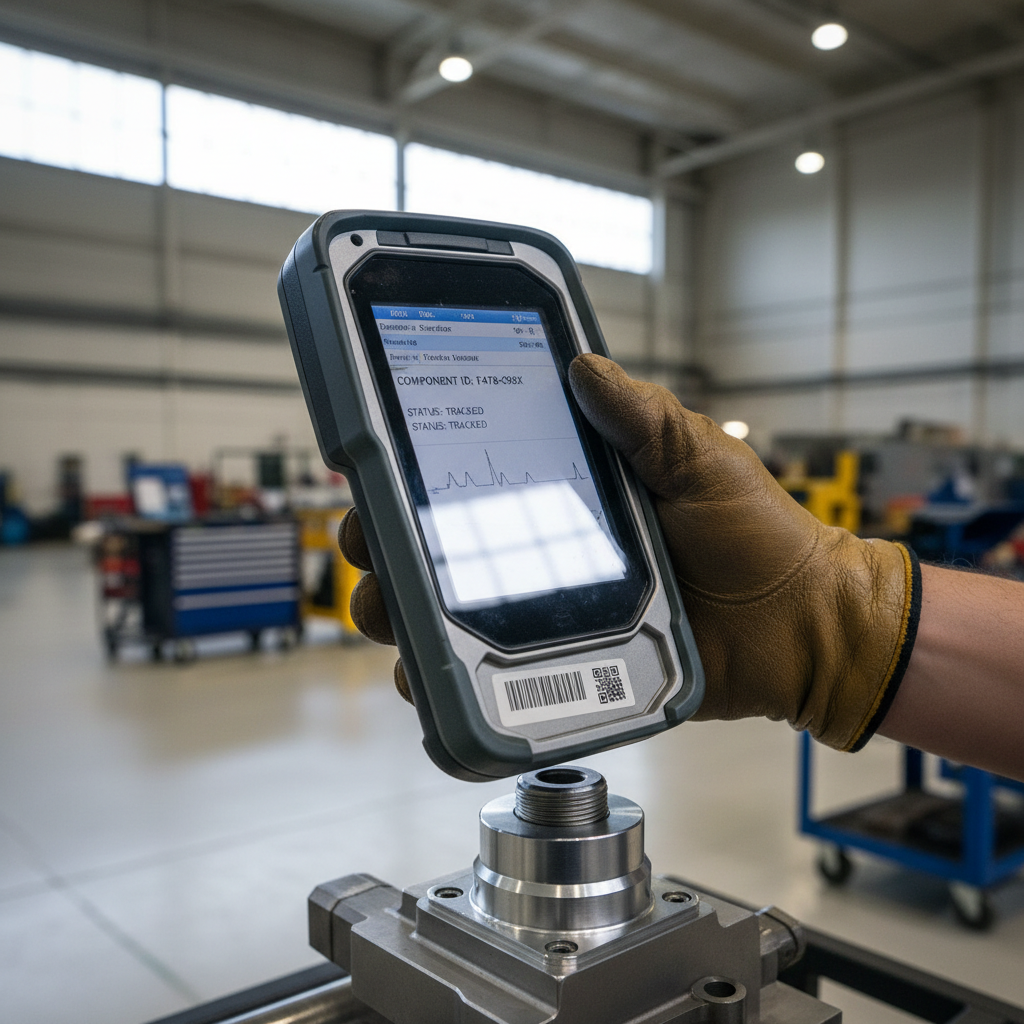
Three Layers of Tracking Technology (and Why You Need More Than One)
The most common mistake in hangar tool tracking is treating it as a single problem with a single solution. In practice, it is three distinct problems layered on top of each other, each served by its own technology.
Layer 1: Identification (RAIN RFID)
RAIN RFID, operating in the ultra-high frequency band between 860 and 960 MHz, is the backbone of hangar tool tracking. Passive tags require no battery, cost under a dollar per tag at volume, and can be bulk-scanned at distances up to 30 feet or more. A reader can reconcile an entire tool cabinet in a single pass without opening drawers.
This is the “is this tool here or not?” layer. It answers the question shadow boards answer visually, but at a speed and scale that manual methods cannot touch. MROs deploying RAIN RFID report a 98% or better reduction in tool loss and a 90% decrease in manual counting time.
Layer 2: Zone Location (BLE)
Bluetooth Low Energy beacons fill the gap between “tool is in its cabinet” and “tool is somewhere on the hangar floor.” Attached to mobile toolboxes, carts, or high-value equipment, BLE beacons broadcast continuously at ranges up to approximately 100 meters. This gives you room-level or bay-level location data with low power consumption and reasonable cost per tag (typically $3 to $10).
BLE will not tell you exactly where a torque wrench is sitting. It tells you the wrench is in Bay 3, north side, near the 737 nose gear. For most operational decisions, that is enough.
Layer 3: Precision Location (UWB)
Ultra-wideband technology operates across 3.1 to 10.6 GHz and achieves positioning accuracy of 10 to 30 centimeters. When a specific calibrated wrench is somewhere inside a 767 fuselage and the aircraft cannot be released until it is found, UWB is the technology that locates it without a manual search.
UWB is more expensive per tag and requires fixed anchor infrastructure. You do not tag every screwdriver with UWB. You reserve it for critical, high-value tools where the cost of a search exceeds the cost of the tag many times over.
Para contexto mais amplo sobre rastreamento de ativos críticos na aviação, veja: tracking high-value aviation assets.
How the Layers Fit Together
| Technology | Frequency | Range | Accuracy | Tag Cost | Best Hangar Use |
|---|---|---|---|---|---|
| RAIN RFID (UHF) | 860-960 MHz | Up to 30+ ft | Zone-level | ~$0.10-1.00 | Tool crib inventory, shadow board verification |
| BLE | 2.4 GHz | Up to ~100 m | Room/bay | ~$3-10 | Mobile cart and GSE zone tracking |
| UWB | 3.1-10.6 GHz | ~50 m | 10-30 cm | ~$5-15 | Precision locating of critical tools |
| LF RFID | 125 kHz | Centimeters | Item-level | Low | Drawer access control, close-range ID |
| HF RFID / NFC | 13.56 MHz | Centimeters | Item-level | Low | Tap-to-verify at shadow boards |
The hangars getting the best results are not choosing one technology. They layer RFID for identification, BLE for zone tracking, and UWB for precision, unified by a software platform that aggregates all three into a single audit trail.
What Three-Month ROI Actually Looks Like
The ROI conversation around hangar tool tracking tends to stall in abstraction. “It saves time.” “It reduces loss.” Here are the concrete numbers.
Rovinj’s RAIN RFID tool management system completes a full inventory in under 45 seconds and pays for itself in an average of three months. Some clients hit ROI in 30 days. The system embeds RFID antennas directly into tool trolleys, so reconciliation happens automatically as drawers close. No mechanic behavior change required for the scan itself.
Across the industry, RFID-based tool control deployments in airline MRO environments report ROI of 200 to 500 percent, with benefits quantified across five dimensions: reduced tool loss, eliminated manual counting labor, FOD prevention, regulatory compliance automation, and optimized tool utilization.
TrackIT, which has tracked over 50 million tools, reports 99.99% tracking accuracy and estimates each technician saves 20 to 30 minutes per shift. In a hangar with 40 technicians across two shifts, that is 26 to 40 recovered labor hours per day. At loaded MRO labor rates, the math becomes difficult to argue with.
British Airways Maintenance Cardiff deployed CribMaster tool vending solutions to replace manual requisition processes. Every tool withdrawal is now logged to a specific technician and work order, giving BAMC consumption tracking and cost-center budgeting that manual systems never delivered.
Lufthansa Technik implemented UHF RFID across multiple hangars for real-time visibility of tools, components, and documents. The scale of that deployment eliminated the argument that RFID only works for small facilities.
The pattern across all these cases: payback is measured in weeks or months, not years. Primary costs are tags, readers, and software licensing. Primary savings come from three places:
- Eliminated tool loss events (38/month average, each carrying replacement cost, investigation time, and potential AOG exposure)
- Recovered technician labor (20 to 30 minutes per shift per person, previously spent searching or counting)
- Avoided aircraft-on-ground delays, where a single AOG event can cost thousands of dollars per hour
Why Standalone Tool Tracking Underdelivers
Most tool tracking content stops at the cabinet. Install RFID readers. Tag every tool. Watch the dashboard light up green.
Except: is the dashboard connected to your MRO software? Does a tool checkout link to a specific work order in AMOS or Maintenix? When a calibrated torque wrench hits its recalibration date, does the tracking system trigger a maintenance task, or does someone have to remember?
The gap between “tool tracking as a standalone system” and “tool tracking integrated into the maintenance workflow” is where most implementations underdeliver. A tracking system that lives in its own silo generates excellent inventory data but fails to prevent the scenarios that actually ground aircraft.
The platforms that get this right treat tool data as part of the maintenance record. Leading solutions feed tool tracking data directly into maintenance planning and procurement systems, so calibration alerts, usage histories, and replacement forecasts flow into the same workflow that manages work orders. Cribwise integrates with ERP and CAM systems for lifecycle cost analysis, enabling decisions about tool retirement based on actual usage data rather than fixed schedules. Ramco’s cloud-based MRO platform ties IoT, AI, and RFID into a unified system and claims an 80% reduction in manual workflows.
If you are evaluating a tool tracking deployment, ask the vendor one question: “How does this connect to my work order system?” If the answer involves CSV exports, you are looking at a data silo, not a solution.
The Human Factor: Why Mechanics Push Back
I have seen tracking systems installed, configured, calibrated to the millimeter, and then abandoned within six months. Not because the technology broke. Because the mechanics stopped using it.
The pattern is predictable. A veteran A&P mechanic who has managed his own tool kit for 20 years does not see the value of scanning a badge before opening a drawer. It feels like overhead. It feels like surveillance. And if the system adds even 30 seconds of friction to a task he does 50 times a shift, he will find a workaround.
The facilities that succeed at adoption share three characteristics.
They remove friction rather than adding it. Rovinj’s embedded-antenna approach is a good example. The mechanic opens the drawer, takes the tool, closes the drawer. The scan happens without a conscious action. Systems that require manual badge swipes at every interaction are fighting human nature.
They make the system serve the mechanic, not just the auditor. When a technician can tap his phone and see which bay has the 3/8″ crowfoot he needs instead of walking the hangar for 15 minutes, the system earns trust. When calibration alerts prevent him from using an out-of-spec wrench that would mean rework, the system has his back.
They pilot with volunteers before mandating. Rolling out tracking to one team, letting them discover the benefits firsthand, and using their experience to onboard the next group is consistently more effective than a facility-wide mandate on day one.
Culture change is not a technology feature. It is a deployment strategy. Budget for it the same way you budget for tags and readers.
Regulatory Reality: FAA, EASA, and the Direction of Travel
No regulation today mandates a specific tool tracking technology. But the direction is unmistakable.
The FAA’s Advisory Circular 150/5380-5B mandates FOD prevention programs at civil airports, which implicitly require tool accountability procedures. EASA Part-145 certification imposes strict tool control requirements on approved maintenance organizations. Neither prescribes RFID or any specific technology. Both require demonstrable tool accountability.
The Delta 717 investigation changed the conversation. When the NTSB explicitly cites the absence of automated tracking as a contributing factor in a safety incident, that creates regulatory momentum. Proposals have been submitted to strengthen FOD prevention requirements to include specific tool control mandates.
The practical implication: if you implement automated tracking now, you are ahead of the mandate curve. If you wait for the mandate, you will be implementing under deadline pressure alongside every other MRO facility in your jurisdiction, competing for the same vendors, integrators, and installation windows.
What Is Coming: AI, Digital Twins, and Drone Scanning
Tool tracking is shifting from passive record-keeping to predictive intelligence. Three trends are accelerating this shift in 2026.
AI-powered predictive management. 65% of maintenance teams are planning AI adoption by year-end. Applied to tool tracking, AI models trained on historical RFID and usage data can predict when a tool will need calibration or replacement before it fails a check. The shift: from reactive replacement to proactive lifecycle management.
Digital twins. Digital twin technology is creating real-time virtual replicas of hangar operations, including tool locations, utilization patterns, and workflow bottlenecks. Integrated with RTLS data, digital twins let operations managers simulate alternative tool allocation strategies or hangar layouts before spending money on physical changes.
Drone-based scanning. Drones equipped with RAIN RFID readers can autonomously patrol tool storage areas, collecting inventory data in locations and at speeds that fixed readers and handheld scanners cannot match. For large complexes with distributed storage across buildings and levels, drones fill coverage gaps that would otherwise require dozens of additional fixed reader installations.
These are not speculative technologies. They are in deployment now. The question is how quickly they move from early-adopter installations to standard operating procedure.
How to Diagnose What Your Hangar Actually Needs
Not every hangar needs a six-figure, multi-technology deployment. The right starting point depends on your actual bottleneck.
If your primary problem is tools going missing, start with RAIN RFID at the tool crib and cabinet level. Tag every tool. Install readers in storage units. Automate the shadow board. This addresses the 38-per-month loss rate at the lowest cost tier. Most hangars should start here.
If your primary problem is technicians spending shift time searching, add BLE zone tracking for mobile tool carts and high-value kits. Real-time visibility of where tool sets are on the floor, without the infrastructure cost of full UWB coverage.
If your primary problem is locating specific tools inside aircraft, deploy UWB anchors in critical work areas. This is the precision layer, the most expensive per tag and per anchor. Reserve it for bays and scenarios where search time is operationally damaging.
If your primary problem is compliance and audit readiness, focus on the software layer. Ensure your tracking hardware feeds data into your MRO or ERP system, creating the continuous audit trail that satisfies FAA and EASA reviewers. Hardware generates data. Software makes it compliance-ready.
For most facilities, the answer is phased: RFID first, BLE second, UWB where justified, software integration throughout. Each phase delivers standalone ROI while building toward comprehensive visibility.
And this is where the hangar problem connects to the broader asset tracking challenge. Tracking a torque wrench inside a hangar is one layer. Tracking the container, GSE cart, or ULD that wrench was used on as it moves between airports, MRO facilities, and freight hubs is another. The principles are identical: know where your assets are, know their condition, and have the data to prove both. The technology stacks differ (RFID indoors, GNSS and cellular in transit), but the operational logic of end-to-end asset tracking spans both worlds.
If your tool tracking stops at the cabinet and your asset visibility stops at the hangar door, you have two blind spots, not one. That is a conversation worth having.

Frequently Asked Questions
What does tool tracking in a maintenance hangar involve?
It is the combination of hardware (RFID tags, BLE beacons, UWB anchors, readers) and software (inventory platforms, MRO integration, audit trail generators) that monitors every tool’s location, condition, calibration status, and chain of custody from check-out to return. The goal is zero unaccounted tools when an aircraft is released for flight.
How much does FOD cost the aerospace industry?
The Aerospace Industries Association estimates Foreign Object Debris costs the global aerospace industry approximately $4 billion per year. Improper tool control is a primary contributor. A single unaccounted tool left inside an engine or airframe can cause damage that leads to in-flight failure.
How fast does RFID tool tracking pay for itself?
Documented payback periods range from 30 days to three months for RAIN RFID systems like Rovinj’s. Nexess reports 200 to 500% ROI. Savings come from eliminated tool loss, recovered technician labor (20 to 30 minutes per shift), and avoided aircraft-on-ground delays.
Do RFID tags survive MRO hangar conditions?
Standard tags do not. Metal tool surfaces detune antennas and kill read range. Specialized on-metal tags use protective housings and optimized antenna designs to withstand jet fuel, hydraulic fluids, temperature extremes, and physical impact. Pre-deployment testing under actual hangar conditions is non-negotiable for reliable performance.
Is automated tool tracking required by aviation regulators?
No specific technology is mandated today. However, FAA Advisory Circular 150/5380-5B requires FOD prevention programs, and EASA Part-145 imposes strict tool accountability. The NTSB cited the absence of automated tracking in the Delta 717 incident, strengthening the case for future mandates.
Can tool tracking integrate with MRO software like AMOS or Maintenix?
Leading platforms support API-driven integration with ERP and MRO systems. Nexess NexCap, Cribwise, and Ramco all connect tool data to work orders, calibration schedules, and procurement workflows. This integration transforms tool tracking from a standalone inventory count into part of the aircraft maintenance record.








 +1 508 292 2210

7 Responses