

Your $200-per-hour aircraft mechanic just spent 45 minutes hunting for a calibrated torque wrench. Multiply that across a team of 30, two shifts, five days a week. That’s six figures a year burned on treasure hunts inside your own facility. (See also: asset tracking in aircraft manufacturing.)
And here’s the part that stings: most of these hangars already run a CMMS. The software knows the wrench exists. It just can’t tell anyone where it is right now.
MRO asset tracking solutions close that gap. They bring real-time visibility to tools, parts, ground support equipment, and rotable components across their full lifecycle. But most of the conversation online focuses on which platform to buy and skips the infrastructure that makes tracking physically work. I’ve spent 15+ years deploying IoT in aviation, freight, and industrial MRO. The pattern repeats: organizations purchase a platform, underinvest in hardware and data readiness, then wonder why adoption flatlines at 20%.
From tags on metal to ROI on paper, here’s what actually moves the needle.
What MRO Asset Tracking Actually Covers
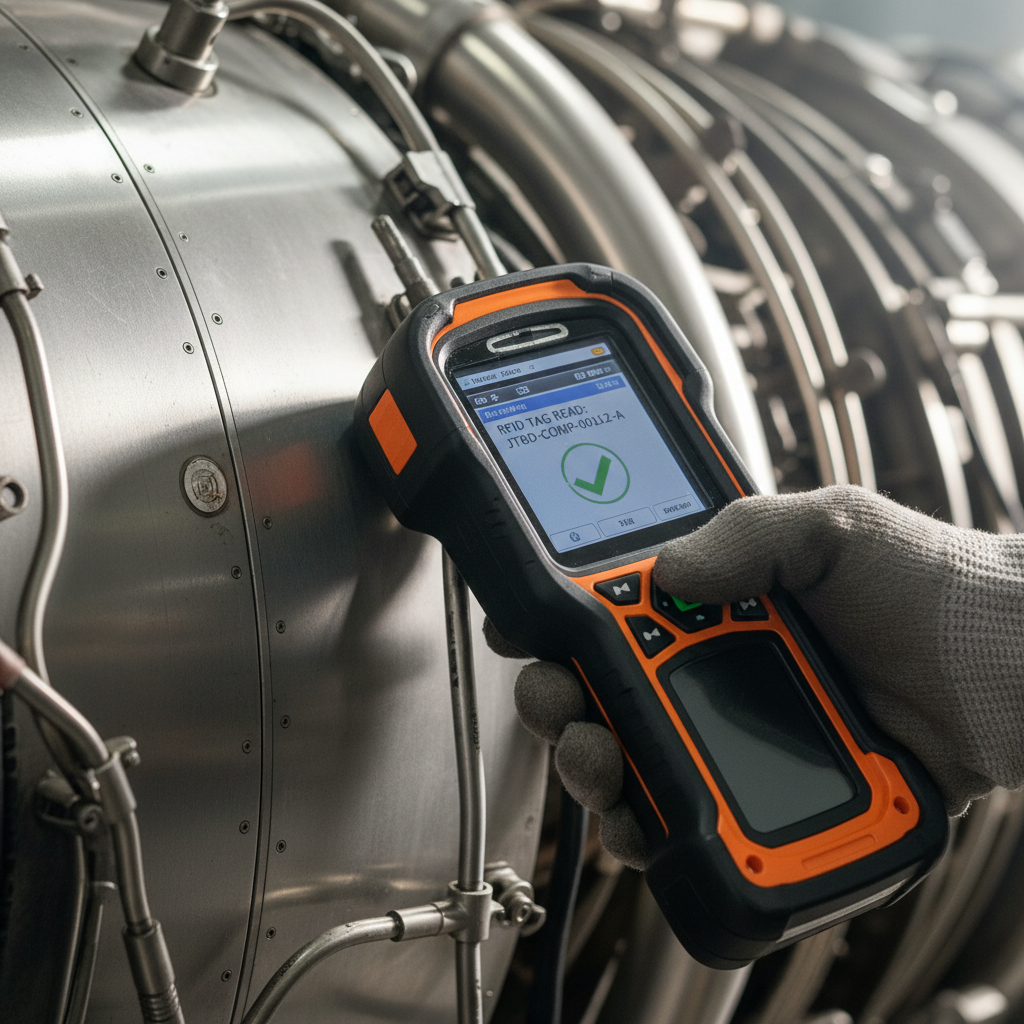
MRO asset tracking uses technologies like RFID, BLE, UWB, GPS/GNSS, and IoT sensors to monitor the real-time location, condition, and lifecycle status of everything involved in maintenance: tools, spare parts, serialized components, consumables, and ground support equipment.
It differs from general asset tracking in one critical way. A logistics tracker asks “where is this pallet?” An MRO tracker asks “where is this torque wrench, is it calibrated, who checked it out, and does it meet the regulatory documentation requirements for the task it’s about to perform?” That layered context (location plus compliance plus condition) is what separates MRO tracking from the broader asset visibility category.
The technology stack operates on four layers:
- Tags and sensors attached to the asset
- Readers and gateways that capture tag signals
- Middleware that filters, aggregates, and routes data
- Application software (CMMS or EAM) where operators make decisions
Most vendor pitches start at layer four. Most implementation failures happen at layers one and two. Understanding the full stack changes how you evaluate every MRO tracking solution on the market.
The Real Cost of Not Tracking
The financial argument for MRO asset tracking doesn’t require creative math. The waste is documented, recurring, and enormous.
46% of maintenance teams lose one to three hours per day searching for tools and parts. In aviation MRO, where labor rates run $150 to $300 per hour, that search time translates to hundreds of thousands in annual waste per facility. Scale that across a multi-hangar operation and you’re looking at seven figures evaporating into hallway walks and radio calls.
The stakes get sharper in energy. A single missing critical part on an offshore platform can defer $500,000 to over $1 million per day of production. A refinery turnaround that runs four days long due to a missing valve costs $25 to $50 million in lost margin. Industry surveys indicate that 20 to 35% of MRO inventory is typically dead stock: capital sitting on shelves, invisible to the people who need it.
In aviation, the consequences go beyond money. Unaccounted tools create foreign object debris (FOD) risks. A wrench left inside an engine nacelle isn’t an inventory error. It’s a potential catastrophe. 30% of FAA audit failures trace to poor documentation, the kind of documentation that automated tracking generates as a byproduct of normal operations.
Then there’s the workforce math. 41% of certified mechanics in the US are over 60, and roughly 45,000 are expected to retire this decade. Every hour a senior technician spends acting as a warehouse clerk is an hour the industry simply cannot afford to lose. The cost of not tracking isn’t just what you can measure today. It’s the compounding drag on a workforce that’s already shrinking.
Five Technologies That Power MRO Tracking
No single technology covers every MRO tracking scenario. The right approach combines two or more, matched to the environment and use case.
| Technology | Best For | Indoor Accuracy | Range | Power Source |
|---|---|---|---|---|
| RFID (RAIN/UHF) | Tool cribs, inventory counts, parts warehouses | Tag-level identification | 5-15 m | Passive (no battery) |
| BLE | Zone-based indoor tracking, GSE | 1-3 m | 10-30 m | Battery, 1-5 years |
| UWB | High-value assets in confined spaces | 10-30 cm | 50-100 m | Battery, 6-24 months |
| GPS/GNSS | Outdoor fleet, ramp equipment, transit | N/A (outdoor) | Global | Device-dependent |
| IoT Sensors | Condition monitoring (temp, vibration, humidity) | N/A (data, not position) | Varies | Battery, 2-10 years |
RFID remains the workhorse for high-volume environments. RAIN RFID scans hundreds of tags simultaneously, making it ideal for tool crib accountability and parts warehouse inventory. Passive tags require no battery, which eliminates maintenance on the tags themselves.
BLE beacons work well for zone-level visibility: knowing an asset is in Bay 3 versus Bay 7, without needing centimeter precision. Lower infrastructure cost than UWB, with battery lifespans of one to five years. UWB, on the other hand, delivers 10 to 30 centimeter accuracy indoors. It matters when tracking high-value components in tight aircraft maintenance bays. The tradeoff is higher infrastructure cost and shorter battery life.
GPS/GNSS handles the outdoor layer: ground support equipment on tarmacs, fleet vehicles, containers moving between facilities. For comprehensive coverage of outdoor aviation assets, aviation GPS tracking solutions provide the foundation. IoT sensors push tracking past location into condition. Temperature, vibration, humidity, wear patterns. This is the data layer that enables condition-based and predictive maintenance strategies, which 56% of MRO executives name as their top digital priority over the next three to five years.
For aviation environments specifically, hardware must meet stringent certification requirements. Airfreight-approved devices like the Thingfox T2, which carries DO-160 certification, are purpose-built for these conditions. Organizations moving parts and equipment across facilities benefit from specialized griffin air cargo tracking solutions that maintain compliance throughout the supply chain and deliver aerospace supply chain visibility end to end. Attempting to deploy consumer-grade trackers in regulated airspace creates compliance problems before it creates value.
Trying to solve everything with a single technology is one of the most common (and expensive) mistakes in MRO tracking. The better question isn’t “which one?” but “which combination, and where?”
Aviation MRO: Where Tracking Is Non-Negotiable
Global MRO demand hit $136 billion in 2025, up 8% year over year. The fleet totaled approximately 30,000 aircraft at the start of 2026 and is projected to grow to 41,000 by 2036, a surge driven partly by aircraft production efficiency gains, advances in aerospace manufacturing automation, and the massive delivery backlog rooted in ongoing aerospace manufacturing challenges. Clearing that backlog puts enormous strain on aerospace production planning, and the MRO infrastructure supporting that fleet must scale proportionally, with asset tracking as the digital backbone that makes scaling possible.
FOD prevention is the most obvious driver. A tool left inside an aircraft engine isn’t a miscount on a spreadsheet. It can cause an in-flight failure. RFID-based tool accountability (automated check-in, check-out, verification before panel close) replaces manual headcounts with system-level assurance, which is why rigorous tool control in aerospace manufacturing matters so much. When every socket and ratchet carries a tag, near-100% tool tracking coverage becomes achievable rather than aspirational.
Regulatory compliance adds another layer of urgency. FAA and EASA require full traceability of tools and serialized components: calibration status, maintenance history, chain of custody, all auditable on demand. Manual spreadsheets don’t survive a thorough audit. Automated tracking generates compliance documentation as a natural output of daily operations rather than an extra administrative step bolted on afterward.
And then there’s the turnaround time pressure. Every hour an aircraft sits in maintenance is revenue lost. One aviation MRO deployment demonstrated a one-third reduction in TAT and a 400% increase in throughput by combining RFID scanning with automated workflows and predictive analytics. This is where tracking connects to broader lean manufacturing in aerospace practices aimed at eliminating waste. Neither the hardware nor the software delivered that outcome alone. It required the full stack, integrated.
With tens of thousands of experienced mechanics retiring this decade, automating the administrative side of maintenance (finding tools, verifying calibration, generating compliance records) frees the remaining workforce to do work that actually requires their expertise. The choice isn’t automation versus people. It’s whether you let skilled technicians do skilled work or spend their days searching shelves.
CMMS vs. EAM: Choosing the Right Software Layer
The software decision is simpler than most vendors make it sound. IBM frames it directly: CMMS can be viewed as a subset of EAM.
CMMS (Computerized Maintenance Management System) handles work orders, preventive maintenance scheduling, and inventory tracking. It starts tracking an asset after installation and works best for single-site or small multi-site operations. EAM (Enterprise Asset Management) covers the full asset lifecycle from procurement through design, operation, maintenance, and disposal, across multiple sites with full financial integration, contract management, and fleet-level analytics.
| Criteria | CMMS | EAM |
|---|---|---|
| Scope | Maintenance-focused | Full asset lifecycle |
| Site coverage | Single or small multi-site | Enterprise-wide |
| Lifecycle tracking | Post-installation | Design to disposal |
| Financial integration | Basic | Full cost-of-ownership |
| Typical buyer | Mid-market, single facility | Large enterprise, regulated industry |
| Implementation cost | Lower | Higher |
The mistake I see most often: organizations buy EAM when they lack clean data to feed it. Or they buy CMMS when they clearly need multi-site lifecycle management. Match the software to your operational complexity, not to the vendor’s enthusiasm during the demo.
Whichever path you take, the software is only as useful as the data going in. And that’s where most projects run into trouble.
Where Most MRO Tracking Projects Stall
It’s rarely the software demo that kills an MRO tracking project. It’s what happens after.
Physical infrastructure gets underbudgeted consistently. RFID readers, antennas, cabling, power runs, mounting hardware. In a large maintenance bay, the reader infrastructure alone can run $50K to $150K before you tag a single tool. If the budget only accounts for software licenses, the pilot never leaves the conference room. I’ve watched this happen more times than I’d like to admit.
Then there’s the tag question. MRO facilities are metal-dense, chemical-heavy, and mechanically brutal. Consumer-grade BLE tags fail within weeks on a factory floor. Tools get dropped in solvent, baked at high temperatures, slammed into metal surfaces daily. Purpose-built tags (metal-mount, high-temperature, chemical-resistant) cost more per unit but actually last. Choosing the wrong tag for the environment is the single most common hardware mistake in MRO tracking, and it often gets made by teams that evaluate tags in a clean lab rather than on the shop floor.
Over 80% of MRO executives cite data limitations as the most significant barrier to digital adoption. If your parts catalog has inconsistent naming conventions, your serial numbers don’t match across systems, or your asset register lives in three separate spreadsheets, no tracking hardware will compensate. Clean the data first, or at least in parallel with deployment. Skipping this step is like mounting a GPS on a car with no engine.
Change resistance is equally real. The same McKinsey research flags that over 70% of MRO executives cite organizational resistance and lack of internal digital talent as barriers. Technicians who’ve worked a bench for 20 years don’t automatically trust a system telling them where their tools are. The fix isn’t a training PowerPoint. Start with a use case that visibly makes their day easier (ending the 45-minute wrench hunt is a reliable one) and expand from there. Earn trust before you demand adoption.
There’s also a pattern I call shadow tracking. Experienced technicians hoard preferred tools in personal drawers because shared ones go missing or get damaged. An RFID system that flags those tools as “missing” creates friction instead of value. If you don’t address why people hoard tools (usually a systemic trust issue), the technology layer just amplifies the cultural one.
Digital transformation success rates in aviation MRO hover between 4% and 11%. Only 6% of MRO organizations have integrated digital at scale. The organizations that beat those odds treat tracking as an infrastructure project with a change management component, not a software purchase with an install date.
Building a Business Case That Survives the CFO
CFOs don’t fund “digital transformation.” They fund projects with a measurable return and a timeline they can trust. Frame MRO asset tracking accordingly.
Start with what tracking recovers. Organizations implementing tracking report 40 to 60% savings on costs related to lost or underutilized assets. If your facility spends $500K annually replacing tools and parts that aren’t actually gone (just invisible), that’s $200K to $300K recovered. RTLS deployments achieve a 30 to 50% reduction in asset loss, which on high-value rotable components can justify the investment on its own. Forrester pegs the broader number at 20 to 30% cost savings through improved asset visibility. On a $10M annual MRO spend, that range translates to $2M to $3M.
Then quantify what tracking prevents. Data-driven maintenance strategies achieve a 36% reduction in unplanned downtime. Translate that into production hours recovered and the revenue those hours represent. For an airline, a single hour of reduced aircraft ground time during peak season can be worth more than the entire tracking pilot.
The strongest business cases combine both: a clear dollar figure for recovered costs and a conservative payback timeline. Well-scoped pilots typically demonstrate ROI within 6 to 12 months. Start with one tool crib, one hangar bay, one maintenance line. Prove the return on a bounded scope, then scale with evidence your CFO can verify independently. This is not the place for a big-bang rollout, and any partner who pushes one is optimizing for their contract size, not your outcome.
If your MRO operation has a persistent gap between what the system says and where assets actually are, that’s the visibility problem tracking was built to solve. We deploy the hardware and integration layer for exactly this: tag selection, reader infrastructure, platform connectivity, tuned for the conditions your assets actually face. Browse our asset tracking devices or reach out directly.

Frequently Asked Questions
What is MRO asset tracking?
MRO asset tracking uses RFID, BLE, UWB, GPS, and IoT sensors to monitor the real-time location, condition, and lifecycle status of tools, parts, equipment, and consumables used in maintenance operations. Unlike general tracking, it layers in compliance context: calibration schedules, certification status, and chain of custody records required for regulatory audits.
What ROI should I expect from MRO asset tracking?
Published benchmarks indicate 40 to 60% savings on lost or underutilized asset costs, 30 to 50% reduction in asset loss, and 20 to 30% overall cost savings through improved visibility. Well-scoped pilots typically demonstrate payback within 6 to 12 months, depending on facility size and asset value.
RFID, BLE, or UWB: which technology fits MRO best?
No single technology covers every use case. RFID excels at high-volume tool crib and inventory tracking with passive tags. BLE provides affordable zone-level indoor visibility. UWB delivers centimeter-level precision for high-value assets in confined spaces. Most MRO operations combine at least two technologies matched to specific environments.
Do I need CMMS or EAM?
CMMS suits single-site operations focused on work orders and preventive maintenance. EAM covers multi-site enterprises managing complex, regulated assets across their full lifecycle. CMMS is functionally a subset of EAM, so most organizations start with CMMS and migrate as operational complexity grows.
Why do most MRO tracking projects fail?
Digital transformation success rates in aviation MRO run between 4 and 11%. Failures typically stem from underbudgeted hardware infrastructure, poor data readiness, tags mismatched to the operating environment, and insufficient change management. These are planning problems, not technology problems.
Is MRO asset tracking only relevant to aviation?
No. Aviation is the most regulated and widely tracked vertical, but MRO tracking delivers measurable returns in oil and gas (where missing parts defer millions per day), manufacturing, rail, defense, and energy. Any operation with high-value equipment, compliance requirements, or significant downtime costs benefits from tracking infrastructure.








 +1 508 292 2210

3 Responses