
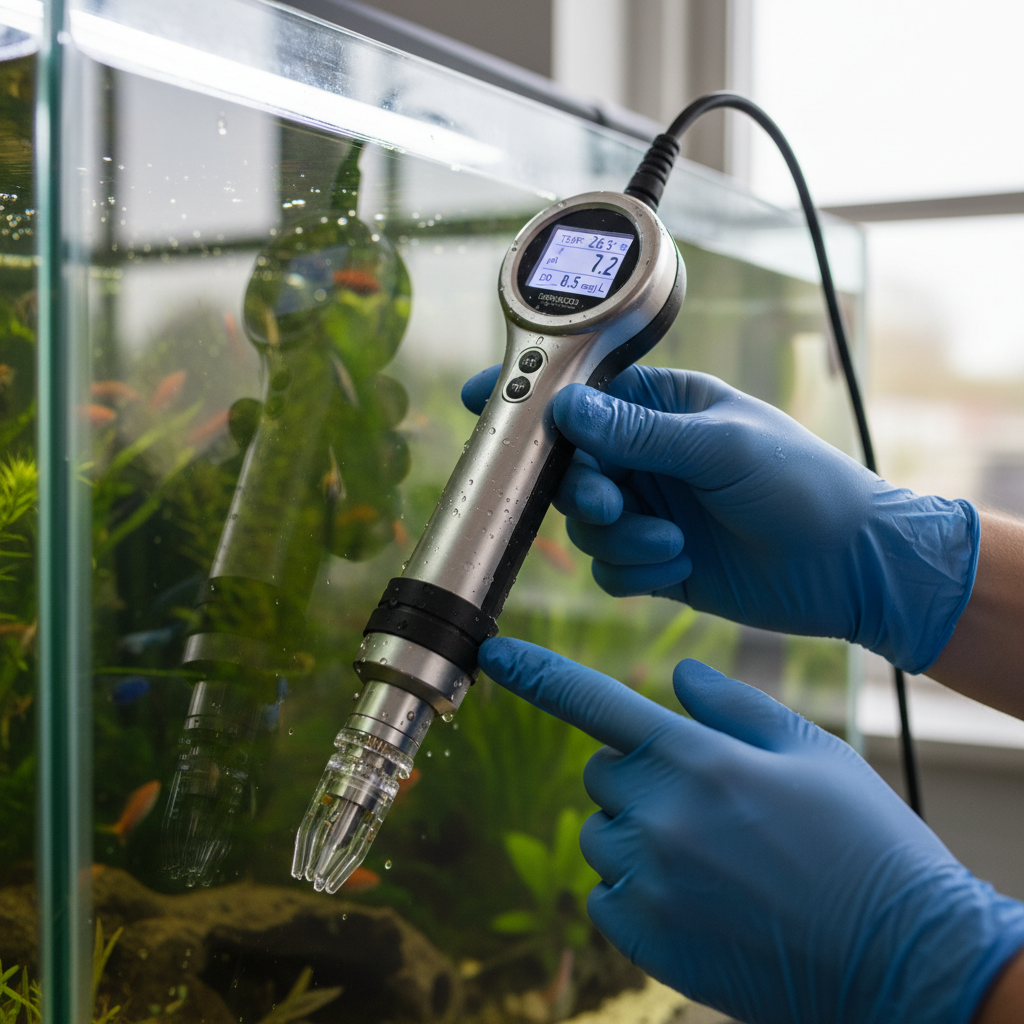
A validated 2024 study tested low-cost dissolved oxygen sensors against a reference probe for three months. The result: 76% accuracy on the single variable most likely to kill your stock overnight. pH hit 97%. Temperature, 98%. But dissolved oxygen, the measurement that determines whether fish survive a warm night, was the weakest reading in the chain. (See also: aquaculture data management.)
Aquaculture sensor systems get plenty of attention in a sector that produced 94.4 million tonnes of aquatic animals and generated $296 billion in first-sale value in its most recent FAO accounting. The problem is not a shortage of probes. It’s the gap between a reading and an intervention. Most farms buy sensors. Few build systems. And that distinction is where mortality, feed waste, and unnecessary energy costs hide.
A Sensor Is Not a System
A probe in the water reads dissolved oxygen at 3.1 mg/L. That’s data. A system reads 3.1 mg/L, cross-references it with temperature trend and stocking density, triggers an alarm on the operator’s phone, activates the aerator, and logs the event for calibration review. The first scenario gives you a number. The second prevents a crash.
The ITU published a smart-aquaculture architecture in early 2025 that defines six actors in a functional system: fish farmer, sensor, actuator, controller, gateway, and farm-management platform. The management layer determines actuator commands from real-time data and adjusts feeding, aeration, temperature, and water exchange. This is why smart aquaculture starts with water, not the software layer. Remove any actor and the loop breaks. You have a reading sitting in a dashboard that nobody checks at 3 AM.
A complete aquaculture sensor system connects measurement to communication to interpretation to decision to physical action, then feeds the result back into the measurement layer for continuous validation. Everything short of that is monitoring. Monitoring is useful. But it does not, by itself, save fish.
Which Parameters Actually Earn a Spot
A 2025 systematic review of 217 aquaculture IoT studies found pH in 98.2% of reviewed systems, temperature in 92.9%, and dissolved oxygen in 62.5%. Those three form the minimum viable measurement layer. But “minimum viable” does not mean “sufficient.” The right parameter set depends on species, production method, and a direct question: which variable can change faster than a human can sample it?
| Parameter | Why it matters | Species sensitivity | Decision it drives |
|---|---|---|---|
| Dissolved oxygen | Drops fast, kills fast | Critical for shrimp, tilapia, salmon | Aeration, O₂ injection, stocking density |
| pH | Affects ammonia toxicity and feed intake | All species, especially intensive systems | Buffer dosing, water exchange, alarm |
| Temperature | Controls metabolism, O₂ solubility, disease risk | All species | Heating/cooling, feeding rate, harvest timing |
| Ammonia (TAN) | Toxic above threshold, difficult to measure continuously | Shrimp, catfish, intensive RAS | Water exchange, biofilter check, feed reduction |
| Salinity / EC | Osmoregulation stress | Shrimp, marine cage species | Water source management |
| Turbidity / TDS | Feed waste indicator, gill health, pathogen load | Pond and cage systems | Filtration, settling, feeding adjustment |
Ammonia deserves special attention. Continuous TAN measurement in water remains expensive and technically difficult. One 2024 system used an evaporation-based ammonia gas sensor; another used electrical conductivity as a salinity proxy. Neither is plug-and-play. This is precisely why ammonia spikes still cause losses even in “monitored” farms: the variable most dangerous after DO is often the one measured least frequently.
The rule is simple. A parameter earns its spot when it changes a decision. If you’re measuring something but never acting on the reading, that probe is consuming power, calibration time, and attention for zero return.
Architecture That Survives a Network Outage
The typical aquaculture sensor architecture follows a familiar IoT stack: probes feed a microcontroller or PLC, which timestamps and validates readings, then pushes data through a gateway (Wi-Fi, LoRaWAN, cellular, or satellite) to a cloud platform for analytics, alerts, and storage.
What separates a production system from a science project is what happens when that chain breaks.
A 2024 prototype used an Arduino and SIM800L cellular module, collecting DO, pH, and temperature every 15 minutes before uploading to the cloud. Useful for research. But 15 minutes is a long interval when oxygen collapses at 2 AM in a loaded shrimp pond. If the cloud goes down and aerators don’t respond, the system has a single point of failure at the worst possible moment.
Three architectural decisions matter more than probe brand:
Edge intelligence. The controller at the pond or tank should carry local rules: if DO drops below threshold, activate aerator; if pH crosses a limit, trigger alarm. These rules execute whether or not the cloud is reachable. This is the same principle we apply in industrial asset tracking and aviation ground support, including manufacturing execution systems for aerospace: the device at the edge must be capable of autonomous response when connectivity fails.
Redundancy on life-critical variables. A single DO probe with a fouled membrane reads zero. Without a second signal (another probe, or a behavioral cue like fish surfacing), the system cannot distinguish sensor failure from a real oxygen crash. False alarms erode trust. Missed alarms kill stock. Redundancy solves both.
Manual override. Every automated actuator needs a physical override accessible to the operator. Automation handles the 3 AM response. Humans retain the authority to shut it down when the automation is wrong.
Connectivity choice depends on geography and data volume. LoRaWAN covers long range at low power, well suited for periodic water readings across spread-out pond farms. Cellular (4G/LTE) supports higher data rates for cameras and real-time dashboards. Satellite fills the gaps in coastal and offshore cage sites. The ITU architecture treats the gateway as a distinct actor because connectivity is a design choice, not an afterthought.
The Three Failures That Kill Deployments
Sensor catalogs advertise accuracy specs, detection ranges, and battery life. They do not advertise failure modes. But failure modes are what separate a functioning system from expensive e-waste submerged in a pond.
Biofouling. Every sensor in productive water grows a biofilm. Algae, bacteria, and invertebrates coat optical windows, membrane surfaces, and reference electrodes within days or weeks depending on conditions. A fouled DO sensor reads low. A fouled pH sensor drifts unpredictably. A review of antifouling strategies for water-monitoring sensors frames biofouling control as a core design requirement. Budget for cleaning schedules, wiper mechanisms, or copper-alloy housings from the start. If your maintenance plan does not specify probe cleaning frequency, accuracy starts degrading on deployment day.
Calibration drift. The 2025 sensor review cites a 3 to 6 month calibration interval for one DO sensor type. But calibration with standard solutions alone is insufficient. The low-cost sensor study stated explicitly that readings must be validated against a reference multiparameter probe. Without reference checks, you calibrate against yourself. Drift accumulates silently until the alarm that should fire at 3 mg/L fires at 2, or not at all.
Post-pilot abandonment. A GSMA case study of Indonesian shrimp farming documented both sides of the adoption curve. In some ponds, IoT-driven smart aeration shortened harvest cycles by up to 10 days and cut production costs by up to 30%. In a neighboring operation, a weathered digital sensor sat unused after the system failed to deliver in practice. The barriers farmers reported: subscription cost, unreliable connectivity, limited maintenance support, technical glitches, and fear of data misuse. A system that works during a funded pilot but collapses six months later has a negative ROI. Maintenance, connectivity, and ongoing support must be priced from day one, not discovered after the integrator moves on.
Translating Sensor Data into Operational Dollars
The ROI of an aquaculture sensor system comes from three measurable levers. Each connects directly to what the probes measure.
Mortality reduction. A DO alarm that triggers aeration 20 minutes before a crash event can prevent partial or total stock loss. One severe oxygen event in a loaded shrimp pond can destroy more value than the entire monitoring system cost. The calculation is straightforward: replacement value of standing biomass, multiplied by the probability and frequency of loss events in your region, compared against annualized system cost. This calculation sits at the heart of aquaculture risk management, which begins long before any insurance policy.
Feed efficiency. Feed typically represents 40 to 60% of production cost. Overfeeding wastes money directly and degrades water quality indirectly (more ammonia, higher oxygen demand, faster biofouling). Sensors that detect low DO or high turbidity can trigger feeding pauses or reduced rations automatically. Even a 5% improvement in feed conversion ratio compounds across every growth cycle, one of the clearest levers for aquaculture productivity improvement.
Energy optimization. Aerators running 24/7 as insurance consume electricity whether the pond needs oxygen or not. DO-triggered aeration runs only when readings justify it. The Indonesia field data showed meaningful energy savings from this approach alone.
Total cost of ownership, though, goes far beyond probe hardware. A waterproof DS18B20 temperature sensor can cost $2 to $5. An OxyGuard DO sensor, roughly $100. But the system those probes feed into (gateways, cellular or satellite connectivity, cloud subscription, calibration labor, reference equipment, cleaning supplies, operator training, and actuator integration) costs multiples of the probe price. The probe is the cheapest component. The system is the investment. Understanding these lifecycle costs and their environmental impact mirrors principles discussed in supply chain sustainability across industrial operations.
The question for any farm is not “can we afford sensors?” It is “what does the next loss event cost us, and can a system prevent it?”
Five Questions Before You Buy
Before evaluating vendors or comparing spec sheets, answer these:
- What specific loss does this system address? Name the mortality event, feed waste pattern, energy overrun, or compliance gap. If you cannot name it, you cannot measure return.
- What happens when the network goes down? If the answer is “we lose data and alarms,” the system has a critical vulnerability. Require local edge control, automatic actuator response, and manual override.
- Who calibrates the probes, and against what reference? If the vendor says “self-calibrating” without specifying the reference standard or interval, expect drift.
- Can you export raw data through an API? If your data lives only inside a vendor’s dashboard, you do not own it. Ask what happens to historical records if you cancel the subscription.
- What evidence comes from a real farm, not a lab? A published model accuracy of 92% does not guarantee 92% on your site with your water, your species, and your fouling conditions. Demand field validation data, not only spec sheets.
These are not theoretical concerns. The Indonesian case proved that farmers who lose connectivity, maintenance support, or trust in data governance abandon the technology, regardless of what worked during the pilot.
What Changes in the Next 24 Months
Multimodal sensing goes mainstream. Water chemistry probes remain the foundation, but the premium layer in 2026 combines chemistry with biological observation. Aquabyte uses AI to derive swim speed, tilt, and breathing index from underwater cameras. CageEye applies hydroacoustics for feeding decisions in salmon operations. The shift: measuring what is in the water is necessary. Measuring what the animals are doing is where the next generation of value lives. Fusing both signals reduces false alarms and accelerates intervention.
AI moves from dashboards to supervised control. A 2025 AIoT review describes sensor data flowing through gateways to cloud systems where AI predicts imbalances and triggers environmental adjustments. The operative word is “supervised.” Fully autonomous aquaculture control is premature. Bounded automation (aerator activation within defined DO thresholds, feeding pauses below oxygen minimums) is practical and proven. Unbounded AI control, where the algorithm makes decisions humans cannot override or explain, is a risk no farm should accept yet.
Cybersecurity becomes biological risk. As farms connect actuators and commercial data to cloud platforms, the attack surface grows. A 2025 research analysis flags cybersecurity and data governance as pivotal challenges for IoT-enabled aquaculture at scale. Reuters reported in early 2025 that eFishery appointed crisis management amid alleged governance failures. Not a sensor malfunction. A governance failure. But the lesson is the same: connected farms need audit trails, role-based access, data ownership terms, and independent verification baked into every deployment.
Remote sensing adds the macro layer. NOAA scientists are applying satellite remote sensing to aquaculture for site scouting and environmental context. Regional imagery cannot replace a calibrated probe inside a cage, but it can contextualize local readings with coastal conditions, harmful algal bloom patterns, and long-term environmental trends.
The deployment path that consistently works is staged: reliable probes first, multimodal data second, bounded AI control third. Digital twins, autonomous underwater inspection, and multi-site optimization earn their place only after the farm has trustworthy historical data and proven closed-loop reliability.
At Datanet IoT Solutions, we build sensor-to-cloud systems across aviation, maritime, and industrial supply chains. The integration principles transfer directly: reliable measurement, resilient connectivity, edge intelligence, and data that drives decisions rather than decorating dashboards. If your aquaculture operation needs that kind of engineering rigor behind its monitoring stack, explore our environmental tracking solutions or talk to our team.
Frequently Asked Questions
What is an aquaculture sensor system?
An integrated stack that connects water-quality probes, a controller, a gateway, cloud software, and actuators (aerators, feeders, alarms) into a closed loop. It measures conditions, transmits and interprets data, supports decisions, and triggers physical interventions. A standalone probe measures one variable. A system connects that measurement to an action.
Which water parameters should a fish farm monitor first?
Dissolved oxygen, pH, and temperature form the minimum viable set. DO is the highest-risk variable because it drops fast and kills fast. Add ammonia (TAN), salinity, and turbidity based on species, production intensity, and whether each reading actually changes an operational decision.
How accurate are low-cost aquaculture sensors?
Accuracy varies sharply by parameter. A 2024 validated study reported 76% for dissolved oxygen, 80% for ammonia, and 97% for pH using low-cost probes compared against a YSI reference instrument. Low-cost sensors can work for trend detection, but life-critical variables like DO need redundancy and regular reference validation.
How often should aquaculture sensors be calibrated?
It depends on sensor type, water conditions, and biological fouling rate. Published intervals range from 3 to 6 months for some DO sensors, but calibration against standard solutions alone is not enough. Always validate readings against a reference multiparameter probe and maintain a log of cleaning, inspection, and outlier events.
Can sensor systems actually prevent fish kills?
They shorten detection time and can trigger automatic aeration or alarms, significantly reducing the risk of mass mortality. But no system guarantees prevention. Fouled probes, connectivity loss, bad calibration, and power failure can all defeat automation. Sensors reduce risk. Trained operators and manual overrides remain non-negotiable.
What does a complete aquaculture monitoring system cost?
Probe hardware ranges from $2 to $5 for a temperature sensor to $100+ for dissolved oxygen. But total cost includes gateways, connectivity plans, cloud subscriptions, calibration labor, replacement parts, cleaning, training, and actuator integration. The probes are the cheapest component. Budget for the full system lifecycle, not just initial hardware.





 +1 508 292 2210

2 Responses