

A hydroponic monitoring system is supposed to prevent crop failures, save water, and reduce labor. Plenty had all of that and still filed for bankruptcy in March 2025 after raising nearly $1 billion. Bowery Agriculture closed after burning through $700 million. The sensors worked fine. The businesses didn’t.
The gap was between data collection and decisions that actually improve unit economics. More sensors, more dashboards, more automation: none of it matters if the monitoring system doesn’t connect to the variables that determine whether a farm survives.
I’ve spent over 15 years deploying IoT sensor networks in industries where downtime is expensive: aviation MRO, ocean freight, industrial supply chains. The crop is different in controlled-environment agriculture, but the infrastructure challenges are identical. Sensor drift. Connectivity gaps. Calibration neglect. And the persistent assumption that a green dashboard means everything is fine.
This guide covers what a hydroponic monitoring system should actually measure, how to architect it, what it really costs to maintain, and where the risks hide that no product page will mention.
What a Hydroponic Monitoring System Actually Does
Strip away the marketing and every system performs the same job: measure the growing environment, interpret the readings, and trigger corrections before plants suffer.
The architecture has five layers:
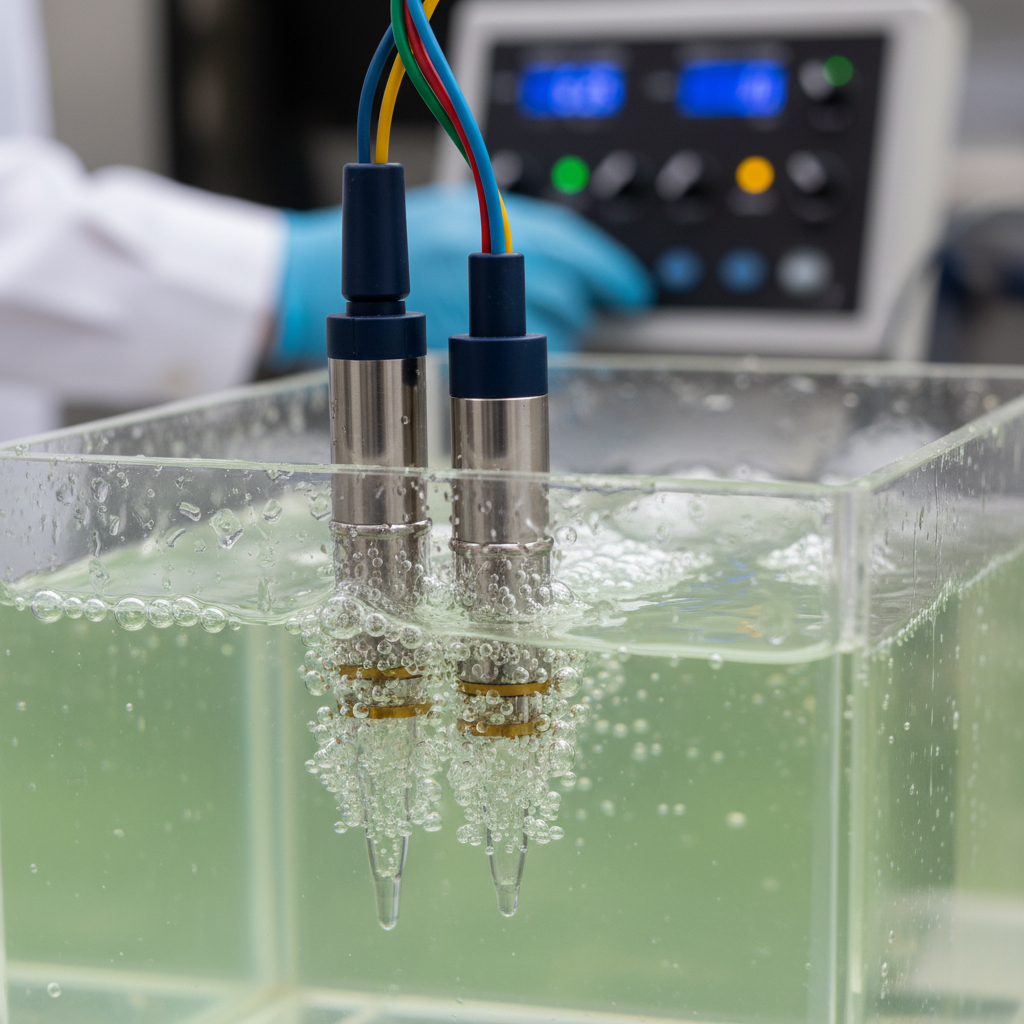
- Measurement layer: pH, electrical conductivity (EC), water temperature, dissolved oxygen (DO), water level, flow rate.
- Crop and room layer: air temperature, relative humidity, light intensity, CO2 concentration, vapor pressure deficit (VPD).
- Communications: Wi-Fi, LoRaWAN, MQTT, wired protocols, or industrial bus systems that move data from probes to software.
- Decision software: threshold alarms, scheduling engines, or predictive models that determine what action to take.
- Actuation: dosing pumps for nutrients and pH adjustment, irrigation valves, aerators, lights, fans, heaters, chillers, CO2 injectors.
The design pattern is a feedback loop: sense, decide, act, improve. Growlink describes this as an integrated approach to climate, irrigation, fertigation, and substrate data. Commercial greenhouse platforms from vendors like Priva and Hoogendoorn follow the same principle at industrial scale, combining sensor networks, actuator controls, and cloud software under a single interface.
The distinction that matters: a dashboard without actuation is observation. A dosing pump without reliable sensing is automation of error. The value of any monitoring system lives in the connection between measurement and correction, not in either one alone.
Which Variables to Measure First
Not all variables carry equal risk. A pH swing of 1.5 points can lock out nutrients within hours. A 2°C air temperature shift in a well-ventilated greenhouse might not matter until tomorrow.
Priority should follow consequence speed:
| Variable | Why it matters | Practical benchmark |
|---|---|---|
| pH | Controls nutrient availability. Too high or too low locks out essential elements. | Most crops: 5.5 to 6.5. Source water: 5.5 to 7. |
| EC (electrical conductivity) | Proxy for total dissolved ion concentration. Not a complete nutrient diagnosis. | Source water: 0.2 to 0.8 dS/m. |
| Water temperature | Affects oxygen solubility, reaction rates, and root health. | Interpret alongside DO readings. |
| Dissolved oxygen (DO) | Root respiration in submerged systems. Low DO invites pathogens. | Above 6 ppm. Warmer water holds less oxygen. |
| Water level and flow | Empty reservoirs and blocked lines cause rapid, irreversible damage. | System-specific; alarm on deviation from baseline. |
| Air temperature and humidity | Drive transpiration, nutrient uptake, and disease pressure. | Crop-specific. VPD is the better single metric. |
| Light (PAR / photoperiod) | Photosynthesis driver. Insufficient light limits everything else. | Depends on crop and growth stage. |
| CO2 | Photosynthesis rate limiter in sealed environments. | Ambient ~420 ppm; supplementation targets vary by crop. |
Missouri Extension recommends testing source water for pH, EC, and alkalinity before designing any nutrient recipe. Oklahoma State Extension adds that poor source water can create toxicity or deficiency no downstream adjustment will fully correct. The sequence matters: test water first, then build the recipe, then monitor continuously.
One critical nuance about EC: it reads total ionic concentration, not individual nutrient ratios. A reservoir can show a perfect EC number while being deficient in calcium and overloaded with sodium. Periodic laboratory analysis closes that gap. Sensors complement lab work. They don’t replace it.
VPD deserves special attention for enclosed environments. It combines air temperature, humidity, and (ideally) leaf temperature into a single metric that predicts how fast plants transpire and how efficiently they move water and nutrients. Monitoring temperature and humidity separately gives you two numbers. VPD gives you the relationship between them, which is what the plant actually responds to. Comprehensive vertical farm environmental monitoring integrates these atmospheric variables with nutrient and irrigation data for complete operational visibility.
Three Architectures and Their Real Trade-Offs
The right system depends on what you grow, how much you can lose in an hour, and how many people are available to respond.
| Architecture | Strength | Main failure mode | Best fit |
|---|---|---|---|
| Handheld meters | Low cost ($100 to $300 for quality units). Direct operator judgment. | Sparse data. Missed overnight excursions. Inconsistent technique. | Hobby grower, small nursery, single reservoir. |
| Fixed probes + local controller | Continuous readings. Automated dosing and alarms. Repeatable. | Sensor fouling and drift. Relay failures. Calibration errors amplified by automation. | Small-to-medium farms with defined zones. |
| Integrated cloud / industrial platform | Cross-system coordination. Historical data. Remote access. Recipe management. | Integration cost. Connectivity dependence. Vendor lock-in. | Multi-zone greenhouse or indoor farm. |
| DIY (ESP32 / open-stack) | Low hardware cost. Full customization. Learning opportunity. | You are the support team. Network resilience is your problem. No SLA. | Makers, researchers, and tight-budget pilots. |
A fifth layer is emerging: AI and spectral analysis. A 2025 hyperspectral study reported 99.6% accuracy for lettuce stress classification and detected stress three days after induction. That’s a promising signal for early detection. But the same research community acknowledges limits in replication, calibration, and the gap between lab conditions and commercial farm reality.
My recommendation: treat AI as an advisory layer, not the dosing authority. Set hard safety limits that override any model. Keep a fallback nutrient recipe. Validate locally before trusting predictions across different cultivars, lighting environments, or sensor aging conditions.
The economic question at every tier is not whether a sensor exists for a given variable. It’s whether the sensor’s accuracy, service interval, and response time prevent more loss than it costs. A $150 pH pen that’s calibrated weekly and read twice daily will outperform a $2,000 probe that hasn’t been cleaned in three months.
Sensor Maintenance: The Cost Nobody Quotes
Every product page shows you the sensor. Almost none show you the maintenance schedule that keeps it accurate.
pH probes are the worst offender. The glass membrane degrades over time. Nutrient salts and biofilm accumulate on the junction. Left uncleaned, a probe drifts, reporting values that look plausible but are quietly wrong. Missouri Extension recommends calibrating pH meters weekly at pH 4 and pH 7, with proper rinsing and storage between uses. That’s not optional for precision growing. It’s the minimum.
EC sensors handle fouling better, but they’re not immune. Mineral crystallization on electrodes is common in concentrated nutrient solutions, especially at higher temperatures. Regular cleaning with a mild acid solution and periodic verification against a reference standard prevents the kind of slow drift that ruins a crop over weeks.
DO sensors have their own lifespan. Polarographic probes consume their electrolyte and need membrane replacement. Optical sensors last longer but still require periodic calibration against a known saturation point. And DO meters can exceed $500, so replacement isn’t trivial. The same dissolved-oxygen discipline underpins any aquaculture monitoring system, where low DO threatens stock just as fast.
The real total cost of ownership for a fixed monitoring system includes:
- Replacement probes (pH sensors typically every 12 to 18 months under continuous use)
- Calibration solutions (pH 4, pH 7, EC reference standards)
- Cleaning supplies and storage solutions
- Labor time for calibration, inspection, and troubleshooting
- Downtime during sensor swaps or recalibration
For automated dosing systems, the stakes multiply. A drifted pH sensor reading 0.5 units low causes the controller to under-dose acid. The reservoir creeps alkaline. Nutrient lockout follows. The controller thinks everything is on target because the sensor says so. Automation without disciplined calibration doesn’t prevent error. It scales it.
Build calibration into the operating schedule, not into the “when we get around to it” category.
What Happens When Connectivity Fails
This is where my background in industrial IoT becomes directly relevant. I’ve seen what happens when a tracker on a $200,000 aviation asset loses cellular signal for 48 hours, the kind of scenario that shapes how I think about asset monitoring and control. The asset is fine when connectivity returns. Plants aren’t.
Most cloud-connected hydroponic monitoring systems work beautifully when the internet is up. The dashboard updates. Alerts fire. Remote adjustments propagate. But real-time monitoring only delivers value if the question that separates good engineering from marketing is answered: what does the system do when the router drops, the cloud service has an outage, or the API endpoint times out?
Research on ESP32-based prototype systems has identified internet interruptions and recalibration limitations as real constraints when a controller depends on an external server for decision-making. No server, no decisions.
For any system where crop damage can occur within hours (nutrient lockout, root-zone overheating, oxygen depletion), the architecture needs:
- Local data buffering so readings aren’t lost during outages
- Edge-level alarms that function without cloud connectivity
- Manual override capability at the physical controller
- Fail-safe defaults: pumps stop dosing (not continue blindly) when sensor data is stale
- Calibration reminders stored on-device, not only in the app
A cloud dashboard is valuable for historical analysis, recipe management, and remote oversight. But the first layer of intelligence must live at the edge, where it can respond in milliseconds regardless of what’s happening upstream.
When evaluating vendors, ask one question: “If your cloud goes down for four hours, what does my system do?” The answer tells you more about the product than any spec sheet.
Energy: The Metric Most Monitoring Systems Ignore
Water savings in hydroponics are real and well-documented. Gotham Greens reports up to 90% less water and more than 450 million gallons saved annually. AeroFarms claims up to 90% less water for leafy microgreens. Little Leaf Farms describes rainwater reuse across 50 acres of greenhouse production with 90% water reduction.
But water savings tell only half the resource story.
A 2025 energy synthesis published in Nature reviewed 748 publications and found a median plant-factory energy intensity of 127 MJ per kilogram of produce. Greenhouses averaged 27 MJ/kg. Open-field production: roughly 1 MJ/kg. The difference is not subtle.
A separate 2025 benchmark study places current lettuce-specific energy use at 10 to 18 kWh per kilogram, with a technical benchmark of 3.1 to 7.4 kWh/kg. The same study estimates that LED improvements could reduce lighting energy by up to 45%, and improving HVAC coefficient of performance from 2 to 6 could cut climate-control energy by 66%. The potential is significant, but the current reality is that most vertical farms operate well above these benchmarks.
The implication for monitoring system design: tracking pH, EC, temperature, and humidity while ignoring energy consumption per saleable kilogram gives you an incomplete picture. The most valuable systems connect crop performance to operating cost. They make it visible when Zone A consumes 15 kWh per kilogram while Zone B achieves 8, and they make it possible to investigate why.
AeroFarms explicitly identifies energy as one of its biggest running costs. Monitoring should expose that cost at the zone level, not hide it in a monthly utility bill.
Food Safety Goes Beyond Crop Sensors
Hydroponic nutrient solution circulates through the system in continuous contact with roots, substrates, and surfaces. That recirculation creates routes for contamination that don’t exist in the same way in field agriculture.
A 2025 review of food-safety interventions in hydroponic leafy greens identified a 2021 outbreak that caused 31 illnesses and four hospitalizations. Across 32 studies and 53 interventions, no intervention eliminated pathogens. Typical sanitizer reductions were about 1 to 2 log units. And none of the studies was conducted on a commercial farm.
For monitoring system design, this means crop telemetry showing “all parameters in range” does not establish that a product is pathogen-free. A complete monitoring approach adds:
- Water-source quality logs
- Sanitation concentration and contact time records
- Temperature excursion tracking
- Worker hygiene and equipment cleaning logs
- Lot traceability from seed to shipment
- Corrective-action documentation
These data points belong on the same event timeline as pH and EC readings. When an auditor or customer asks “what happened on Tuesday at 3pm?”, the answer should include both the growing environment and the food safety context. Most monitoring platforms don’t integrate these. They should.
Commercial Proof: Who Survived and Why
Controlled-environment agriculture is growing. USDA data show U.S. commercial CEA operations nearly tripling from 1,015 in 1998 to 2,994 in 2019. Market estimates for the broader hydroponics sector range from $6.8 billion to $12.2 billion in 2025/2026, depending on the source and what it includes. The direction is clear even if the exact numbers are debatable.
Growth in the sector doesn’t guarantee survival for individual operators. The recent record is instructive.
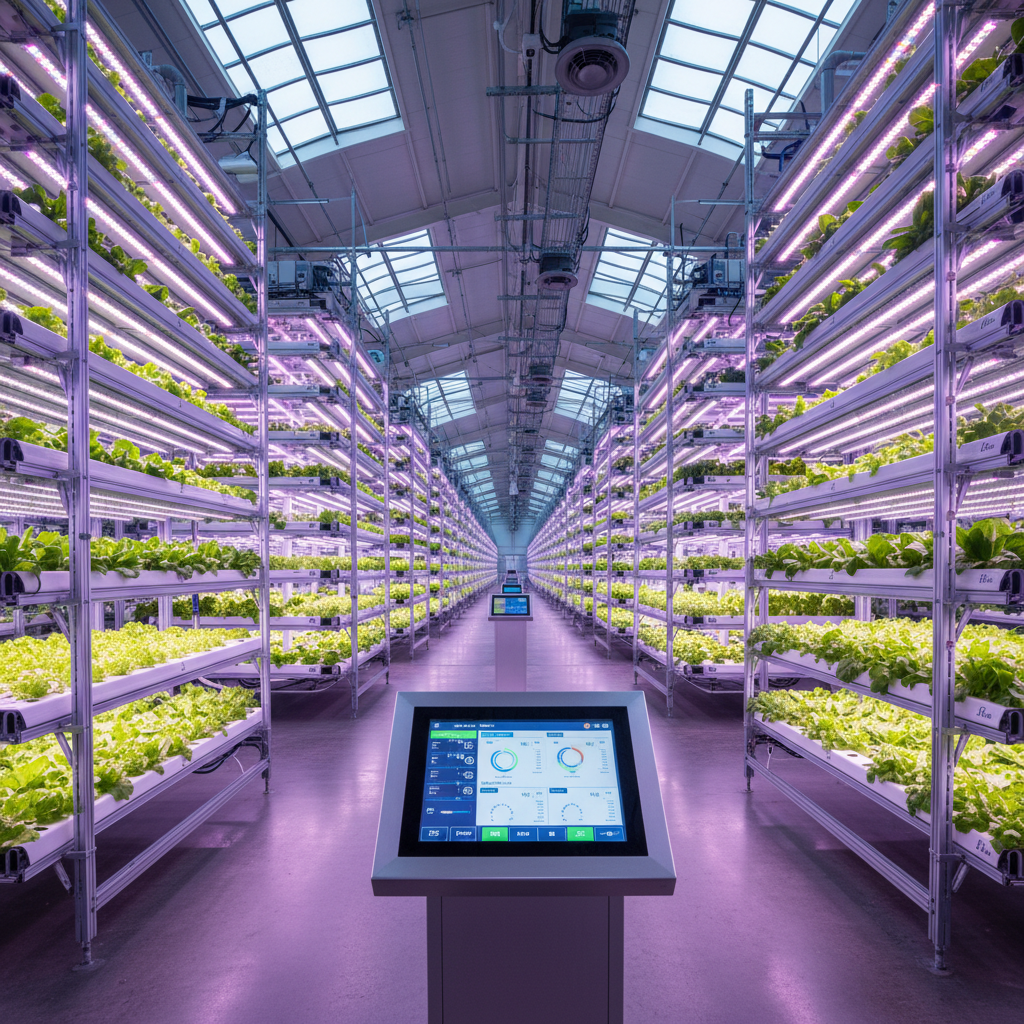
Gotham Greens runs an integrated greenhouse model: nutrient-film technique, filtered and recycled water, automatic climate balancing across temperature, humidity, light, and air composition. The company reports 30 times more lettuce per acre than field farming. Monitoring isn’t a gadget in their operation. It’s embedded in a production system that ties water performance, energy use, and quality control to a brand proposition.
Little Leaf Farms operates 50 acres across Massachusetts and Pennsylvania, emphasizing rainwater reuse and a workflow that runs from seeding through cutting and packaging with minimal manual intervention. At that scale, monitoring is a coordination problem. One handheld reading can’t cover multiple zones, crop stages, and production schedules.
On the other side: Plenty filed for Chapter 11 after raising nearly $1 billion. Bowery Agriculture closed operations after raising more than $700 million and reaching a $2.3 billion valuation. Neither failure was caused by bad sensors. Both companies faced capital structure problems, energy costs, market pricing challenges, and facility utilization issues.
The lesson is direct. A monitoring system should expose unit economics early enough for management to act: cost per saleable kilogram, labor hours per zone, energy per unit, shrink rate, grade-out percentage. If your monitoring only tells you the plants are healthy but can’t tell you whether production is profitable, it’s solving the wrong problem.
Matching the System to Your Operation
There’s no universal spec. The right monitoring system depends on crop value, staffing, and how fast a failure causes irreversible damage.
Small or hobby grower: A calibrated pH/EC meter, a written crop recipe, a simple logging habit (even a spreadsheet), and a reservoir-level alarm. Total investment under $500. The discipline of consistent measurement and calibration matters more than the sophistication of the hardware.
Commercial greenhouse: Fixed probes feeding a local controller with cloud connectivity for history and remote access. Interoperability matters here because climate, fertigation, lighting, and energy must share data. Evaluate platforms based on your existing infrastructure, crop recipes, and service availability in your region.
Vertical farm or indoor plant factory: Everything above, plus energy monitoring at the zone level, food-safety event logging, and a clear view of cost per saleable kilogram. Before signing the purchase order, model the energy cost against your crop’s market price. If the math doesn’t close at current energy rates, more sensors won’t fix it.
For detailed architecture guidance, see our complete vertical farm monitoring system overview.
Across all three tiers, one principle holds: start with the variables that cause the fastest damage, keep those sensors maintained, and build outward. A $150 probe that’s calibrated weekly beats a $5,000 system that hasn’t been touched since installation.
At Datanet, we work with environmental monitoring across industries where sensor reliability and edge connectivity aren’t optional. If you’re building or scaling a controlled-environment operation and need help with temperature, humidity, and environmental tracking infrastructure, we can help you architect a solution that doesn’t fall apart when the Wi-Fi does. Talk to our team.
Frequently Asked Questions
What is the most important variable to monitor in hydroponics?
pH. It controls nutrient availability more directly than any other variable. A pH swing outside the 5.5 to 6.5 range can lock out essential nutrients within hours, even if EC and temperature are on target. Start with pH, add EC and water temperature, then expand based on your system type and crop.
How often should hydroponic sensors be calibrated?
For pH meters, weekly calibration at pH 4 and pH 7 is a widely cited minimum. EC sensors need less frequent calibration but should be verified against a reference standard monthly. Fixed probes in continuous contact with nutrient solution foul faster and may need cleaning between calibrations. Follow the instrument manufacturer’s schedule and treat it as non-negotiable.
Can I build a monitoring system with an ESP32?
Yes. Published research validates the approach for prototyping. An ESP32 paired with pH, EC, and temperature sensors can route data through MQTT to a dashboard or mobile app. The trade-offs: you are the support team, connectivity resilience depends on a single Wi-Fi link, and software troubleshooting falls on you. It’s a viable path for makers and researchers, not a shortcut for commercial reliability.
How much does a hydroponic monitoring system cost?
Quality handheld meters start at $100 to $300. Dissolved oxygen meters can exceed $500. A fixed multi-probe system with a local controller and cloud connectivity runs $1,000 to $5,000 for a small operation. Integrated commercial greenhouse platforms cost significantly more. Ongoing costs (probe replacement, calibration solutions, software subscriptions) often exceed the initial hardware investment within two to three years.
Does monitoring replace laboratory water testing?
No. EC measures total dissolved ions, not individual nutrient ratios. A reservoir can show the correct EC while being deficient in calcium or overloaded with sodium. Periodic lab analysis (quarterly for stable systems, monthly during optimization) validates what sensors report and catches imbalances that EC cannot detect.
What happens if my monitoring system loses internet connectivity?
It depends on the architecture. Well-designed systems buffer data locally, maintain edge-level alarms, and default to safe states (pumps stop dosing rather than continue on stale readings). Poorly designed systems stop functioning or, worse, continue automated actions without current data. Before purchasing any system, ask the vendor what happens during a four-hour cloud outage.






 +1 508 292 2210

3 Responses