

Farmed aquatic-animal production crossed 103 million tonnes in 2024, according to FAO’s SOFIA 2026 report. That number represents more than half of all aquatic-animal food on the planet. The sector feeding over 3 billion people their primary animal protein is now larger than wild capture. (See also: smart aquaculture.)
Most operations still treat aquaculture automation as a catalog decision. Pick a smart feeder, subscribe to a dashboard, bolt on a camera. That approach burns capital because it skips the foundation.
Aquaculture automation is a sequence, not a shopping list. Sensors first. Reliable data second. Assisted decisions third. Closed-loop control fourth. Robotics last. Skip a layer, and the AI feeding system you just installed is making decisions on bad data.
I have spent 15+ years integrating IoT hardware across logistics, aviation, and industrial environments. The technology works. The sequence is where deployments fail. This piece covers where aquaculture automation stands in 2026, what the real implementation sequence looks like, and what the vendor brochures consistently leave out.
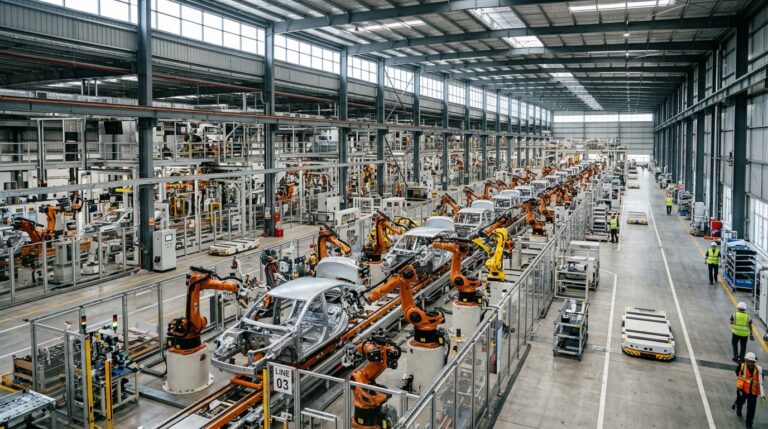
Similar sequencing principles apply across industries—see how aerospace manufacturing automation handles layered implementation.
What Aquaculture Automation Actually Means
Aquaculture automation is the use of sensors, networks, software, AI, and physical actuators to monitor and control farm processes: feeding, water quality management, aeration, biomass estimation, disease detection, harvesting, and compliance reporting. MarketsandMarkets defines precision aquaculture as spanning sensors, cameras, control systems, software, services, and ROV solutions.
The word “automation” covers a wide range of control authority, and this is where confusion starts.
| Level | What Happens | Example |
|---|---|---|
| Timer/threshold | System executes on a fixed schedule or trigger | Feeder dispenses every 90 minutes. Aerator kicks in when DO drops below 4 mg/L. |
| Alert-based monitoring | Sensors measure, dashboard displays, operator decides | pH spike triggers a notification. Operator adjusts water exchange manually. |
| AI decision support | Model recommends an action, human approves | System suggests reducing afternoon feed by 15% based on fish behavior. Operator confirms. |
| Closed-loop control | System measures, decides, and acts within defined parameters | Oxygen controller maintains saturation between 85% and 95% without human input. |
| Mobile autonomy | Robot navigates, inspects, or acts independently | Net-cleaning robot patrols cage perimeter on a scheduled cycle. |
Most farms operate at level 1 or 2. The marketing operates at level 5. The gap between those two is where money disappears.
Monitoring tells you what is happening. Automation changes what happens. A temperature probe is monitoring. A system that increases aeration when dissolved oxygen drops below a threshold is automation. Both have value. Confusing them has cost.
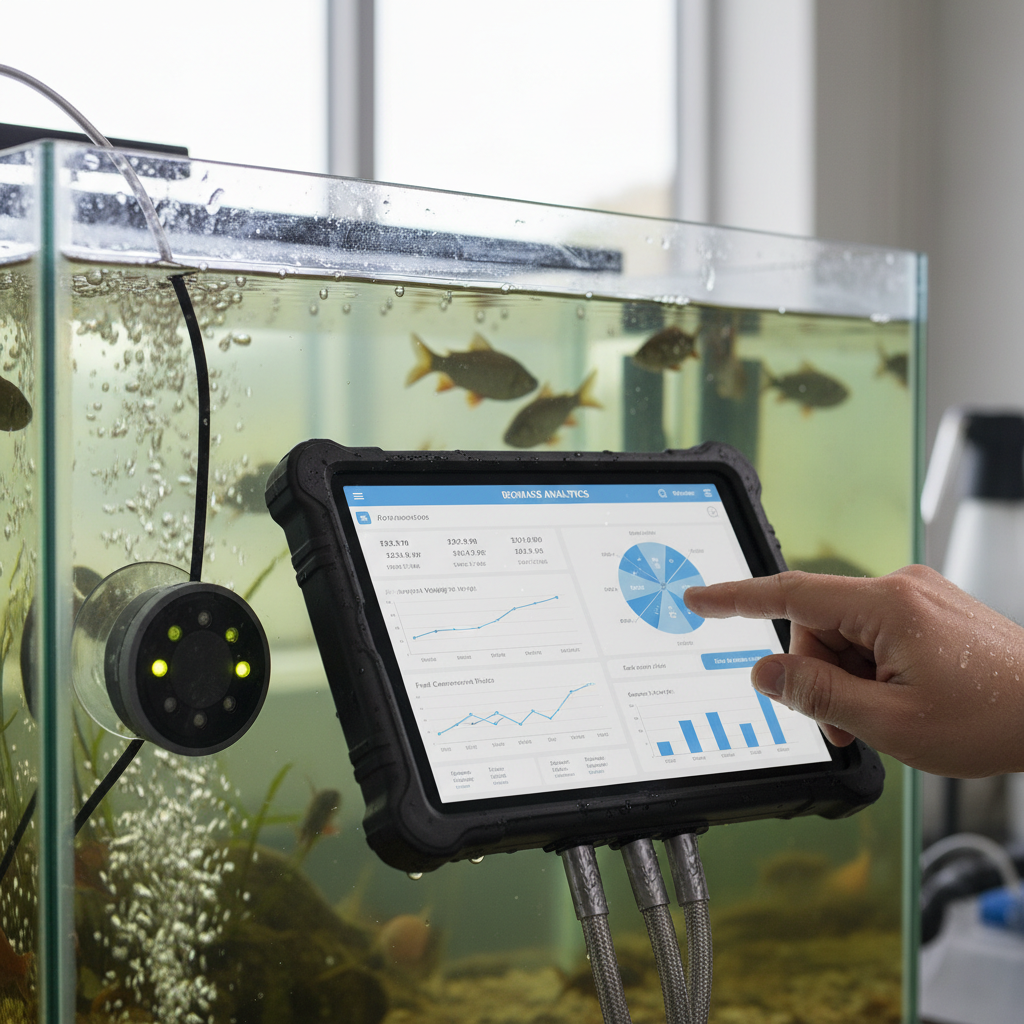
Why the Economics Force the Conversation Now
Three numbers frame the urgency.
First, production scale. FAO’s SOFIA 2026 estimates aquaculture (including algae) produced 141 million tonnes in 2024, valued at $391 billion, with aquatic-animal aquaculture alone valued at $371 billion at farm gate. At that scale, even a 2% improvement in feed conversion or survival translates to billions in aggregate value.
Second, the technology market. One estimate puts aquaculture monitoring and automation systems at $1.64 billion in 2025, growing to $4.03 billion by 2035 at a 9.4% CAGR. A narrower precision-aquaculture estimate from MarketsandMarkets gives $850 million in 2025, reaching $1.43 billion by 2030. The numbers differ because they define scope differently. Both point the same direction.
Third, the feed wedge. Feed represents roughly 50% of operating expenditure in most finfish operations. Feeding and feed-management systems alone account for an estimated $492 million, about 30% of the broader automation market. When half your costs sit in one category, that category gets automated first.
Geography concentrates the stakes further. Asia accounts for 70% of aquatic-animal production, with China, India, and Indonesia leading. Automation products designed exclusively for Norwegian salmon cages miss the majority of global demand. Pond systems, shrimp farms, and tilapia operations across Southeast Asia and Sub-Saharan Africa represent the largest deployment opportunity. They need solutions that work on low bandwidth, low power, and modest capital. See also the article: Vertical Farming Automation: What Pays and What Doesn’t.
Five Layers, One Sequence
Aquaculture automation is a stack. Each layer depends on the one below it.
| Layer | Function | Typical Technology |
|---|---|---|
| 1. Sensing | Capture temperature, dissolved oxygen, pH, ammonia, salinity, turbidity, biomass, behavior | Probes, cameras, sonar, hydroacoustic sensors, buoys |
| 2. Connectivity | Move data from pond, tank, or cage to local or remote software | Cellular, NB-IoT, LoRa, Wi-Fi, satellite, edge gateways |
| 3. Analytics | Convert raw signals into alerts, predictions, or recommended actions | Rules engines, machine learning, computer vision, anomaly detection |
| 4. Actuation | Execute a response or schedule a process change | Smart feeders, aerators, pumps, oxygenation systems, valves, dosers |
| 5. Mobile autonomy | Inspect, clean, count, or harvest without a human in the water | ROVs, AUVs, cage-cleaning robots, machine-vision harvest systems |
The ordering principle is simple. If your sensing layer produces unreliable data, every layer above it amplifies the error. An AI feeding model trained on drifting dissolved-oxygen readings will recommend bad feeding schedules. A robot cleaning nets on a calendar that ignores actual biofouling patterns wastes energy and disturbs fish for no reason. This is why disciplined aquaculture data management matters more than the sophistication of any model on top of it.
Step 1 is not glamorous. It means deploying sensors, calibrating them, proving the data matches reality, and building a baseline over weeks or months. Step 2 means getting that data off the farm reliably, including when connectivity degrades. Only after those two steps are solid do steps 3 through 5 produce value.
A 2025 review of smart aquaculture technologies integrates IoT, AI, edge computing, robotics, and blockchain into one framework. The same review identifies sensor reliability, model robustness, data transmission, interoperability, and skilled personnel as persistent bottlenecks. The technology exists. The implementation discipline is what separates farms that automate successfully from farms that buy expensive dashboards nobody trusts.
Feeding Automation: The Highest-ROI Starting Point
Feeding is the obvious entry point because it is the highest-frequency economic loop on any farm. Feed goes in multiple times per day. Conversion, waste, and growth respond within weeks. The measurement cycle is short enough to prove or disprove value quickly.
In shrimp ponds, the data is clear. Published research on Pacific white shrimp found that automated feeding systems were significantly more efficient than hand feeding. Related studies show improved growth and feed conversion when shrimp receive frequent, controlled meals rather than the traditional one to four manual feedings per day. The mechanism is straightforward: smaller, more frequent meals align feed delivery with actual appetite and reduce the large errors of infrequent manual distribution.
In salmon, the frontier is moving from timer-based feeding to AI-assisted feeding. Mowi began trialing AKVA Observe in early 2026, using AI to recognize feed pellets and support feeding decisions. The model observes feeding response and provides evidence. A human or established control process remains accountable for the decision. Less glamorous than “fully autonomous feeding.” Easier to validate and safer to scale.
On the other end of the resource spectrum, Carnegie Mellon University’s CMU-Africa project applies computer vision and IoT-controlled auto-feeders to fish farming in Rwanda. The design uses edge computing to optimize feed without assuming uninterrupted cloud access. This matters because most of the world’s aquaculture does not operate on Norwegian-grade infrastructure.
The honest comparison: a basic automatic feeder improves timing and repeatability over manual distribution. An AI feeder adds a feedback layer using behavior, biomass, pellet recognition, or environmental data. The question is not which sounds better. The question is whether your farm has the sensing infrastructure to make that feedback layer trustworthy. If your cameras are fogged with biofilm and your DO probe drifted last month, the AI layer is operating on fiction.
Sensors, Cameras, Acoustics: Choosing the Right Signal
No single sensing modality covers everything a farm needs to know. Cameras struggle with darkness, turbidity, and dense fish populations. Acoustics struggle with interpretation and environmental noise. Water probes measure conditions but not fish response. Each type answers a different question.
The emerging trend is multimodal fusion: combining cameras, sonar, hydroacoustic sensors, and environmental telemetry to cover each modality’s blind spots. Aquabyte’s product trajectory illustrates this. Their public timeline shows successive launches from 2024 through 2026, starting with biomass estimation and lice counting, moving through behavior monitoring and a breathing index, and culminating in the Hydra 360 camera combining sonar, 360-degree video, and health monitoring. CageEye focuses specifically on hydroacoustics for feeding efficiency and welfare in salmon cages. BioSonics targets real-time acoustic observation in larger offshore pens. Each product reflects the same insight: you need multiple signals to build a reliable picture, and choosing water quality sensors for fish farming that actually hold calibration is where that picture starts.
Research on intelligent fish farms describes sensors and cameras on buoys or unmanned vessels collecting dissolved oxygen, temperature, chlorophyll, turbidity, ammonia nitrogen, and pH alongside biological video. The vision is comprehensive. The reality on a working farm is messier.
Here is what most vendor pages skip. Sensors submerged 24/7 in saltwater, brackish water, or nutrient-rich pond environments face biofouling, calibration drift, corrosion, and power constraints. A dissolved-oxygen probe that drifts 0.5 mg/L over three months is worse than no probe at all, because operators trust it. Underwater cameras develop biofilm on lenses within weeks if not cleaned regularly. Temperature and pH probes need periodic validation against reference instruments—structured asset audit automation helps track calibration schedules and maintenance cycles across distributed sensor networks.
Calibration schedules, cleaning protocols, spare-part inventory, and probe replacement cycles are not glamorous line items. They are the difference between data and noise. Budget for them from day one, or the analytics layer built on top will generate confident, wrong recommendations.
Edge computing addresses another practical challenge. Comparative studies report roughly 50% lower latency and up to 70% less data transmission with edge-cloud hybrid architectures versus cloud-only systems. For remote ponds and offshore cages, the critical design question is: what does the farm do when the network drops? A resilient system continues local alarms, maintains safe actuator states, and queues data for later upload. A system without that fallback is waiting to fail at the worst possible moment.
RAS: Where Control and Risk Concentrate
Recirculating Aquaculture Systems are the most automation-intensive production model in the industry. Water chemistry, circulation, oxygen, biological filtration, and feeding are all continuously coupled in a closed loop. The attraction is obvious: you control the environment. The risk is equally obvious. A sensor error, pump failure, or oxygen interruption can cascade across every tank in the facility within hours.
Atlantic Sapphire’s Florida RAS facility provides the cautionary reference. Reported incidents involved approximately 500,000 salmon and expected losses of 500 metric tonnes. The available reports do not establish that automation caused the events. They do show why a highly automated facility needs independent oxygen backup, independent power, manual overrides accessible under stress, incident response playbooks, and biological expertise alongside the software.
A 2025 review of RAS challenges warns that fluctuations in pH, temperature, or dissolved oxygen can cause acute stress and mass mortality within hours in recirculating systems. More instrumentation does not equal more resilience. A farm with 200 sensors and a single point of failure in its oxygen supply is less resilient than a farm with 20 sensors and triple-redundant aeration.
The implementation rule for RAS: automate alarms and redundancy first. Build independent safety layers that software cannot override. Then add intelligence. Not the other way around.
Underwater Robotics: Bounded Tasks First
Net cleaning is the first underwater robotics use case achieving genuine commercial scale, because biofouling is repetitive, hazardous for divers, and directly affects water exchange through cage nets.
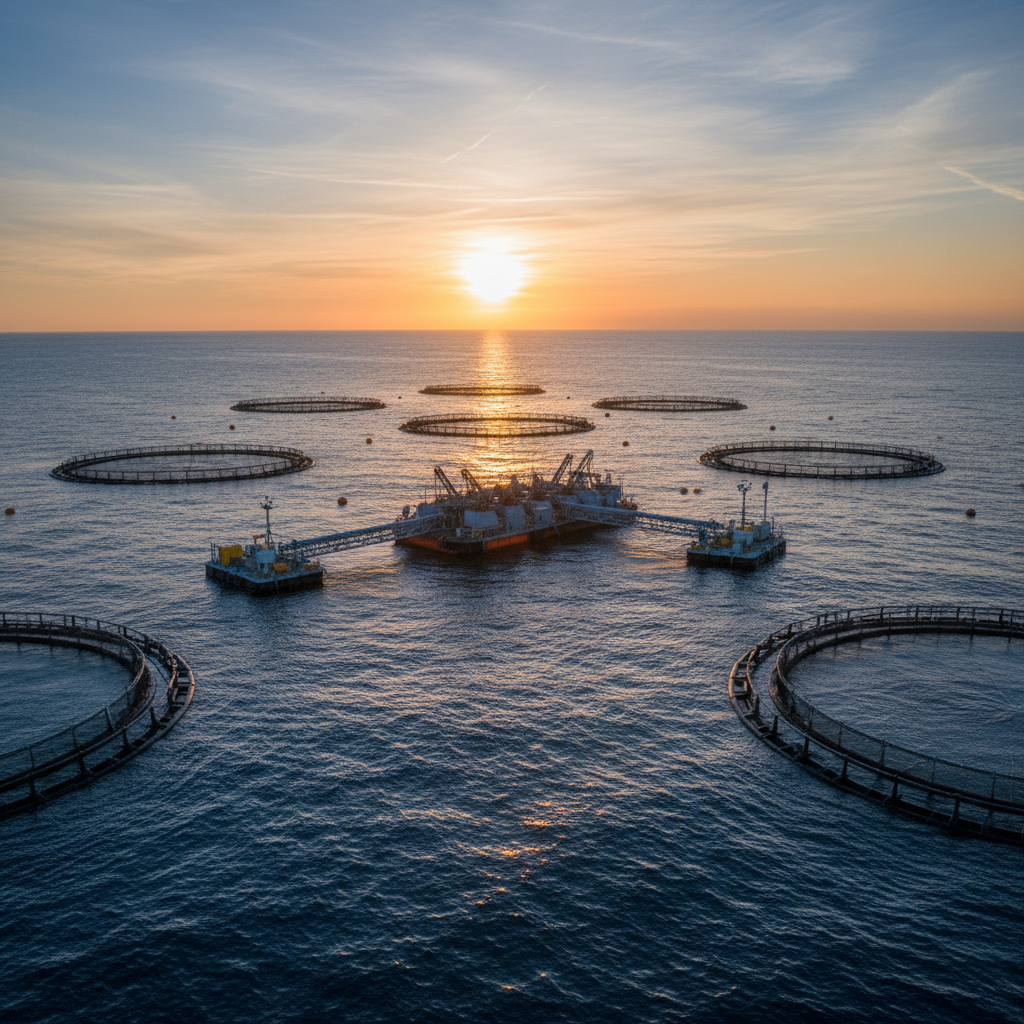
Remora Robotics deployed cleaning robots commercially at Bjørøya AS facilities in Flatanger in November 2024. By July 2025, the company raised NOK 164 million (approximately EUR 13.9 million) to scale its AI-powered net-cleaning robot. Real funding. Real deployment. Real commercialization signals.
They are not proof that every farm will achieve lower cost or better welfare from robots. A responsible procurement trial should record cleaning coverage, fish disturbance, net integrity, downtime, energy consumption, maintenance requirements, and how often a human still needs to intervene. “Autonomous” often means self-navigating, while inspection, exception handling, and safety remain remotely supervised. That distinction should appear explicitly in contracts and performance metrics.
Broader research describes autonomous inspection, cage cleaning, data collection, and even harvesting. These applications will expand first where the task is bounded, the environment is structured, and a human can intervene remotely. Open-water harvesting and welfare-sensitive handling are harder problems with far less tolerance for error.
What the Vendor Brochures Leave Out
The top search results for aquaculture automation are dominated by equipment manufacturers and academic reviews. Both do what they are designed to do: sell solutions or catalog research. Neither addresses the implementation reality that determines whether those solutions actually work on your farm.
Five gaps show up consistently.
The first is integration. Your sensors come from one vendor. Your feeders from another. Your farm management software from a third. Everyone advertises “open APIs.” In practice, confirm which API functions are actually open, actively supported, documented, and included in your commercial agreement. ScaleAQ explicitly positions open APIs as a differentiator, which tells you the default in this industry is closed systems. Plan integration work and budget for it.
The second is physical maintenance. Saltwater, brackish water, and nutrient-rich ponds corrode, foul, and degrade sensors continuously. Budget for biofouling removal, recalibration against reference instruments, and probe replacement at defined intervals. The cost of a sensor is the purchase price plus 3 to 5 years of maintenance. Most ROI projections only count the first number.
Third, crew adoption. A system your night-shift operator does not trust is a system that does not exist. Traditional aquaculture crews need training, intuitive interfaces, and clear escalation paths. The fanciest AI model in the world fails if the person watching the farm at 2 AM ignores its alarm because they have seen too many false positives. User acceptance testing with actual farm workers, not the IT team, should be a procurement requirement.
Fourth, degraded connectivity. Remote ponds, offshore cages, and coastal shellfish sites cannot assume stable cellular or Wi-Fi coverage. What happens to your feeders, aerators, and alarms when the signal drops? If you do not have a defined degraded-mode plan, you have a system waiting to fail at the worst possible time.
Finally, cybersecurity and data governance. A 2026 review in Frontiers in Aquaculture flags transparency, cybersecurity, privacy, and equitable access to data as governance concerns for AI-enabled farms. As you connect more devices, the attack surface grows. Data ownership clauses, access controls, model-change logs, and incident protocols belong in your procurement checklist from the start.
Building the Business Case Without Guessing
There is no universal ROI for aquaculture automation. A timer-controlled feeder, a camera subscription, a cage-cleaning robot, and a complete RAS plant have radically different capital requirements, service costs, and biological assumptions. Anyone offering a generic “3-year payback” without your farm’s data is guessing.
The framework that works:
- Establish baseline metrics. Current feed conversion ratio, labor hours per production cycle, mortality rate, downtime events, energy cost, water usage, compliance overhead. You cannot measure improvement without a starting point.
- Identify the highest-cost problem. Usually feed waste, mortality events, or labor on repetitive tasks. Start there.
- Run a controlled pilot on bounded scope. One pond, one cage, one tank bay. Measure outcomes against the baseline with the same rigor you would apply to a feed trial.
- Count total cost of ownership. Hardware, software subscription, connectivity, installation, training, calibration, cleaning, replacement parts, and support. Not just the purchase price.
- Scale only what the pilot proved. Expand the deployment that delivered measurable improvement. Discard or redesign what did not.
For smaller operations, modular, low-power environmental sensing is often the right first move. Reliable temperature, dissolved oxygen, and pH monitoring across your ponds or tanks gives you the data foundation for every decision above it. You do not need a full platform to start building that foundation. Rugged environmental tracking devices designed for remote, harsh-environment deployment can establish the baseline without the complexity of a full farm-management system.
The question is not “does aquaculture automation have ROI?” The question is: which specific automation action, at your specific scale, produces measurable improvement on which specific metric? Answer that, and the business case writes itself. For a ranked view of where the biggest gains come from, see these aquaculture productivity improvement levers.
If you are building the sensing and connectivity layer for a pond, cage, or RAS operation and want to think through what that looks like in practice, reach out to our team. We deploy IoT hardware in harsh industrial environments for a living, and we have learned that the foundation matters more than the features.
Frequently Asked Questions
What is aquaculture automation?
Aquaculture automation is the use of sensors, networks, software, AI, and physical actuators to monitor and control farm processes like feeding, water quality, aeration, biomass estimation, and disease detection. It ranges from simple timer-controlled feeders to AI-driven closed-loop systems and autonomous underwater robots. The common thread is replacing manual, intermittent action with continuous, data-driven control.
What is the most common starting point for automating a farm?
Feeding. Feed represents roughly 50% of operating costs in finfish farming, making it the highest-impact target. Automatic feeders improve timing and reduce waste. AI-assisted feeders add a feedback layer using fish behavior and environmental data, but they require reliable sensors upstream to function correctly.
Does aquaculture automation replace farm workers?
It changes the work before it eliminates it. Dangerous, repetitive, and time-sensitive tasks (manual feeding, diving for net inspection, overnight water monitoring) are the first to shift. Farms still need people to calibrate sensors, interpret exceptions, validate welfare, handle fish, and respond to equipment failures. The workforce question is which tasks to delegate, not whether humans are still needed.
How much does aquaculture automation cost?
There is no universal figure. Industry estimates put the global monitoring and automation systems market at $1.64 billion in 2025. Individual farm costs depend on scale, production system (ponds, cages, RAS), and scope. Build your business case from your own baseline metrics and a bounded pilot, not from a vendor’s generic payback estimate.
Can automation work in remote or low-resource environments?
Yes, with deliberate design. Low-power sensors, NB-IoT or LoRa connectivity, edge computing, and solar-powered nodes can deliver reliable environmental monitoring to remote ponds and offshore sites. The key is designing for degraded connectivity and limited power from the start, not assuming always-on cloud access.
What are the biggest risks of farm automation?
Uncalibrated sensors feeding bad data to decision systems. Connectivity loss without a defined fallback mode. Vendor lock-in from closed, proprietary platforms. Growing cybersecurity exposure as more devices connect. In RAS environments, tightly coupled systems where a single failure can cascade into mass mortality within hours. Independent safety layers and manual overrides are non-negotiable at every level of automation.



 +1 508 292 2210

5 Responses